


Fashion Psychology: Shaping Personal Style Decisions
Bold choices in winter fashion can do more than keep you warm. Studies show that over 80 percent of American young adults feel more confident when their clothing matches their personality and mood. Understanding fashion psychology helps make every wardrobe decision smarter and more authentic. If you’re searching for stylish casual winter apparel, you’ll discover how the right pieces can improve your mood, express your identity, and set your style apart from the crowd.
Table of Contents
- What Is Fashion Psychology And Why It Matters
- Key Principles Of Fashion Psychology
- Types Of Fashion Psychology Applications
- How Clothing Impacts Mood And Identity
- Social Influences And Consumer Behavior
- Common Mistakes In Fashion Choices
Key Takeaways
| Point | Details |
|---|---|
| Understanding Fashion Psychology | Fashion psychology examines how clothing choices affect emotions, self-perception, and social interactions, serving as a powerful form of nonverbal communication. |
| Impact on Consumer Behavior | Social dynamics significantly shape fashion choices, influencing purchasing decisions based on peer perceptions and cultural expectations. |
| Common Fashion Mistakes | Many individuals make clothing selections based on societal pressure rather than personal identity, often leading to mistakes that neglect comfort and self-expression. |
| Empowerment through Clothing | Choosing garments that resonate with personal values and boost confidence can transform fashion into a tool for emotional well-being and self-identity. |
What Is Fashion Psychology and Why It Matters
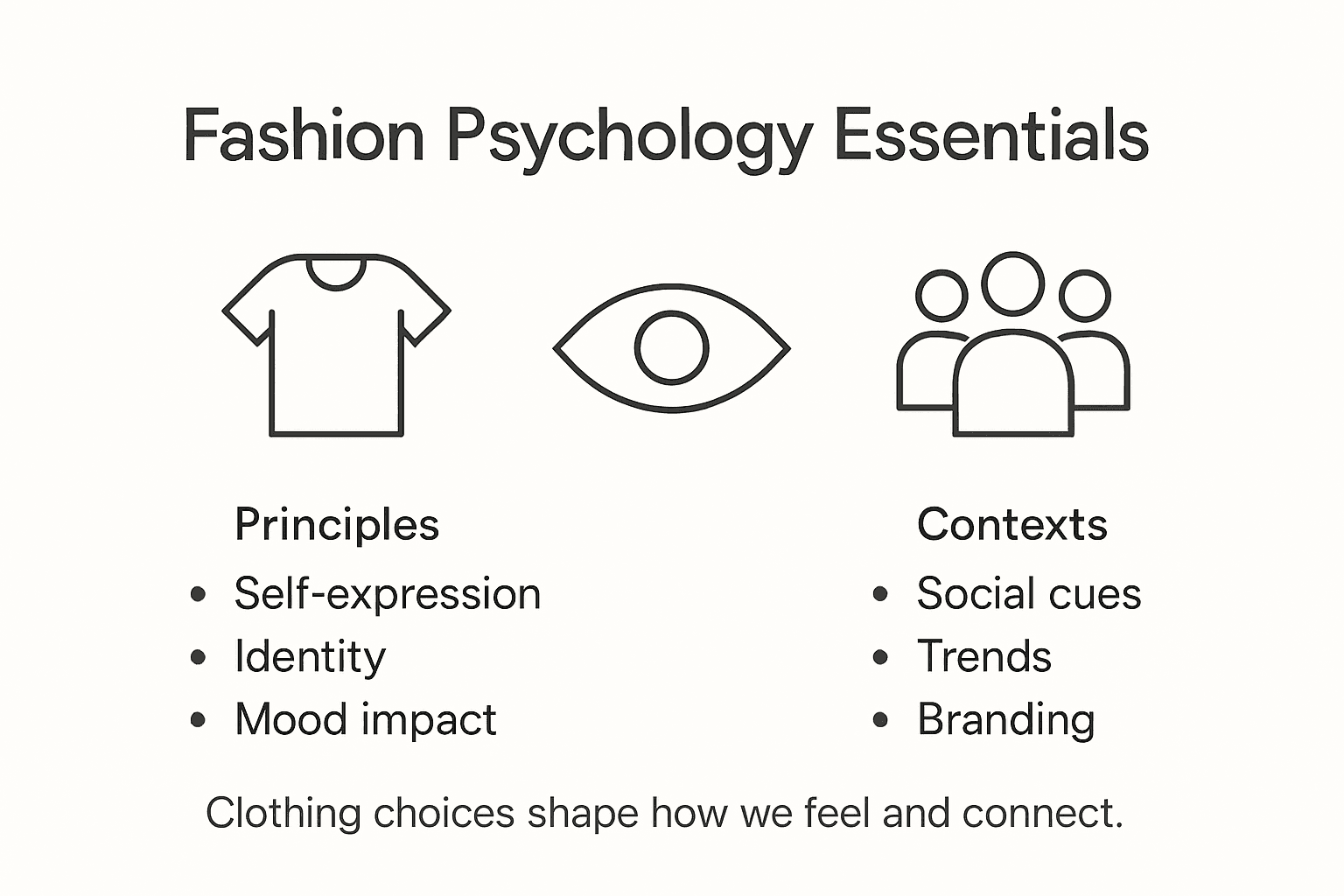
Fashion psychology is a fascinating field that explores the intricate relationship between clothing, human behavior, and mental processes. Fashion psychology applies psychological theories to understand how our wardrobe choices impact our emotions, self-perception, and social interactions.
At its core, this discipline investigates why people select specific clothing styles and how those choices reflect deeper psychological mechanisms. Research studies in the UK and USA have demonstrated that fashion serves as more than just protection from the elements. Instead, clothing becomes a powerful medium of personal expression, revealing complex layers of individual identity and social communication.
Psychological research indicates that fashion choices are influenced by multiple factors:
- Emotional State: Clothing can reflect and even modify current moods
- Cultural Context: Social norms significantly impact personal style decisions
- Self-Perception: Wardrobe selections communicate personal narratives
- Psychological Comfort: Certain clothing styles enhance confidence and personal empowerment
The significance of fashion psychology extends beyond personal style. Marketers, designers, and researchers use these insights to understand consumer behavior, predict trend acceptance, and create clothing that resonates with psychological needs and social expectations.
Pro tip: Pay attention to how different clothing makes you feel and recognize that your fashion choices are a powerful form of nonverbal communication about your inner self.
Key Principles of Fashion Psychology
Fashion psychology operates on several core principles that reveal the profound connection between clothing and human behavior. Applied psychological research demonstrates that fashion extends far beyond aesthetic choices, serving as a complex mechanism for personal expression, emotional regulation, and social communication.
The discipline explores multiple interconnected psychological dimensions of fashion choices. Comprehensive studies have identified key principles that explain how individuals select and interpret clothing:
- Identity Expression: Clothing as a visual language of personal narrative
- Emotional Regulation: Wardrobe selections that influence mood and self-perception
- Social Signaling: Fashion as a method of communicating group membership and individual status
- Cultural Context: Understanding how societal norms shape fashion preferences
Understanding these principles reveals fashion as a dynamic psychological tool. Personality traits, cultural backgrounds, and individual experiences interact to create unique fashion behaviors. Researchers recognize that clothing choices are not random but carefully constructed representations of internal psychological processes.
This multidimensional approach allows professionals to understand fashion beyond surface aesthetics. Marketers, designers, and psychologists can leverage these insights to create more meaningful, resonant clothing experiences that connect with individuals’ deeper psychological needs.
Pro tip: Approach your wardrobe as a personal canvas of self-expression, recognizing that each clothing choice communicates a nuanced story about your inner emotional landscape.
Types of Fashion Psychology Applications
Fashion psychology encompasses a wide range of practical applications that transform psychological insights into actionable strategies across multiple industries. Research demonstrates the breadth of these applications, showing how psychological principles can be strategically integrated into fashion design, marketing, and consumer experiences.
Behavioral psychology principles are increasingly applied in various fashion-related domains, revealing the discipline’s versatility and depth. Key application areas include:
- Design Innovation: Using psychological insights to create more intuitive and emotionally resonant clothing
- Marketing Strategies: Understanding consumer behavior to develop targeted communication and product positioning
- Retail Experience: Enhancing shopping environments to improve customer engagement and satisfaction
- Personal Styling: Helping individuals develop authentic personal style that boosts confidence and self-expression
- Sustainable Fashion: Applying psychological techniques to promote more conscious consumption behaviors
Professionals in fashion psychology leverage sophisticated research methodologies to decode complex consumer motivations. This approach allows brands to create products that not only look appealing but also connect deeply with psychological and emotional needs of their target audiences.
The interdisciplinary nature of fashion psychology enables professionals to bridge gaps between human behavior, design aesthetics, and commercial strategies. Researchers and practitioners can now develop more nuanced, empathetic approaches to fashion that recognize clothing as a powerful form of personal and social communication.
Here is an overview of how fashion psychology professionals apply their insights across various domains:
| Application Area | Key Focus | Business Impact |
|---|---|---|
| Design Innovation | Emotional needs and comfort | Increases product appeal |
| Marketing Strategies | Consumer motivation and identity | Improves campaign effectiveness |
| Retail Experience | Shopping environment psychology | Enhances customer satisfaction |
| Personal Styling | Authentic self-expression | Boosts client confidence and loyalty |
Pro tip: Explore your clothing choices as a form of personal storytelling, recognizing that each garment can be a deliberate expression of your inner psychological landscape.
How Clothing Impacts Mood and Identity
Clothing serves as a powerful psychological tool that extends far beyond mere physical protection, functioning as a dynamic medium of personal expression and emotional regulation. Psychological research reveals the profound connection between what we wear and how we perceive ourselves and interact with the world around us.
The intricate relationship between clothing, mood, and identity manifests through several key psychological mechanisms:
- Emotional Transformation: Clothing can significantly alter psychological state and emotional experience
- Self-Perception: Wardrobe choices directly influence personal confidence and self-image
- Social Signaling: Garments communicate complex personal narratives without verbal communication
- Psychological Protection: Certain clothing can serve as emotional armor during challenging situations
Psychological studies demonstrate that clothing acts as a form of nonverbal communication, allowing individuals to project internal states and negotiate social interactions. The strategic selection of specific garments can trigger positive emotional responses, boost self-esteem, and help manage complex psychological experiences.
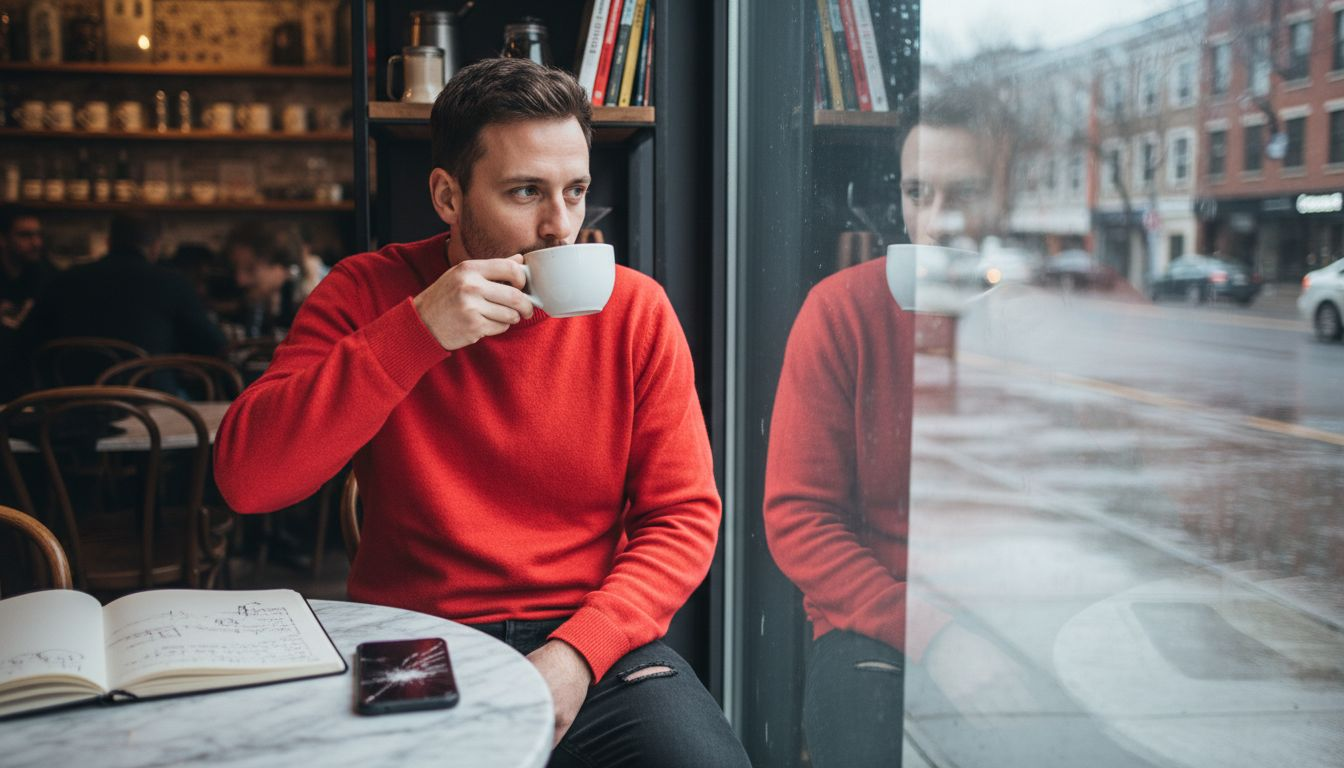
Moreover, clothing functions as a sophisticated form of personal branding, enabling individuals to craft and communicate their identity through carefully curated visual representations. By understanding this psychological mechanism, people can intentionally use fashion as a tool for personal empowerment and emotional well-being.
Pro tip: Intentionally choose clothing that makes you feel confident and authentic, recognizing that your wardrobe is a powerful instrument of personal psychological expression.
Social Influences and Consumer Behavior
Social dynamics play a critical role in shaping consumer behavior, particularly within the fashion ecosystem. A comprehensive systematic literature review reveals the intricate mechanisms by which social factors profoundly influence purchasing decisions and fashion consumption patterns.
Psychological investigations highlight multiple dimensions of social influence that impact consumer behavior:
- Peer Perception: How social groups shape individual fashion choices
- Social Media Impact: Digital platforms driving trend adoption and consumer preferences
- Cultural Expectations: Societal norms determining acceptable fashion expressions
- Identity Signaling: Clothing as a mechanism for social communication and group belonging
Consumer behavior in fashion is not merely a personal decision but a complex interaction between individual preferences and broader social contexts. Individuals unconsciously navigate social expectations, using clothing as a strategic tool to negotiate their place within various social hierarchies and communities.
The psychological underpinnings of consumer behavior demonstrate that fashion choices are deeply embedded in social communication systems. People continuously interpret and respond to social cues, using clothing as a nuanced language of belonging, status, and personal narrative.
Pro tip: Recognize that your fashion choices are a sophisticated form of social dialogue, strategically communicating your identity while simultaneously responding to collective social dynamics.
Common Mistakes in Fashion Choices
Fashion psychology reveals that clothing choices are far more complex than simple aesthetic decisions. Academic research demonstrates that individuals frequently make critical errors when selecting their wardrobe, often misunderstanding the deeper psychological functions of clothing.
Common fashion mistakes typically arise from several fundamental misunderstandings:
- Ignoring Personal Body Type: Choosing styles that do not complement individual physical characteristics
- Mimicking Trends Blindly: Adopting fashion trends without considering personal style and comfort
- Neglecting Contextual Appropriateness: Wearing clothing unsuited to specific social or professional environments
- Prioritizing Appearance over Comfort: Selecting garments that look good but feel uncomfortable
- Undervaluing Personal Confidence: Choosing clothing that does not authentically represent personal identity
Psychological research suggests that fashion mistakes often stem from external pressures and a disconnection from personal identity. Many individuals unconsciously select clothing based on societal expectations rather than understanding their unique psychological needs and personal expression.
Effective fashion choices require a nuanced understanding of how clothing interacts with personal identity, social context, and individual comfort. By recognizing these complex dynamics, people can develop a more intentional and psychologically aligned approach to their wardrobe selections.
This table summarizes common mistakes in fashion choices and strategies to overcome them:
| Mistake | Root Cause | Recommended Solution |
|---|---|---|
| Ignoring body type | Lack of self-awareness | Choose styles that flatter shape |
| Blind trend following | Peer or media pressure | Adapt trends to suit personality |
| Neglecting social context | Inattentiveness to events | Dress appropriately for each setting |
| Disregarding comfort | Appearance-focused choices | Prioritize comfort and confidence |
| Underestimating self-image | External validation seeking | Select outfits that reflect values |
Pro tip: Approach your fashion choices as a form of personal storytelling, prioritizing clothing that genuinely reflects your inner self and makes you feel confident and comfortable.
Unlock Your Personal Style with Fashion Psychology Insights
Understanding how clothing shapes your mood and identity is the first step toward building a wardrobe that truly expresses who you are. The article reveals how emotional regulation, self-perception, and social signaling influence fashion choices. If you struggle with finding apparel that reflects your authentic self while providing comfort and confidence, this is your moment to transform your style based on these powerful psychological principles.
Discover a curated collection of casual and winter clothing designed to resonate with your inner style at Smoked Times. Shop hoodies, pullovers, T-shirts, and polo shirts that not only fit your body but also boost your confidence with every wear. Take advantage of exclusive bundle offers and seasonal promotions today to make your fashion choices purposeful and empowering. Explore how your wardrobe can become a dynamic tool for self-expression by visiting our homepage. Start shaping your personal style now and step into a clothing experience crafted with you in mind.
Frequently Asked Questions
What is fashion psychology?
Fashion psychology is the study of how clothing choices influence human behavior, emotions, and social interactions. It explores the connection between personal style and psychological factors such as identity, mood, and social communication.
How does clothing impact mood and self-perception?
Clothing can significantly affect one’s mood and self-image by altering emotional states and boosting confidence. It serves as a powerful form of nonverbal communication, reflecting individual identity and emotional needs.
What are some common mistakes people make in their fashion choices?
Common mistakes include ignoring body type, blindly following trends, neglecting the appropriateness of clothing for specific contexts, prioritizing appearance over comfort, and underestimating the importance of personal authenticity in style.
How can understanding fashion psychology improve personal style?
By understanding fashion psychology, individuals can make more intentional choices that align with their identity, emotional needs, and social contexts, leading to a personal style that enhances confidence and self-expression.