


Role of Pullovers in Fashion: Comfort Meets Style
Chilly city mornings bring a fresh challenge to staying warm without sacrificing personal style. For young adults navigating busy streets from New York to London, finding trendy winter pullovers that strike the right balance between comfort and a polished look makes all the difference. This guide unpacks what truly defines a pullover, clears up common mix-ups with similar styles, and shows you how to pick the best option for effortless layering during casual outdoor adventures.
Table of Contents
- Defining Pullovers And Common Misconceptions
- Types Of Pullovers And Distinctive Features
- Styling Versatility For Casual And Outdoor Looks
- Material Choices And Seasonal Functionality
- Comparing Pullovers To Hoodies And Alternatives
- Common Mistakes In Pullover Selection And Care
Key Takeaways
| Point | Details |
|---|---|
| Understanding Pullovers | Pullovers are defined as knitted garments without front openings, designed to be worn over the head. Key features include long sleeves and warmth, distinguishing them from cardigans and hoodies. |
| Material Importance | The material of a pullover greatly affects its comfort and suitability for seasons. Choose wool for winter, cotton for spring/fall, and lightweight materials for summer. |
| Styling Versatility | Pullovers can be styled for various occasions, from casual to semi-formal. Layering them appropriately with different outfits enhances their adaptability. |
| Care Strategies | Proper sizing and material considerations are critical to avoid common selection mistakes. Always follow care instructions to maintain the pullover’s quality and longevity. |
Defining Pullovers and Common Misconceptions
Pullovers represent a versatile clothing item that often generates confusion among fashion enthusiasts. Sweaters in North American terminology encompass these comfortable upper-body garments designed to be pulled over the head, typically featuring long sleeves and providing warmth.
Understanding the core characteristics of pullovers helps clarify common misconceptions. Key distinguishing features include:
- No front opening or buttons
- Made from knitted materials like wool, cotton, or synthetic blends
- Designed to be worn over shirts or base layers
- Covers the upper body from shoulders to waist
- Usually pulled on by sliding over the head
Many people mistakenly conflate pullovers with other sweater styles, particularly cardigans. Dictionary definitions clarify that pullovers specifically refer to garments without front closures, differentiating them from open-front sweaters.
The terminology can be particularly confusing across different English-speaking regions. In the United Kingdom, the term “jumper” is often used interchangeably with pullover, while Americans typically use “sweater” as the standard descriptor. This linguistic variation can lead to misunderstandings about the exact type of garment being discussed.
Here’s a quick reference for distinguishing common upper-body garments:
| Garment Type | Main Closure Style | Key Features | Typical Use |
|---|---|---|---|
| Pullover | No front opening | Knitted, slides over head | Layering, daily wear |
| Cardigan | Open front with buttons | Knitted, easy to remove | Office, layering |
| Hoodie | Pullover or zip front | Attached hood, kangaroo pocket | Casual, outdoor |
| Sweater Vest | No front opening | Sleeveless, knitted | Layering, business |
| Jumper (UK) | No front opening | Same as pullover, British term | Layering, UK style |
Pro tip: When shopping for pullovers, always check the product description to confirm whether the item has a front opening or is a true pullover style.
Types of Pullovers and Distinctive Features
Pullovers encompass a fascinating range of styles that cater to different fashion preferences and functional needs. Sweater designs vary widely in neckline, material, and overall aesthetic, offering something for every wardrobe and occasion.
The most common pullover styles include:
- Crew Neck: Classic round neckline that sits at the base of the neck
- V-Neck: Triangular neckline that creates a lengthening effect
- Turtleneck: High, folded collar that provides extra warmth
- Mockneck: Standing collar that doesn’t fold over
- Sleeveless Pullovers: Also known as sweater vests, ideal for layering
Material composition plays a crucial role in determining a pullover’s characteristics. Dictionary definitions highlight that pullovers can be crafted from wool for warmth, cotton for breathability, or synthetic blends for durability and moisture management. Each material brings unique properties that impact comfort, style, and functionality.
Beyond neckline and material, pullovers differentiate themselves through distinctive knitting patterns and construction techniques. Cable knit designs offer textural interest, while ribbed cuffs and hems provide structure and a polished appearance. The thickness and fit can range from slim and streamlined to oversized and relaxed, allowing individuals to express personal style while maintaining comfort.

Pro tip: When selecting a pullover, consider your body type, intended use, and layering needs to find the most flattering and functional style.
Styling Versatility for Casual and Outdoor Looks
Pullovers represent an exceptional wardrobe staple that seamlessly transitions between casual and outdoor settings. Professional styling guides highlight their incredible adaptability across different environments and social contexts.
Styling strategies for pullovers include multiple versatile approaches:
-
Layering Techniques
- Under lightweight jackets for urban settings
- Over button-down shirts for smart-casual looks
- Paired with blazers for semi-formal occasions
- Combined with windbreakers for outdoor activities
Casual Styling Options:
- Weekend street style with distressed jeans
- Athletic-inspired looks with joggers
- Minimalist ensemble with tailored chinos
- Relaxed outfit with comfortable cargo pants
Smart casual outfit recommendations demonstrate that pullovers can effortlessly bridge the gap between comfort and sophistication. The key lies in selecting the right fabric weight, color, and complementary pieces that create a polished yet relaxed aesthetic.
Accessorizing plays a crucial role in elevating pullover styling. Lightweight scarves, minimal jewelry, and carefully chosen footwear can transform a basic pullover into a statement outfit that works equally well for coffee meetings or weekend hiking trips.
Pro tip: Invest in neutral-colored pullovers that can be easily mixed and matched across different outfits and occasions.
Material Choices and Seasonal Functionality
Pullovers represent a sophisticated intersection of textile engineering and fashion design, with material selection playing a critical role in their performance and comfort. Textile market research reveals the complex considerations behind choosing the right fabric for different seasonal demands.
The primary material categories for pullovers include:
-
Natural Fibers:
- Wool: Superior warmth and insulation
- Cotton: Breathable and lightweight
- Hemp: Sustainable and temperature-regulating
-
Synthetic Fibers:
- Polyester: Durable and moisture-wicking
- Nylon: Quick-drying and resilient
- Spandex blends: Enhanced stretch and flexibility
Materials selection strategies demonstrate how designers balance performance, comfort, and environmental considerations. Winter pullovers typically prioritize thermal insulation through dense wool or cashmere, while summer options focus on breathability using cotton or lightweight synthetic blends.
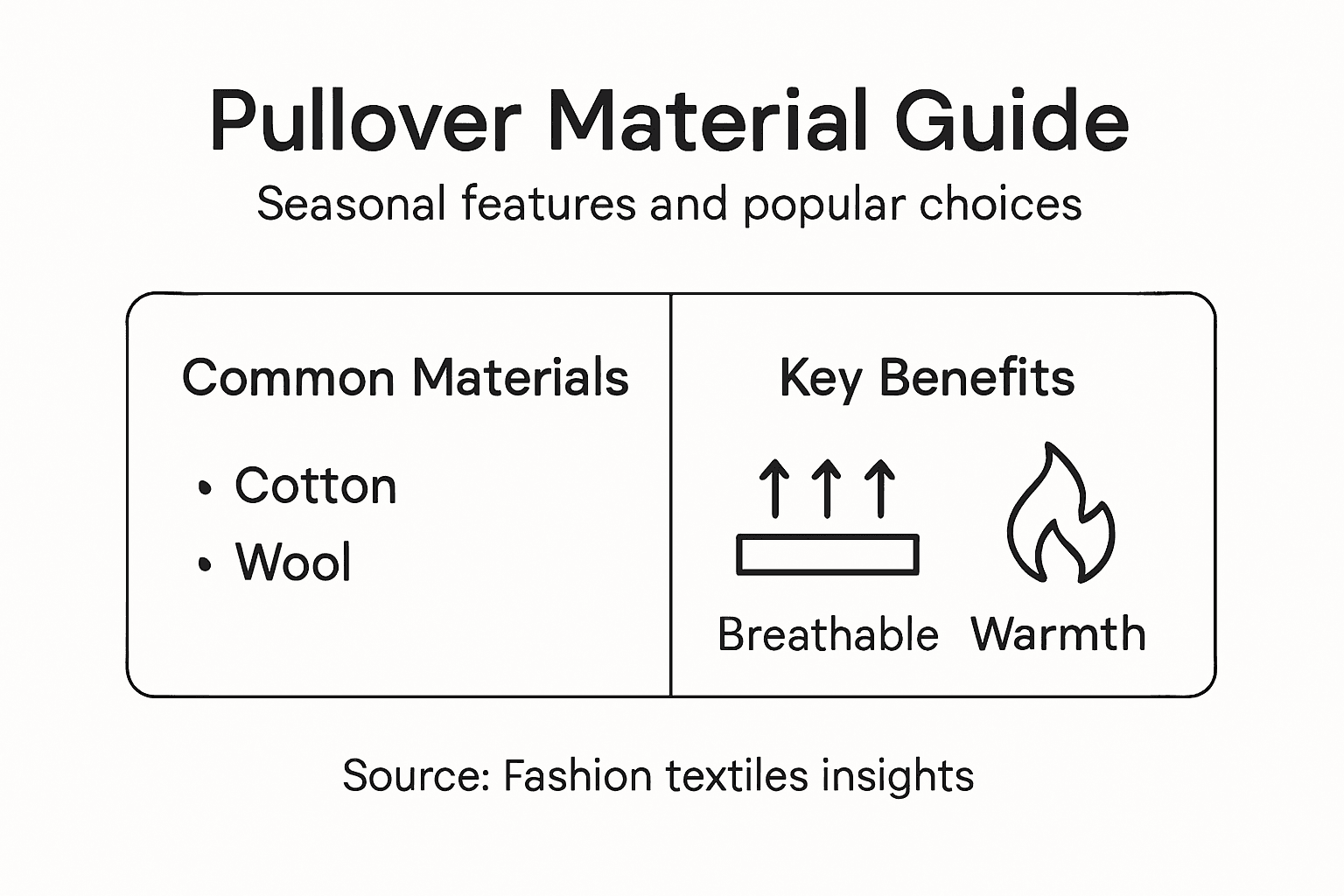
The technological advancements in textile manufacturing have expanded pullover functionality beyond traditional expectations. Modern materials now incorporate moisture-management technologies, temperature regulation capabilities, and sustainable production methods, transforming pullovers from simple clothing items into sophisticated performance garments.
This summary highlights how seasonal needs impact pullover material selection:
| Season | Preferred Materials | Main Benefit | Typical Features |
|---|---|---|---|
| Winter | Wool, cashmere | Maximum insulation | Dense, warm, thick |
| Spring/Fall | Cotton, blends | Balanced warmth | Lightweight, breathable |
| Summer | Lightweight cotton, hemp | Cooling, comfort | Loose, moisture-wicking |
| Outdoor | Synthetic blends | Moisture management | Durable, quick-drying |
Pro tip: Choose pullover materials based on your primary activity and local climate to maximize comfort and functionality.
Comparing Pullovers to Hoodies and Alternatives
Understanding the nuanced differences between pullovers and alternative garments helps fashion enthusiasts make informed style choices. Hoodie origins reveal fascinating insights into how these garments evolved from functional workwear to contemporary fashion statements.
Key comparative features include:
Pullover Characteristics:
- No attached hood
- Typically more structured design
- Smoother fabric profiles
- Suitable for layering
- Clean, minimalist aesthetic
Hoodie Characteristics:
- Integrated hood with drawstrings
- Front kangaroo pocket
- More casual and relaxed silhouette
- Often made from fleece or thicker materials
- Associated with streetwear culture
Dictionary definitions highlight critical distinctions between these garment types. Cardigans represent another alternative, featuring an open front design that differs fundamentally from pullovers’ closed construction. Each style offers unique advantages depending on personal preference, activity, and style context.
The functional and aesthetic variations between pullovers, hoodies, and other alternatives demonstrate the rich diversity of modern casual wear. Factors like fabric weight, design elements, and cultural associations play significant roles in determining a garment’s versatility and appeal.
Pro tip: Consider your primary activities and personal style when choosing between pullovers, hoodies, and alternative layering pieces.
Common Mistakes in Pullover Selection and Care
Making informed decisions about pullover selection and maintenance can significantly extend the lifespan of these versatile garments. Professional attire guides emphasize the critical importance of understanding material characteristics and proper care techniques.
Common selection mistakes include:
-
Sizing Errors
- Choosing pullovers that are too tight
- Selecting oversized styles that overwhelm body shape
- Ignoring personal body proportions
-
Material Mismatches
- Picking heavy wool for warm climates
- Selecting thin cotton for cold environments
- Overlooking fabric performance characteristics
Care and maintenance represent another critical area where many individuals make significant errors. Knitting experts recommend specific techniques to preserve pullover quality and appearance. Improper washing methods can lead to irreversible fabric damage, including shrinkage, stretching, and fiber degradation.
Understanding the nuanced requirements of different pullover materials is essential for maintaining their aesthetic and functional qualities. Delicate fabrics like merino wool and cashmere demand gentle handling, while synthetic blends offer more robust care options. Careful attention to washing instructions, drying techniques, and storage can dramatically extend a pullover’s usable life.
Pro tip: Always check the garment’s care label and invest in specialized fabric detergents for optimal pullover maintenance.
Elevate Your Style and Comfort with Premium Pullovers
The article highlights the challenge of finding pullovers that blend warmth, style, and versatility without compromising fit or material quality. If you want to avoid common mistakes like sizing errors or material mismatches and embrace pullovers that truly complement your lifestyle pullovers are the perfect solution. These garments provide that clean minimalist aesthetic and layering flexibility discussed while keeping you comfortable whether you are exploring urban scenes or enjoying the outdoors.
Discover a carefully curated selection of casual and winter pullovers at Smokedtimes that align with your goals for comfort and style. Choose from a variety of styles including crew necks and turtlenecks crafted using quality materials designed to keep you warm and looking sharp. Take advantage of special offers and easy shopping features at Smokedtimes to update your wardrobe with the perfect pullover today. Don’t wait until the cold sets in order to experience ultimate layering comfort—visit Smokedtimes now and find the pullover that fits your lifestyle perfectly.
Frequently Asked Questions
What defines a pullover in fashion?
A pullover is defined as a knitted garment that is worn over the head, typically featuring long sleeves and no front opening, making it distinct from cardigans and other sweater styles.
What types of pullovers are available, and how do they differ?
Common pullover styles include crew necks, v-necks, turtlenecks, mocknecks, and sleeveless versions (sweater vests). Each style varies in neckline and intended use, catering to different fashion preferences.
How should I style my pullover for different occasions?
Pullovers can be styled in various ways, including layering under jackets for casual outings, or pairing with blazers for semi-formal events. Accessorizing with scarves or jewelry can elevate the look further.
What should I consider when choosing a pullover material?
When selecting a pullover, consider the season and your intended activities. Wool provides warmth for winter, while cotton offers breathability for summer. Synthetic materials can enhance moisture management for outdoor use.
Recommended
- Why Comfort Matters in Fashion Choices Today – Smoked Times
- 7 Top Fashion Trends 2026 to Upgrade Your Casual Style – Smoked Times
- 7 Essential Examples of Casual Wear for Stylish Comfort – Smoked Times
- Winter Fashion Guide 2026: Master Casual Layering Trends – Smoked Times
- 7 Essentials for an Effective Streetwear Styling Checklist – MEXESS