


Role of Fashion in Youth Culture—Impact on Identity
Stepping outside in chillier months often means more than just staying warm. For fashion-driven teens and young adults, fashion is a powerful language of self-expression and identity construction. As global influences and social media shape what we wear, every winter jacket and hoodie becomes part of your personal story. This article brings fresh insight into how youth worldwide use style to communicate individuality, connect with like-minded peers, and navigate the bold trends shaping modern youth culture.
Table of Contents
- Defining Fashion In Modern Youth Culture
- Types Of Youth Fashion And What They Mean
- Fashion As Self-Expression And Identity
- Power Of Trends, Social Media, And Influencers
- Brand Loyalty And Consumer Behavior Among Youth
- Risks Of Conformity And Social Pressures
Key Takeaways
| Point | Details |
|---|---|
| Fashion as Self-Expression | Fashion serves as a vital medium for youth to express their identities and personal narratives beyond clothing. |
| Influence of Social Media | Social media transforms youth fashion, enabling rapid trend creation and allowing individuals to participate actively in fashion dialogues. |
| Brand Loyalty Significance | Young consumers choose brands that resonate with their values and identities, emphasizing emotional connections over mere product preferences. |
| Navigating Social Pressures | Youth must balance authentic self-expression with social expectations, promoting self-awareness and confidence in their individual style. |
Defining Fashion in Modern Youth Culture
Fashion serves as more than just clothing for today’s youth - it’s a powerful language of self-expression and identity construction. Modern young people utilize clothing and style as dynamic tools to communicate complex personal narratives, social positions, and cultural affiliations. Youth dress behaviors represent intricate strategies of negotiating personal and social identities within diverse cultural landscapes.
In contemporary society, fashion has transformed from a mere functional necessity to a sophisticated medium of personal storytelling. Young individuals carefully curate their appearances, selecting clothing that reflects their inner emotional states, cultural backgrounds, and aspirational identities. These sartorial choices become visual statements that transcend traditional aesthetic considerations, functioning as nuanced forms of non-verbal communication. Through strategic clothing selections, youth articulate complex personal experiences, challenge social norms, and establish meaningful connections with like-minded communities.
The digital era has exponentially expanded fashion’s role in youth identity formation. Social media platforms and global connectivity have democratized fashion trends, enabling young people to access and experiment with diverse style influences instantaneously. Global fashion trends now emerge and spread rapidly, creating dynamic, interconnected style ecosystems that allow unprecedented personal reinvention and cultural cross-pollination. This digital landscape empowers youth to craft multifaceted identities that can shift, adapt, and evolve with remarkable fluidity.
Pro tip: Embrace fashion as a personal experiment, not a restrictive rulebook - your style should reflect your unique journey, not conform to external expectations.
Types of Youth Fashion and What They Mean
Youth fashion represents a dynamic spectrum of style expressions that go far beyond simple clothing choices. Global youth fashion patterns reveal complex sociological narratives embedded within different style categories. These fashion types serve as powerful communication tools, allowing young people to signal their cultural affiliations, personal values, and social identities through strategic aesthetic selections.
Different youth fashion types can be broadly categorized into several distinctive styles. Streetwear represents urban youth culture, characterized by comfortable, oversized clothing and athletic influences. Minimalist fashion reflects a more understated aesthetic, emphasizing clean lines and neutral color palettes. Vintage-inspired styles demonstrate a nostalgic connection to past decades, while avant-garde fashion pushes traditional boundaries, challenging conventional design norms. Each of these styles functions as a nuanced language of self-expression, enabling young individuals to communicate complex personal narratives without uttering a single word.
The social significance of these fashion types extends beyond mere aesthetic preferences. Youth fashion trends demonstrate how clothing choices serve as critical markers of social recognition, cultural belonging, and individual identity. Subcultural fashion styles like punk, goth, or hip-hop represent more than just clothing - they embody philosophical perspectives, musical preferences, and social attitudes. Young people strategically use these fashion archetypes to connect with like-minded communities, challenge societal norms, and construct multifaceted personal identities that transcend traditional demographic boundaries.
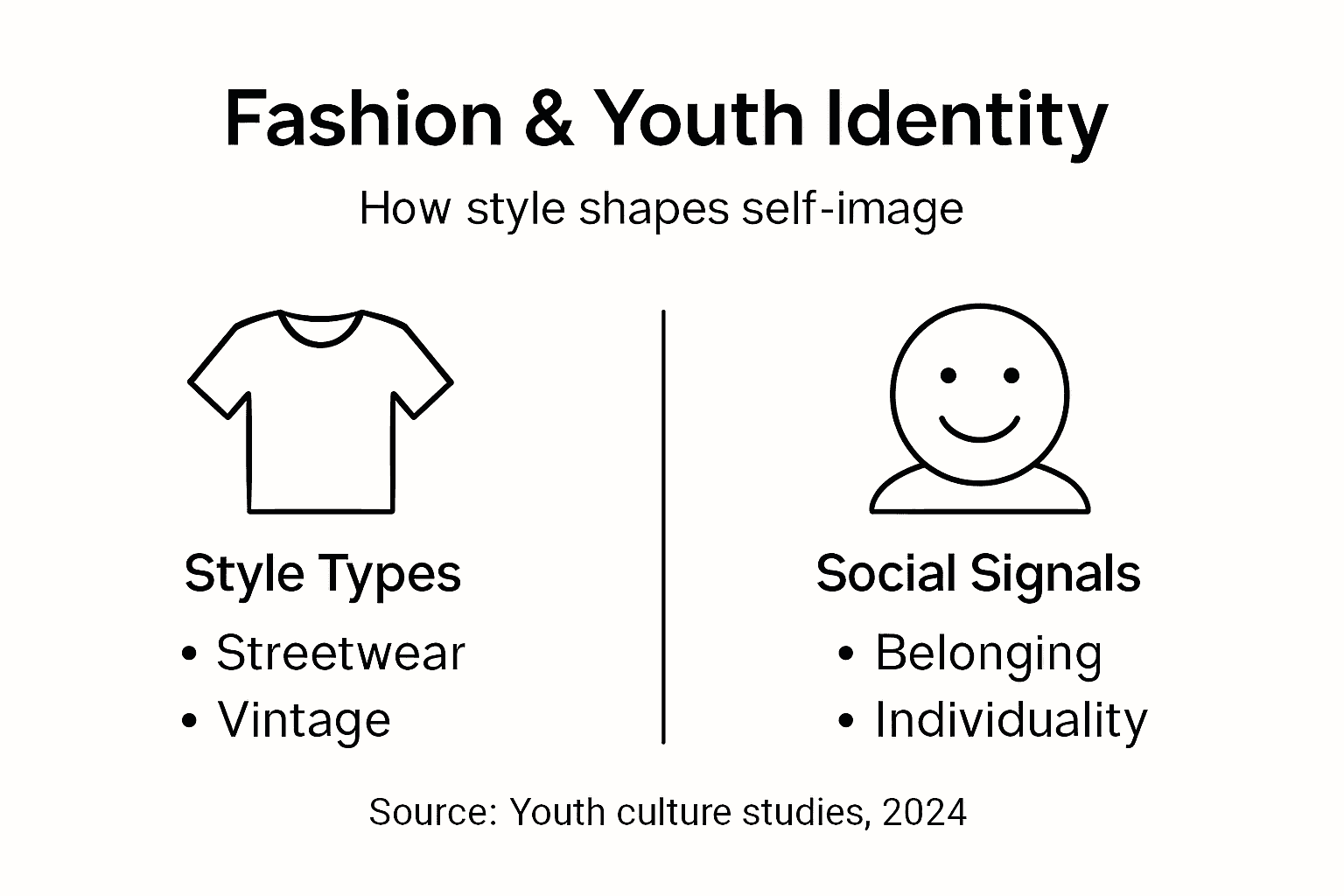
Here’s a comparative look at popular youth fashion styles and what they signal:
| Style Type | Typical Features | Social Signal |
|---|---|---|
| Streetwear | Oversized, sporty, casual | Urban identity, trend-savvy |
| Minimalist | Simple, neutral, clean | Sophistication, understatement |
| Vintage-Inspired | Retro patterns, old cuts | Nostalgia, individuality |
| Avant-Garde | Bold, experimental, unique | Rebellion, creativity |
| Subcultural (e.g., Punk, Goth, Hip-Hop) | Symbolic, genre-driven | Defiance, belonging |
Pro tip: Experiment with multiple fashion styles to discover the aesthetic that most authentically represents your inner self, remembering that true style is about personal confidence, not strict adherence to trends.
Fashion as Self-Expression and Identity
Fashion transcends mere clothing, emerging as a profound method of personal storytelling and identity construction. Individual fashion choices serve as sophisticated non-verbal communication, allowing individuals to express complex inner narratives without uttering a single word. Through strategic style selections, people craft visual representations of their personality, values, cultural background, and emotional landscape.
The psychological dynamics of fashion as self-expression are deeply nuanced. Clothing becomes a canvas where personal identity is painted, with each garment representing a carefully chosen brush stroke. Cultural influences, personal experiences, and emotional states intersect within fashion choices, creating a rich tapestry of self-representation. Cultural identity through attire reveals how individuals negotiate their sense of self, blending traditional roots with contemporary global influences. Young people particularly use fashion as a dynamic tool to explore, challenge, and redefine their evolving identities.
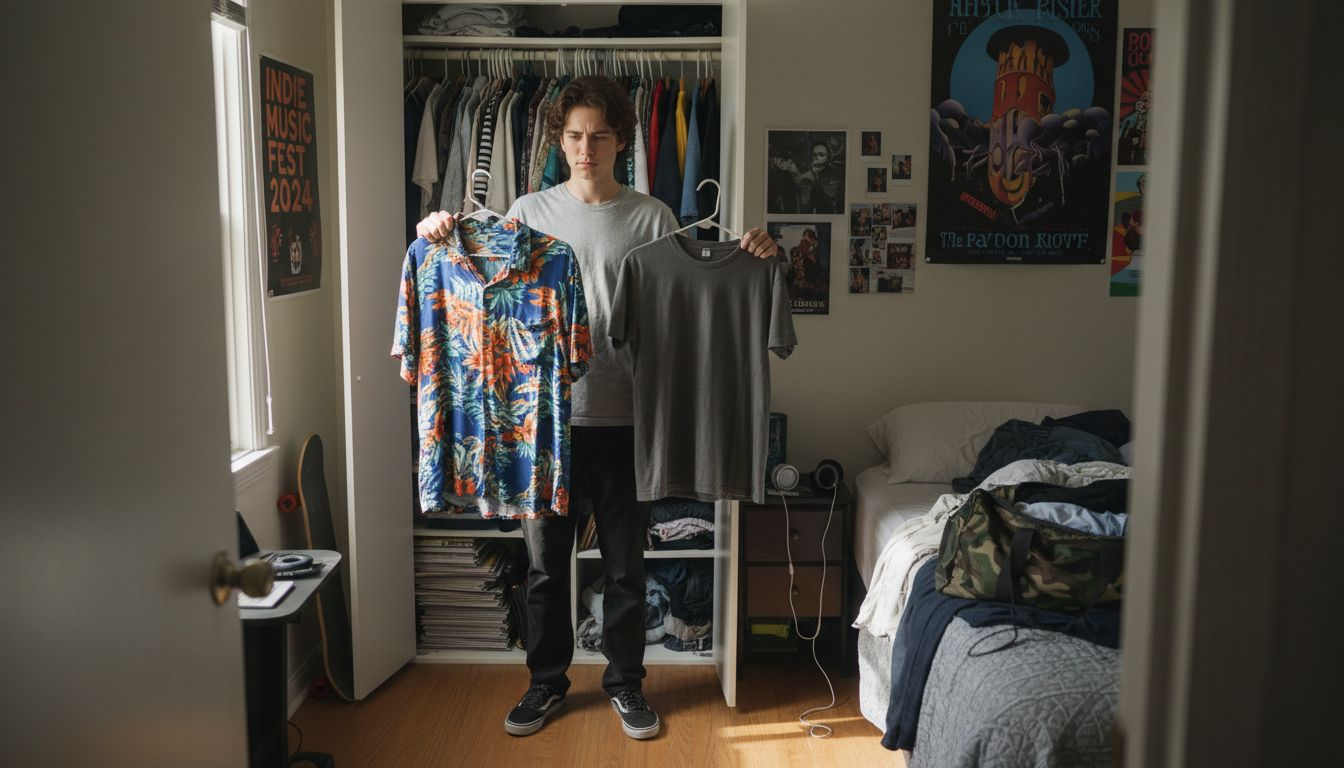
In our increasingly interconnected world, fashion serves as a powerful mechanism for personal agency and social dialogue. Global youth are not passive consumers but active creators of meaning through their style choices. They remix cultural symbols, challenge traditional aesthetic boundaries, and use clothing as a form of personal and collective expression. This transformative approach to fashion allows individuals to communicate complex identities that transcend simple demographic categorizations, creating visual narratives that are simultaneously personal and universal.
Pro tip: Treat your wardrobe as a personal art gallery, where each piece reflects a chapter of your unique story and represents an authentic expression of your inner self.
Power of Trends, Social Media, and Influencers
Social media has fundamentally transformed the landscape of youth fashion, creating unprecedented channels for trend creation and personal expression. Social media’s fashion impact reveals a complex ecosystem where digital platforms act as powerful trend accelerators, enabling instantaneous global style communication. Young people now navigate a dynamic fashion environment where trends emerge, spread, and evolve at lightning speed, challenging traditional fashion hierarchies and democratizing style creation.
Influencers have emerged as critical architects of contemporary youth fashion trends. Platforms like Instagram, TikTok, and YouTube have transformed ordinary individuals into style authorities who can instantaneously spark global fashion movements. Trend cycles now operate at unprecedented velocities, with viral content capable of transforming an obscure fashion choice into a worldwide phenomenon within hours. Youth fashion trends online demonstrate how digital platforms have dismantled traditional gatekeeping mechanisms, allowing young creators to directly shape global aesthetic narratives.
The relationship between social media, influencers, and youth fashion represents a complex symbiosis of personal identity and collective experience. Young people are no longer passive consumers but active participants in a global style dialogue. They remix cultural references, challenge aesthetic boundaries, and use digital platforms to negotiate their evolving identities. This dynamic interaction creates a fluid fashion ecosystem where trends are constantly negotiated, challenged, and reimagined through collective digital creativity.
This table summarizes how social media impacts youth fashion choices:
| Platform | Influence Mechanism | Impact on Youth Style |
|---|---|---|
| Visual discovery, trends | Fast trend adoption, global reach | |
| TikTok | Viral challenges, influencers | Rapid trend cycles, instant sharing |
| YouTube | Tutorials, style guides | In-depth learning, niche communities |
| Curated boards, inspiration | Personalized mood boards |
Pro tip: Curate your social media feed intentionally, following creators who inspire authentic self-expression rather than those promoting conformist trends.
Brand Loyalty and Consumer Behavior Among Youth
Brand loyalty in youth culture represents a complex psychological phenomenon far beyond simple product preference. Youth consumer behavior patterns reveal that young consumers select brands as powerful tools for identity construction and social signaling. Their purchasing decisions are deeply intertwined with personal narratives, social aspirations, and the desire to belong to specific cultural ecosystems.
The mechanisms driving brand loyalty among youth are multifaceted and intricate. Young consumers prioritize brands that authentically reflect their values, aesthetic sensibilities, and social identities. Global youth brand preferences demonstrate how brands become symbolic representations of personal philosophy, transcending mere material consumption. Social media amplifies this dynamic, enabling brands to create immersive narratives that resonate with young consumers’ evolving self-perceptions and cultural experiences.
Understanding youth consumer behavior requires recognizing the profound emotional and social dimensions of brand interactions. Young people do not simply purchase products - they invest in experiences, community memberships, and personal narratives. Brands that successfully navigate this landscape understand the importance of authenticity, social responsibility, and genuine connection. They create ecosystems that allow young consumers to experiment with identity, challenge societal norms, and express their unique cultural perspectives through strategic consumption choices.
Pro tip: Choose brands that align with your personal values and contribute positively to social conversations, not just those that offer trendy aesthetics.
Risks of Conformity and Social Pressures
Social pressures in youth fashion represent a complex psychological landscape where individual identity constantly negotiates between authentic self-expression and collective belonging. Youth fashion conformity risks reveal profound psychological challenges young people face when attempting to balance personal style with peer expectations. The fear of social exclusion can drive young individuals to compromise their unique identity, adopting fashion choices that may not genuinely reflect their inner selves.
The mechanisms of social pressure operate through intricate psychological and social dynamics. Young people often experience intense anxiety about being perceived as different or outside mainstream trends. Contemporary youth identity challenges demonstrate how social media and digital platforms amplify these pressures, creating hyper-visible environments where personal style becomes a constant performance. This environment can lead to significant psychological stress, particularly among adolescents who are still developing their sense of self.
Navigating these social pressures requires developing robust self-awareness and emotional resilience. Young individuals must learn to distinguish between authentic personal style and externally imposed expectations. This involves cultivating critical thinking skills, understanding that true confidence emerges from embracing individual uniqueness rather than conforming to transient trends. By recognizing that fashion should be a form of self-expression, not a mechanism for social validation, youth can liberate themselves from restrictive social expectations and develop more genuine, autonomous identities.
Pro tip: Prioritize your personal comfort and authenticity over fleeting trends, understanding that genuine style reflects inner confidence, not external approval.
Express Your Unique Identity Through Fashion Today
The article highlights how youth navigate the complex challenge of balancing personal style with social pressures while using fashion as a powerful tool for self-expression and identity construction. If you are looking for apparel that truly reflects your authentic self and helps you break free from conformity, you need clothing that speaks your story with comfort and confidence. Smokedtimes.com offers a carefully curated collection of casual and winter apparel such as hoodies, pullovers, t-shirts, and polo shirts designed to empower your individuality every day.
Discover styles that embrace your unique journey and build your personal fashion narrative at smokedtimes.com. Take advantage of special bundle offers and buy-one-get-one-free promotions to expand your wardrobe without compromise. Start shaping your identity with apparel that matches your values and ambitions now by visiting this page Express Your Style at Smokedtimes. Your authentic style awaits.
Frequently Asked Questions
What is the role of fashion in youth identity formation?
Fashion plays a crucial role in youth identity formation by serving as a powerful medium for self-expression and personal storytelling. Young people use clothing to communicate their individual narratives, values, and cultural affiliations, allowing them to negotiate their identities in a complex social landscape.
How do social media platforms influence youth fashion trends?
Social media platforms greatly influence youth fashion trends by acting as accelerators for trend creation and dissemination. They empower young individuals to share their styles and ideas, transforming ordinary users into trendsetters and enabling rapid global communication of fashion influences.
What are the psychological implications of fashion conformity among youth?
Fashion conformity can lead to significant psychological challenges for young individuals, such as anxiety related to social acceptance and fear of exclusion. It often results in compromises to personal style as youth navigate between authentic self-expression and peer pressures.
How can youth balance personal style and social expectations in fashion?
Youth can balance personal style and social expectations by cultivating self-awareness and emotional resilience. It’s important for them to prioritize their comfort and authenticity over transient trends, understanding that true confidence stems from embracing their unique identities.