


How to Choose Hoodies: Fit, Fabric, and Style Guide
TL;DR:
- Choosing the right hoodie involves selecting a style, fit, and fabric that suit your needs and body type. Proper measurements, fabric weight, and care routines ensure longevity and comfort, with neutral colors offering versatile styling options. Prioritize quality, fit, and durability over price or brand reputation for a hoodie that truly performs in daily wear.
Most people buy a hoodie based on a photo and a price tag, then spend the next year fighting with a hood that barely covers their head or a fabric that pilled after three washes. Knowing how to choose hoodies properly means thinking beyond color and logo. It means understanding fit categories, fabric weights, and how a pullover behaves differently on your body than a full-zip. This guide gives you the practical framework to pick a hoodie that looks good, feels right, and holds up through daily wear and travel without disappointment.
Table of Contents
- Key takeaways
- How to choose hoodies: start with style
- Getting the right hoodie fit
- Fabric and material: what actually matters
- Styling and seasonal versatility
- Common mistakes and hoodie care
- My honest take on picking the right hoodie
- Find your next hoodie at Smokedtimes
- FAQ
Key takeaways
| Point | Details |
|---|---|
| Style affects function | Pullover, zip-up, and quarter-zip hoodies each serve different needs beyond aesthetics. |
| Fit type changes the silhouette | Slim, regular, and oversized fits affect how a hoodie layers and looks on your body. |
| Fabric blend determines durability | Cotton-polyester blends shrink less and hold shape better than 100% cotton for everyday wear. |
| Hood sizing is often overlooked | Measuring hood height and depth separately prevents an uncomfortable hood even when the body fits perfectly. |
| Care habits extend hoodie life | Cold washing and air drying protect fit and fabric quality significantly longer than machine drying on high heat. |
How to choose hoodies: start with style
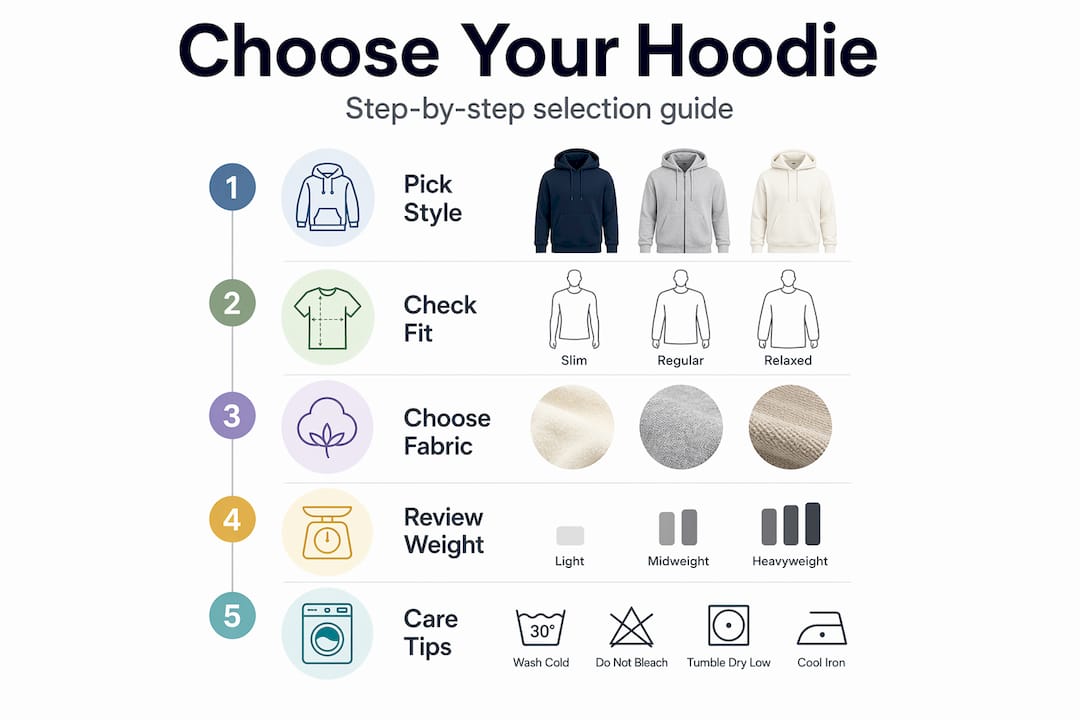
Before you think about size charts or fabric weight, you need to pick the right style. The three main types you will encounter are the pullover, the full-zip, and the quarter-zip. Each one handles differently, and choosing the wrong type for your lifestyle is one of the most common buying mistakes.
The pullover is the most versatile of the three. It has a kangaroo pocket at the front and no zipper to interrupt the front panel, which makes it the best option if you care about a clean look or want a design to read clearly. Pullover and zip-up styles each have distinct use cases: pullovers work well for casual everyday wear and relaxed styling, while zip-ups excel when layering is the priority.
The full-zip gives you temperature control. You can open it partially over a t-shirt without committing to removing it, which makes it practical for commutes, outdoor activities, or office-casual situations. The trade-off is that the zipper splits any front graphic, so if you care about a cohesive front design, a pullover wins. The full-zip also works better as an outer layer over thinner shirts.
The quarter-zip sits in between. It has a short zipper at the collar that adds ventilation without going full-open. This style reads as slightly more polished than the other two, which makes it a stronger choice for casual-smart occasions.
Here is a quick comparison to help you decide:
| Style | Best use | Layering ease | Design area |
|---|---|---|---|
| Pullover | Everyday casual, streetwear | Moderate | Full front panel |
| Full-zip | Outdoor, commuting, layering | High | Split by zipper |
| Quarter-zip | Smart casual, active wear | Low | Mostly chest area |
Pocket style also matters. A single kangaroo pocket on a pullover reads more casual and street-ready, while dual side pockets on a zip-up tend to feel more structured. Neither is better. They serve different aesthetics.
Getting the right hoodie fit
This is where most people go wrong. Fit is not just about whether a hoodie buttons up or slides over your shoulders. It shapes how the garment hangs, how it layers, and how comfortable you feel wearing it for hours at a stretch.
There are three main fit categories to know:
- Slim fit hugs closer to the chest and arms. It looks clean and put-together on leaner frames and works well under jackets. The downside is that it restricts layering underneath and can feel tight if you wear base layers in winter.
- Regular fit gives you the middle ground. There is room to move and to layer a light shirt underneath without the hoodie pulling across the chest. This is the most adaptable fit for everyday wear.
- Oversized fit is a deliberate style choice, not just a sizing mistake. Oversized silhouettes require increased chest and body length with proper grading to maintain the intended drape. Simply ordering two sizes up rarely gives you the same result as a hoodie built for that silhouette.
Sizing up is the right call when you are between sizes. Most people regret going smaller, not larger, because a hoodie that pulls across the chest or rides up in the back never fully relaxes.
Here is a simple step-by-step approach to measuring for the right size:
- Chest measurement: Wrap a tape measure around the fullest part of your chest, under your arms. Add two to four inches for a regular fit, or four to six inches for an oversized look.
- Body length: Measure from the top of your shoulder to where you want the hem to fall. Most hoodies sit at the hip, but oversized cuts drop lower.
- Sleeve length: Measure from the center back of your neck, across the shoulder, and down to your wrist with a slight bend in the arm.
- Hood height and depth: This one gets skipped constantly. Hood dimensions are often under-specified, which results in hoods that feel small and uncomfortable even when the body of the hoodie fits well.
Pro Tip: When shopping online, always check the brand’s size chart against your measurements rather than defaulting to your usual size. Sizing varies noticeably between brands, and a medium at one label may fit like a small at another.
Fabric and material: what actually matters
Fabric is the single biggest factor in how a hoodie ages. Two hoodies can look identical on a rack and feel completely different after six months of regular wear.
100% cotton hoodies feel soft, breathe well, and have a natural drape. The problem is shrinkage. Cotton hoodies can shrink 3% to 7% over time, and most of that damage happens in a single hot dryer cycle. If you love the feel of cotton but want to protect the fit, cold washing and air drying are non-negotiable habits.

Cotton-polyester blends are the most practical choice for everyday hoodies. Blended fabrics shrink less and hold their shape through repeated washing better than pure cotton. A common blend is 80% cotton and 20% polyester, which keeps the soft hand-feel while adding structure and durability.
100% polyester or performance fabrics are better suited for athletic use. They wick moisture and dry fast, but they can feel less comfortable against skin for long casual wear and tend to look less natural.
Here is a fabric comparison to guide your decision:
| Fabric | Feel | Durability | Shrink risk | Best for |
|---|---|---|---|---|
| 100% cotton | Soft, natural | Moderate | High (3%–7%) | Comfort-first casual wear |
| Cotton-polyester blend | Soft with structure | High | Low | Everyday, repeated washing |
| 100% polyester | Smooth, technical | High | Very low | Athletic, outdoor use |
| Brushed-back knit | Plush, warm | Moderate | Moderate | Cold weather, oversized styles |
Fabric weight also shapes how a hoodie performs. Lightweight fabrics in the 200 to 280 gsm range work well for layering in mild weather. Heavyweight fabrics at 400 gsm and above provide real warmth as a standalone piece in cold conditions. Heavyweight cotton or brushed-back knit is also critical for oversized hoodies specifically, because thin fabric collapses and loses the intentional volume that makes the silhouette work.
Pro Tip: Before buying, check the fabric weight listed in the product details. A hoodie labeled “heavyweight” without a gsm number is a red flag. Quality brands list it because it is a selling point.
Styling and seasonal versatility
Once you have the right style, fit, and fabric, the styling part becomes much easier. The choices you made in the previous steps directly limit or expand what you can do with the hoodie day to day.
A few principles that make a real difference:
- Neutral colors travel further. Gray, navy, black, and off-white pair with almost anything in your wardrobe and do not date as quickly as trend-specific colors. If you want one hoodie that works year-round, start with a neutral.
- Heavyweight hoodies for winter. The best hoodies for winter are 380 gsm or heavier. Pair a slim-fit version under a structured coat, or wear an oversized heavyweight on its own for a relaxed cold-weather look.
- Lightweight hoodies for transitional weather. A thinner cotton blend in spring or fall layers cleanly over a long-sleeve shirt without adding bulk.
- Fit shapes the outfit. A slim hoodie tucked into straight-leg pants reads more intentional. An oversized hoodie over wide-leg trousers leans into streetwear. Regular fit is the most flexible and works across both casual and weekend-smart contexts.
For more ideas on building outfits around your hoodie, the hoodie styling tips guide at Smokedtimes walks through specific combinations by fit and season.
Common mistakes and hoodie care
Buying the right hoodie is only half the job. How you care for it determines how long it stays looking and feeling like the one you bought.
The most common mistakes buyers make:
- Ignoring the size chart and ordering based on brand intuition
- Choosing 100% cotton without accounting for shrinkage from heat drying
- Picking an oversized style in thin fabric, which results in a shapeless, unflattering drape
- Washing on hot or tumble drying on high, which causes both shrinkage and pilling
- Storing hoodies while still slightly damp, which causes odor and fabric breakdown over time
Pro Tip: Wash your hoodie inside out on a cold cycle. This protects the outer surface from friction and keeps the color and texture looking fresh much longer.
For ongoing care: reshape the hoodie after washing and lay it flat or hang it to dry. If you must use a dryer, use the lowest heat setting and remove the hoodie slightly before it is fully dry to finish air drying. If shrinkage does happen, there are ways to reverse it with gentle stretching while the fabric is damp.
My honest take on picking the right hoodie
I have bought a lot of hoodies over the years, and the lesson that took me longest to learn is this: brand reputation and price tell you almost nothing about whether a hoodie will actually work for you. I have worn expensive hoodies that pilled within a few months and affordable ones that are still in regular rotation years later.
What actually separates a great hoodie from a forgettable one comes down to two things: the fabric weight relative to how you plan to wear it, and whether the hood fits your head properly. I cannot tell you how many times I have seen people buy a hoodie that fits the chest perfectly but the hood sits like a collar. Measuring hood height before you order is not obsessive. It is just smart.
I have also found that durability across varied conditions matters far more than first impressions in a store. A hoodie that feels good on the rack but stretches out after two weeks of travel is a bad investment, regardless of the label. Test it in your head before you buy: will this still look and feel right after a month of real use?
The other thing I would push back on is the idea that oversized automatically means comfortable. Volume with control is what makes an oversized hoodie look intentional. That comes from the right fabric weight and construction, not from just going three sizes up.
Buy fewer hoodies. Buy better ones. That is the whole framework.
— Denis
Find your next hoodie at Smokedtimes
If this guide gave you a clearer picture of what to look for, Smokedtimes has the hoodies to back it up. The collection is built around heavyweight fabrics, minimal branding, and fits designed for real everyday wear. Whether you want a clean oversized option with proper drape and weight, or you need guidance before you buy, the Smokedtimes blog covers everything from how to find the right hoodie for versatile wear to care routines that keep your pieces looking sharp. No trend chasing. Just well-made basics that show up every time.
FAQ
What is the best hoodie style for everyday wear?
The pullover hoodie is the most versatile option for daily casual wear. It offers a clean front panel, a comfortable fit for most body types, and works across a wide range of outfits without the bulk of a zipper.
How do I choose the right hoodie size?
Measure your chest, body length, and sleeve length, then compare against the brand’s size chart. When between sizes, sizing up improves fit satisfaction for most people, since hoodies that are too snug never fully settle into comfort.
What materials are best for hoodies?
Cotton-polyester blends offer the best balance of comfort, shape retention, and durability for everyday use. Blended fabrics shrink less than 100% cotton and hold up better through repeated washing.
How do I stop my hoodie from shrinking?
Wash your hoodie in cold water and air dry it instead of using a dryer. Cotton hoodies shrink 3% to 7% primarily from heat exposure, so avoiding high temperatures is the single most effective prevention method.
Do hoodies for different body types fit differently?
Yes. Slim-fit hoodies suit leaner frames and work well under jackets, while regular and oversized fits offer more room for broader builds and layering. For oversized styles specifically, proper grading and fabric weight determine whether the silhouette flatters or just looks large.