


How to Pick Winter Accessories for Style and Comfort
TL;DR:
- Winter accessories should keep you warm and complement your style, but most men often prioritize one over the other. To build an effective wardrobe, assess your climate and routine, identify necessary pieces, and choose quality, natural fiber items that pair easily with existing outfits. Proper coordination and avoiding common mistakes ensure comfort and timeless style, emphasizing practicality over fleeting trends.
Winter accessories should do two things at once: keep you warm and make you look like you actually thought about what you put on. Most guys get one right and blow the other. They grab a scratchy beanie that ruins every outfit, or they buy something that looks great but does nothing against a cold wind. This guide walks you through exactly how to assess your needs, choose the right pieces, pair them with what you already own, and sidestep the most common mistakes men make every season.
Table of Contents
- Assessing your winter accessory needs
- Choosing the core winter accessories
- Pairing accessories with your winter wardrobe
- Avoiding common winter accessory mistakes
- Why practical comfort beats flashy trends for men’s winter accessories
- Upgrade your winter style with Smoked Times essentials
- Frequently asked questions
Key Takeaways
| Point | Details |
|---|---|
| Identify your needs | Knowing your climate and daily habits helps select the best winter accessories for style and comfort. |
| Choose practical basics | Focus on accessories made from warm, functional materials for versatile everyday wear. |
| Pair with your wardrobe | Match colors and fabrics for a coordinated look that complements casual outfits. |
| Avoid common mistakes | Steer clear of poor sizing and material choices for reliable warmth and no discomfort. |
| Prioritize comfort | Selecting comfortable accessories ensures you’ll actually enjoy wearing them all winter. |
Assessing your winter accessory needs
Before spending a single dollar, figure out what your wardrobe actually needs. Most men skip this step and end up with a drawer full of accessories that almost work. Almost doesn’t cut it when you’re cold on a Tuesday morning.
Start by thinking honestly about your climate and daily routine. Are you commuting by foot through freezing temperatures, or mostly moving from a heated car to a heated building? Do you work outdoors, hike on weekends, or spend most of winter in casual social settings? Your answers should drive every purchase decision. A man who commutes through Chicago wind needs a different set of accessories than someone in coastal Georgia.
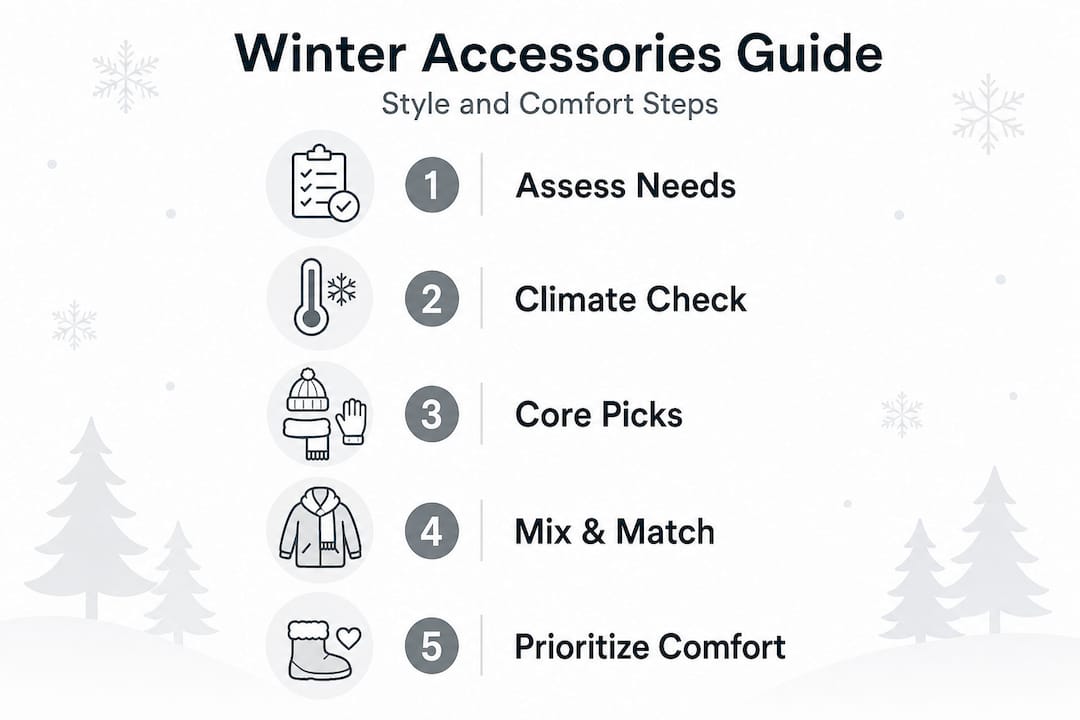
Here’s a quick framework to map your needs:
| Activity type | Climate zone | Priority accessories |
|---|---|---|
| Urban commuter | Cold, below 30°F | Insulated beanie, wind-resistant gloves, thermal socks |
| Casual/social | Mild, 30-50°F | Lightweight scarf, knit beanie, mid-weight gloves |
| Outdoor/active | Variable | Moisture-wicking layers, fleece gloves, wool socks |
| Work/office | Heated indoors | Packable scarf, thin gloves, versatile hat |
Once you’ve placed yourself in the table, look at what you already own and spot the gaps. Most guys have one or two items that work but are missing the pieces that would actually round out their wardrobe. A smart winter checklist helps you move from random shopping to intentional buying. Retail data consistently shows that must-have winter accessories cluster around seven key categories: hats, scarves, gloves, thermal socks, neck gaiters, base layers, and versatile outerwear add-ons.
The gaps you should watch for include:
- Warmth without style: Heavy but ugly pieces that get left at home
- Style without function: Thin, decorative accessories that don’t protect from cold
- Mismatched materials: Wool scarf with a polyester jacket that pills and looks off
- Single-use items: Accessories that only work for one outfit or setting
Think of your winter accessories as a system, not a collection of random items. When every piece works with at least two or three outfits you already own, you’ve built something useful. Check your essentials for stylish comfort to see whether your current wardrobe supports or fights the accessories you’re considering.
Choosing the core winter accessories
Now that you know what you need, here’s how to make smart choices across the main accessory categories. Each type has specific material and design considerations that affect both warmth and style.
| Accessory | Best materials | Style benefit | Warmth level |
|---|---|---|---|
| Beanie | Wool, acrylic blend | Casual, clean look | High |
| Scarf | Merino wool, cashmere | Elevated layering | Medium to high |
| Gloves | Leather, fleece, knit | Refined or rugged | Medium to high |
| Socks | Wool, wool blend | Hidden but essential | High |
| Neck gaiter | Fleece, thermal knit | Sporty versatility | Medium |
Here’s a step-by-step process for selecting each one:
- Start with the beanie. A fitted, ribbed wool or wool-blend beanie is the single most versatile winter hat for men. Avoid oversized or slouchy styles if you’re going for a clean, everyday look. A dark neutral like charcoal, navy, or black will pair with almost anything.
- Choose a scarf that doubles as a statement piece. A mid-weight merino wool scarf in a subtle pattern or muted tone adds visual interest without overwhelming an outfit. Keep it simple. A plaid or houndstooth in neutral tones works better than bold colors you’ll tire of in two weeks.
- Pick gloves based on how often you use your hands outside. If you’re just running from car to door, a knit or leather glove works great. If you’re out for extended periods, go for a lined glove with a water-resistant shell. Outdoor essentials guides emphasize that the right glove balances dexterity with insulation, which matters more than most men realize.
- Don’t ignore socks. This is the most overlooked cold-weather accessory. A good wool or wool-blend sock keeps your feet warm, manages moisture, and prevents the misery of cold feet that ruins the rest of your day. Buy at least four pairs so you’re never rationing them.
- Consider a neck gaiter. It sounds tactical, but a slim fleece neck gaiter worn loose around the collar is one of the most functional pieces you can own. It bridges the gap between your jacket collar and your chin on genuinely cold days.
When choosing materials, stylish and practical accessories consistently come down to natural fibers for warmth and synthetic blends for durability. Wool wins on warmth-to-weight ratio and stays warm even when slightly damp. Fleece dries faster and costs less. Leather gloves last years if you care for them.
Pro Tip: Buy one premium beanie and one premium scarf instead of five cheap versions of each. Quality natural wool holds its shape, stays soft after washing, and looks better six months in. The math on cost-per-wear almost always favors the better item.
For 2026, winter wear style and warmth recommendations lean toward minimal branding, clean silhouettes, and earth tones. The trend cycle keeps moving, but the men who build their accessory wardrobe around neutral, well-made basics never look dated.

Pairing accessories with your winter wardrobe
Selecting good accessories is step one. Wearing them together without looking like you got dressed in the dark is step two. Coordination sounds complicated but it follows a few consistent rules that are easy to apply.
Match weight to weight. A heavy wool overcoat pairs naturally with a chunky knit scarf and structured leather gloves. A lighter quilted jacket looks better with a thinner knit beanie and a simple wool scarf rather than something bulky. When textures clash without intention, outfits look accidental rather than assembled.
Use a three-color rule for accessories. Your outerwear typically anchors the outfit with one or two colors. Your accessories should pull from those same tones or neutrals. If your jacket is olive, a camel scarf and a charcoal beanie work cleanly. If your jacket is navy, a cream or gray scarf with dark knit gloves ties the whole look together. You can reference the pairing workflow for coordinating winter accessories with outerwear and casual basics, which provides a practical method for building outfits rather than guessing.
Here are the key pairing principles to follow:
- Match material families: Wool with wool, knits with knits, leather with structured outerwear
- Stick to three colors max: Anchor, neutral, and one accent at most
- Balance proportion: Bulky coat needs slimmer accessories; slim jacket can handle more texture
- Avoid logo stacking: One branded piece per outfit max, ideally none
- Let the coat lead: The outerwear sets the tone; accessories should support it, not compete
Pro Tip: Lay your outfit flat before you put it on. Seeing the full combination without wearing it lets you spot obvious clashes in color or texture before you leave the house. It takes 30 seconds and saves you from a day of feeling like something’s off.
The most common coordination mistake men make is wearing accessories from different style families. A rugged waxed-canvas jacket with a luxury cashmere scarf creates a subtle disconnect that’s hard to name but easy to feel. Keep your pieces speaking the same visual language and you’ll always look intentional.
Avoiding common winter accessory mistakes
Good accessories ruin quickly when you make avoidable errors. Here are the most common ones and exactly how to fix them.
- Wrong sizing on hats and gloves. A beanie that sits too high on your head or gloves that bunch at the fingers look sloppy and feel uncomfortable. Try before you buy when possible. If shopping online, check sizing charts and read reviews about fit.
- Choosing synthetic when natural fiber is available. Acrylic beanies pill, itch, and look cheap within a season. For anything touching your skin regularly, natural or blended fibers are almost always worth the extra cost. The connection between comfortable clothing for winter and the right fabric choice is direct. Comfort is not a luxury feature. It determines whether you actually wear the piece or leave it on a hook.
- Over-accessorizing. More is not warmer. A scarf, beanie, gloves, and a gaiter worn simultaneously often looks cluttered and creates overheating once you’re indoors. Build your layering system to be modular so you can remove pieces as needed.
- Buying trendy, not timeless. Statement beanies with ironic patches, scarves in bold geometric prints, novelty gloves. These feel fun in October and embarrassing by February.
- Ignoring care instructions. Wool shrinks in hot water. Leather cracks without conditioning. Fleece pills when washed with abrasive fabrics. Read the label and follow it. One bad wash can ruin a $60 scarf you planned to wear for five years.
Comfort is not a reward you earn by looking good first. It’s the foundation that makes everything else work. When an accessory scratches, pinches, or overheats, you stop wearing it. Prioritize how it feels, not just how it photographs.
Quick fixes for common errors: If a beanie is too loose, a single wash in slightly warm water often brings it back to shape. If gloves are slightly large, a knit style will conform to your hand over time. If you’ve over-bought in one category, donate the duplicates and reinvest in the category you’re missing.
Why practical comfort beats flashy trends for men’s winter accessories
Here’s an uncomfortable truth: most of what the fashion industry tells men about winter accessories is designed to sell newness, not serve them. Every season, there’s a “must-have” accessory that looks great in editorial photos and feels wrong by the second week of actual use.
We’ve watched this cycle repeat. Brands push bold colors one year, technical fabrics the next, maximalist layering the year after. Men buy in, feel trendy briefly, and then go back to the same worn-out knit hat they’ve owned for seven years because it actually fits, actually keeps them warm, and actually works with everything. That hat isn’t a failure. It’s the benchmark.
The men who dress best in winter are the ones who stopped chasing what’s new and started asking what lasts. They own fewer pieces, but every piece earns its place. A charcoal wool beanie. A camel scarf. Dark leather gloves. These are not exciting purchases, but they’re the ones you reach for every single morning without thinking. That automatic ease is exactly what a well-built wardrobe feels like.
What most brands don’t tell you is that casual style and warmth don’t require seasonal reinvention. They require getting the basics right once and then maintaining them. The men who look effortlessly good in winter aren’t buying more. They bought better, one time, and it stuck.
Invest in materials that age well, silhouettes that stay clean, and colors that work across your whole wardrobe. That’s not settling. That’s actually knowing what you’re doing.
Upgrade your winter style with Smoked Times essentials
You’ve now got a clear picture of what to buy, how to choose it, and how to wear it. The next step is finding pieces that actually live up to those standards.
At Smoked Times, we build essentials for men who want to look good without overthinking it. Our winter essentials collection brings together the kind of clean, well-made basics that do their job every day without demanding your attention. From the foundation of a reliable retro cotton t-shirt that layers perfectly under your cold-weather pieces to the accessories that pull everything together, every item is designed for comfort, durability, and versatile styling. If you’ve already shopped with us and want to share your experience, we’d love it if you’d review your purchase and help others make confident choices.
Frequently asked questions
What materials are best for winter accessories?
Wool, fleece, and technical fabrics are best for warmth and comfort in winter accessories, with natural fiber accessories offering the best warmth-to-weight ratio for everyday wear. Wool blends are especially durable and hold their shape season after season.
How many accessories should I have for winter?
Aim for at least two hats, two scarves, two pairs of gloves, and several warm socks for a versatile winter wardrobe. A smart winter checklist helps you avoid over-buying in one category while leaving others empty.
How do I match winter accessories to my casual outfits?
Use simple color schemes and coordinate materials like wool with sweaters or cotton with jackets for a cohesive look. Following a clear fashion accessory pairing workflow makes this process faster and more consistent without requiring a background in styling.
How can I avoid discomfort from winter accessories?
Choose accessories with proper sizing and breathable materials to prevent overheating and skin irritation. Prioritizing comfortable clothing for winter means selecting pieces that feel good against your skin first and look good second, since discomfort always wins and kills the habit of wearing them.