


How to select comfortable fabrics for everyday wear
TL;DR:
- Choosing the right fabric involves assessing softness, breathability, weight, stretch, and drape.
- Medium-weight fabrics between 150 and 250 GSM offer the best balance for casual, everyday wear.
- Natural fibers like cotton, linen, and wool improve with wear, providing lasting comfort and durability.
You find a shirt that looks exactly right. Clean lines, no logo, the kind of relaxed fit that works anywhere. But after a few washes, it pills, stiffens, or starts to feel like sandpaper. That frustration is more common than you’d think, and it almost always comes down to one thing: fabric choice. Picking the right material is not about chasing trends or memorizing technical jargon. It’s about knowing what to feel for, what to read on a label, and which fibers actually hold up over time. This guide walks you through every step, from understanding comfort to hands-on testing, so you can build a wardrobe that gets better with age.
Table of Contents
- Know what makes a fabric comfortable
- Check fabric weight and ideal types for casual wear
- Prioritize durability and fiber content for timeless comfort
- Hands-on tests: Texture, stretch, and shrinkage
- The truth most guides miss about fabric comfort
- Shop essentials made with comfort in mind
- Frequently asked questions
Key Takeaways
| Point | Details |
|---|---|
| Comfort factors matter most | Softness, breathability, and drape are essential when choosing everyday fabrics. |
| Medium weight is ideal | Fabrics weighing 150-250 GSM offer the best balance for casual wear. |
| Prioritize natural fibers | Cotton, linen, wool, and hemp provide lasting comfort and durability over synthetics. |
| Always test by hand | Touch for stretch, feel, and softness, and pre-wash before deciding. |
Know what makes a fabric comfortable
With a basic understanding of your style goals, let’s clarify what actually makes a fabric feel comfortable for casual, all-day wear.
Comfort is not a single quality. It’s a combination of how a fabric feels against your skin, how freely it lets you move, how well it breathes, and how it holds up after repeated washing. When you pick up a piece of fabric, you’re instinctively running a quick comfort check, even if you don’t realize it. The importance of comfort in clothing goes far beyond softness alone. It shapes how long you’ll actually wear something.
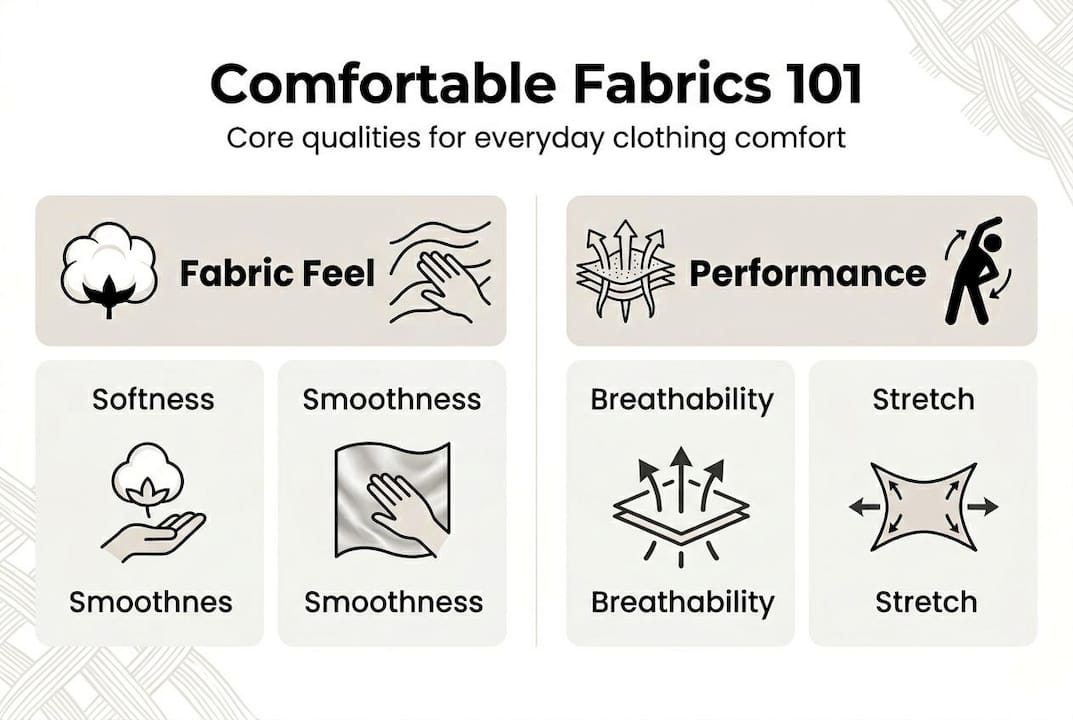
Subjective testing is where most people start. Rub the fabric between your fingers. Does it feel smooth or scratchy? Hold it up and let it drape. Does it fall naturally or does it hold a stiff shape? Gently stretch it and release. Does it snap back or stay distorted? These simple checks reveal a lot before you ever try something on.
For a more precise approach, textile researchers use the Kawabata Evaluation System, which measures tensile strength, bending, and surface roughness to model how humans perceive fabric comfort. You won’t have a KES machine at home, but knowing the system exists helps you understand why some fabrics that look identical can feel completely different.
Pre-washing is a step many people skip, and it matters. A fabric’s true hand feel often changes after the first wash. Stiffeners and finishing treatments wash out, and you get a more honest sense of what you’re actually wearing long-term.
Pro Tip: When shopping in-store, grab two or three different fabric options and hold them against the inside of your wrist. That skin is more sensitive than your fingertips and gives you a clearer read on softness.
Here are the major comfort factors to look for in casual, unbranded wear:
- Softness: How smooth the fabric feels directly on skin
- Breathability: How well air moves through the weave
- Weight: Whether the fabric feels substantial without being heavy
- Stretch and recovery: How the fabric moves with your body
- Texture: Whether the surface is even, without rough slubs or raised fibers
- Drape: How naturally the fabric falls when worn
| Comfort factor | What to check |
|---|---|
| Softness | Rub against inner wrist |
| Breathability | Hold up to light, check weave openness |
| Stretch | Gently pull and release |
| Drape | Hold at one corner, observe fall |
| Weight | Lift a full yard or garment panel |
Check fabric weight and ideal types for casual wear
Once you know what makes a fabric comfortable, your next step is to understand why weight matters and how to pick the right type for your needs.
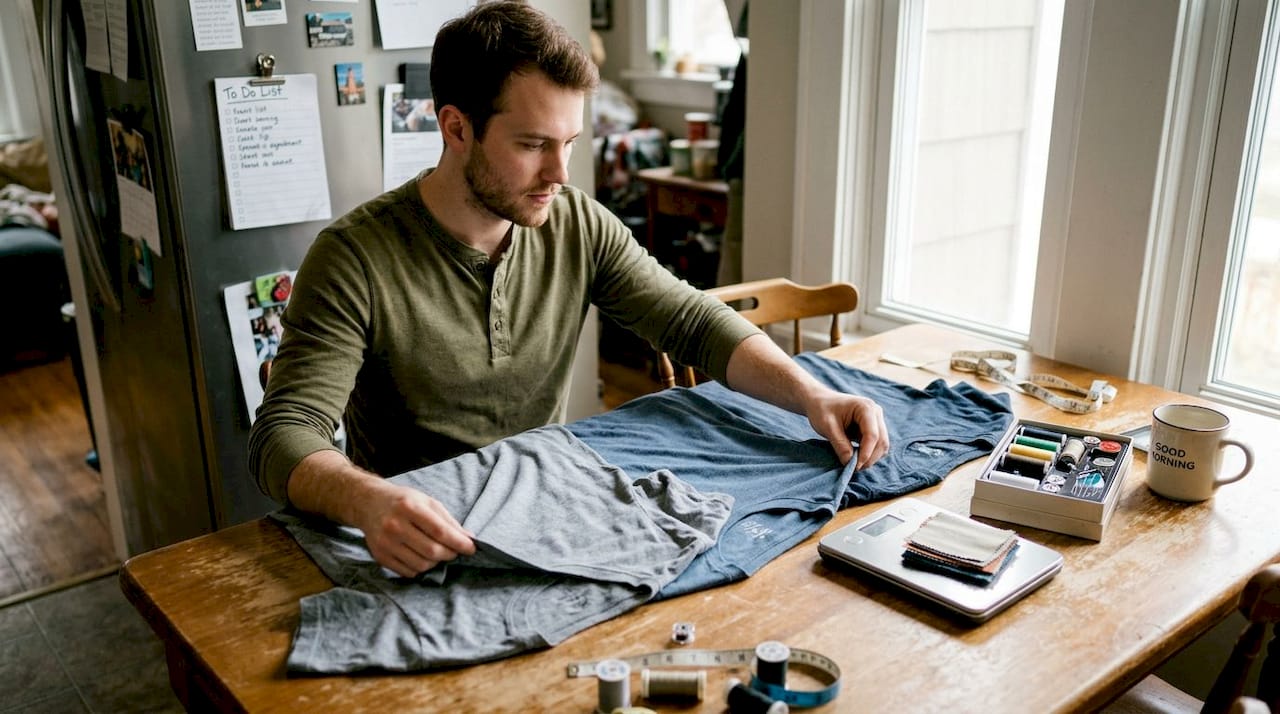
GSM stands for grams per square meter. It’s the standard measurement for fabric weight, and it tells you a lot about how a finished garment will feel and perform. Light fabrics run below 150 GSM. They’re airy and great for summer but can feel flimsy and wear thin quickly. Heavy fabrics sit above 300 GSM. Think structured denim or wool outerwear. They’re built for cold weather and durability but can feel stiff for everyday basics.
Medium-weight fabrics between 150 and 250 GSM hit the sweet spot for casual wear. They balance drape, durability, and breathability in a way that works across seasons. A 180 GSM cotton tee, for example, feels substantial without being heavy, holds its shape after washing, and breathes well enough for year-round use.
When you’re exploring types of cotton for t-shirts, GSM is one of the first numbers worth checking. It tells you before you even touch the shirt whether it’s going to feel like a quality piece or a throwaway.
| Fabric type | Typical GSM range | Best use |
|---|---|---|
| Lightweight cotton | 100-150 | Summer tees, warm climates |
| Medium cotton | 150-250 | Everyday tees, casual shirts |
| Heavyweight cotton | 250-350 | Hoodies, structured basics |
| Linen | 120-200 | Warm-weather wear |
| Wool | 200-400 | Jackets, cold-weather layers |
| Synthetic blends | 130-280 | Activewear, performance pieces |
Here’s how to check weight and feel whether you’re at home or in a store:
- Hold the garment or fabric panel flat in both hands and feel the overall density.
- Pinch a small section between two fingers. Thicker, denser fabric signals higher GSM.
- Gently shake the piece. Heavier fabric moves with more resistance.
- Check the label for GSM if listed, or ask a sales associate.
- Compare two similar items side by side to feel the difference directly.
Prioritize durability and fiber content for timeless comfort
Having matched the right weight to your style, let’s focus on why fiber content matters for lasting comfort and minimizing regret.
Natural fibers are the foundation of timeless, vintage-inspired clothing. High-quality natural fibers like linen, wool, and cotton suit classic styles and hold up for years of regular wear. They breathe better, age more gracefully, and feel more authentic against skin than most synthetic alternatives.
Here’s what each major natural fiber brings to the table:
- Cotton: Soft, washable, and widely available. Breaks in beautifully over time.
- Linen: Exceptional breathability. Wrinkles easily but softens with every wash.
- Wool: Naturally resilient and temperature-regulating. Resists odors and holds shape well.
- Hemp: Surprisingly durable and gets softer with age. Excellent for sustainable fabric options.
| Fiber | Comfort | Durability | Breathability |
|---|---|---|---|
| Cotton | High | High | High |
| Linen | Medium | High | Very high |
| Wool | High | Very high | High |
| Hemp | Medium | Very high | High |
| Polyester | Medium | High | Low |
| Nylon | Medium | Very high | Low |
Pro Tip: When reading content labels, look for blends with less than 3% elastane or less than 50% synthetic content. These ratios keep the natural feel and breathability intact while adding just enough give for comfort.
Reading a label takes about ten seconds and tells you everything. If the first fiber listed is a synthetic, that’s the dominant material. For minimalist, unbranded basics, look for cotton or linen at the top of that list. Knowing what the best quality cotton actually is helps you recognize it when you see it on a label.
Hands-on tests: Texture, stretch, and shrinkage
Beyond labels, real comfort is best confirmed by touch. Here’s how to physically test for the best choice.
Tactile testing is the part most people rush through. But spending sixty seconds on a few simple checks can save you from buying something that feels wrong after the first wash. Scratchy, stiff, or poorly recovering fabrics reveal themselves quickly if you know what to look for.
Testing stretch, recovery, drape, and texture by hand, along with pre-washing to check shrinkage, gives you a far more complete picture than a label alone. Here’s a quick sequence to run through:
- Stretch test: Gently pull the fabric in four directions. It should give slightly and return to its original shape without distortion.
- Drape test: Hold a corner and let the fabric fall. Natural drape means it flows smoothly rather than holding a rigid angle.
- Smoothness test: Run the fabric across the back of your hand. Any scratching or roughness will be immediately obvious.
- Seam test: Rub your finger along any seam. Rough or raised stitching can cause irritation over long wear.
- Pre-wash check: If you’re buying fabric by the yard, wash a small swatch first. Significant shrinkage at home means the finished garment will do the same.
“Always pre-wash fabric before cutting or committing to a garment. What feels perfect off the bolt can shrink, stiffen, or change texture after even a single wash cycle. Pre-washing is the only honest test.”
Pro Tip: Feel both sides of any fabric you’re considering. The reverse side is sometimes softer than the face, and for certain garments like hoodies or lined shirts, that inner surface is what actually touches your skin all day. If you want to know how to stretch cotton that’s already shrunk, there are ways to recover it, but it’s much easier to choose right the first time.
The truth most guides miss about fabric comfort
Now that you know how to choose and test fabrics, here’s an honest perspective on what really matters for lasting comfort.
Most fabric guides lean heavily toward synthetics. They point to durability ratings, moisture-wicking specs, and wrinkle resistance as if those are the only metrics that matter. But for people who want clothing that actually feels good and looks better with age, that advice misses the point entirely.
Synthetics can trap heat and odors in ways that naturals simply don’t. A polyester shirt might last technically longer, but it often smells worse by noon and feels less comfortable by the end of the day. Natural fibers, by contrast, improve with every wear. Cotton softens. Linen relaxes. Wool develops a character that’s impossible to fake.
“Comfort is not instant. It’s earned through wear and care.”
Vintage-inspired basics are built on this idea. The fading, the softening, the way a well-worn tee starts to feel like a second skin. Those are features, not flaws. Minimal branding reinforces this because when there’s no logo to distract, the fabric and fit do all the talking. Exploring modern sustainable fabrics shows that natural and durable are not opposites. The best pieces age honestly and reward the people who wear them consistently.
Shop essentials made with comfort in mind
Ready to experience comfortable, classic fabrics for yourself? Apply what you’ve learned here to pieces that are already built around these principles.
At Smoked Times, every piece in our lineup starts with fabric quality. No loud logos, no trend-chasing. Just well-constructed timeless essentials made from durable, natural-forward materials that feel better the more you wear them. If you’re looking for a layer that earns its place in your rotation, our comfortable hoodies are a strong place to start. Heavyweight cotton, clean construction, and a fit that works season after season. That’s the standard we hold every piece to.
Frequently asked questions
What GSM is best for comfortable everyday t-shirts?
A GSM of 150 to 250 offers the right balance of comfort, durability, and breathability for casual everyday wear. This range feels substantial without being stiff or heavy.
Should I choose 100% cotton or blends for casual basics?
100% cotton is a classic choice for comfort and breathability, but blends with under 3% elastane can add gentle stretch without sacrificing the natural feel. Both work well depending on how much give you prefer.
How do I test fabric comfort in-store?
Rub the fabric against the inside of your wrist, check how it stretches and recovers, and look for smoothness without any rough texture. Pre-washing a swatch at home is the most reliable way to confirm shrinkage and true hand feel.
Are synthetic fabrics bad for comfort?
Not entirely, but synthetics trap heat and odors more than natural fibers do, which makes them less ideal for all-day casual wear. Natural fibers breathe better and improve with repeated washing and wear.
Recommended
- How to choose comfortable fabrics for everyday wear – Smoked Times
- Why Comfort Matters in Fashion Choices Today – Smoked Times
- 7 Examples of Sustainable Fabrics for Eco-Friendly Fashion – Smoked Times
- 7 Essential Examples of Casual Wear for Stylish Comfort – Smoked Times
- Ženski Everyday Top - A+Majice