


How to Style Polos for Outdoors: a Practical Guide
TL;DR:
- Selecting the right fabric, fit, and layering options is essential for stylish and comfortable outdoor polo outfits.
- Using moisture-wicking, UPF-rated fabrics and appropriate accessories enhances sun protection and practicality during outdoor activities.
Getting dressed for outdoor activities feels straightforward until you’re standing in the sun, overdressed, sweating through fabric that was never designed for movement. Knowing how to style polos for outdoors means more than grabbing any polo from the closet. It means selecting the right fabric, getting the fit dialed in, layering smart, and protecting your skin without sacrificing how you look. This guide covers every piece of that puzzle, from technical fabric features to footwear pairings and sun protection strategies that go beyond slapping on sunscreen.
Table of Contents
- Key takeaways
- How to style polos for outdoors: start with the right fabric
- Layering and accessories for changing outdoor conditions
- Pairing bottoms and footwear with outdoor polo outfits
- Sun protection strategies for outdoor polo styling
- Common mistakes that undermine your outdoor polo style
- My honest take on styling polos outdoors
- Find the right polo for your next outdoor adventure
- FAQ
Key takeaways
| Point | Details |
|---|---|
| Fabric choice drives comfort | Moisture-wicking and breathable fabrics outperform basic cotton for outdoor activities in heat. |
| Fit shapes the whole look | A slim but not tight polo with a mid-thigh hem keeps movement clean and the silhouette intentional. |
| Layering extends usability | A lightweight jacket or cardigan over your polo handles temperature shifts at outdoor events. |
| Sun protection needs a system | UPF 50+ fabric blocks most UV rays, but exposed skin still needs sunscreen for full coverage. |
| Colors and bottoms complete the outfit | Neutral and earthy tones with tailored chinos or shorts create cohesive, outdoor-ready looks. |
How to style polos for outdoors: start with the right fabric
The polo shirt is one of the most underrated pieces for outdoor use. It sits between the polish of a button-down and the casualness of a t-shirt, which is exactly what you need when you’re moving between a hike, a patio lunch, and an outdoor event in the same afternoon. But not all polos handle outdoor conditions equally.
Performance polo fabrics engineered for outdoor activities offer stretch and moisture management that traditional pique cotton simply cannot match. When you’re active, fabric that pulls sweat away from the body and dries quickly keeps you comfortable for longer. This matters whether you’re on a golf course, watching an outdoor game, or just spending a few hours at a farmers market.
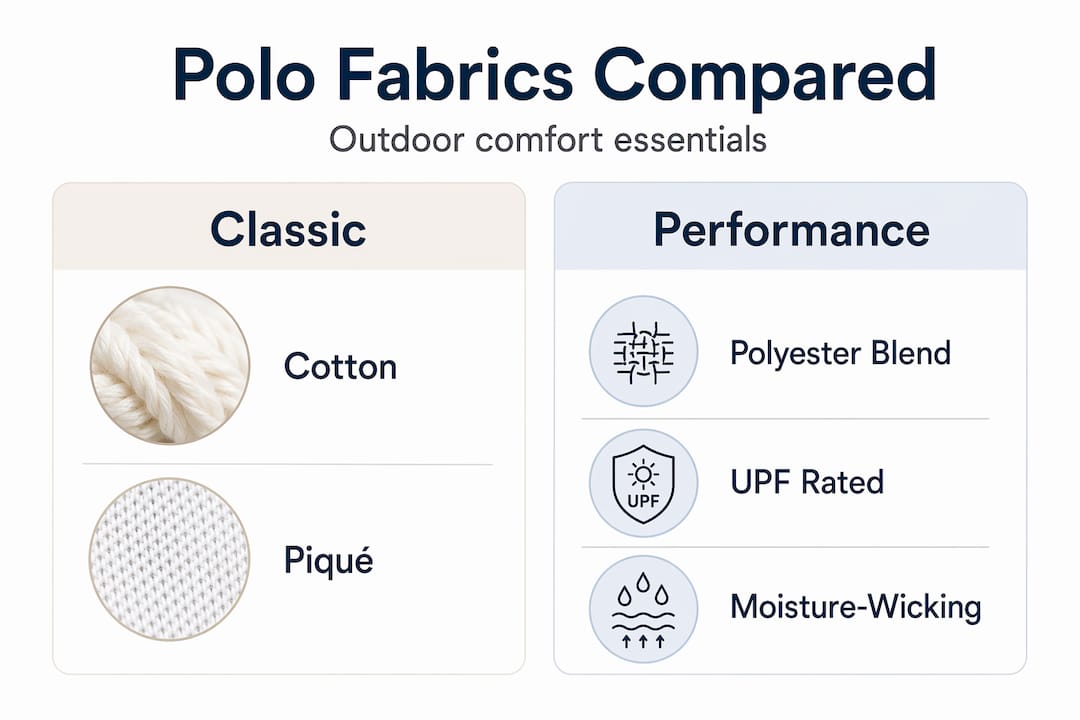
Here’s a breakdown of the most common polo fabric types and how they perform outdoors:
| Fabric Type | Moisture-Wicking | Breathability | Sun Protection | Best Use |
|---|---|---|---|---|
| Pique Cotton | Low | Moderate | Low (UPF 5-15) | Casual outings, shade-heavy settings |
| Performance Polyester Blend | High | High | Moderate (UPF 30+) | Active sports, full-sun exposure |
| Mercer Cotton Blend | Moderate | High | Moderate | Outdoor dining, spectator events |
| UPF 50+ Technical Fabric | High | High | High (UPF 50+) | Long sun exposure, hiking, cycling |
For outdoor-ready polos, prioritize fabric that combines moisture-wicking with UPF protection. You want something lightweight, quick to dry, and built to move.
Key fabric features to look for before buying:
- Moisture-wicking: Pulls sweat to the fabric surface where it evaporates quickly
- Quick-drying: Reduces the clammy feeling during or after physical activity
- Four-way stretch: Allows full range of motion without pulling or bunching
- UPF 50+ rating: Blocks roughly 98% of UV rays where the fabric covers skin
- Breathable construction: Open-weave or fine knit patterns allow airflow in heat
Pro Tip: If you’re choosing between a classic cotton polo and a performance blend for outdoor use, go with the blend on active days. Save the classic cotton for shaded outdoor dining where you’re mostly seated and the temperature is mild.
Fit is the other non-negotiable. Proper polo fit means slim but not tight through the chest and torso, with sleeves that end at the mid-bicep. The hem should fall at the top of the thigh. Any longer and you’re walking around in something that looks like a tunic. Any shorter and it rides up the moment you reach for anything.
Layering and accessories for changing outdoor conditions
One of the most common outdoor styling mistakes is treating your polo as the final layer regardless of what the weather is doing. Outdoor temperatures shift. A morning hike at 65 degrees becomes a 90-degree afternoon on a patio. Planning your layers before you head out is what separates a polished outdoor look from a frantic, uncomfortable one.
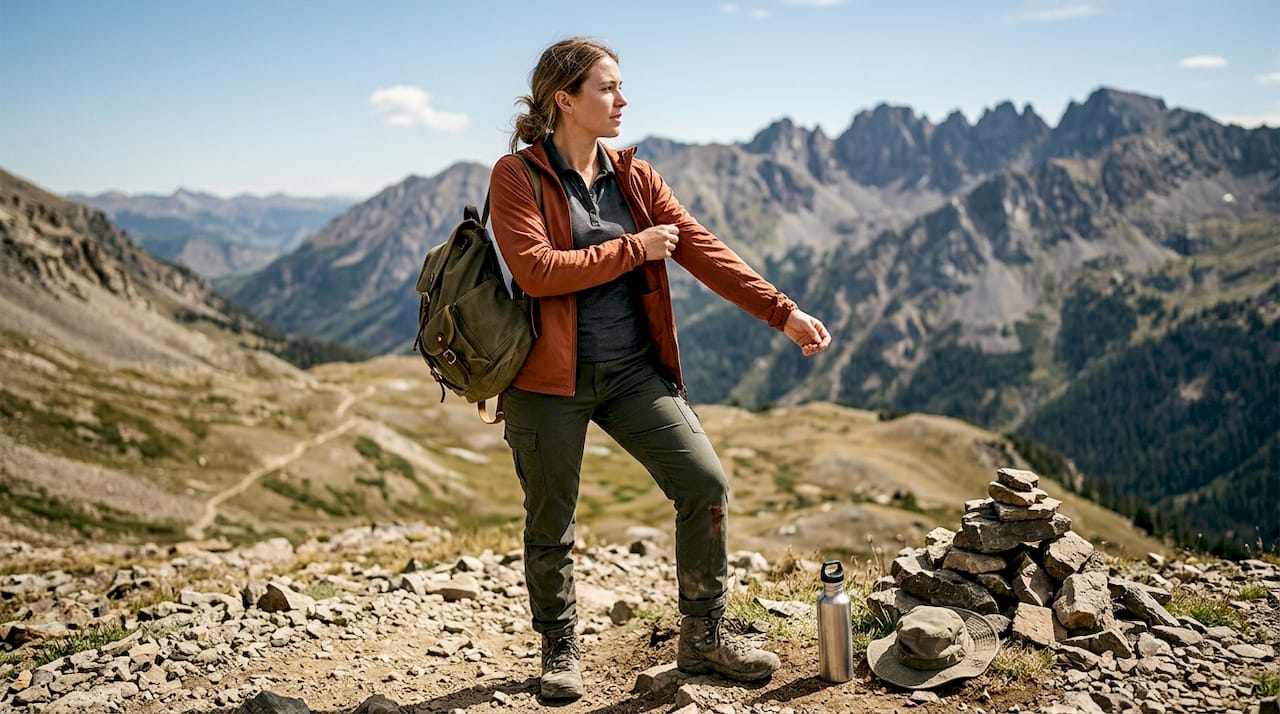
Layering pieces like light jackets or cardigans add both visual interest and practical adaptability when temperatures fluctuate throughout the day. The key is choosing layers that don’t overpower the polo underneath.
The best layering options for outdoor polo outfits:
- Unlined bomber jacket: Adds structure without weight; ideal for outdoor evening events
- Lightweight cardigan: Works well for outdoor dining or spectator events with a smart casual tone
- Technical shell jacket: Packs into a pocket and handles wind or light rain during hikes
- Overshirt: Worn open over a polo for casual outdoor outings with a relaxed, layered look
Smart outdoor event dressing pairs styled polos with tailored chinos and layering options that can be shed or added depending on conditions. Think of a polo at a garden party or an outdoor sporting event. A well-fitted polo tucked into tailored chinos with a lightweight layer over the shoulders reads as intentional and polished without being overdressed.
On the accessories front, a structured baseball cap or a wide-brim hat serves double duty by keeping sun off your face and tying the outdoor aesthetic together. Sunglasses with UV400 protection are non-negotiable in full sun. For a full rundown on pairing accessories with outdoor casual outfits, there’s a lot to build on beyond just hats and glasses.
Pro Tip: Tuck your polo when wearing it to outdoor events that lean formal, like garden parties or golf clubs with dress codes. Untuck it for casual outings like festivals, hikes, or weekend markets. That single shift changes the entire read of the outfit.
Pairing bottoms and footwear with outdoor polo outfits
Getting the top right is only half the equation. Choosing versatile bottoms like tailored shorts, chinos, or joggers completes outdoor polo outfits across different activity types. Here’s a practical outfit framework organized by outdoor setting:
-
Casual hike or trail walk: Go with a moisture-wicking polo in olive or slate gray, technical joggers or stretch chinos, and trail runners. The polo handles sweat while looking cleaner than a graphic tee if you stop somewhere for food after.
-
Outdoor sporting event (golf, tennis, lawn games): A tucked polo in navy or white, slim-fit chinos in tan or sand, and clean leather sneakers or loafers. Add a structured belt and sunglasses to sharpen the look. The golf dress code at most venues requires collared shirts, which makes the polo the natural go-to.
-
Patio dining or outdoor brunch: Try a linen-blend polo in a light, earthy tone like terracotta or sage green, paired with tailored shorts in a neutral color. Leather sandals or clean white sneakers keep the look relaxed without being sloppy.
-
Weekend market or casual outdoor outing: An untucked polo in a heathered gray or faded blue, worn with dark joggers or slim-fit cargo pants and clean sneakers. This is where styling polos for casual outings is most forgiving. Comfort comes first.
-
Outdoor evening event: A structured polo in deep navy or charcoal, tucked into slim trousers, with leather loafers and a bomber jacket to layer as temperatures drop.
For color coordination, stick to a simple rule: if your polo is a pattern or brighter color, keep your bottoms neutral. If your polo is a solid neutral, your bottoms can carry a subtle print or a bolder tone. Earthy palettes generally work best outdoors because they read as deliberate rather than accidental.
Sun protection strategies for outdoor polo styling
This is where most outdoor style guides fall short. People pick a polo that looks great, but they forget that spending three hours in direct sunlight without adequate UV protection is a real health concern. The good news is that your polo can pull double duty when you choose it with sun protection in mind.
UPF 50+ clothing blocks about 98% of UV rays, which is meaningful protection compared to a standard cotton polo that might only provide a UPF of 5 to 15. The rating measures how much UV radiation the fabric blocks, not how much the garment covers. That distinction matters.
Wearing a UPF 50+ polo does not mean you’re fully protected. Your face, neck, hands, and any exposed skin still need sunscreen applied on top of your clothing strategy. Think of your polo as the first layer of a larger sun defense system, not the whole plan.
Strategies to build solid sun protection into your outdoor polo outfit:
- Choose darker or more densely woven fabrics for better UV blocking, especially for long outdoor days
- Pair your polo with a wide-brim hat that shades your face, ears, and the back of your neck
- Add UV400 sunglasses to protect your eyes and the delicate skin around them
- Apply broad-spectrum SPF 30 or higher to all uncovered skin, including the back of your hands
- Consider long-sleeve UPF polo options when spending extended time at altitude or near water, where UV exposure intensifies
For more detail on how fabric construction affects UV protection, the Smokedtimes blog has a useful breakdown on cotton and sun protection that puts the numbers in context.
Common mistakes that undermine your outdoor polo style
Even with the right polo in hand, a few avoidable errors consistently show up in outdoor settings. Knowing them ahead of time saves you from wearing something that looks great on the hanger and awkward in motion.
- Going too loose: An oversized polo reads as sloppy outdoors. The intentional silhouette depends on fit. If the shoulders are dropping off or the fabric is billowing, size down.
- Choosing the wrong fabric for the setting: Shiny performance fabrics look out of place at outdoor social events. Save the high-gloss athletic polo for active sports. For outdoor dining or events, a mercer cotton or matte performance blend reads better.
- Ignoring hem length: A polo hem that falls past the mid-thigh creates a proportional problem. It makes you look shorter and the outfit looks unplanned. Correct hem placement sits at the top of the thigh.
- Skipping layers entirely: Heading to a full-day outdoor event with just a polo and shorts is a setup for being cold by evening or overdressed when it heats up. Always bring a layer.
- Misreading the dress code: Polos work across most outdoor settings but not all. A formal outdoor wedding or black-tie garden event calls for something more structured. Know the context before defaulting to a polo.
My honest take on styling polos outdoors
I’ve spent a lot of time thinking about what actually makes a polo work outdoors, and the answer is almost always the same: fit first, fabric second, everything else third. I’ve seen well-built guys in great-looking polos look completely off because the shirt was a size too big. And I’ve seen a simple, solid-color polo in the right cut look sharp at an outdoor wedding, a golf course, and a trail-side cafe in the same weekend.
What surprises people is how much the fabric choice changes the actual experience. The first time I wore a moisture-wicking performance blend on a long outdoor day instead of a standard cotton polo, it changed how I dress for summer entirely. No midday weight from sweat-saturated fabric. No looking wrecked by 2pm.
The sun protection angle is where I think most style advice fails outdoor enthusiasts. People treat it as a separate concern from style. It isn’t. Choosing a UPF-rated polo, adding a hat that actually shades your neck, and keeping sunscreen in your bag is part of dressing well outdoors. It keeps you comfortable, protects your skin, and means you can stay outside longer without paying for it later.
My advice: buy fewer polos and buy better ones. A well-made polo in a performance cotton or tech blend, in a neutral color, in the right fit, handles more outdoor situations than an entire drawer of ill-fitting options.
— Denis
Find the right polo for your next outdoor adventure
If you’ve been working through this guide and realizing your current polo drawer doesn’t quite measure up, it’s a good time to look at what you’re actually working with.

Smokedtimes builds polos and essentials around durable fabrics, clean construction, and versatile fits that hold up across real outdoor use. The Smokedtimes cotton polo is a strong starting point if you want something that moves well, looks intentional, and wears comfortably in warm outdoor conditions. For the full range of what pairs well with it, including layering pieces and casual basics, browse the organic cotton essentials that round out a practical outdoor wardrobe. These are pieces designed to be worn repeatedly, not just bought and forgotten.
FAQ
What fabrics work best for outdoor polos?
Moisture-wicking polyester blends and UPF-rated technical fabrics outperform standard cotton for outdoor activities because they manage sweat, dry faster, and block more UV radiation.
How should a polo fit for outdoor use?
A well-fitting polo should be slim but comfortable through the chest, with sleeves ending at the mid-bicep and a hem sitting at the top of the thigh to prevent riding up during movement.
Can a polo protect you from the sun outdoors?
A UPF 50+ polo blocks about 98% of UV rays on covered skin, but you still need sunscreen on your face, neck, and hands for complete outdoor sun protection.
What bottoms go best with a polo for outdoor events?
Tailored chinos, slim shorts in neutral tones, and stretch joggers all pair well with polos for outdoor settings, depending on whether the event is active, casual, or semi-formal.
Should you tuck in a polo for outdoor occasions?
Tuck your polo for polished outdoor events like golf outings or garden parties. Leave it untucked for casual outdoor activities like hiking, markets, or weekend hangouts.