


Outdoor apparel explained: features, layering, and style
TL;DR:
- Outdoor apparel is engineered for weather resistance, durability, and layering, making it versatile for everyday wear.
- Its technical features, like DWR, breathability, and abrasion resistance, differ from fashion clothing designed solely for style.
- Minimal branding and vintage-inspired designs enhance timeless, functional outdoor style that suits both city and trail environments.
Outdoor apparel used to carry a very specific image: someone in a technical shell jacket scaling a ridgeline or fording a creek in trail shoes. That image isn’t wrong, but it’s incomplete. The truth is that the same features built to handle mountain weather, long miles, and unpredictable conditions are exactly what make outdoor-influenced clothing so practical and comfortable for everyday wear. When you look past the performance marketing, you’ll find durability, smart construction, and a timeless aesthetic that works just as well on a city block as it does on a forest trail.
Table of Contents
- What defines outdoor apparel?
- Core performance features you should look for
- The layering system: Foundation of versatile outdoor style
- Beyond ‘waterproof’: Real-world comfort and garment care
- Our take: Minimal branding and vintage inspiration win for modern outdoor style
- Explore more durable outdoor style with Smoked Times
- Frequently asked questions
Key Takeaways
| Point | Details |
|---|---|
| Performance matters most | Outdoor apparel stands out for its technical features that resist weather and enhance comfort, even for everyday wear. |
| Layering unlocks versatility | The base-mid-shell system lets you adapt your style and comfort to any situation, not just the outdoors. |
| Tech plus timeless style | Choosing vintage-inspired, minimally branded outdoor pieces delivers function that blends naturally with urban wardrobes. |
| Care affects performance | Regular maintenance and proper washing are essential to keep your gear performing as promised over time. |
What defines outdoor apparel?
Outdoor apparel has a precise engineering purpose behind it, which is what separates it from most of what hangs on a typical retail rack. Outdoor apparel is clothing engineered to protect the wearer from environmental conditions while supporting comfort, mobility, and durability. That’s a real design brief, not just marketing language.
Standard fashion clothing is made to look good on the hanger and feel acceptable during a normal day indoors. Outdoor apparel, by contrast, is categorized by performance for weather and activity, not just by style. That’s a meaningful distinction. A regular cotton twill jacket might look similar to a waxed canvas field jacket from the outside, but the construction, materials, and finishing are entirely different under pressure.
Here’s what that actually means in practice. Outdoor garments are built with features like:
- Weather resistance: fabrics treated or constructed to repel wind, rain, or UV radiation
- Moisture-wicking: moving sweat away from your skin to keep you dry during physical activity
- Thermal insulation: trapping body heat efficiently without bulk
- Abrasion resistance: withstanding friction against rough surfaces, bags, or repeated use
- Breathability: allowing vapor to escape so you don’t overheat
Now compare that to a standard fashion tee or bomber jacket. Most are optimized for one thing: visual appeal. They’re cut for silhouette, not movement. The fabric is chosen for drape, not durability. When it rains or the temperature drops, fashion clothing often fails fast.
| Feature | Outdoor apparel | Standard fashion clothing |
|---|---|---|
| Weather resistance | Built-in DWR or membrane | Rarely included |
| Fabric durability | Reinforced, tested fabrics | Optimized for look |
| Moisture management | Active wicking systems | Passive at best |
| Layering compatibility | Designed to work in systems | Usually standalone |
| Branding | Typically logo-forward or minimal | Varies widely |
| Longevity | Multi-season construction | Often season-specific |
The overlap with vintage-inspired style is real and intentional. Classic outdoor pieces from the 1970s and 1980s, things like canvas chore coats, fleece pullovers, and ripstop field shirts, were built to last because they had to. That same principle drives the best modern outdoor-influenced basics. If you’re exploring casual outdoor jackets, you’ll notice the most enduring designs are always the ones where function shapes the form.
Core performance features you should look for
Understanding what separates a good outdoor garment from a weak one comes down to a few specific characteristics. Industry performance standards include weather resistance, moisture-wicking, thermal insulation, windproofing, abrasion resistance, breathability, quick-drying capability, and compatibility with layering. That’s a lot to track, but once you know what each does, the picture gets clearer fast.
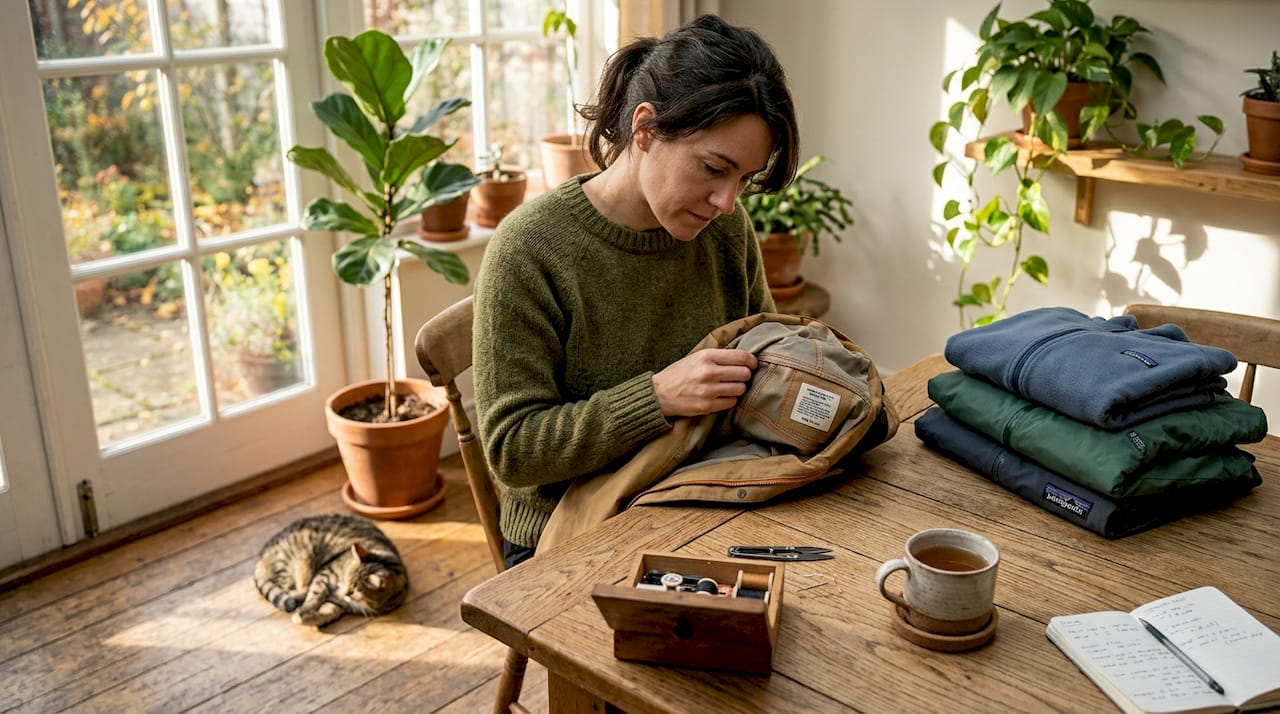
Let’s focus on the ones that matter most for everyday wear.
DWR (Durable Water Repellent) is one of the most misunderstood terms in outdoor apparel. It’s a polymer finish applied to the outer face of a fabric. When water hits a properly treated surface, it beads up and rolls off rather than soaking into the fibers. This keeps the outer shell lighter, reduces the clammy feeling of a wet jacket, and helps breathability stay intact. DWR is not the same as waterproofing. It’s a surface treatment, not a membrane, and it wears off over time with washing and friction.
Breathability is equally important and often underrated. A jacket that blocks rain but traps all your body heat will leave you drenched in sweat anyway. The best outdoor pieces balance water resistance with vapor escape, so moisture from your body can move outward while precipitation stays out.
Abrasion resistance sounds like a concern only for climbers or backpackers, but it’s just as relevant for daily wear. Bag straps, seating surfaces, rough walls, these all wear down fabric over time. Heavier cotton canvas, ripstop nylon, and woven polyester blends all resist this far better than a lightweight jersey or poplin shirt.
| Performance feature | What it does | Why it matters daily |
|---|---|---|
| DWR coating | Sheds light rain and moisture | Commuting, light rain, wet surfaces |
| Breathability | Allows vapor to escape | Physical activity, warm indoor spaces |
| Moisture-wicking | Pulls sweat from skin | Everyday activity, temperature changes |
| Abrasion resistance | Resists surface wear | Bags, seating, repeated use |
| Insulation | Traps heat efficiently | Cold mornings, wind chill |
| Quick-dry capability | Returns to dry quickly | Unexpected weather, washing and reuse |
For active or water-adjacent days, something like a UPF 50 boardshirt shows how technical features can sit inside clean, minimal designs without broadcasting their specs on the sleeve.
The concept of feature stacking is worth understanding here. The most versatile outdoor garments don’t just do one thing well. They layer multiple performance characteristics into a single piece: a shirt with moisture-wicking and quick-dry, a midlayer with wind resistance and stretch, a shell with DWR and breathability. When these features work together, the garment earns its place in your rotation for years. For a deeper look at how this plays out in real wardrobes, all-weather apparel is a useful reference.
Pro Tip: When evaluating a new piece for durability, turn it inside out and check the seam construction. Taped or bound seams suggest a garment built to handle stress over time, not just look sharp for one season.
The layering system: Foundation of versatile outdoor style
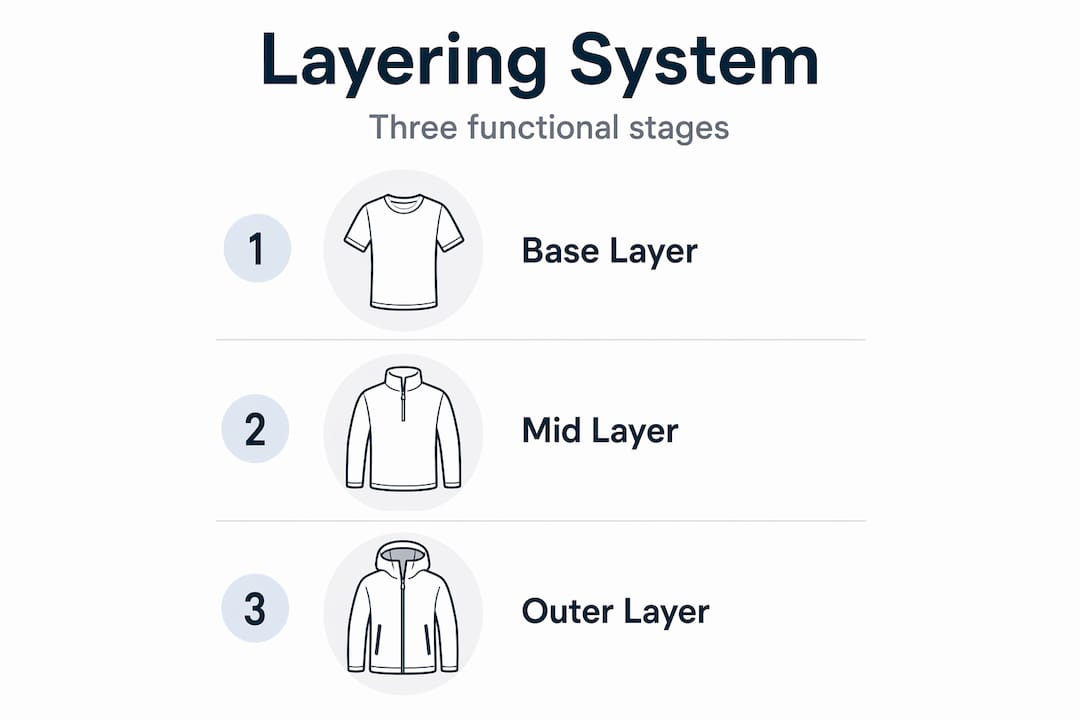
No concept in outdoor apparel has more practical value for everyday dressing than layering. Outdoor apparel is often organized around a layering system that splits functions across base, mid, and shell layers. Each layer has a specific job, and together they handle a much wider range of conditions than any single garment could alone.
Here’s how the system breaks down:
- Base layer: sits directly against your skin, manages moisture by wicking sweat outward, and keeps your core temperature stable. Lightweight merino wool, technical polyester, or heavyweight cotton all work depending on your activity level and climate.
- Mid layer: provides insulation by trapping warm air close to your body. Fleece, quilted liners, heavy knits, and flannel shirts all serve this role. The key is that a good mid layer lets the base layer breathe through it.
- Shell layer: faces the environment directly. It handles wind, rain, and cold. A quality shell doesn’t need to be bulky. A well-constructed waxed canvas overshirt or a tightly woven anorak can serve this function well for everyday conditions.
This system is brilliantly adaptable for urban use. A morning walk in 40-degree weather might call for all three layers. A warmer afternoon means stripping back to the base and mid. You’re not carrying different outfits. You’re managing one modular system across a full day.
Vintage layering aesthetics fit perfectly here. A heavy flannel over a ribbed thermal over a cotton tee is both functional and visually interesting in a way that a single trend-driven coat simply isn’t. The pieces work independently, combine well, and read as considered rather than overdressed. For more on building this into your daily routine, read about why layer clothing and how minimalist fashion layering creates real wardrobe flexibility.
A practical everyday layering example: start with a heavyweight cotton base tee, add a fleece or knit pullover as your mid, and throw a waxed or canvas shell on top. This combination works for a Saturday market run, a casual office, or an evening outdoors as the temperature drops.
Pro Tip: The mid layer is the most underinvested piece in most wardrobes. Invest in a well-made fleece, knit, or quilted overshirt and your layering game changes immediately. It’s the layer that defines your silhouette and carries the most visual weight.
For those building this system intentionally, how to layer outfits walks through the practical techniques in clear detail.
Beyond ‘waterproof’: Real-world comfort and garment care
Waterproofing is one of the most oversold terms in outdoor retail. A garment labeled waterproof performs differently depending on its construction, age, and care history. The reality is more nuanced, and understanding it will change how you shop and maintain your gear.
“DWR improves water repellency but does not by itself make a garment waterproof.” — NRS
That’s important. DWR is a finishing treatment. It’s the reason water beads on the surface of your jacket. But it degrades. Washing, friction, and UV exposure all break it down over time. When DWR degrades, the outer face of the fabric starts to wet out, meaning it absorbs water rather than shedding it. When that happens, breathability and comfort can degrade noticeably, even if the underlying membrane is still intact.
Here’s what most people miss about garment care:
- Washing frequency matters: frequent washing with standard detergents strips DWR faster. Use a technical cleaner or a gentle cycle with minimal detergent.
- Heat reactivates DWR: a low tumble dry or warm iron on the right setting can partially restore DWR performance on treated fabrics.
- Re-treatment is straightforward: spray-on or wash-in DWR products can restore water repellency without a full replacement. This extends garment life significantly.
- Air circulation is key: storing outdoor garments in compressed or damp conditions degrades both insulation and fabric performance faster than regular use does.
- Heavy cotton needs different care: dense canvas or heavyweight cotton pieces don’t use DWR the same way technical shells do. Their durability comes from weave density and wax treatments. Keep them clean and re-wax when needed.
For cold-weather pieces specifically, check out outdoor essentials for winter for a breakdown of what to prioritize when temperatures drop. And for quick-dry garments that handle moisture and weather with minimal fuss, something like a quick-dry boardshirt shows how technical design can stay clean and understated at the same time.
The practical takeaway here: treat your outdoor garments like tools, not decorations. Maintain them and they’ll last years longer than anything in your wardrobe that was built only to look good.
Our take: Minimal branding and vintage inspiration win for modern outdoor style
Here’s something we’ve seen play out repeatedly when it comes to building a wardrobe that actually holds up over time. The gear covered in logos and performance graphics often gets retired first. Not because it fails technically, but because it stops feeling right outside of one specific context. A heavily branded technical jacket is a statement. Wear it on a trail and it reads perfectly. Walk into a coffee shop or a casual work environment and it suddenly feels out of place.
Vintage-inspired outdoor pieces solve this problem by design. A waxed canvas chore coat, a ribbed fleece pullover, a simple heavyweight tee in a natural color, these don’t announce themselves. They just work. And because they’re not tied to a season’s color palette or a trend cycle, they stay relevant year after year.
There’s also something to be said about the relationship between layering for versatile style and brand neutrality. When your pieces don’t compete visually, they layer better. A shirt without a giant logo reads as a garment, not an advertisement. That makes it easier to build coherent, interesting outfits from a small number of well-chosen pieces.
We’d argue that durability and restraint are the two most undervalued qualities in everyday outdoor-inspired clothing. Pieces built to last and designed without visual clutter are genuinely more versatile than anything chasing the current performance aesthetic. That’s the philosophy behind everything we make: build it well, keep it clean, let it work hard in the background.
Explore more durable outdoor style with Smoked Times
If the principles covered in this article resonate with you, the basics already exist in the Smoked Times collection. We build around heavyweight fabrics, clean silhouettes, minimal branding, and a vintage-inspired aesthetic that earns its place in your rotation across seasons.
Everything at Smoked Times is designed for comfort, durability, and versatility, whether you’re layering for a cold morning commute or keeping it simple on the weekend. If you’ve already picked up a piece and want to share how it’s working for you, we’d love to hear it. Head over to submit a product review and let us know. Real feedback from real wearers helps us keep building things worth keeping.
Frequently asked questions
What makes outdoor apparel different from regular clothes?
Outdoor apparel is engineered for weather resistance, durability, comfort, and layering using technical fabrics and construction details that standard clothing doesn’t include. Industry performance standards cover weather resistance, moisture-wicking, thermal insulation, windproofing, abrasion resistance, breathability, quick-drying, and layering compatibility.
How does DWR treatment help keep you dry?
DWR is a polymer surface treatment that causes water to bead and roll off fabric rather than soaking in, which preserves breathability and reduces the chilling effect of a wet outer layer during light rain.
Why is layering important in outdoor clothing?
Layering lets you adapt to changing temperature and weather by combining garments that each handle a specific function. The base, mid, and shell system manages moisture, insulation, and weather protection as a single coordinated unit.
Can outdoor apparel be worn casually or for work?
Absolutely. Modern outdoor pieces built with vintage silhouettes and minimal branding fit naturally into everyday environments, from casual offices to weekend errands, without reading as technical or athletic gear.