


Fashion layering: minimalist, comfortable, versatile style
TL;DR:
- Fashion layering involves a structured system of base, mid, and outer garments.
- Thin-to-thick layering prevents bulk and maintains versatile, stylish outfits.
- Mixing functional and stylistic layering enhances comfort and visual depth in minimal wardrobes.
Most men think layering means piling on sweaters until they can barely move. That’s bulk, not layering. Real fashion layering is a structured system of base, mid, and outer garments that works together for both comfort and style. The smartest dressers figured out long ago that you can look put-together and stay comfortable without a closet full of statement pieces. This guide breaks down exactly what fashion layering means, how to do it without looking overdressed, and how to build a minimalist wardrobe that actually works across seasons and situations.
Table of Contents
- What is fashion layering?
- Core principles: How fashion layering works
- Functional vs. stylistic layering: Key differences and when to use each
- Building a versatile minimalist wardrobe through layering
- Perspective: Why most men overthink layering and what really works
- Unlock minimalist layering with Smoked Times
- Frequently asked questions
Key Takeaways
| Point | Details |
|---|---|
| Layering defined | Fashion layering means combining base, mid, and outer pieces for comfort, flexibility, and style. |
| Avoid bulk | Following the thin-to-thick rule keeps layers sleek and practical without adding heaviness. |
| Function meets style | A good layering system balances practical warmth with visual depth for minimalism. |
| Wardrobe versatility | Layering lets you rotate a few essentials for endless looks—perfect for minimalist fashion. |
What is fashion layering?
Fashion layering is the practice of wearing multiple garments in a deliberate sequence, each one serving a specific purpose. It’s not random. Every piece has a role, and together they create an outfit with depth, function, and visual interest. The concept goes back centuries. Soldiers, explorers, and working men layered out of necessity long before it became a style choice. Today, it’s one of the most practical tools in a minimalist wardrobe.
The system breaks down into three parts:
- Base layer: The garment closest to your skin. Think a fitted cotton tee, a henley, or a lightweight long-sleeve. Its job is moisture management and comfort.
- Mid layer: The insulating piece. A merino sweater, a flannel shirt, or a lightweight knit. This layer adds warmth and visual texture.
- Outer layer: The shell. A jacket, coat, or overshirt. This is what the world sees first and what protects you from wind, rain, or cold.
As noted in layered clothing research, this system manages both temperature and style in a single approach. That’s why it works so well for minimalists: one framework, endless combinations.
| Layer | Purpose | Example pieces |
|---|---|---|
| Base | Comfort, moisture control | Cotton tee, henley, thermal top |
| Mid | Insulation, texture | Merino sweater, flannel, knit |
| Outer | Protection, structure | Jacket, coat, overshirt |
Understanding why layer clothing at all comes down to one key insight: it multiplies your outfit options without multiplying your wardrobe. Three well-chosen pieces can create six or more distinct looks depending on how you combine them.
“The best-dressed men aren’t wearing more. They’re wearing smarter.”
Layering also plays a central role in modern minimalist style. Rather than buying trend-specific pieces every season, you invest in a few quality items that rotate well together. That’s the real power of understanding layering’s role in fashion: it’s not about more clothes, it’s about more versatility from fewer pieces.
Core principles: How fashion layering works
With the essentials of layering defined, let’s explore the foundational rules and tips that prevent layering from looking or feeling clumsy.
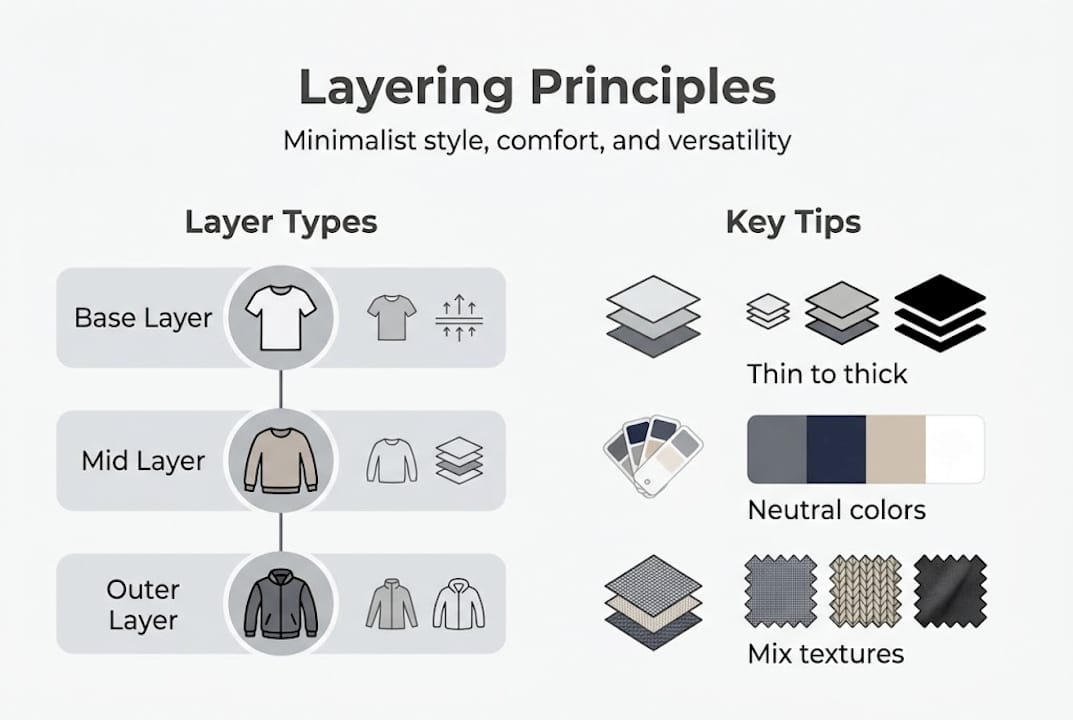
The single most important rule is thin to thick. Your base layer should always be the lightest fabric. Your mid layer adds a little more weight. Your outer layer is the heaviest. This sequence keeps you mobile, prevents overheating, and avoids that stuffed-sausage silhouette that kills an otherwise good outfit. Thin-to-thick layering prevents excessive bulk while maximizing comfort, and it’s the principle that separates intentional dressers from guys who just threw on whatever was nearby.
Here’s how to build a layered outfit step by step:
- Start with a breathable base. A well-fitted cotton tee or henley is ideal. It should sit close to the body without being tight. Avoid anything too thick here.
- Add an insulating mid layer. A lightweight merino sweater or an open-collar flannel shirt works well. This layer adds warmth and texture without adding visual noise.
- Finish with a structured outer layer. A chore coat, a bomber, or a simple field jacket completes the look. This piece frames the outfit and ties everything together.
- Check your proportions. Each layer should be slightly looser than the one beneath it. Nothing should bunch, pull, or restrict movement.
- Edit ruthlessly. If something feels off, remove a layer. Simplicity almost always wins.
Pro Tip: Avoid doubling up on heavy knits. Two thick sweaters don’t equal twice the warmth. They equal twice the bulk and half the style. Stick to one statement mid layer and let your outer piece do the heavy lifting.
Common mistakes to avoid:
- Skipping the base layer and going straight to a sweater (you lose moisture control and comfort)
- Wearing a thick inner layer under a slim-fit jacket (the jacket won’t close properly and the silhouette breaks)
- Matching every layer in the same fabric weight (it reads as flat and unintentional)
The three-layer system works because it’s built on logic, not trends. Once you understand the sequence, you can apply it to almost any situation, from a cold morning commute to a casual weekend outing.
Functional vs. stylistic layering: Key differences and when to use each
After understanding the principles and process, it’s important to distinguish the two key mindsets in fashion layering.
Functional layering is about thermal regulation and practical comfort. You’re dressing for conditions: cold weather, wind, rain, or unpredictable temperatures. The goal is to stay comfortable while being able to add or remove layers as needed. Think of a hiker who wears a moisture-wicking base, a fleece mid layer, and a waterproof shell. Every choice is driven by performance.
Stylistic layering is about visual depth and texture contrast. You’re not necessarily cold. You’re building an outfit that looks considered and interesting. An open flannel over a plain tee, or a lightweight jacket worn over a crewneck sweater, creates dimension without adding significant warmth. The goal here is aesthetic, not thermal.
As layering research confirms, both functional and stylistic approaches share the same thin-to-thick principle. The difference is the intention behind each choice.
Here’s how they compare:
| Approach | Primary goal | Best for | Key fabrics |
|---|---|---|---|
| Functional | Warmth, weather adaptation | Outdoor activities, cold climates | Merino, fleece, technical blends |
| Stylistic | Visual depth, texture contrast | City outings, casual settings | Cotton, linen, lightweight knits |
| Blended | Both comfort and style | Everyday minimalist wear | Cotton, merino, structured wovens |
The best minimalist outfits blend both approaches. You want to look good and feel comfortable. That’s not a compromise. It’s the point.
Situations where functional layering dominates:
- Winter hiking or outdoor work
- Commuting in unpredictable weather
- Travel across multiple climates in one day
Situations where stylistic layering takes the lead:
- A casual city outing on a mild day
- A relaxed dinner or social gathering
- Working from a coffee shop where you control the temperature
The style and comfort benefits of blending both approaches are real. You don’t have to choose between looking good and feeling good. The thin-to-thick rule handles both at once when you apply it consistently.
Building a versatile minimalist wardrobe through layering
Now that you understand the functional and style sides, here’s how to apply layering to your wardrobe for easy, everyday versatility.
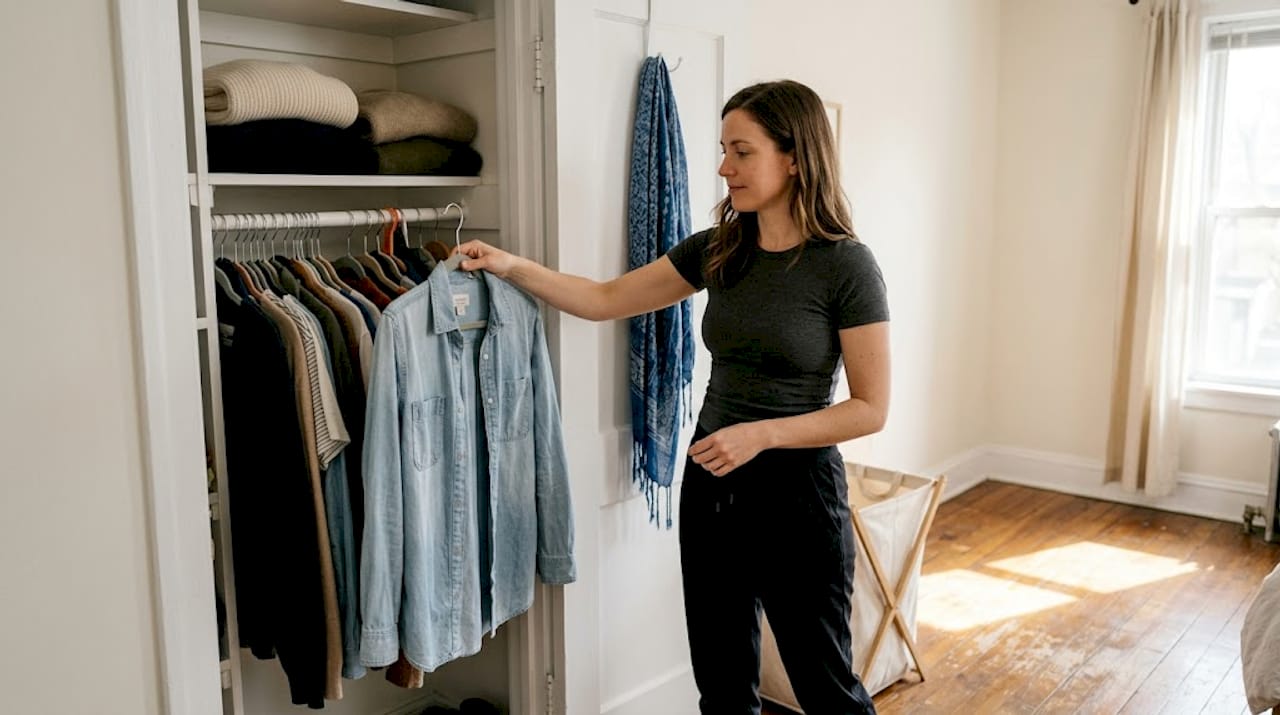
The foundation of a layering-friendly minimalist wardrobe is a small set of high-quality, neutral pieces that work together without effort. Layered clothing supports versatile outfits and minimalist wardrobes precisely because a few well-chosen items can cover a wide range of situations.
Start with these core pieces:
- Neutral heavyweight tees in white, black, gray, and navy. These are your base layer workhorses.
- A merino crewneck sweater in a mid-tone color like olive, slate, or camel. Merino regulates temperature well and resists odor.
- A lightweight jacket such as a chore coat, a bomber, or a field jacket. Choose one that works across casual and slightly dressed-up settings.
- A flannel or overshirt for a versatile mid layer that can also stand alone on warmer days.
- Simple accessories like a wool beanie or a lightweight scarf in neutral tones. These add a finishing touch without visual clutter.
For fabric choices, prioritize cotton, merino wool, and technical blends. These fabrics breathe well, layer easily, and hold up to regular wear. Check out the best t-shirts for layering if you want specific recommendations for base layers that actually perform.
Pro Tip: Store your layering pieces folded by category, not by outfit. When you can see all your base layers together, all your mid layers together, and all your outer layers together, building a new combination takes about thirty seconds.
Outfit rotation examples:
- Work: White tee + merino crewneck + chore coat in charcoal
- Weekend: Gray tee + open flannel + bomber jacket
- Travel: Thermal henley + lightweight knit + packable field jacket
For more ideas on putting these pieces together, the winter casual outfit guide and the mix and match winter styles guide are worth bookmarking. They show exactly how a small wardrobe can generate a lot of looks without any stress.
For care, wash base layers more frequently and outer layers less often. Most mid layers like merino sweaters only need airing out between wears. This extends the life of every piece and keeps your wardrobe in rotation longer.
Perspective: Why most men overthink layering and what really works
Here’s something most style guides won’t tell you: the men who look best in layered outfits are almost always wearing fewer pieces than you think. They’ve found two or three combinations that work for their body, their lifestyle, and their color palette, and they repeat those formulas with minor variations. That’s it.
The idea that successful layering requires constant experimentation is a myth. It sells magazines and fills social media feeds, but it doesn’t reflect how real, well-dressed men actually get dressed. Mastery in layering looks like confidence in repetition, not novelty.
The other trap is chasing contrast for its own sake. Mixing textures and colors can add depth, but forced combinations just look busy. Tonal layering, where your pieces share a similar color family with slight variation, is almost always more elegant and easier to pull off. Check out the essential layering items if you want a starting point that removes the guesswork.
Invest in reliable basics. Resist the urge to bulk up. Find your two or three formulas and wear them with confidence. That’s the real lesson.
Unlock minimalist layering with Smoked Times
If you’re ready to stop overthinking your wardrobe and start building something that actually works, Smoked Times has the pieces to get you there. Every item in the collection is designed with layering in mind: clean cuts, quality fabrics, and zero visual noise.

From heavyweight cotton tees that anchor any base layer to structured outerwear that finishes a look without effort, Smoked Times curates essentials built for repeat wear and real versatility. Tried a piece you love? Share your experience and submit your review to help other guys build smarter wardrobes. Great style starts with the right basics.
Frequently asked questions
What are the three layers in fashion layering called?
They are base, mid, and outer layers, each serving a different function for comfort and style. The base manages moisture, the mid insulates, and the outer protects and frames the outfit.
How do I start layering without adding bulk?
Use lighter fabrics for lower layers and reserve thicker items for the outermost piece, following the thin-to-thick rule. This keeps your silhouette clean and your movement unrestricted.
Is layering only for cold weather?
No. Layered clothing adapts outfits for different conditions year-round, not just cold weather. Lightweight layering in spring or fall adds style without adding warmth.
Can minimalist wardrobes work with layering?
Yes. Layered clothing supports versatile and minimalist wardrobes because it creates more outfit combinations from fewer pieces. Three core items can easily generate six or more distinct looks.