


Mix and Match Apparel Guide for Effortless Winter Style
Pulling sweaters from the back of your closet when the temperature drops often leaves you feeling uninspired about winter style. The challenge is finding pieces that you love and that actually work together for everyday comfort. By focusing on foundational staples, layering techniques, and neutral color palettes, you can create versatile streetwear looks that fit your real life and make getting dressed easier all season long.
Table of Contents
- Step 1: Assess Your Wardrobe Essentials
- Step 2: Select Core Pieces For Layering
- Step 3: Incorporate Accessories For Versatility
- Step 4: Verify Outfit Combinations For Everyday Wear
Quick Summary
| Essential Insight | Explanation |
|---|---|
| 1. Evaluate Your Wardrobe Essentials | Take stock of your current wardrobe to identify which foundational pieces you wear most often and which are in poor condition or unworn. |
| 2. Prioritize Layering Core Pieces | Select quality base and mid-layer pieces that are well-fitted and comfortable, focusing on neutral colors for versatility in winter outfits. |
| 3. Invest in Quality Accessories | Choose neutral accessories that can transform multiple outfits, enhancing style without cluttering your wardrobe with trendy items. |
| 4. Test Outfit Combinations | Lay out and try on complete outfits to ensure color coordination and balanced proportions, documenting successful combinations for quick access. |
Step 1: Assess Your Wardrobe Essentials
Start by taking a realistic inventory of what you already own. Pull everything from your closet and lay it out so you can see your current collection clearly. This visual approach helps you identify patterns in what you naturally reach for and what sits unworn.
Look for the foundational pieces that form the backbone of winter dressing. These include sweaters in different styles like crewneck and turtleneck, layering pieces, and sturdy outerwear. Quality basics in neutral colors are your best friends because they work together effortlessly across multiple outfits.
Key pieces to evaluate:
- Sweaters and cardigans that you actually enjoy wearing
- Sturdy outerwear including puffer coats and tailored options
- Well-fitting trousers in neutral shades
- Warm accessories like gloves, beanies, and scarves
- Long-sleeve shirts that layer smoothly
Next, assess the condition and fit of each item. Pieces that don’t flatter your body or need repair should be set aside. A smaller wardrobe of clothes that fit well beats a closet stuffed with pieces you avoid.
Check your color palette honestly. Notice if you have mostly warm tones, cool tones, or a mix. Winter styling becomes easier when your pieces coordinate naturally rather than fighting against each other. Building a seasonal wardrobe for every climate helps clarify which colors work best with your lifestyle.
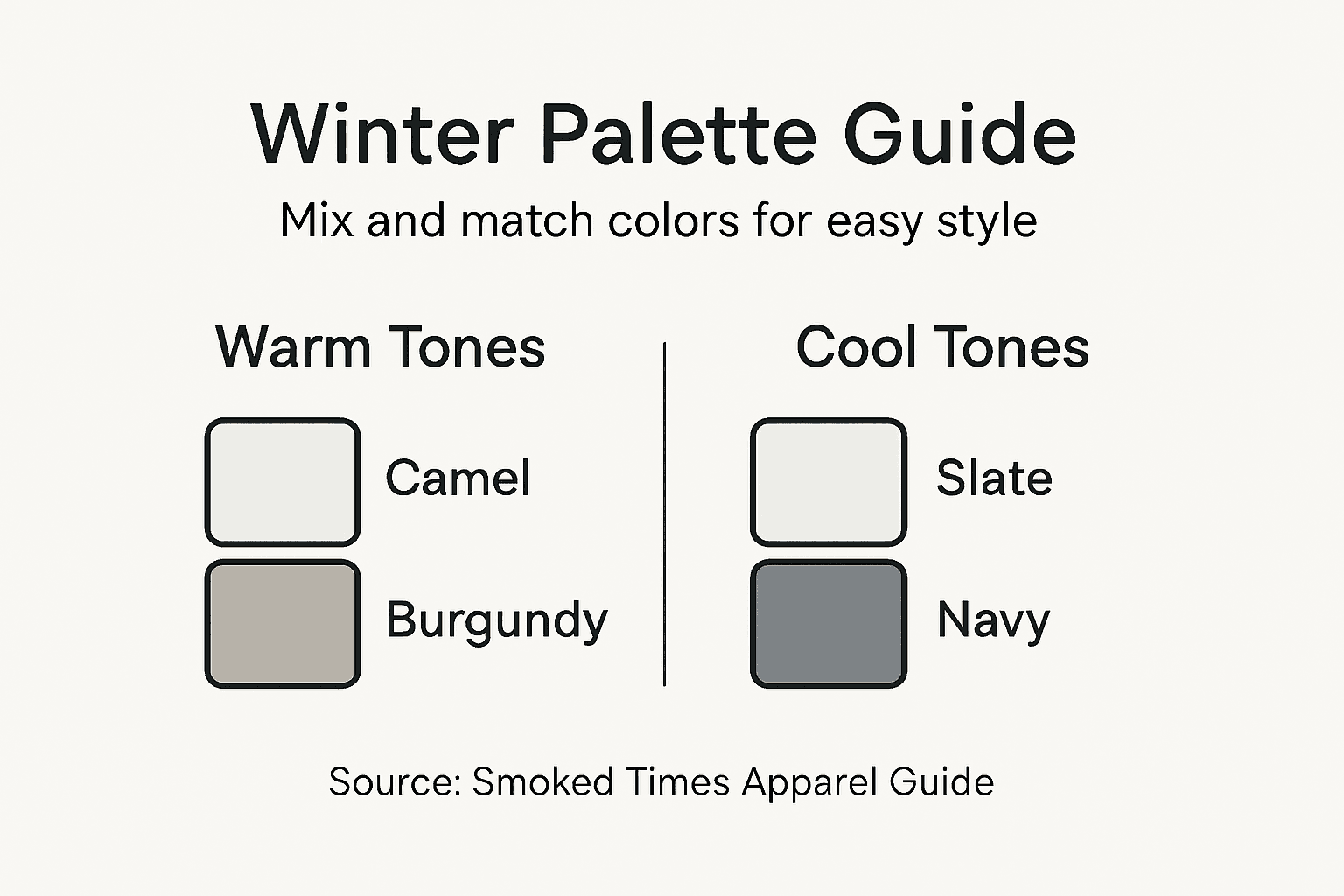
Here’s how color palettes influence winter wardrobe versatility:
| Palette Type | Benefits | Styling Challenge | Best Uses |
|---|---|---|---|
| Neutral palette | Coordinates easily, timeless | May lack vibrancy | Everyday outfits |
| Warm palette | Adds warmth and richness | Sometimes hard to mix | Work, cozy settings |
| Cool palette | Feels sleek and modern | May clash with warm tones | Business, casual chic |
| Mixed palette | Enables unique combos | Can appear less unified | Creative, varied looks |
Consider the lifestyle demands on your wardrobe. Are you dressing mostly for work, school, casual hangouts, or a mix of everything? Your assessment should reflect what you actually do, not what you think you should do.
Your winter wardrobe should reflect your real life, not an imaginary version of yourself that doesn’t exist.
Once you understand what you have and what gaps exist, you’ll know exactly what pieces to prioritize. This prevents impulse buying and helps you build outfits with intention rather than frustration.
Pro tip: Photograph each item individually as you assess it, then organize these photos into categories on your phone. This visual reference becomes invaluable when shopping or planning outfits away from home.
Step 2: Select Core Pieces for Layering
Layering is the secret weapon for winter dressing, and it starts with choosing the right base pieces. Your core layers form the foundation that everything else builds upon, so quality matters here more than quantity.
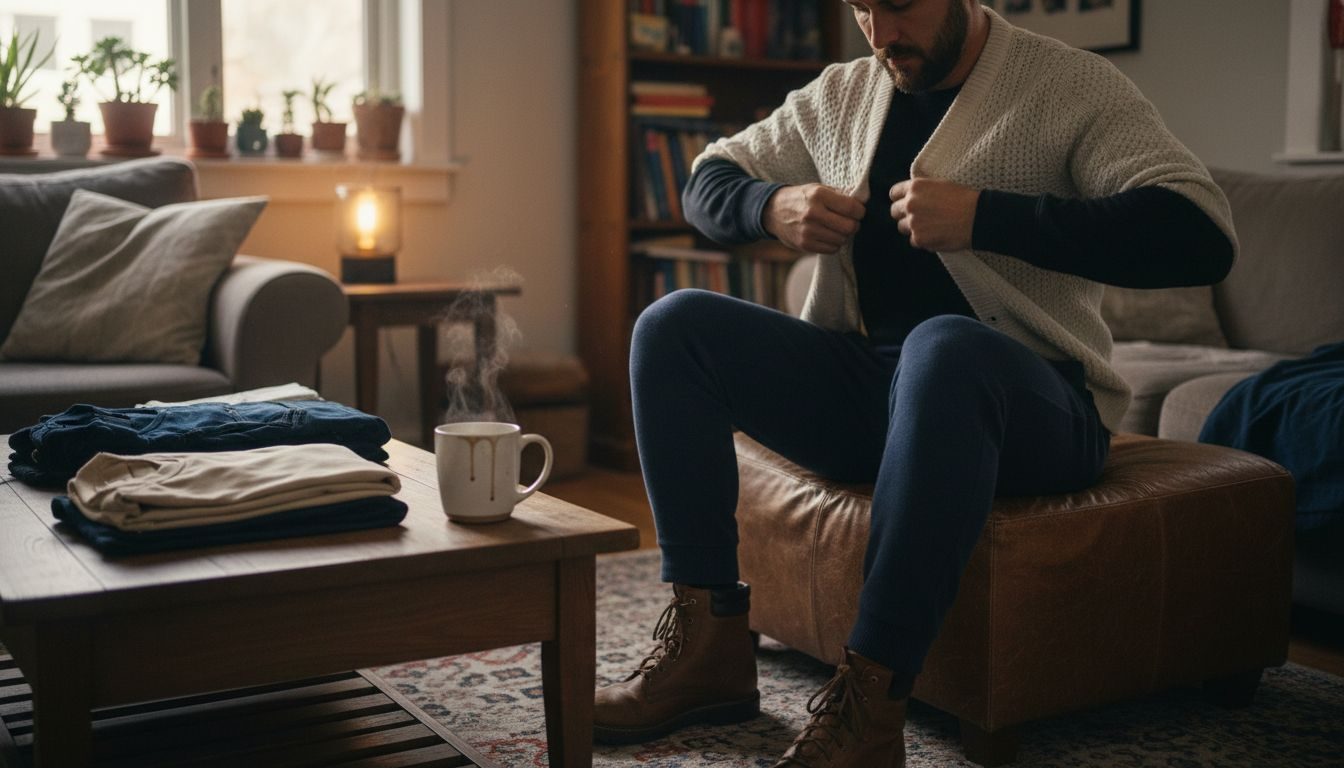
Start with well-fitted thermal tops as your first layer. These sit directly against your skin and should be snug without restricting movement. Look for pieces that wick moisture and provide warmth without bulk. Neutral colors like black, gray, and white give you maximum flexibility when combining with other pieces.
Your mid-layer is where personality enters the picture. This is where sweaters, turtlenecks, and cardigans shine. These pieces provide insulation while staying relatively thin, allowing you to add warmth without creating a puffy silhouette. The key to successful layering is avoiding excessive thickness by choosing lighter fabrics that still deliver warmth.
Core pieces to prioritize:
- Thermal or fitted long-sleeve base layers in neutral colors
- Crew neck and turtleneck sweaters in quality fabrics
- Cardigans that work over anything you throw at them
- Lightweight button-ups for versatile layering options
- Fitted tank tops for additional layering flexibility
Invest in neutral tones because they become the glue holding your outfits together. Black, gray, cream, and navy create natural harmony across your wardrobe. When layering pieces are neutral, you can experiment with texture and silhouette without worrying about color clashes.
Compare base, mid, and accessory layers for building winter outfits:
| Layer Type | Function | Typical Materials | Impact on Style |
|---|---|---|---|
| Base layer | Moisture wicking | Thermals, cotton blends | Keeps you warm, discreet |
| Mid layer | Adds insulation | Wool, knits, synthetics | Defines silhouette, flexible |
| Accessory layer | Enhances outfit | Leather, wool, synthetics | Elevates, adds personality |
Consider fabric weight carefully. Layering techniques for winter fashion stress that thinner, quality fabrics prevent that bulky appearance while still delivering serious warmth. Merino wool, cotton blends, and synthetic thermals all offer benefits without the thickness.
The best layering pieces are the ones you actually reach for because they feel good and look polished.
Your core pieces should be items you genuinely enjoy wearing. If a sweater feels itchy or a base layer rides up, skip it. You’ll naturally rotate through pieces you like, making your entire wardrobe more cohesive and functional.
Pro tip: Try on your potential layers together before committing to purchases. Wear a base layer under your favorite sweater with your coat to test the overall silhouette and comfort, ensuring everything works harmoniously.
Step 3: Incorporate Accessories for Versatility
Accessories are the easiest way to transform your winter outfits without buying an entire new wardrobe. A single scarf, belt, or bag can completely change the vibe of what you’re wearing, giving you exponentially more outfit combinations from fewer pieces.
Start by investing in quality neutral accessories that work across your entire wardrobe. Black, gray, cream, tan, and navy belts, scarves, and bags become invisible connectors that tie outfits together seamlessly. When accessories match your color palette, they enhance rather than compete with your clothing.
Scarves deserve special attention because they’re incredibly versatile. Wrap one around your neck for warmth and sophistication, drape it over your shoulders for a relaxed vibe, or tie it to a bag as an accent. A single quality scarf in a neutral tone works with dozens of outfit combinations.
Essential accessories to prioritize:
- Structured bags in neutral colors that hold your daily essentials
- Quality leather boots or chic sneakers for footwear flexibility
- Belts that cinch silhouettes and add definition
- Scarves in multiple textures for layering options
- Gloves and hats in neutral tones that complement everything
Belts are underrated winter tools. They define your waistline, break up long silhouettes, and instantly elevate casual outfits. A polished leather belt transforms a simple sweater and jeans into something put-together and intentional.
Accessories in winter wardrobes can transform basic pieces into multiple distinct looks. Quality footwear like leather boots also grounds your entire outfit and lasts for years if cared for properly.
Choose bags that work for your lifestyle. If you’re commuting to work or school, a structured tote or crossbody bag holds everything you need while looking polished. Neutral colors mean your bag works with every outfit you create.
One quality neutral accessory often does more for your wardrobe than three trendy items that only match a few outfits.
Accessories should feel functional, not like an afterthought. When they’re pieces you genuinely use and enjoy, they become the glue holding your winter style together and multiplying your outfit possibilities.
Pro tip: Before buying any accessory, mentally style it with at least three different outfits already in your closet. If you can’t easily imagine it working with multiple pieces, skip it and find something more versatile.
Step 4: Verify Outfit Combinations for Everyday Wear
Now comes the fun part: testing your combinations to see what actually works together. This is where you discover the real potential of your wardrobe and build confidence in getting dressed without overthinking it.
Start by laying out complete outfits on your bed or a designated space. Pair a base layer with a mid-layer, add your outer layer, then incorporate accessories. Step back and assess how everything looks together. Does it feel balanced? Do the colors work? Does it feel like you?
Test proportions carefully. If you’re wearing fitted bottoms, pair them with a relaxed top to avoid looking too compressed. If your sweater is oversized, slim-fitting pants create better visual balance. Mix-and-match formulas for winter outfits help ensure you’re not accidentally creating awkward silhouettes.
Try on combinations physically whenever possible. Seeing how pieces drape on your actual body reveals things that laying clothes flat cannot. You’ll notice if a scarf overwhelms your frame or if a belt cinches at an unflattering angle.
Verification checklist for each outfit:
- Color coordination flows without clashing or feeling too monochromatic
- Proportions balance fitted with relaxed pieces
- Layering doesn’t create excessive bulk at the midsection
- Accessories complement without overpowering the outfit
- You feel comfortable and confident wearing it
Document your successful combinations. Take photos of outfits you love so you can recreate them on busy mornings. These become your go-to formulas when you’re short on time or energy.
Experiment with patterns and textures deliberately. Start with neutral bases and add textural interest through different fabric weights. A smooth silk scarf over a chunky knit sweater creates visual appeal without chaos.
The best outfit is one you’ll actually wear repeatedly because it makes you feel good and works for your real life.
Don’t force combinations that feel off. If something doesn’t click after trying it on, that’s valuable information. Your instincts matter more than any rule about matching colors or following trends.
Pro tip: Create a simple spreadsheet or note with your verified outfit combinations, listing each piece used. On hectic mornings, you can reference these pre-tested looks instead of scrambling to coordinate everything from scratch.
Elevate Your Winter Wardrobe with Effortless Mix and Match Solutions
Struggling to create versatile winter outfits that fit your lifestyle and keep you comfortable is a common challenge. This guide showed how crucial it is to focus on layering, choosing neutral foundational pieces, and incorporating quality accessories that actually get worn. At Smoked Times, we understand your need for functional yet stylish apparel designed for easy mixing and matching through the season.
Discover our Hoodies Collection – Premium Oversized & Fleece Hoodies – Smoked Times featuring cozy, well-fitted pieces perfect for layering. Pair these with essentials from our Cotton T-Shirts – Smoked Times range to build a flexible winter capsule wardrobe that matches your color palette and lifestyle demands.
Ready to stop wasting time and money on pieces that don’t work together? Visit smokedtimes.com now to shop thoughtfully designed winter staples that help you mix, match, and master your style with confidence today.
Frequently Asked Questions
How can I assess my current winter wardrobe effectively?
To assess your current winter wardrobe, pull everything from your closet and lay it out visually. Evaluate the fit, condition, and color palette of each item to identify which pieces you truly enjoy wearing and which may need repair or replacement.
What are core pieces I should include for winter layering?
Core pieces for winter layering should include well-fitted thermal tops, quality sweaters, and versatile cardigans. Prioritize neutral colors to create flexibility and harmony in your outfits.
How do I choose accessories that enhance my winter wardrobe?
Choose accessories in neutral tones, such as scarves, belts, and bags, that can seamlessly tie various outfits together. Investing in quality pieces that match your color palette will maximize versatility.
What is the best way to verify potential outfit combinations?
To verify outfit combinations, lay out complete outfits and check for color coordination and balance in proportions. Try on the outfits to assess comfort and ensure that layering doesn’t create excessive bulk.
How can I document stylish outfits for easy access later?
Document your stylish outfits by taking photos of combinations you love and create a simple spreadsheet or note listing each piece used. This way, you can quickly reference these looks on busy mornings without scrambling.