


Why layer clothing for better warmth and style
Struggling to stay warm without looking bulky? Many shoppers believe one thick sweater is warmest, but layering thin clothes actually traps more heat between fabrics. This approach not only keeps you warmer but also lets you adjust your outfit as temperatures shift throughout the day. Understanding how to layer properly transforms winter dressing from frustrating to functional, giving you control over comfort and style.
Table of Contents
- Why Layering Works: The Science Of Warmth And Moisture Control
- Materials And Fabrics: Choosing Each Layer Wisely
- Common Misconceptions About Layering Clothing
- How To Layer Clothing Effectively: Practical Guide
- How Layering Enhances Both Function And Style
- Conclusion And Next Steps For Winter Comfort
- Upgrade Your Winter Wardrobe With Smoked Times
- FAQ
Key takeaways
| Point | Details |
|---|---|
| Layering traps heat better | Multiple thin layers create insulating air pockets that retain warmth more effectively than single thick garments. |
| Moisture control is essential | Base layers wick sweat away from skin, preventing the chill caused by dampness. |
| Fabric choice matters | Wool and synthetics insulate well, while cotton retains moisture and should be avoided next to skin. |
| Flexibility for conditions | Easy to add or remove layers when moving between outdoor cold and indoor heat. |
| Style meets function | Mixing textures and colors creates versatile, fashionable looks while maintaining warmth. |
Why layering works: the science of warmth and moisture control
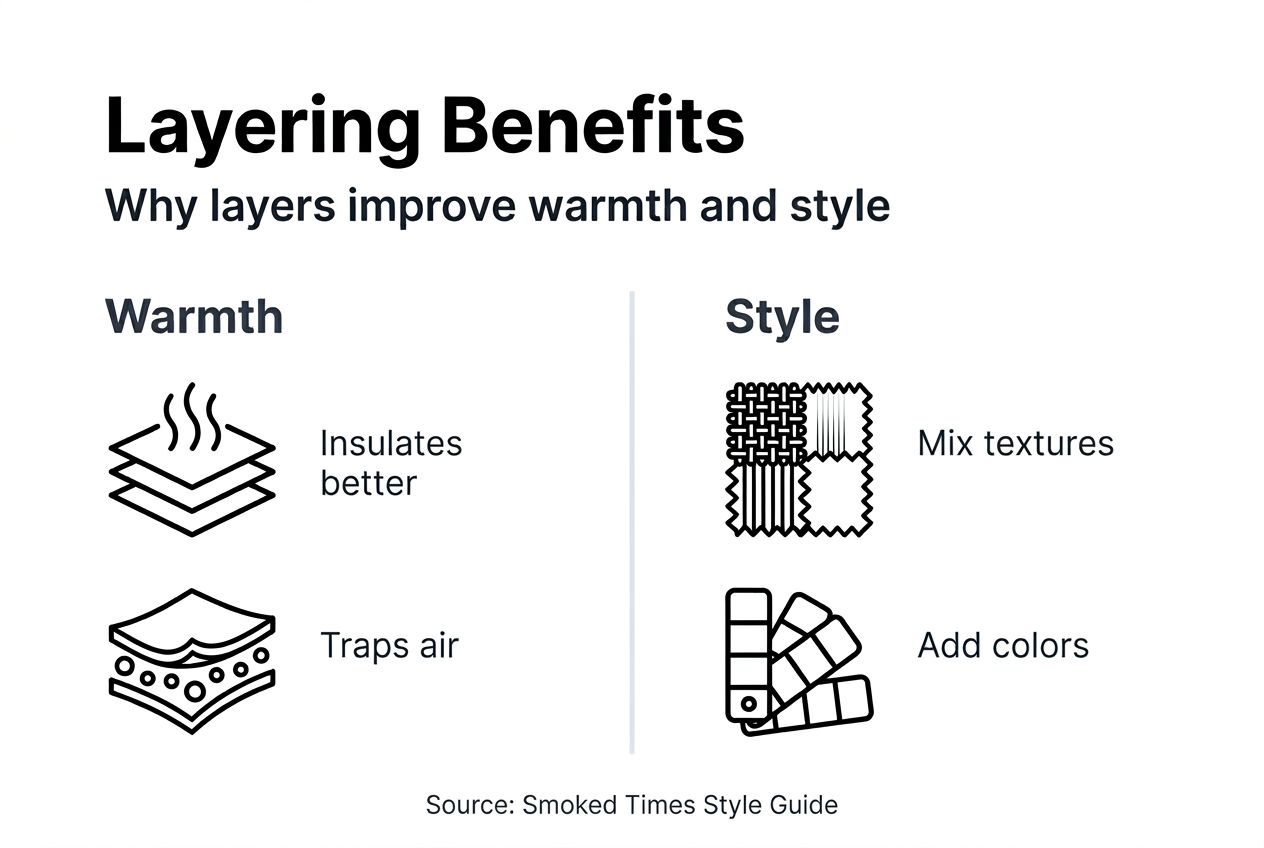
The effectiveness of layering comes down to basic physics. Layering clothes traps air between layers, which acts as insulation to retain body heat effectively. Air is actually a poor conductor of heat, meaning it prevents your body warmth from escaping. Each additional layer creates another air pocket, building a thermal barrier that one thick garment cannot match.
Your body generates heat constantly, but it also produces moisture through sweat. When moisture sits against your skin, it cools through evaporation, making you feel cold even when bundled up. This is where the three layer system boosts warmth by addressing both heat retention and moisture management simultaneously.
Consider how different layers work together:
- Base layers pull moisture away from your skin through wicking fabrics
- Mid layers trap warm air while allowing moisture vapor to escape
- Outer layers block wind and precipitation while remaining breathable
- Each layer enhances the others’ performance through coordinated functions
Windproof outer layers are particularly important because wind accelerates heat loss dramatically. Even a gentle breeze can strip away the warm air trapped in your clothing, a phenomenon called convective heat loss. A proper shell layer stops this process while the inner layers maintain their insulating properties.
“The beauty of layering is that it creates a microclimate around your body, maintaining steady warmth while managing the moisture your body naturally produces during activity.”
This scientific approach to dressing means you can stay comfortable in temperatures ranging from just below freezing to extreme cold, simply by adjusting the thickness and number of your mid layers. The science of layering clothing proves that strategic layering outperforms bulky single garments every time.
Materials and fabrics: choosing each layer wisely
Fabric selection determines whether your layering system succeeds or fails. Each layer requires specific material properties to perform its designated function effectively.
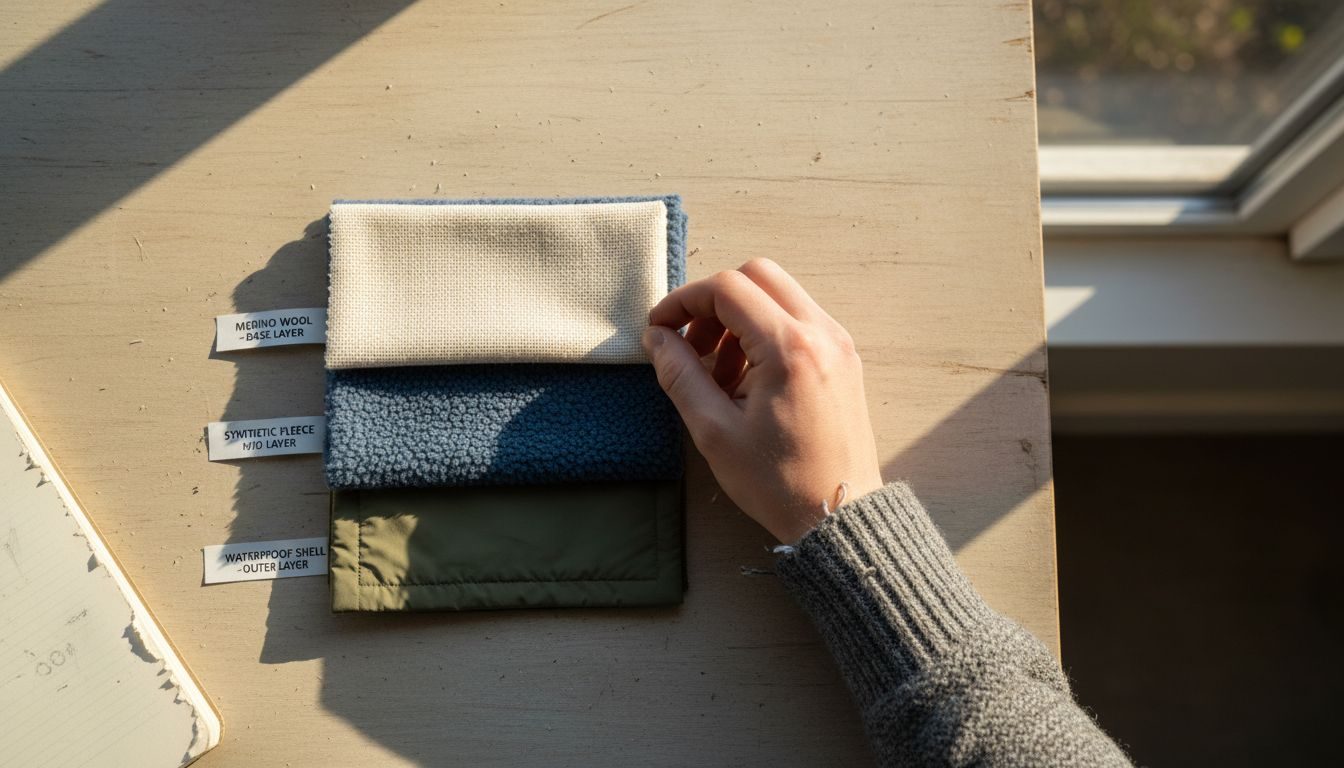
For base layers, merino wool and synthetic fabrics like polyester excel at wicking moisture away from skin. These materials move sweat to the outer surface where it can evaporate, keeping your skin dry and preventing that clammy, cold feeling. Avoid cotton entirely as a base layer because it absorbs moisture and holds it against your skin, leading to rapid cooling.
Mid layers should prioritize insulation while remaining breathable. Fleece, down, and synthetic insulation like PrimaLoft trap air effectively. Wool sweaters or hoodies provide excellent warmth while naturally resisting odors. The best outdoor clothing essentials winter comfort guide emphasizes choosing mid layers that balance warmth with packability.
Outer shells need to be windproof and water resistant while allowing moisture vapor to escape. Look for materials with these characteristics:
- Nylon or polyester with DWR (durable water repellent) finish
- Membrane fabrics that block water while remaining breathable
- Adjustable features like zippers for ventilation control
- Durable construction that withstands abrasion and repeated use
Pro Tip: Test fabric breathability by holding it up to your mouth and breathing through it. If air passes easily, moisture vapor will too, preventing sweat buildup during activity.
Natural fibers like wool offer unique advantages including natural temperature regulation and odor resistance. Synthetic fabrics dry faster and typically cost less, making them practical for frequent use. Many experienced winter dressers combine both material types to get the best properties from each.
The weight of fabrics matters too. Lightweight base layers work for most conditions, while expedition weight materials suit extreme cold. Mid layers range from thin fleece for mild cold to thick down jackets for arctic conditions. Matching fabric weight to expected temperatures prevents overheating or insufficient warmth.
Common misconceptions about layering clothing
Several persistent myths about winter dressing lead people to make ineffective clothing choices. Understanding these misconceptions helps you avoid common mistakes.
Many believe one thick jacket provides more warmth than multiple thinner layers. This assumption ignores how air trapping works. Three thin layers create two insulating air spaces, while one thick layer creates none. The thin layers also allow better moisture management and temperature adjustment.
Another widespread myth is that any fabric works for layering. Some people wear cotton base layers because they feel soft and comfortable initially. However, cotton’s moisture retention creates a cooling effect that negates the warmth from outer layers. Once cotton gets damp from sweat or snow, it loses nearly all insulating value.
The how to style fall outfits 2026 article addresses another misconception: that layering only applies to extreme cold. Actually, layering works for any cool weather because you can adjust the number and thickness of layers. Light layering prevents overheating in mild temperatures while keeping you prepared for temperature drops.
Some shoppers think more layers always equals more warmth. This oversimplification ignores fabric choice and fit. Five layers of poor materials perform worse than three layers of appropriate fabrics. Layers that fit too tightly restrict blood flow and reduce the air trapping that provides insulation.
Consider these common mistakes:
- Wearing layers so tight they compress and eliminate air pockets
- Choosing fashion over function in base layer materials
- Overdressing for activity level, causing excessive sweating
- Neglecting outer layer breathability, trapping moisture inside
The misconception that layering looks bulky or unfashionable prevents many from trying it. Modern layering techniques actually create sleeker profiles than single bulky garments while offering superior performance. Proper fit and coordinated colors make layered outfits both functional and stylish.
How to layer clothing effectively: practical guide
Successful layering follows a systematic approach that adapts to your specific conditions and activities. Start by understanding the three layer system as your foundation.
- Begin with a moisture wicking base layer that fits snugly without restricting movement.
- Add an insulating mid layer like a fleece or hoodie that traps warm air.
- Top with a protective outer layer that blocks wind and moisture.
- Adjust thickness and number of mid layers based on temperature.
- Remove or add layers as your activity level changes.
The best outdoor clothing essentials winter comfort collection shows how versatile basic pieces enable countless layering combinations. A quality hoodie functions as either a warm mid layer or a casual outer layer in milder weather.
Activity level dramatically affects how you should layer. High intensity activities generate more body heat and sweat, requiring fewer, lighter layers with excellent breathability. Low intensity activities like standing outside need thicker insulation since your body produces less heat.
Pro Tip: Always start with one less layer than you think you need. You can always add more, but removing layers when you’re already sweating is less effective.
Fit matters as much as fabric. Base layers should fit snugly to wick moisture effectively. Mid layers need room to trap air without being baggy. Outer layers must accommodate all inner layers without restricting movement. The comfortable winter clothing three layer system explains proper fit for each layer.
Compare the performance differences:
| Approach | Warmth | Moisture Control | Adjustability | Style Options |
|---|---|---|---|---|
| Single thick garment | Moderate | Poor | None | Limited |
| Proper layering | Excellent | Excellent | High | Versatile |
| Multiple poor layers | Low | Poor | Moderate | Bulky |
Color coordination and texture mixing elevate layered outfits from functional to fashionable. Neutral base layers pair with any mid layer color. Contrasting textures like smooth base layers under chunky knit sweaters add visual interest. Lighter colors in outer layers reflect heat back toward your body while darker mid layers absorb and retain warmth.
How layering enhances both function and style
Layering transforms winter dressing into an opportunity for creative expression while maintaining practical benefits. The ability to mix and match pieces exponentially increases outfit possibilities from a limited wardrobe.
Consider how three base layers, four mid layers, and two outer layers create 24 different combinations. Each combination adapts to different temperatures, activities, and style preferences. This versatility makes layering economically smart since fewer total pieces generate more looks.
Transitioning between environments becomes effortless with proper layering. Walking into a heated building after being outside, you simply remove your outer layer and remain comfortable. Traditional single garment dressing leaves you either too hot indoors or too cold outside.
The how to style winter hoodies guide demonstrates how hoodies serve multiple layering roles. Wear them as standalone pieces in mild cold, under jackets for extra warmth, or over long sleeve base layers for adjustable comfort. This flexibility maximizes value from each wardrobe piece.
Style benefits extend beyond versatility:
- Textural contrast between layers creates visual depth
- Color blocking opportunities from visible layer edges
- Proportional balance through varying layer lengths
- Casual to refined looks achievable with the same base pieces
The winter fashion accessory pairing article shows how scarves, beanies, and gloves complement layered outfits. Accessories add both functional warmth and style finishing touches that complete your look.
Modern layering draws from technical outdoor gear and urban fashion simultaneously. The piloten hoodie layering 2026 concept exemplifies this fusion, combining performance fabrics with streetwear aesthetics. You get microclimate comfort control in clothing that looks intentionally styled rather than purely utilitarian.
Layering also allows personal temperature preference expression. Some people run warm and need fewer layers, while others feel cold easily and prefer more insulation. The system adapts to individual needs without requiring completely different wardrobes.
Conclusion and next steps for winter comfort
Mastering layering revolutionizes how you experience winter weather. The combination of superior warmth, moisture management, and style flexibility makes layering the clear choice over single garment approaches.
Your success depends on choosing appropriate fabrics for each layer and understanding how they work together. Start with moisture wicking base layers, add insulating mid layers, and protect everything with a windproof shell. Adjust the number and thickness of layers based on temperature and activity.
Experiment with your existing wardrobe first to understand layering principles before investing in new pieces. You likely already own items that work well in a layering system. As you identify gaps, prioritize quality base layers since they provide the foundation for everything else.
The adaptability of layering means you can start simple and refine your approach over time. Pay attention to which combinations keep you most comfortable in different situations. This personal knowledge guides future clothing purchases and daily outfit decisions.
Remember that effective layering balances warmth, breathability, and style. No single factor dominates, they all contribute to overall comfort and confidence in cold weather.
Upgrade your winter wardrobe with Smoked Times
Ready to build a versatile layered wardrobe? Smoked Times offers quality pieces designed for effective winter layering. Our hoodies collection features mid layers that trap warmth while remaining breathable enough to wear comfortably indoors and out.

The winter hoodie exemplifies ideal mid layer design, with fabric that insulates without bulk and a fit that layers smoothly under jackets. Combined with base layers and outer shells, it creates a complete system for winter comfort. Explore our essentials collection for foundational pieces that mix and match effortlessly, giving you maximum outfit combinations from minimal items.
FAQ
Why is layering better than wearing one thick garment?
Multiple thin layers trap insulating air pockets between fabrics, retaining heat more effectively than single thick items. Layering also manages moisture by wicking sweat away from skin, preventing the chill that dampness causes.
What fabrics should I avoid for base layers and why?
Cotton absorbs and holds moisture against your skin, causing rapid cooling through evaporation. Choose merino wool or synthetic materials that wick moisture away, keeping your skin dry and maintaining warmth.
How do I adjust layers when moving from outdoor to indoor settings?
Remove your outer shell layer when entering heated buildings, leaving mid layers that provide comfort without overheating. Lightweight hoodies work perfectly as adaptable mid layers that transition easily between environments.
Can layering help with style as well as warmth?
Layering enables mixing colors, textures, and proportions for versatile looks from the same wardrobe pieces. The visible edges and combinations of different fabrics create intentional, fashionable outfits while maintaining practical warmth.
Recommended
- Role of Layering in Fashion: Style, Comfort, Versatility – Smoked Times
- Winter Fashion Guide 2026: Master Casual Layering Trends – Smoked Times
- What Defines Comfortable Clothing? 3-Layer System Boosts Warmth – Smoked Times
- Master winter casual style for warmth and trend in 2026 – Smoked Times
- Winter Plush Fashion Thicken Lapel Outwear Coat – 16th Avenue