


What Makes Apparel Truly All-Weather and Timeless
TL;DR:
- Most “all-weather” clothing is designed for narrow conditions and often fails in real-world scenarios. True all-weather apparel should perform well across various temperatures, moisture levels, and use cases, but many brands oversell their capabilities. Building a minimalist wardrobe with high-quality, purpose-driven pieces like merino wool, synthetic insulation, and waxed cotton ensures reliable comfort and durability regardless of weather.
You’ve been there. A jacket labeled “all-weather” leaves you soaked on a drizzly Tuesday. A hoodie marketed as “versatile for every season” turns into a sweat trap the moment temperatures rise. The promise of all-weather clothing is everywhere, but the real thing is frustratingly rare. Here’s the truth: most clothing marketed as all-weather is designed for a narrow band of conditions, and the gap between the tag and real life is wide. This guide cuts through that noise to show you what actually works, what materials matter, and how a thoughtful, minimalist approach to your wardrobe can keep you comfortable no matter what the sky decides to do.
Table of Contents
- Understanding all-weather apparel: More than marketing
- Fabrics that excel in any weather
- The science of layering: Adaptability for every season
- Timeless style: Minimalism meets all-weather performance
- Why most ‘all-weather’ labels fail: Our perspective
- Ready for all-weather style? Discover more with Smoked Times
- Frequently asked questions
Key Takeaways
| Point | Details |
|---|---|
| Material matters most | Fabrics like synthetics, merino blends, and waxed cotton excel for all-weather wear. |
| Smart layering is key | Layering allows you to adapt your wardrobe for any season and activity. |
| Minimalism boosts versatility | Choosing timeless, simple designs ensures both comfort and long-lasting style. |
| Real-world performance varies | Breathability and waterproof claims can fall short; test gear and consider climate. |
| Balance style with function | Modern wardrobe choices let you enjoy comfort and adaptability without sacrificing looks. |
Understanding all-weather apparel: More than marketing
To truly understand which apparel lives up to all-weather promises, let’s start by defining the term beyond marketing lingo.
“All-weather” should mean one thing: a garment that performs across a genuine range of temperatures, moisture levels, and use cases. A light rain shower in spring, a damp morning commute in fall, or a cold wind off the water in early winter. True all-weather apparel needs to handle all of these without making you miserable or forcing you to carry a bag full of backup clothing.
The problem is that most brands use “all-weather” as a catch-all label for items that really only perform in one or two of those situations. A jacket may repel light drizzle but trap heat the moment you move faster than a slow walk. A shirt may breathe beautifully in dry 65°F air but feel like plastic wrap on a humid 75°F afternoon. These are not edge cases. These are your Tuesday and Thursday mornings.
“Breathability fails in high humidity and low temperature differentials regardless of the membrane used. Real-world breathable waterproof performance depends heavily on activity level and heat output.”
This is the dirty secret most brands skip in their product descriptions. A garment’s breathability rating is measured in lab conditions, often at moderate temperatures with low humidity and moderate movement. Your actual day looks nothing like a lab.
Understanding three key terms will help you make smarter choices. Waterproof means no moisture penetrates the fabric, even under sustained pressure. Water-resistant means the fabric repels light rain for a short time but will eventually soak through. Breathable means moisture vapor (your sweat) can escape through the fabric. You want all three working together, but they rarely do at full strength simultaneously. That tension is why the role of layering in fashion becomes so essential to filling the gaps.
Fabrics that excel in any weather
Once we define all-weather honestly, the next step is understanding which materials actually perform. Let’s break down the leading fabric contenders.
Not all fabrics are created equal, and for casual, minimalist wardrobes, the wrong choice means either sweating through a layer or shivering when the wind picks up. Here’s a clear look at what the main all-weather fabrics bring to the table.
Synthetic insulation is a standout for wet and mixed conditions. Synthetic insulation retains 70 to 80% of its warmth even when wet, and it dries quickly once you’re back somewhere warm. Down, in contrast, loses most of its loft and insulation value the moment it absorbs moisture, making it a poor choice for anything other than dry, cold air. The trade-off with synthetics is that they tend to be slightly bulkier and heavier than down for the same warmth level in dry conditions. But for real-world, unpredictable weather, synthetics win.
Merino wool blends offer a natural all-weather option that’s genuinely impressive. Merino regulates temperature by absorbing moisture vapor before it becomes liquid sweat, releasing it as your body cools. It resists odor naturally, making it ideal for travel or days where you’re unsure how much activity you’ll be doing. The blend part matters: a merino-synthetic mix improves durability, since pure merino can pill or thin over time with heavy use.
Waxed cotton is a classic that deserves its reputation. The wax coating makes the fabric water-resistant without synthetic membranes, and the material gets better with age as the wax redistribution creates a personal wear pattern. It’s heavier than modern synthetics, but the payoff is a rugged, vintage aesthetic that works just as well in a city as on a trail.
| Fabric | Warmth when wet | Breathability | Durability | Style versatility |
|---|---|---|---|---|
| Synthetic insulation | High | Moderate | High | Moderate |
| Merino wool blend | Moderate | High | Moderate | High |
| Waxed cotton | Low | Low | Very high | High |
| Down | Very low | High | Moderate | Moderate |
| Stretch wovens | Low | High | High | Very high |
Pro Tip: If you’re building a minimal, all-weather wardrobe, start with a merino base layer and a synthetic mid layer. These two pieces handle about 80% of weather situations most people encounter in a typical year, and they take up almost no space in a bag or closet.
For a deeper comparison of cold-season fabric performance, our winter clothing types guide walks through specific pieces that deliver both comfort and durability.
The science of layering: Adaptability for every season
Selecting the right materials is just one half. Now let’s see how layering can take your outfit from summer heat to winter chill with minimal fuss.
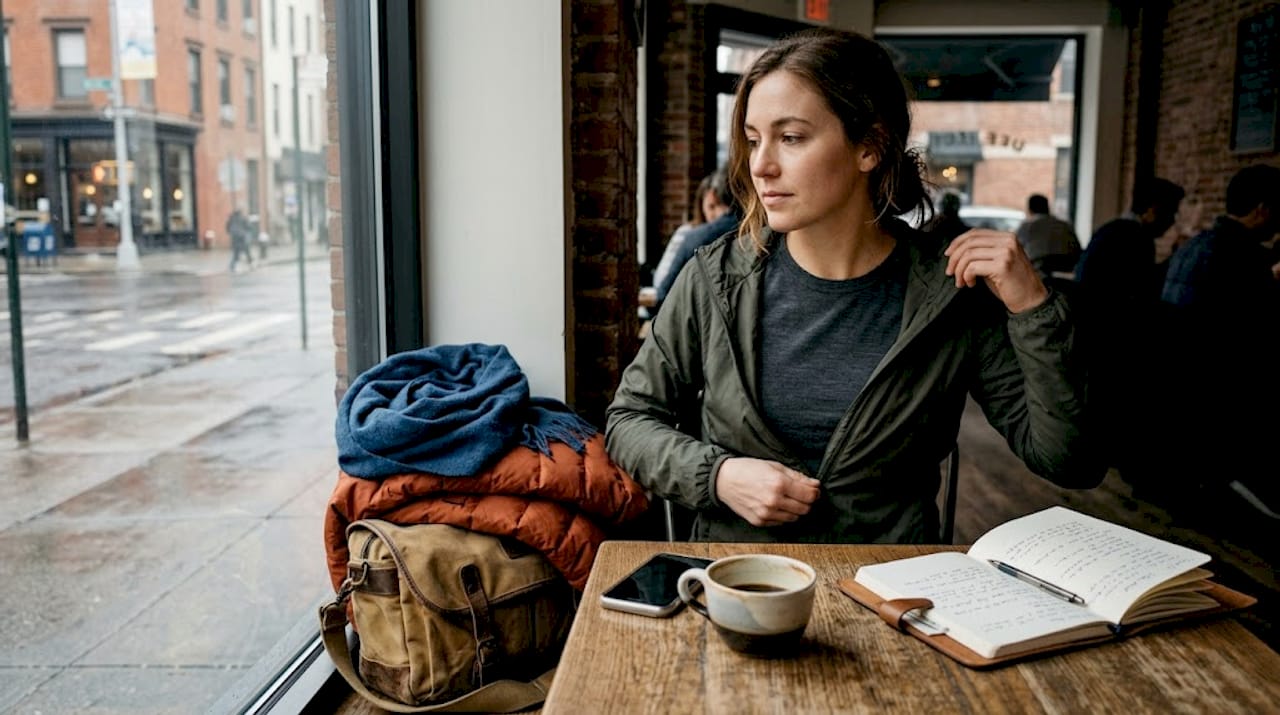
Layering is not just a cold-weather trick. It is a full-season strategy. When done correctly, three intentional layers can take you from a cool morning through a warm afternoon and into a cold, damp evening without ever feeling under or overdressed. Layering enables adaptability for casual enthusiasts, with lightweight packable shells over synthetic mid layers creating all-season minimalist wardrobes that require almost no extra gear.
Here’s how the three-layer system works in practice:
-
Base layer: This sits directly against your skin. Its job is to move moisture away from your body, keeping you dry whether you’re warm or cold. Merino wool or a lightweight synthetic are the best choices here. Avoid standard cotton for this layer because it absorbs sweat and holds it against your skin, making you feel cold and clammy when temperatures drop.
-
Mid layer: This is your insulation. Its job is to trap warm air close to your body. A synthetic-fill hoodie, a fleece pullover, or even a heavyweight cotton sweatshirt can work here, depending on the temperature range. For truly variable weather, a synthetic-fill piece is the most reliable because of its performance when damp, as discussed above.
-
Shell layer: This is your protection from wind and rain. A packable wind-shell or light rain jacket goes over everything and blocks the elements without adding significant bulk. For most casual situations, a water-resistant shell is enough. Full waterproof shells are heavier and less breathable, making them better suited to sustained rain rather than everyday use.
Understanding why layering creates better warmth comes down to air pockets. Each layer traps a thin cushion of warm air, and those cushions stack. One thick coat traps one layer of air. Three thoughtful layers trap three layers of air, and they adapt independently as conditions change.
Pro Tip: Pack your shell into itself if it has a stuff pocket, and keep it in your bag or backpack year-round. You’ll be surprised how often a packable rain shell turns a ruined day into a perfectly comfortable one.
For specific outfit formulas and how to combine pieces visually, check out our guides on the three-layer clothing system and smart layering techniques that bring both function and style together.
Timeless style: Minimalism meets all-weather performance
Layering brings flexibility, but how does this fit with a desire for simple, lasting style? This is where minimalism shines.
Minimalism in fashion is not about owning less for its own sake. It is about owning things that do more. A well-chosen piece of clothing that works in three seasons, layers under or over four other pieces, and looks sharp in both a grocery store and a weekend hike is worth ten trendy items that only work in one narrow context.
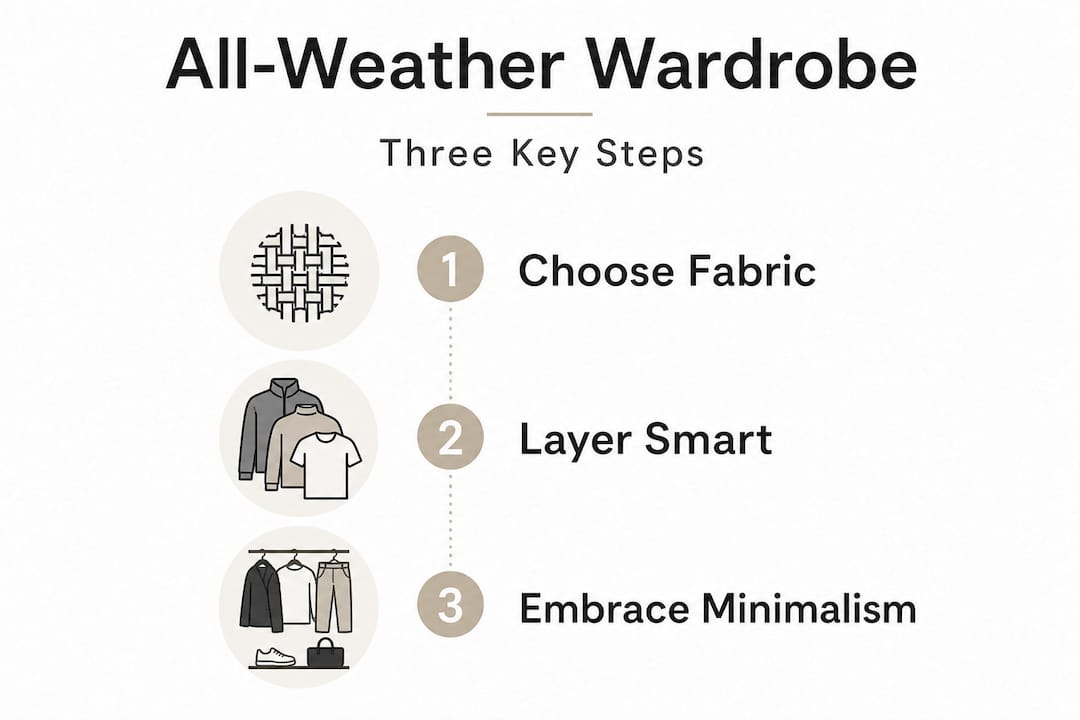
For minimalist casual wardrobes, merino blends, waxed cotton, and stretch wovens offer durable, timeless versatility without unnecessary bulk. These fabrics share something important: they age well. They don’t fade aggressively, they don’t develop obvious wear patterns quickly, and they retain their shape after washing.
Building a capsule all-weather wardrobe means prioritizing:
- Neutral, versatile colors: Charcoal, navy, olive, and off-white work across every season and mix with almost anything.
- Heavyweight, quality construction: A heavier cotton T-shirt or a well-sewn hoodie will outlast three cheap, lightweight alternatives.
- Minimal branding: Loud logos date quickly. Clean, unbranded pieces stay relevant year after year.
- Multi-function design: A piece that works as both a standalone and a layer is worth twice as much in your wardrobe.
| Piece | Primary use | Secondary use | Weather range |
|---|---|---|---|
| Heavyweight cotton T-shirt | Base layer, summer top | Mid layer under a shell | Spring, summer, mild fall |
| Merino blend pullover | Mid layer | Standalone in mild cold | Fall, winter, cool spring |
| Waxed cotton overshirt | Light shell, standalone | Mid layer under a jacket | Spring, fall, mild winter |
| Synthetic-fill hoodie | Mid layer, casual wear | Standalone in cool temps | Fall, winter |
| Packable wind shell | Shell layer | Travel layer | All seasons |
Our guide on minimalist layering principles goes further into how to combine these pieces into a wardrobe that feels intentional without being rigid.
Why most ‘all-weather’ labels fail: Our perspective
Equipped with the science and strategy, let’s challenge some common assumptions about all-weather apparel from an insider’s point of view.
Here’s the uncomfortable reality: the all-weather label on most clothing is a marketing decision, not a performance guarantee. Brands know that “all-weather” is a purchasing trigger. It sounds like smart buying. It sounds like you’re getting more for your money. But the label is rarely backed by testing in real-world conditions, and almost never accounts for the combination of high activity, humidity, and mixed precipitation that most people actually encounter.
The “breathable waterproof” category is the biggest offender. Yes, membranes like those found in many technical shells allow some water vapor to pass through. But as hydrophobic down still doesn’t match synthetics in wet cold, breathable shells still fail most people in genuinely wet and active conditions. The vapor pressure differential required for these membranes to work efficiently simply doesn’t exist when it’s raining hard, you’re moving fast, and the air is humid. You end up wet from the inside.
The fix isn’t buying more expensive gear. It’s shifting your mindset. Stop looking for one garment to solve every weather problem. Start building a small collection of honest, purpose-driven pieces that work together. A merino base, a synthetic mid, a clean shell, and a couple of versatile tops can replace a closet full of single-use “all-weather” jackets.
Future-proofing your wardrobe also means thinking about how your style will evolve. Trends shift. Body weight and shape change. What doesn’t change is the appeal of well-made, clean, comfortable basics. Following casual layering trends for 2026 shows a clear move toward exactly this: quieter, more durable, more functional wardrobes. People are tired of buying fast and replacing often.
Our view is simple. Real all-weather dressing is about building smart rather than buying into labels. It rewards patience, a willingness to invest in quality, and the clarity to choose pieces that earn their spot in your rotation every single day.
Ready for all-weather style? Discover more with Smoked Times
You know what to look for. Here’s where to start your journey toward a better, long-lasting wardrobe.
At Smoked Times, we build exactly the kind of wardrobe pieces this guide talks about. Heavyweight cotton T-shirts that layer well and hold their shape. Clean, minimal hoodies that earn their spot in your rotation through fall and winter. Durable basics with no loud branding, no seasonal gimmicks, and no compromise on fabric quality. Every piece is built for repeat wear because we believe your wardrobe should work harder so you don’t have to think about it as much.
We also know that building a better wardrobe is a process, not a single purchase. That’s why we love hearing from people who’ve put our pieces to work in real conditions. If you’ve worn our pieces through the seasons, we’d love it if you’d share your experience and help others make smarter choices. Your honest feedback shapes what we make next.
Frequently asked questions
How can I tell if an apparel item is truly all-weather?
Look for breathable, water-resistant, and quick-drying fabrics that are designed for layering. Merino blends, waxed cotton, and stretch wovens are reliable signals of genuine all-weather capability.
Are synthetic or natural fibers better for changing weather?
Synthetics generally outperform natural fibers in wet conditions because synthetic insulation retains 70 to 80% of its warmth when wet, while down loses most of its insulating loft when damp.
How important is layering for all-weather style?
Layering is the single most effective strategy for handling variable weather. Packable shells over synthetic mids give you a fully adaptable system that works across every season with minimal effort.
What are the pitfalls of ‘breathable’ clothing?
Breathable fabrics often underperform in real conditions because breathability fails in high humidity when there isn’t enough temperature difference between your body and the outside air to push moisture vapor through the membrane.
Can I have both style and function in all-weather wear?
Absolutely. Modern minimalist design proves that merino blends and waxed cotton can deliver durability and timeless visual appeal without sacrificing the comfort or weather performance you need every day.