


Winter apparel care guide: keep your favorites fresh
TL;DR:
- Proper, fabric-specific care extends the lifespan of winter coats, preventing damage from common elements.
- Using the right tools and storage methods protects garments from moths, mold, and wear over off-season months.
- Minimal, gentle cleaning techniques, like airing and spot cleaning, are more effective and eco-friendly than frequent washing.
Your favorite winter coat shouldn’t look worn out after just one season. Yet without a clear care routine, even well-made pieces lose their shape, loft, and warmth faster than they should. Winter garments take a beating from salt, moisture, and repeated use, and most people either overwash them or store them wrong. This guide gives you a practical, fabric-specific system for cleaning, maintaining, and storing every winter essential you own, so your investment pieces stay looking and feeling great for years, not just one cold season.
Table of Contents
- Essential preparation: What you need to care for winter apparel
- Step-by-step cleaning for every winter essential
- Troubleshooting: Mistakes and myths to avoid
- Best practices for off-season storage
- Our expert take: Why less is more in winter apparel care
- Keep your winter closet at its best with Smoked Times
- Frequently asked questions
Key Takeaways
| Point | Details |
|---|---|
| Right supplies matter | Investing in the right cleaning tools and storage materials ensures your winter apparel lasts longer. |
| Fabric-specific care | Wash and dry each item based on fabric type to prevent shrinkage, pilling, or loss of insulation. |
| Minimize cleaning frequency | Clean only when needed; frequent washing and harsh methods shorten garment life. |
| Store wisely | Store winter wear in a cool, dry, moth-free space and avoid plastic or vacuum bags. |
| Gentle methods extend life | Hand washing, air drying, and using natural repellents keep your favorite pieces wearable season after season. |
Essential preparation: What you need to care for winter apparel
Many skip this crucial first step, but starting with the right supplies makes everything else easier. Before you touch a single garment, gather your tools. The difference between a coat that lasts five years and one that falls apart after two often comes down to whether you used the right products from the start.
Here’s what belongs in your winter care kit:
- Down-specific detergent (like Nikwax Down Wash): Gentle enough to clean without stripping the natural oils that keep down clusters lofty
- Wool and cashmere detergent: Protects delicate protein fibers that regular detergent can felt or shrink
- Mesh laundry bags: Keep delicate knits and accessories from snagging or stretching during machine cycles
- Tennis balls: Tossed in the dryer with down items, they break up clumps and restore loft
- White vinegar: A natural deodorizer and gentle cleaner for leather and fabric alike
- Soft-bristle brush: Lifts surface dirt from wool and fleece without damaging the weave
- Breathable garment bags: Essential for hanging storage, as breathable bags and cedar protect stored items far better than plastic
Each tool serves a specific purpose. Using a standard detergent on cashmere, for example, can break down the fiber’s natural scales and cause irreversible shrinkage. Similarly, down-specific detergent and mesh bags are important for outerwear care because they protect the fill power that makes your puffer warm.
| Supply | Best for | Why it matters |
|---|---|---|
| Down wash | Puffer coats, vests | Preserves loft and DWR coating |
| Wool detergent | Sweaters, scarves, coats | Prevents felting and shrinkage |
| Mesh laundry bag | Knits, gloves, hats | Reduces mechanical stress |
| Tennis balls | Down items in dryer | Restores clumped fill |
| Cedar or lavender sachets | Storage containers | Repels moths naturally |
Pro Tip: Skip chemical moth repellents and use cedar blocks or lavender sachets instead. They work just as well, smell better, and won’t leave chemical residue on your clothes. Refresh cedar blocks with light sanding each season to restore their potency.
Before you start washing anything, also check your apparel care checklist to make sure you’re not missing a step that could cost you a garment.
Step-by-step cleaning for every winter essential
Once your tools are assembled, the cleaning process for each winter item begins. The key is matching your method to the fabric, not applying one approach to everything.
Wool and cashmere coats and sweaters: Hand washing is the safest option. Use cool water and a wool-specific detergent, gently squeeze (never wring), and lay flat to dry on a clean towel. Wool coats should be dry cleaned or spot cleaned unless the care tag explicitly allows machine washing. If you do machine wash, use a mesh bag and the delicate cycle only.

Down and puffer jackets: These need a gentle approach. Machine wash down jackets cold on a gentle cycle and tumble dry with tennis balls to break up clumped fill. Only wash down items once or twice per season. More than that strips the protective DWR (durable water repellent) finish and reduces loft over time.
Here’s a quick reference for cleaning each item type:
- Heavy wool coat: Spot clean first; dry clean or hand wash in cool water; lay flat or hang on a wide hanger to dry
- Puffer or down jacket: Cold gentle machine wash with down detergent; low-heat tumble dry with two tennis balls
- Cashmere or knit sweater: Hand wash in cool water; never wring; lay flat to reshape while drying
- Fleece jacket: Turn inside out; wash cold with gentle detergent; skip the fabric softener entirely
- Leather or suede boots: Wipe with a 1:1 vinegar and water solution; condition with leather balm; air dry away from heat
- Hats, gloves, and scarves: Wash every two weeks during heavy use; use a mesh bag; air dry flat
For outdoor winter comfort, keeping your layering pieces clean without over-processing them is the real skill. And when selecting stylish winter essentials, knowing how to care for each fabric type helps you make smarter buying decisions too.
Pro Tip: Air dry almost everything. Heat is the number one enemy of winter fabrics. Even items with dryer-safe labels last longer when you skip the heat and let them dry naturally at room temperature.
Troubleshooting: Mistakes and myths to avoid
With your process set, it’s crucial to avoid the most common pitfalls that shorten garment lifespan. Some of the most damaging habits come from well-meaning but misguided advice that gets passed around every winter.
Common myths debunked:
- “All winter coats need dry cleaning”: Not true. Many modern wool blends and down jackets handle gentle home washing well, and frequent dry cleaning reduces wool lifespan faster than careful hand washing does
- “Heat dries boots fastest”: Placing leather boots near a radiator causes cracking and warping. Always air dry at room temperature
- “Fabric softener makes fleece softer”: Softener coats synthetic fibers and reduces their ability to wick moisture, making fleece less effective over time
- “More washing means cleaner clothes”: Overwashing down jackets strips the protective loft and finish that keeps them warm and water-resistant
“Frequent dry cleaning wears wool faster. Steaming between wears and spot cleaning when needed is almost always the better call.”
Mistakes people make most often:
- Using high heat in the dryer on wool or down
- Forgetting to replace cedar blocks or moth traps mid-season
- Packing items into storage before they’re fully dry, which leads to mildew
- Washing accessories like hats and gloves too rarely (or not at all)
For better casual layering tips, understanding what not to do is just as valuable as knowing the right steps.
Pro Tip: Hang wool sweaters and coats outside in fresh air for a few hours after wearing them. This removes odors naturally and reduces how often you need to wash them, which is the single most effective way to extend their life.
Best practices for off-season storage
After cleaning and repairing, safeguarding your garments for next winter is the final step. Storage mistakes are responsible for a huge amount of preventable damage, from moth holes to mildew to permanent creasing.
Follow these steps before putting anything away:
- Wash or dry clean every item fully before storage. Even faint body oils attract moths and cause fiber breakdown over months
- Make sure every piece is completely dry. Storing even slightly damp items leads to mildew and odor that’s nearly impossible to remove
- Fold knits flat rather than hanging them. Gravity stretches shoulder seams and distorts the shape of sweaters over a long storage period
- Hang coats and structured jackets on wide, padded hangers to preserve their shoulder shape
- Place cedar blocks, lavender sachets, or moth traps in every storage container or garment bag
What to use and what to avoid:
- Use: Breathable cotton garment bags, cedar-lined storage boxes, fabric bins
- Avoid: Plastic bags, vacuum-seal bags, and cardboard boxes (which attract pests and trap moisture)
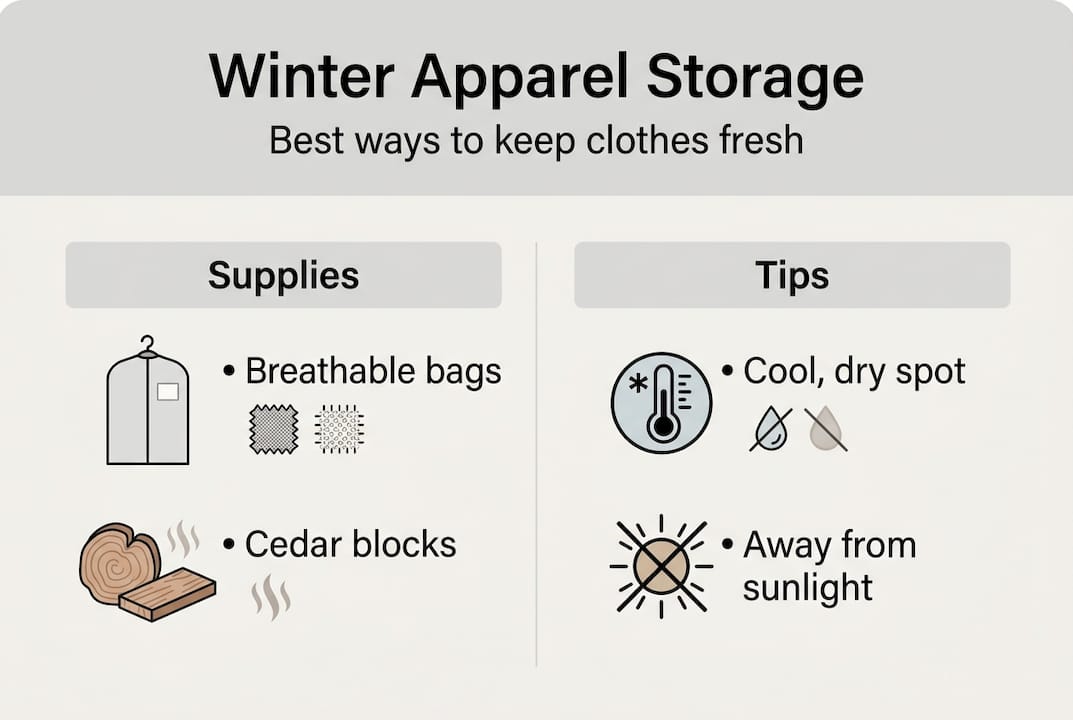
Clean before storage and use breathable bags with cedar or lavender, and keep items away from direct sunlight, which fades color and weakens fibers over time.
| Storage method | Good or bad | Why |
|---|---|---|
| Breathable fabric bag | Good | Allows airflow, prevents moisture buildup |
| Plastic bag | Bad | Traps humidity, causes yellowing |
| Vacuum-seal bag | Bad for knits | Crushes fibers permanently |
| Cedar-lined box | Good | Repels moths, absorbs moisture |
| Cardboard box | Bad | Attracts insects, holds dampness |
Choose a cool, dry, and dark location for your storage area. A bedroom closet shelf beats a basement or attic every time. Check out this smart winter checklist for a full rundown of what to prep before the season ends.
Our expert take: Why less is more in winter apparel care
Here’s something most care guides won’t tell you: the biggest threat to your winter wardrobe isn’t dirt. It’s overcleaning. Every time you wash a garment, you’re putting its fibers through mechanical stress, chemical exposure, and heat. Do that too often, and you’re accelerating breakdown, not preventing it.
The brands and garment experts who really understand fabric longevity will tell you that steaming between wears, airing items outside, and spot cleaning small stains immediately will do more for a coat’s lifespan than a full wash cycle ever could. We believe this deeply at Smoked Times, which is why we build our pieces to handle real life without needing constant intervention.
Minimal, intentional care is also better for the environment. Fewer washes mean less water, less energy, and less microfiber pollution, especially from synthetic fleece. When you treat your winter wardrobe as a long-term investment rather than a disposable seasonal rotation, you spend less, waste less, and end up with pieces that actually improve with age.
If you want to go further, explore sustainable winter apparel options that are built to last and made with care practices in mind from the start.
Keep your winter closet at its best with Smoked Times
Taking care of your winter wardrobe is one of the best investments you can make in your everyday comfort and style. At Smoked Times, we design our cold-weather essentials to hold up season after season, and we want to help you get the most out of every piece you own.

If you’ve found a care routine that works, we’d love to hear about it. Share a garment care review and help other shoppers learn from your experience. And if you’re still building out your winter wardrobe, visit Smoked Times to explore our full range of heavyweight basics, hoodies, and cold-weather accessories built for durability and everyday wear.
Frequently asked questions
How often should I clean my winter coat?
Wash or clean heavy winter coats once or twice per season unless visibly soiled. Washing down jackets more than that risks stripping their loft and water-resistant finish.
Is it safe to machine wash wool or cashmere sweaters?
Hand washing is the safest method, but machine washing cashmere on a delicate cycle inside a mesh bag is acceptable for some labels. Always check the care tag first.
What’s the best way to remove salt stains from leather boots?
Gently wipe the stained area with a 1:1 vinegar and water solution, then let the boots air dry completely before conditioning.
Should I use fabric softener on fleece or synthetics?
No. Fabric softeners coat synthetic fibers and reduce their performance. Use a gentle detergent only, as softeners weaken fleece fibers and reduce their ability to insulate effectively.
How do I prevent moth damage during storage?
Store fully clean items with cedar or lavender sachets in breathable fabric bags. Avoid plastic or vacuum-sealed storage, which traps moisture and can make the problem worse.
Recommended
- Clothing care checklist: Keep apparel fresh and durable – Smoked Times
- Selecting winter clothing essentials for stylish comfort – Smoked Times
- 7 Essentials for a Smart Winter Fashion Checklist – Smoked Times
- 7 Must-Have Items on Your Fashion Essentials Checklist – Smoked Times
- Luxury Bag Care Tutorial: Keep Designer Bags Pristine