


Climate adaptive fashion: upgrade your wardrobe for weather
TL;DR:
- Climate adaptive fashion emphasizes functionality and comfort across unpredictable weather conditions.
- Natural fibers like wool and cotton are preferred for their thermoregulation and moisture management.
- Building a versatile, layered wardrobe reduces waste and promotes sustainable, year-round style.
You step outside in a light jacket, and by noon you’re sweating through a meeting. By evening, the temperature drops ten degrees and you’re underdressed again. This isn’t bad luck — it’s the new normal. Climate adaptive fashion refers to clothing and wardrobe strategies designed to maintain comfort, thermal regulation, and protection across varying and unpredictable climate conditions, often using natural fibers, smart textiles, and modular layering systems. This guide breaks down exactly how it works and how you can use it to dress smarter every single day.
Table of Contents
- What is climate adaptive fashion?
- How climate adaptive fashion works: Core mechanics
- Materials and sustainability: What makes clothing truly adaptive?
- Everyday application: Building a climate adaptive capsule wardrobe
- What most get wrong about climate adaptive fashion
- Explore more: Smoked Times resources for sustainable wardrobes
- Frequently asked questions
Key Takeaways
| Point | Details |
|---|---|
| True adaptation | Climate adaptive fashion ensures comfort and function as weather patterns grow unpredictable. |
| Beyond sustainability | Unlike traditional eco-fashion, adaptive wardrobe choices put performance and protection first. |
| Smart material choices | Natural fibers usually beat synthetics for climate balance, but blends can make garments more sustainable. |
| Capsule benefits | Building a modular, adaptive capsule wardrobe saves money, lowers waste, and works everywhere. |
What is climate adaptive fashion?
Climate adaptive fashion is not just another label for eco-friendly clothing. It’s a practical design philosophy built around one core goal: keeping you comfortable when the weather refuses to cooperate. Where sustainable fashion focuses heavily on reducing environmental harm through material sourcing and production ethics, climate adaptive fashion zeroes in on how a garment performs across shifting temperatures, humidity levels, and weather events.
The distinction matters. You can own a wardrobe full of organic cotton basics and still be completely unprepared for a day that starts at 45°F and ends at 72°F. Adaptive fashion fills that gap by combining environmental responsibility with real functional performance.
“Adaptive fashion goes beyond traditional sustainability by focusing on functionality amid climate variability, not just material ethics.”
This shift in priorities is reshaping how collections are designed. Eco-friendly clothing now increasingly overlaps with performance wear, as brands recognize that a garment must do both: tread lightly on the planet and actually work for the person wearing it.
Here’s a quick breakdown of how climate adaptive fashion compares to conventional approaches:
| Feature | Conventional fashion | Climate adaptive fashion |
|---|---|---|
| Primary goal | Style and trend | Comfort across conditions |
| Material focus | Aesthetics | Thermoregulation and durability |
| Lifespan | Seasonal | Year-round, multi-use |
| Environmental lens | Optional | Built-in by design |
| Fiber preference | Mixed | Natural fibers prioritized |
Natural fibers dominate adaptive collections for good reason. 72% of climate-adaptive apparel collections feature natural fibers like wool and cashmere. These materials breathe, regulate temperature, and manage moisture in ways that most synthetics simply can’t match. The design principles behind climate-adaptive fashion continue to evolve as weather patterns grow less predictable, pushing designers to think beyond seasonal collections and toward truly flexible systems.
How climate adaptive fashion works: Core mechanics
Adaptive fashion is engineered around one elegant idea: no single garment can do everything, but the right combination of pieces can handle almost anything. The system that makes this possible is layering.
The three-part layering system works like this:
- Base layer — sits directly against your skin; manages moisture and regulates body temperature
- Mid layer — insulates and retains warmth; can be added or removed as conditions change
- Outer layer — shields against wind, rain, and extreme temperature shifts
Each layer has a specific job, and the magic happens when they work together. Layering in fashion is not about piling on clothes — it’s about building a responsive system you can adjust throughout the day.
Here’s how natural fibers and synthetics compare across the core mechanics:
| Property | Natural fibers | Synthetics |
|---|---|---|
| Thermal regulation | Excellent | Moderate |
| Moisture management | Strong | Varies |
| Breathability | High | Low to moderate |
| Durability | High with care | High |
| Environmental impact | Lower overall | Higher production footprint |
Natural fibers outperform synthetics in thermal regulation and moisture management, which is why wool base layers and cotton mid-layers are staples in any adaptive kit. A heavyweight cotton hoodie, for instance, traps warmth without making you feel sealed in plastic.
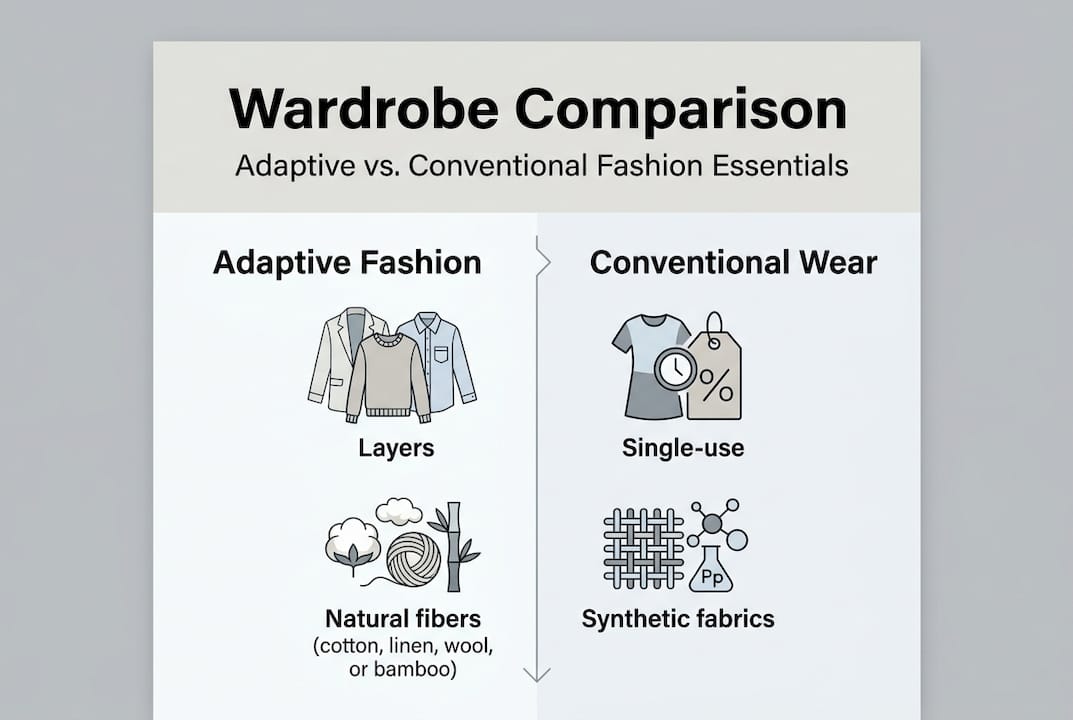
Beyond layering, adaptive garments are also chosen for specific thermoregulatory properties: warmth retention in cold snaps, moisture-wicking during physical activity, UV protection in high-sun environments, and ventilation during humid afternoons. Understanding why layering works helps you choose each piece with intention rather than guesswork.
The weather-proof style approach also emphasizes that adaptive dressing is not just for outdoor adventurers. Office workers, commuters, and weekend wanderers all benefit from a layered kit.
Pro Tip: Keep a lightweight mid-layer in your bag whenever you’re moving between indoor and outdoor environments. Air-conditioned offices and warm afternoons are the most common source of daily discomfort — and the easiest to fix with one extra piece.
Materials and sustainability: What makes clothing truly adaptive?
The material you choose is where climate adaptation and environmental responsibility either align or fall apart. Natural fibers like wool, cashmere, and down have earned their place in adaptive wardrobes because of their performance credentials, not just their origins.
Here’s what each brings to the table:
- Wool — outstanding insulation even when damp; naturally odor-resistant; works across a wide temperature range
- Cashmere — lightweight warmth with a soft hand; ideal for layering without bulk
- Down — exceptional warmth-to-weight ratio; best for cold outer layers
- Heavyweight cotton — breathable, durable, and comfortable as a base or mid-layer in mild to moderate climates
But material choice isn’t straightforward. The textile industry accounts for about 10% of global carbon emissions, which means every purchase carries a footprint. Even well-intentioned choices can surprise you: organic cotton trousers carry a GWP of 12.23 kg CO2e, which can actually be higher than some fiber blends depending on production methods.
This is why sustainable fabrics for fashion are increasingly moving toward thoughtful blends rather than single-fiber absolutes. A well-chosen blend can reduce environmental impact while maintaining the performance properties you need. The goal is not purity — it’s practicality with a conscience.
Modular garments, pieces designed to be worn multiple ways or across multiple seasons, also reduce waste by cutting down on how many items you actually need. Explore sustainable apparel options and sustainable clothing practices to see how small shifts in buying habits add up fast. The material science behind adaptive fashion continues to advance, but the most practical step you can take right now is simply buying fewer, better pieces.
Pro Tip: Before buying any new piece, ask whether it works in at least three different weather scenarios. If it only functions in one, it’s a single-use item — and that’s the opposite of adaptive.
Everyday application: Building a climate adaptive capsule wardrobe
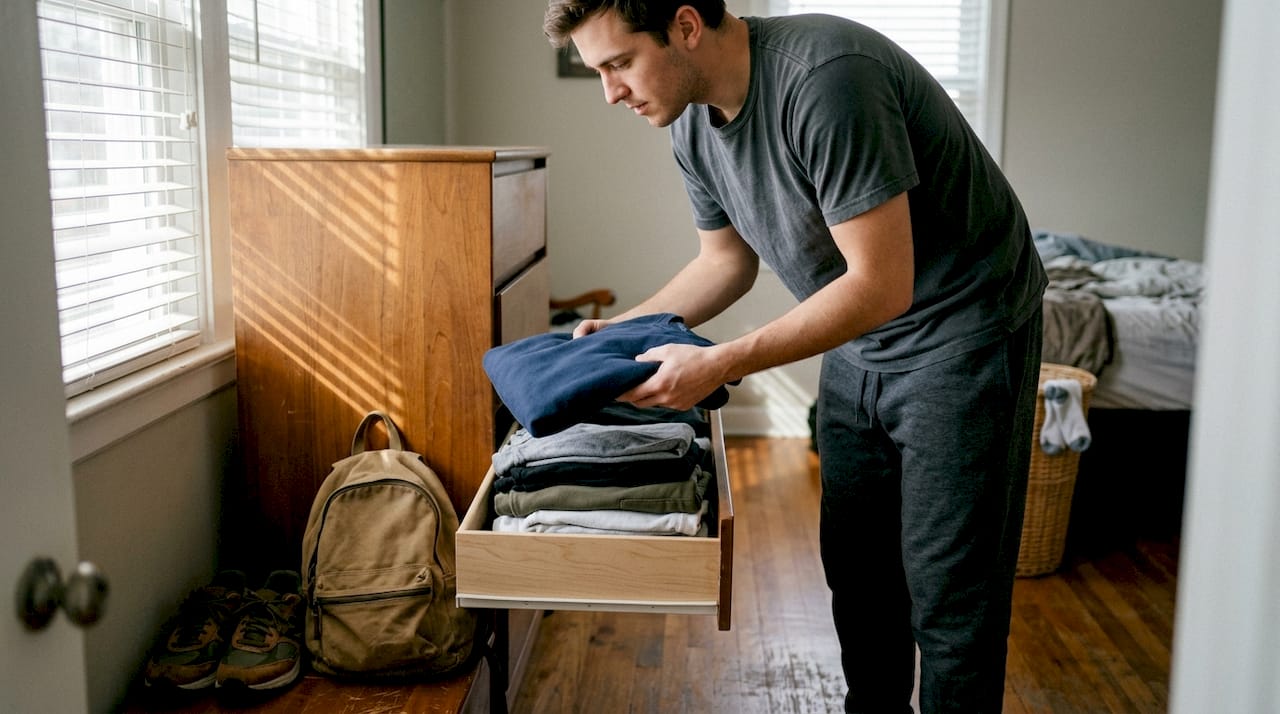
Knowing the theory is one thing. Putting it into practice means making real decisions about what actually goes in your closet. Here’s a step-by-step approach to building a functional adaptive wardrobe without overcomplicating it.
- Audit what you already own — identify which pieces layer well and which are single-season items
- Define your climate range — consider the coldest and warmest conditions you regularly face
- Fill gaps with natural or blended base layers — prioritize breathable, moisture-managing fabrics
- Add one strong mid-layer — a heavyweight hoodie or wool knit that works indoors and out
- Invest in one versatile outer layer — wind-resistant and packable if possible
- Choose accessories that extend your range — a beanie, scarf, or lightweight gloves add significant warmth without bulk
A capsule wardrobe built from natural fiber layers reduces seasonal overconsumption and adapts to microclimates — the small but significant temperature differences between your commute, your office, and your evening plans.
For daily wear, a strong adaptive kit looks like this:
- Lightweight cotton tee as a base
- Heavyweight hoodie or fleece mid-layer
- Packable outer shell for wind and rain
- Wool or cotton beanie for cold mornings
- Versatile pants that work from errands to evenings
The biggest mistake most people make is buying single-function garments. A jacket that only works in snow, or a shirt that’s only comfortable in summer, forces you to own more than you need. Check out seasonal apparel trends for ideas on how versatile pieces are being styled right now, and understand the broader fashion retail context to see why the industry is finally catching up to what conscious consumers have wanted for years. The real cost of extreme temperature swings on daily comfort is pushing this shift faster than any trend cycle ever could.
What most get wrong about climate adaptive fashion
Most articles treat climate adaptive fashion as sustainability with a performance upgrade. That framing misses the point. The real shift is psychological as much as practical.
When you build a wardrobe around versatile, durable pieces, you stop second-guessing what to wear every morning. You stop panic-buying a rain jacket because a storm caught you off guard. You stop replacing items every season because they wore out or stopped fitting the weather. That peace of mind is underrated and rarely discussed.
Adaptive fashion promotes durability and multifunctionality, which counters fast fashion’s waste cycle in a way that no single eco-material can on its own. The most sustainable garment is the one you actually wear, repeatedly, across many conditions.
This is exactly why we built Smoked Times around heavyweight basics that hold up. Our pieces are not trendy. They are not seasonal. They are designed to be your go-to layer regardless of what the forecast says. A good sustainable clothing guide will tell you the same thing: buy less, buy better, and let your wardrobe work harder than your shopping habits.
Explore more: Smoked Times resources for sustainable wardrobes
Ready to take your knowledge into action? Building a climate adaptive wardrobe does not require a complete overhaul — it starts with a few well-chosen pieces and a clearer sense of what you actually need.
At Smoked Times, we’ve built our entire catalog around the kind of durable, versatile basics that form the backbone of an adaptive wardrobe. Heavyweight cotton tees, cozy hoodies, and cold-weather accessories designed for repeat wear across real conditions. If you’ve found a piece that works for you across seasons, we’d love to hear about it. Write a review and help other conscious shoppers make smarter choices. Your experience matters to this community.
Frequently asked questions
What is the difference between climate adaptive fashion and sustainable fashion?
Climate adaptive fashion focuses on garments that respond to environmental unpredictability for comfort and function, while sustainable fashion primarily targets minimizing environmental impact. As research confirms, adaptive fashion prioritizes functionality amid climate variability rather than material ethics alone.
Are natural fibers always the best choice for climate adaptive clothing?
Natural fibers often offer better thermal and moisture control, but blends can have a lower environmental impact and sometimes outperform in durability. Natural fibers lead in thermal regulation, yet organic cotton can carry higher GWP than some blended alternatives.
How do I start building a climate adaptive wardrobe on a budget?
Begin with versatile natural or blended base layers, add modular pieces, and prioritize items with year-round utility to minimize total purchases. A capsule of natural fiber layers reduces seasonal overconsumption without requiring a large upfront investment.
Does climate adaptive fashion help reduce apparel waste?
Yes, by emphasizing multifunctional and durable garments, adaptive fashion combats overconsumption and extends product life. Durability and multifunctionality are the core mechanisms that make adaptive fashion inherently less wasteful than trend-driven alternatives.
Recommended
- Master the role of winter wear for style and warmth in 2026 – Smoked Times
- 7 Top Fashion Trends 2026 to Upgrade Your Casual Style – Smoked Times
- Winter Fashion Guide 2026: Master Casual Layering Trends – Smoked Times
- 7 Essentials for a Smart Winter Fashion Checklist – Smoked Times
- Trans-seasonal fashion: master layering and versatility – MaraFormigone
- How Arizona Weather Shapes Everyday Fashion: Fabrics, Layers, and Sun Protection - Arizona Swag