


Global Fashion Retail Explained: Impact On Shoppers
Scrolling through endless pages for the perfect winter jacket can feel exhausting when your closet needs both style and warmth on a budget. With global fashion retail now woven through every digital and physical store, today’s shoppers get more choices than ever, from exclusive Canadian parkas to vibrant European outerwear. Online shopping has transformed how we find affordable trends, so you’ll discover how this vast, evolving fashion world connects you to quality winter essentials and the latest seasonal deals.
Table of Contents
- What Is Global Fashion Retail?
- Major Types Of Fashion Retailers
- How Global Fashion Retail Operates
- International Regulations And Compliance
- Key Consumer Impacts And Risks
Key Takeaways
| Point | Details |
|---|---|
| Global Fashion Retail Ecosystem | The industry involves a complex system integrating design, manufacturing, and marketing to deliver clothing worldwide. Success relies on data analytics and understanding regional market nuances. |
| Diverse Retail Categories | Fashion retailers range from luxury brands to fast fashion, each targeting specific consumer segments with varied strategies. Awareness of these categories helps navigate the market effectively. |
| Operational Efficiency | Digital transformation and effective supply chain management are crucial for responding to changing consumer demands and enhancing shopping experiences. Retailers should prioritize technological investment. |
| Regulatory Compliance as Strategy | Addressing international regulations proactively offers competitive advantages and builds brand trust while accessing new markets. Companies should implement comprehensive compliance systems. |
What Is Global Fashion Retail?
Global fashion retail represents a complex, interconnected ecosystem spanning worldwide apparel and accessory markets. This dynamic industry encompasses the entire journey of clothing from initial design to final consumer purchase, integrating multiple channels and technologies. Global economic trends significantly shape how fashion products are developed, marketed, and sold internationally.
The industry involves several critical components that work together to deliver clothing to consumers worldwide:
- Design: Creative teams developing seasonal collections
- Manufacturing: Production facilities across multiple countries
- Distribution: Complex logistics networks moving products globally
- Marketing: Digital and physical strategies targeting international consumers
- Retail: Both online and brick-and-mortar sales channels
Understanding global fashion retail requires recognizing its incredibly complex nature. Modern fashion retail isn’t just about selling clothes - it’s a sophisticated system blending technology, cultural trends, economic conditions, and consumer preferences. Companies must now navigate rapidly changing digital landscapes, sustainable production requirements, and increasingly demanding consumer expectations.
The most successful global fashion retailers leverage data analytics, understand regional market nuances, and create flexible supply chains that can quickly respond to emerging trends. They recognize that today’s consumers want more than just clothing - they want experiences, storytelling, and brands that align with their personal values.
Pro tip: Research global fashion retail trends consistently and be prepared to adapt your strategy quickly to changing consumer preferences and technological innovations.
Major Types Of Fashion Retailers
Fashion retailers represent a diverse ecosystem with multiple business models and market approaches. Global fashion markets feature distinct retail categories that serve different consumer segments and price points. These categories range from high-end luxury brands to budget-friendly mass-market retailers, each targeting specific customer demographics and lifestyle preferences.
The primary types of fashion retailers include:
- Luxury Retailers: High-end brands offering premium products
- Mid-Market Retailers: Balanced price and quality segments
- Fast Fashion Retailers: Trend-driven, rapidly produced clothing
- Discount Outlets: Budget-friendly clothing options
- Specialty Stores: Focused on specific clothing categories
- Online Marketplaces: Digital platforms selling multiple brands
Brick-and-Mortar Stores continue to play a significant role alongside digital platforms. Online marketplaces are rapidly expanding their market share, creating complex hybrid retail environments. Traditional stores are now integrating digital technologies like augmented reality fitting rooms and mobile payment systems to remain competitive.
Understanding these retail types helps consumers and industry professionals navigate the complex global fashion landscape. Each retailer type has unique strategies for product development, pricing, and marketing, reflecting the sophisticated nature of modern fashion retail.
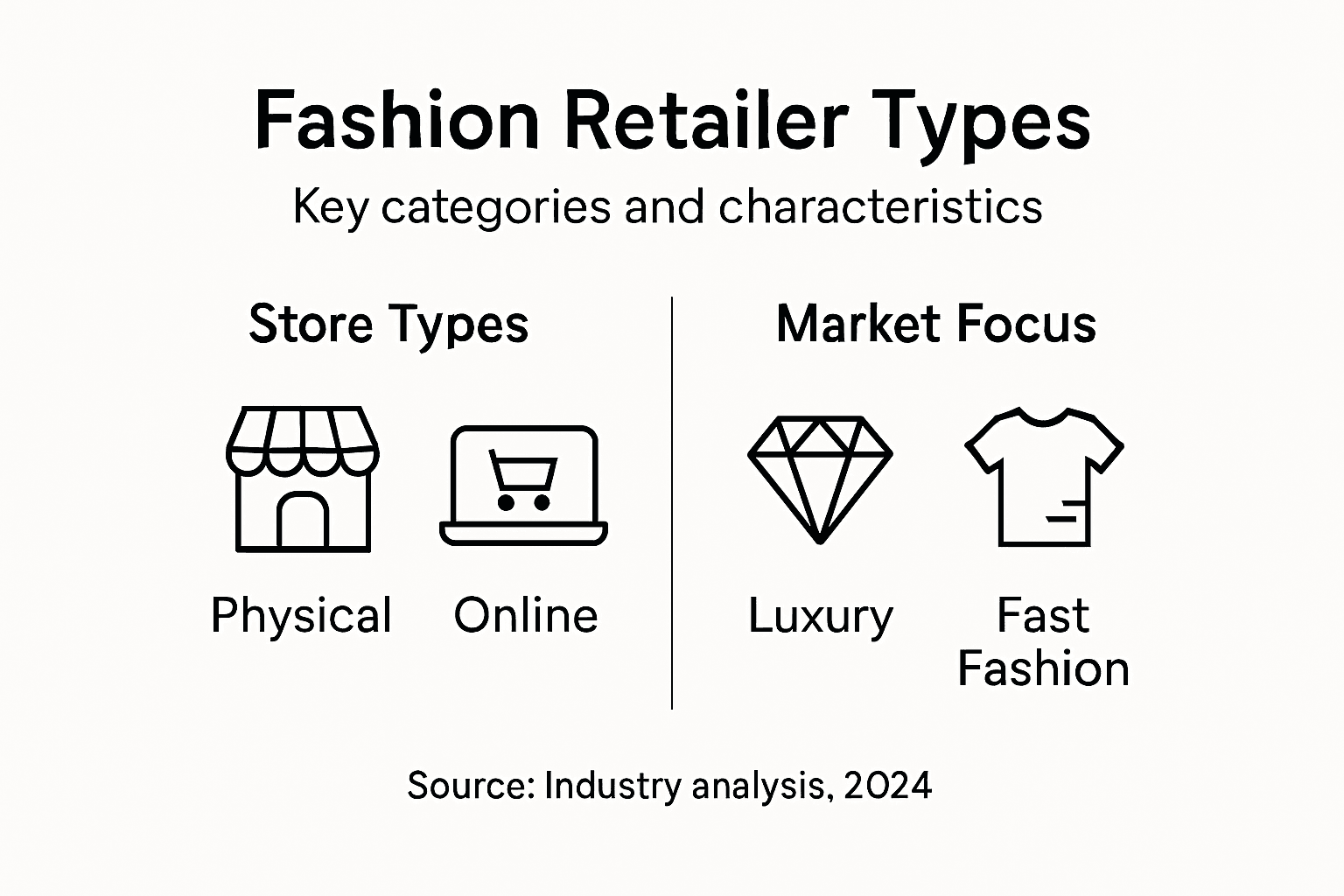
Here is a comparison of major fashion retailer types and their strategic focuses:
| Retailer Type | Main Consumer Appeal | Typical Product Range | Strategic Focus |
|---|---|---|---|
| Luxury Retailers | Exclusivity, status | High-end, limited editions | Premium branding, heritage |
| Mid-Market Retailers | Value and style balance | Quality everyday fashion | Broad appeal, versatility |
| Fast Fashion Retailers | Latest trends, low cost | Rapid, trend-driven clothing | Speed, trend adoption |
| Discount Outlets | Low prices | Overstock, off-season items | Volume, affordability |
| Specialty Stores | Niche interest | Focused categories | Deep expertise, loyalty |
| Online Marketplaces | Variety, convenience | Multi-brand, global products | Tech, wide assortment |
Pro tip: Diversify your fashion retail strategy by understanding the strengths and limitations of different retail models and consumer preferences.
How Global Fashion Retail Operates
Complex supply chain dynamics drive the intricate machinery of global fashion retail, transforming how clothing moves from concept to consumer. The industry has evolved into a sophisticated network integrating design, manufacturing, distribution, and multi-channel sales strategies that span continents and digital platforms.
Key operational components of global fashion retail include:
- Digital Transformation: Integrating online and offline experiences
- Supply Chain Management: Coordinating global production networks
- Consumer Data Analytics: Understanding purchasing behaviors
- Personalization Technologies: Tailoring shopping experiences
- Sustainability Initiatives: Reducing environmental impact
- Omni-Channel Marketing: Creating seamless brand interactions
Technological Innovation has become the backbone of modern fashion retail operations. E-commerce integration drives retail strategies by enabling real-time inventory management, personalized recommendations, and global market access. Retailers now leverage artificial intelligence, virtual try-on technologies, and predictive analytics to create more responsive and engaging shopping experiences.

The global fashion retail ecosystem continuously adapts to changing consumer demands, technological advancements, and economic shifts. Successful retailers demonstrate remarkable flexibility, using data-driven insights to anticipate trends and create agile business models that can quickly respond to market transformations.
This table summarizes how key operational components affect global fashion retailers:
| Operational Area | Impact on Retailers | Example Benefit |
|---|---|---|
| Digital Transformation | Streamlined customer experiences | Unified e-commerce & in-store |
| Supply Chain Management | Faster production, less waste | Shorter lead times |
| Data Analytics | Better trend prediction | Smarter inventory buying |
| Personalization Tech | Higher conversion rates | Relevant product suggestions |
| Sustainability Initiatives | Improved brand reputation | Eco-friendly practices |
| Omni-Channel Marketing | Consistent messaging everywhere | Seamless online/offline shopping |
Pro tip: Continuously invest in technology and data analytics to stay ahead of rapidly evolving consumer preferences and market trends.
International Regulations And Compliance
Global fashion retail regulations represent a complex web of legal requirements that retailers must navigate across different international markets. These regulations encompass environmental standards, labor rights, product safety, and ethical production practices, creating a challenging landscape for global fashion brands seeking to maintain compliance and market access.
Key areas of international regulatory focus include:
- Environmental Sustainability: Reducing carbon footprints
- Labor Rights: Ensuring fair working conditions
- Product Safety: Meeting global quality standards
- Supply Chain Transparency: Documenting production processes
- Corporate Social Responsibility: Demonstrating ethical business practices
- Trade Compliance: Managing tariffs and import regulations
Compliance Challenges continue to evolve as global fashion markets demand increased accountability. Retailers must invest significant resources in understanding and implementing complex regulatory frameworks that vary dramatically across different regions. This includes developing robust tracking systems, conducting regular audits, and maintaining detailed documentation of production processes and supply chain interactions.
Successful global fashion retailers approach regulatory compliance as a strategic advantage rather than a mere legal requirement. By proactively addressing environmental and social governance standards, companies can build stronger brand trust, access new markets, and differentiate themselves in an increasingly competitive global landscape.
Pro tip: Develop a comprehensive compliance management system that can quickly adapt to changing international regulations and track your entire global supply chain.
Key Consumer Impacts And Risks
Global fashion retail transforms consumer experiences through unprecedented access to diverse styles and personalized shopping technologies. The digital revolution has fundamentally reshaped how consumers interact with fashion, offering both remarkable opportunities and complex challenges that extend far beyond traditional purchasing dynamics.
Key consumer impacts and potential risks include:
- Personalization Benefits: Tailored shopping recommendations
- Privacy Concerns: Data tracking and personal information risks
- Overconsumption Patterns: Fast fashion psychological triggers
- Ethical Purchasing Challenges: Supply chain transparency issues
- Technology-Driven Convenience: Simplified multi-channel shopping
- Information Overload: Decision-making complexity
Consumer Vulnerability emerges through multiple technological and marketing channels. Digital platforms collect extensive personal data, creating intricate networks of consumer profiling that can simultaneously enhance shopping experiences while potentially compromising individual privacy. The convenience of instant global access comes with subtle psychological pressures to consume more frequently and rapidly.
Modern consumers must develop critical awareness about their digital fashion interactions. Understanding the complex ecosystem of global retail helps individuals make more informed choices about personal consumption, data sharing, and ethical purchasing practices that align with their values and long-term sustainability goals.
Pro tip: Regularly audit your digital shopping behaviors and privacy settings to maintain control over your personal data and consumption patterns.
Discover Casual Comfort That Matches Your Style and Values
Navigating the complexities of global fashion retail means balancing trends, sustainability, and personalization while dealing with overwhelming choices and privacy concerns. If you are looking for apparel that offers casual comfort without compromising on ethical standards or your unique style, explore what Smokedtimes has to offer. Our focus on seasonal hoodies, pullovers, and t-shirts provides flexible wardrobe options that align with evolving consumer demands highlighted in the article.
Shop now at Smokedtimes Online Store to experience fashion retail designed with your convenience and values in mind. Take advantage of exclusive bundle offers and promotional campaigns to update your casual wardrobe today. Don’t wait — redefine your shopping experience with products tailored for comfort, quality, and mindful consumption.
Frequently Asked Questions
What are the major components of global fashion retail?
Global fashion retail encompasses design, manufacturing, distribution, marketing, and retail sales channels. These components work together to deliver clothing to consumers worldwide.
How does technology impact modern fashion retail operations?
Technology enhances operational efficiency through digital transformation, data analytics, personalization tools, and e-commerce integration, ultimately improving the shopping experience for consumers.
What are the different types of fashion retailers?
Fashion retailers range from luxury brands and mid-market retailers to fast fashion outlets and online marketplaces. Each type has unique strategies related to pricing, target audiences, and product offerings.
What are the consumer risks associated with global fashion retail?
Consumers face privacy concerns related to data tracking, overconsumption triggered by fast fashion, and ethical purchasing challenges due to supply chain transparency issues.
Recommended
- What Is Fast Fashion and Why It Matters Now – Smoked Times
- Digital Marketing in Fashion – Driving Global Trends – Smoked Times
- Role of Fashion in Youth Culture—Impact on Identity – Smoked Times
- What Is Sustainable Fashion and Why It Matters – Smoked Times
- 7 Versatile T-Shirt Outfit Ideas for Eco-Friendly Streetwear – MEXESS