


What Is Sustainable Fashion and Why It Matters
Choosing winter clothes that align with your values often feels more complicated than picking a favorite sweater. The world of sustainable fashion comes with both exciting options and confusing myths, making it tough to know what really makes a difference. When you want comfort, style, and environmental responsibility in one purchase, understanding what sustainable fashion truly means helps you avoid empty marketing claims and confidently support brands that share your commitment to a healthier planet.
Table of Contents
- Sustainable Fashion Defined And Common Myths
- Types Of Sustainable Fashion Approaches Today
- Key Characteristics Of Eco-Conscious Apparel
- How Sustainable Production Works
- Impacts, Risks, And Industry Challenges
- Alternatives To Sustainable Fashion Choices
Key Takeaways
| Point | Details |
|---|---|
| Sustainable Fashion Defined | Sustainable fashion focuses on ethical production and consumption to reduce environmental impact and promote social responsibility. |
| Common Myths | Consumers often mistakenly believe sustainable fashion is limited to expensive or unattractive clothing options. |
| Approaches to Sustainable Fashion | Key methods like Slow Fashion and Circular Fashion aim to minimize waste and promote durable, ethical choices. |
| Alternatives to Fast Fashion | Consumers can explore second-hand shopping, rental services, and clothing swaps to reduce environmental impact. |
Sustainable fashion defined and common myths
Sustainable fashion represents a comprehensive approach to clothing production and consumption that minimizes environmental impact while prioritizing social responsibility. Unlike traditional fashion models that prioritize rapid production and low costs, sustainable fashion seeks to create garments through ethical practices that respect both human workers and ecological systems. Complex fashion systems require transformative action to address industry-wide challenges.
Many consumers misunderstand sustainable fashion as simply purchasing organic or recycled clothing. However, true sustainability encompasses far more than material selection. It involves examining entire production processes, including labor practices, carbon emissions, water usage, waste management, and long-term environmental consequences. Fashion industry sustainability claims often remain misleading, with many brands marketing themselves as eco-friendly without substantive systemic changes.
Common myths about sustainable fashion include believing that sustainable clothing is always expensive, unattractive, or limited in style options. In reality, sustainable fashion now offers diverse, trendy designs across multiple price points. Brands are increasingly integrating innovative materials and production techniques that reduce environmental impact without compromising aesthetic appeal. Sustainable fashion isn’t about sacrificing style but making more conscious, responsible choices that benefit both consumers and the planet.
Pro tip: Start building a sustainable wardrobe by investing in versatile, high-quality pieces that can be mixed, matched, and worn across multiple seasons, reducing overall consumption.
Types of sustainable fashion approaches today
Sustainable fashion has evolved into a multifaceted strategy addressing environmental and social challenges across the industry. Design-led sustainability strategies are driving transformative changes in how clothing is conceived, produced, and consumed. These approaches go beyond traditional manufacturing, focusing on holistic solutions that minimize ecological footprints and promote responsible consumption.
Five key sustainable fashion approaches are currently reshaping the industry:
- Slow Fashion: Emphasizes quality over quantity, encouraging consumers to buy fewer, more durable garments
- Circular Fashion: Designs products with their entire lifecycle in mind, promoting recycling and regeneration
- Eco-Design: Utilizes environmentally friendly materials and production techniques to reduce waste
- Sustainable Sourcing: Prioritizes ethical supply chains and materials with minimal environmental impact
- Digital Innovation: Leveraging technology for net-zero emissions through advanced design and production processes
These approaches collectively represent a comprehensive strategy to transform the fashion industry from a significant environmental burden to a model of responsible production. By integrating innovative materials, ethical labor practices, and advanced technologies, sustainable fashion is creating a new paradigm that balances style, functionality, and environmental stewardship.
Here’s a quick comparison of sustainable fashion approaches and their primary industry impact:
| Approach | Key Focus | Main Industry Impact | Notable Example |
|---|---|---|---|
| Slow Fashion | Quality, durability | Lower waste, longer lifespan | Artisan labels |
| Circular Fashion | Lifecycle, recycling | Reduced landfill, resource use | Take-back schemes |
| Eco-Design | Materials, footprint | Less pollution, cleaner input | Biodegradable fabrics |
| Sustainable Sourcing | Ethics, supply chain | Fair labor, traceability | Direct trade brands |
| Digital Innovation | Technology, emissions | Data-driven, reduced impact | 3D design platforms |
Pro tip: Research clothing brands that transparently share their sustainability practices and invest in pieces from companies committed to verifiable environmental and social responsibility.
Key characteristics of eco-conscious apparel
Eco-conscious apparel represents a holistic approach to clothing that prioritizes environmental sustainability and social responsibility throughout its entire lifecycle. Sustainable materials and ethical production have become critical considerations for modern consumers seeking responsible fashion choices. This approach goes beyond simple fabric selection, encompassing a comprehensive strategy that addresses environmental impact, worker welfare, and long-term sustainability.
The key characteristics of eco-conscious apparel include:
- Sustainable Materials: Utilizing organic cotton, hemp, recycled fibers, and low-impact textiles
- Ethical Production: Ensuring fair wages, safe working conditions, and transparent supply chains
- Minimal Environmental Footprint: Reducing water consumption, carbon emissions, and waste generation
- Durability and Longevity: Creating high-quality garments designed to last multiple seasons
- Circular Design: Incorporating recyclability and potential for material reuse into product development
Moreover, eco-conscious apparel integrates consumer values with environmental responsibility, challenging traditional fashion industry practices. The approach demands a fundamental reimagining of clothing production, moving beyond fast fashion’s disposable model to create meaningful, sustainable garments that respect both people and the planet.

Pro tip: Learn to read clothing labels carefully, looking for certifications like GOTS, Fair Trade, or recycled material indicators to make more informed sustainable fashion choices.
How sustainable production works
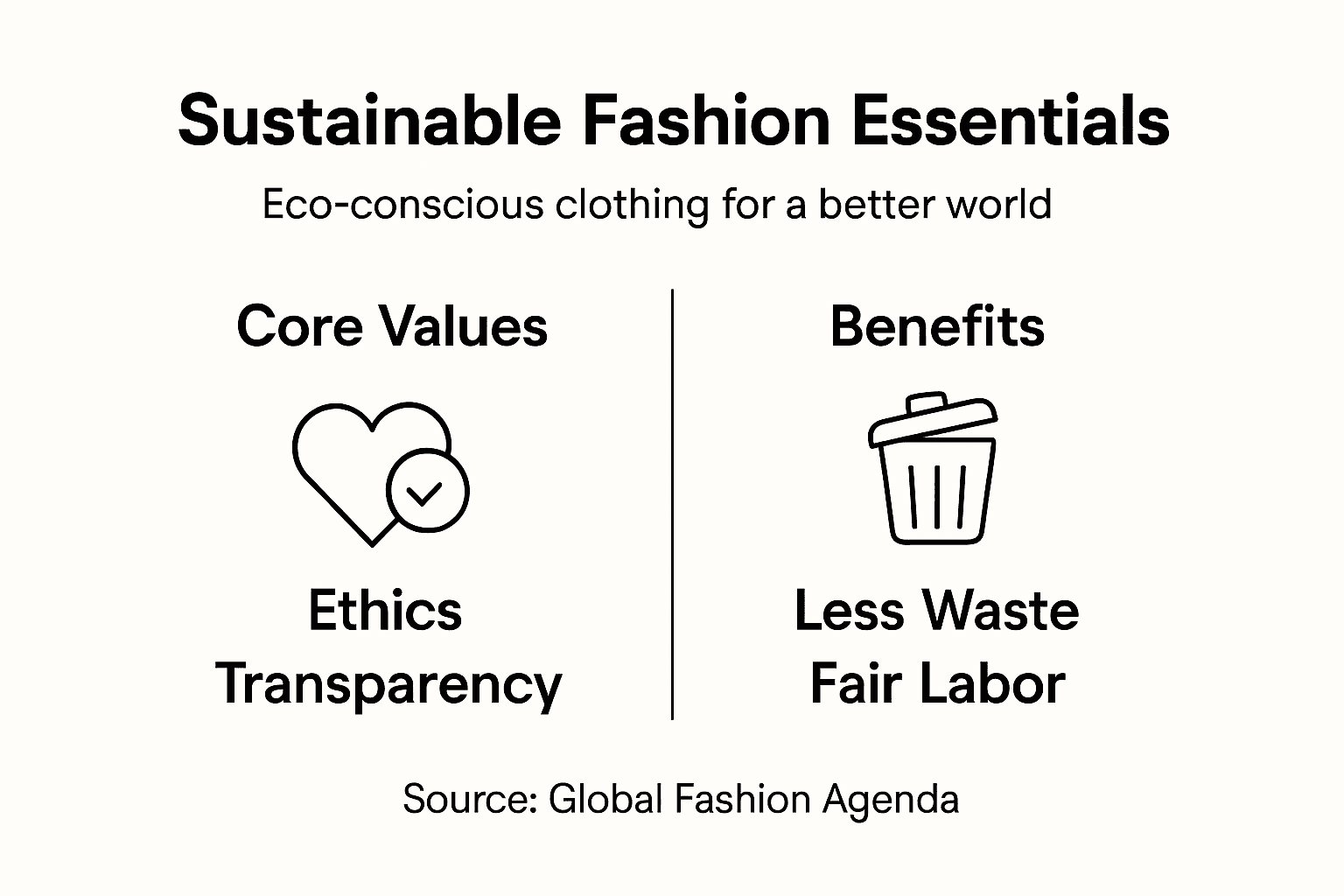
Sustainable production in the fashion industry represents a comprehensive reimagining of traditional manufacturing processes, focusing on minimizing environmental impact while maximizing social responsibility. Textile manufacturing transformation requires a multi-dimensional approach that addresses ecological and human welfare concerns simultaneously. This holistic strategy goes beyond simple production techniques, embedding sustainability into every stage of clothing creation.
The key elements of sustainable production include:
- Material Selection: Choosing eco-friendly, low-impact raw materials like organic cotton, recycled polyester, and hemp
- Energy Efficiency: Implementing renewable energy sources and reducing overall power consumption
- Water Management: Minimizing water usage and implementing advanced filtration and recycling systems
- Waste Reduction: Developing circular design principles that minimize textile waste
- Ethical Labor Practices: Ensuring fair wages, safe working conditions, and transparent supply chains
Sustainable manufacturing innovations are reshaping the textile industry’s approach to production. By integrating advanced technologies, transparent supply chains, and environmentally conscious practices, manufacturers can significantly reduce their ecological footprint while creating high-quality, responsible clothing that meets modern consumer expectations.
Pro tip: Research brands that provide detailed sustainability reports and transparently share their production practices to make more informed purchasing decisions.
Impacts, risks, and industry challenges
The fashion industry faces unprecedented challenges in balancing economic growth with environmental and social responsibility. Fast fashion’s global impact reveals a complex web of interconnected risks that extend far beyond simple production metrics. These challenges encompass environmental degradation, social inequality, and systemic economic disparities that demand comprehensive, transformative solutions.
Key industry challenges include:
- Resource Depletion: Excessive consumption of water, raw materials, and energy
- Environmental Pollution: High carbon emissions, textile waste, and chemical contamination
- Labor Exploitation: Unsafe working conditions and inadequate compensation in global supply chains
- Economic Inequality: Uneven distribution of profits between production and consumption regions
- Regulatory Complexity: Navigating diverse international sustainability standards
Corporate social responsibility strategies are crucial for mitigating these risks. By integrating ethical practices, transparent supply chains, and sustainable innovations, the fashion industry can gradually transform its approach, creating more resilient and responsible business models that balance economic viability with environmental and social stewardship.
Here is a summary of major risks faced by the fashion industry and potential strategies for mitigation:
| Challenge | Impact on Industry | Mitigation Strategy |
|---|---|---|
| Resource Depletion | Scarcity, price spikes | Efficient resource management |
| Labor Exploitation | Reputational, legal issues | Strong labor regulations |
| Environmental Pollution | Regulatory fines, cleanup | Eco-friendly technologies |
| Economic Inequality | Unstable markets | Fair profit distribution |
| Regulatory Complexity | Compliance costs | International standard alignment |
Pro tip: Research and support brands that provide comprehensive sustainability reports and demonstrate measurable progress in addressing environmental and social challenges.
Alternatives to sustainable fashion choices
Sustainable fashion alternatives represent innovative approaches that challenge traditional consumption patterns and reduce environmental impact. Sustainable consumption strategies offer consumers multiple pathways to engage with fashion more responsibly, moving beyond the traditional buy-and-dispose model that characterizes fast fashion.
Key alternatives to conventional fashion consumption include:
- Second-Hand Shopping: Purchasing pre-owned clothing to extend garment lifecycles
- Clothing Rental Services: Temporarily accessing fashion items without permanent ownership
- Clothing Swap Events: Trading garments with others to refresh wardrobes sustainably
- Upcycling and Repair: Transforming existing garments to create new, personalized pieces
- Minimalist Wardrobes: Curating versatile, high-quality clothing collections
Consumer motivations for sustainable choices vary widely, ranging from economic benefits to ethical considerations. These alternatives not only reduce environmental waste but also provide unique opportunities for personal expression, economic savings, and meaningful engagement with fashion consumption. By embracing these approaches, consumers can actively participate in reshaping the fashion industry’s environmental and social landscape.
Pro tip: Start building a sustainable wardrobe by dedicating one month to exclusively purchasing second-hand or rental clothing to understand alternative fashion consumption models.
Embrace Sustainable Fashion With Comfort and Style Today
Understanding sustainable fashion means recognizing the challenge of finding clothing that respects the planet and workers while fitting your lifestyle. You want apparel that offers durability, ethical production, and environmental care without giving up comfort and style. At Smoked Times, we share your commitment to conscious choices by offering casual and winter clothing that aligns with sustainable values. Whether you seek cozy hoodies or versatile t-shirts, our collection emphasizes quality materials and long-lasting wear that supports a more responsible fashion future.
Take the first step in building your sustainable wardrobe by exploring our carefully selected apparel. Check out our specials and promotional bundles to enjoy premium casual wear that blends eco-consciousness with affordability. Feel confident shopping at Smoked Times, where every purchase supports better production practices and your journey toward mindful fashion. Start shopping now and make a positive impact with your style.
Frequently Asked Questions
What is sustainable fashion?
Sustainable fashion refers to an approach in clothing production and consumption that minimizes environmental impact and prioritizes social responsibility, involving ethical practices that respect both human workers and ecological systems.
Why does sustainable fashion matter?
Sustainable fashion matters because it addresses the significant environmental and social challenges posed by traditional fashion practices, promoting healthier ecosystems, ethical labor standards, and more responsible consumption habits.
What are some common myths about sustainable fashion?
Common myths include the belief that sustainable clothing is always expensive, unattractive, or limited in style options. In reality, there are diverse, trendy designs available at various price points in sustainable fashion.
How can consumers build a sustainable wardrobe?
Consumers can build a sustainable wardrobe by investing in high-quality, versatile pieces that can be mixed and matched, thereby reducing overall consumption. Additionally, exploring second-hand options and rental services can help extend garment lifecycles.