


How to Choose Winter Apparel for Comfort and Durability
TL;DR:
- Build a layered wardrobe based on climate, activity, and versatility using neutral colors.
- Use a three-layer system with appropriate materials for warmth, moisture management, and weather resistance.
- Invest in quality essentials like coats and base layers to ensure durability and long-term comfort.
Most men have been there: standing outside in January wearing a jacket that looked great in October but now lets wind straight through, paired with jeans that stiffen in the cold and a cotton T-shirt doing absolutely nothing for warmth. The result is miserable, and the fix usually involves buying more cheap stuff that fails the same way. This guide cuts through that cycle. We’ll walk you through identifying your actual winter needs, building a layered system that works, choosing fabrics that last, and dialing in fit so every piece pulls its weight through every cold month ahead.
Table of Contents
- Identify your core winter apparel needs
- Master the three-layer system for warmth and versatility
- Choose the right fabrics for comfort and durability
- Optimize fit, style, and color for practical winter basics
- What most men get wrong about winter apparel: Lessons from experience
- Upgrade your winter wardrobe with quality essentials
- Frequently asked questions
Key Takeaways
| Point | Details |
|---|---|
| Layer smartly | A three-layer system keeps you warmer and adapts to changing conditions efficiently. |
| Choose quality fabrics | Invest in merino wool and blends for base layers and heavyweight natural fabrics for outerwear. |
| Prioritize fit | A tailored fit boosts warmth, comfort, and the versatility of your winter basics. |
| Capsule approach works | Ten well-chosen basics create endless outfits and cut down on unnecessary spending. |
| Spend where it counts | Direct most of your budget to durable outerwear and base layers for years of comfort. |
Identify your core winter apparel needs
After understanding why most men’s winter wardrobes fail, you’ll want to get clear on what you actually need. The biggest mistake is buying reactively. You feel cold, you grab whatever’s on sale, and six weeks later you’ve got a closet full of things that don’t work together. The smarter move is to assess your situation before spending a single dollar.
Start by looking at three factors: your local climate, your daily activities, and how versatile you need each piece to be. A guy commuting in Chicago needs different gear than someone in Dallas who occasionally faces a cold snap. Someone working outdoors all day has different demands than a guy moving between a heated office and a parking garage. Get honest about your actual conditions, not some imagined worst case.
From there, lock in a color palette. Stick to neutrals: navy, charcoal, olive, tan, and black. These colors layer cleanly and mix without effort. Building a winter capsule wardrobe around neutrals means every piece you buy connects to what you already own. That’s the foundation of a wardrobe that actually gets worn.
Here are your true winter must-haves:
- Base layer: thermal or merino top and bottom for warmth next to skin
- Mid-layer: fleece, hoodie, or insulated vest for heat retention
- Outer layer: a weather-resistant jacket or coat for wind and moisture
- Pants: heavyweight options like denim, wool trousers, or cord for durability and warmth
- Boots: waterproof, insulated, with grip for wet and icy surfaces
- Accessories: beanie, gloves, and a scarf or neck gaiter
Thinking about casual winter outfit strategies ahead of time helps you see which pieces can double up across multiple outfits. As noted in a men’s winter style guide, tailoring basics to fit your specific climate and color preferences makes everything more functional.
| Essential item | Primary function |
|---|---|
| Base layer | Warmth, moisture management, odor resistance |
| Mid-layer | Heat retention, insulation from cold air |
| Outer layer | Wind and rain protection |
| Heavyweight pants | Warmth, abrasion resistance, durability |
| Insulated boots | Grip, waterproofing, foot warmth |
| Cold-weather accessories | Neck, head, and hand protection |
Master the three-layer system for warmth and versatility
Once you know your basic needs, structure your picks using the three-layer system. This approach isn’t just for hikers or skiers. It’s the most reliable framework for staying comfortable across changing temperatures, whether you’re running errands or heading into a long outdoor workday.
Here’s the order and why it matters:
- Base layer: This sits against your skin. Its job is to regulate temperature and move moisture away from your body. If this layer fails, nothing above it compensates. Go for a snug but not tight fit.
- Mid-layer: This is your insulation engine. It traps warm air close to your body. A quality fleece, heavyweight hoodie, or down vest works well here. It should fit loosely enough to allow airflow but not so loose that it adds bulk under your outer shell.
- Outer layer: This is your shield. It blocks wind, repels water, and protects everything underneath. A well-fitted coat or shell with some structure holds the whole system together.
For materials, each layer has a best-fit option. Layering for warmth effectively depends on matching material to function. A layering guide for winter confirms that merino wool handles both comfort and odor resistance better than most alternatives at the base. Synthetics like polyester fleece dominate the mid-layer for their warmth-to-weight ratio. Down or synthetic insulation in a shell works best on the outside.

| Layer | Best material | Key benefit |
|---|---|---|
| Base | Merino wool | Temperature regulation, odor control |
| Mid | Fleece or down | Heat retention, lightweight insulation |
| Outer | Nylon or waxed cotton | Wind and water resistance |
A good casual layering guide can help you apply this system to everyday outfits without looking overdressed or bulky.
Pro Tip: Merino wool base layers can be worn two or three days in a row without odor buildup. This is a real advantage for travel or long commutes where laundry access is limited.
Choose the right fabrics for comfort and durability
Now that you’ve outlined your layers, material selection determines how each piece performs over time. This is where most men lose money. They buy something that feels good in the store and falls apart or pills out by February.
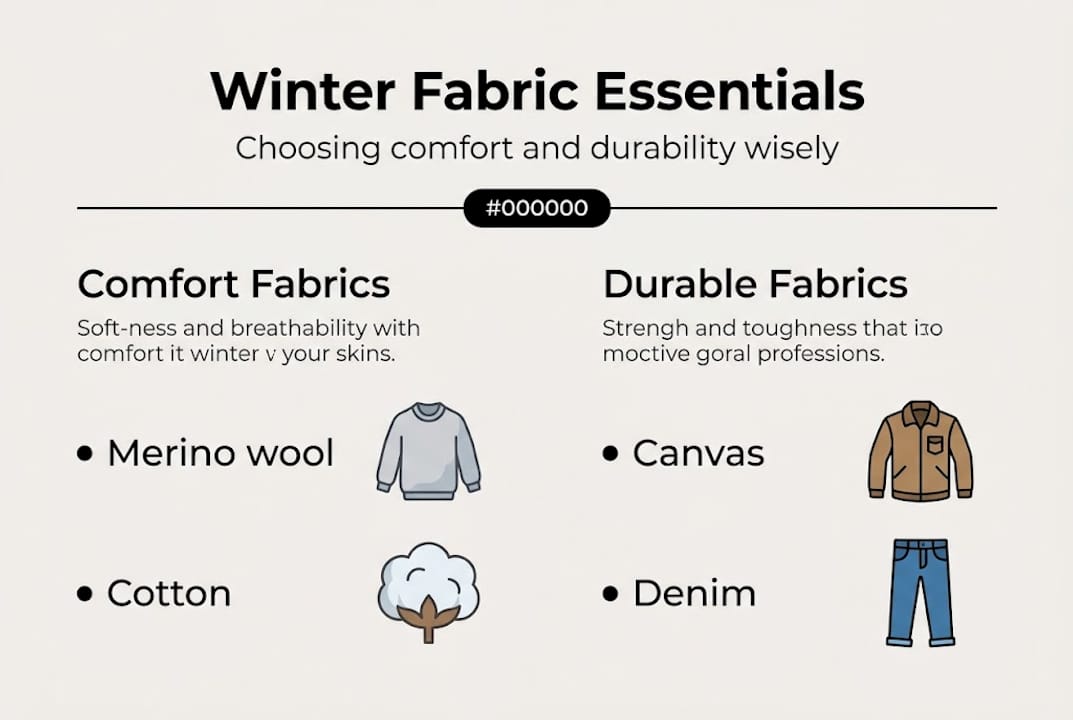
Merino wool is the highest-performing base layer fabric available. Merino base layers rated 150 to 250 GSM at 17 to 22 microns deliver the best combination of warmth, breathability, and odor resistance for everyday winter wear. GSM refers to grams per square meter, which measures fabric weight. Higher GSM means more warmth. Micron count affects softness: the lower the number, the finer and softer the fiber.
For pants and outerwear, heavyweight natural fabrics hold up better. Denim over 12 oz, thick flannel, and wool blends resist abrasion and stay structurally sound across a full winter season. When it comes to men’s best winter fabrics, natural and blended options consistently outperform pure synthetics in real-world durability tests.
Here’s a quick breakdown of fabric options:
- Merino wool: Exceptional warmth when wet, naturally odor-resistant, soft against skin, but costs more and requires careful washing
- Synthetic (polyester, nylon): Durable and quick-drying but less odor-resistant than wool; better suited for mid and outer layers
- Merino blends: A smart middle ground; adding nylon or polyester to merino improves durability while keeping much of the comfort
- Heavyweight cotton (flannel, canvas): Great for outer layers and pants; breathable, structured, and long-lasting with proper care
- Down insulation: Unbeatable warmth-to-weight ratio but loses insulating ability when wet; best kept for dry climates
When it comes to winter fabric essentials, the practical rule is simple: spend where it counts most.
Pro Tip: Allocate more of your winter clothing budget to outerwear and base layers. These two items make or break the whole system. Mid-layers can be replaced more affordably if needed.
Optimize fit, style, and color for practical winter basics
Great fabrics only go so far. Your choices must fit your body and daily life. A well-made jacket that’s two sizes too big loses most of its warmth benefit because cold air moves through the extra space freely.
Here’s how to evaluate fit when layering:
- Base layer: Should feel snug with no sagging. Move your arms above your head. The hem should stay tucked.
- Mid-layer: Should fit over the base without compressing it. You want a small amount of air between layers.
- Outer layer: Should button or zip over the mid without pulling across the shoulders or back.
- Pants: Should move freely without excess fabric pooling at the knee or ankle. Straight or tapered cuts work best for everyday wear.
Fit also matters for a clean look. Straight and tapered cuts prevent the air pockets that undercut insulation while keeping a sharp silhouette. Avoid skinny fits when layering because they restrict movement and compress insulation.
For color, a smart winter checklist always starts with neutrals. A charcoal hoodie, navy coat, and khaki pants can be assembled into more than a dozen combinations with just a few base layers and a scarf swapped in. Neutrals let the quality of the fabric speak instead of relying on pattern or color to stand out.
A practical example: a navy mid-layer hoodie, olive canvas trousers, and a charcoal wool coat covers casual errands, coffee meetings, and weekend travel. Add a thermal base and you’ve got a perfect winter look for temperatures down to the low 20s.
“Invest 70% of your winter clothing budget in a quality coat and 30% in a solid mid-layer. Everything else is secondary.”
That ratio shifts your spending where warmth and durability actually come from, not from stacking cheap layers.
What most men get wrong about winter apparel: Lessons from experience
All the details above help you build the right wardrobe, but most men still fall into common traps. The most common one is hoarding. Over three winters, a man buys twelve items, most of them cheap, most of them used twice. He still feels cold and disorganized. Compare that to a guy who commits to a 10-piece capsule of well-made basics. That 10-item capsule generates 30 or more outfit combinations for casual wear. He reaches for the same coat, the same two hoodies, and the same neutral pants because they always work together.
The second trap is prioritizing looks over function when buying cheap outerwear. A thin topcoat might look sharp in a catalog but it fails as soon as temperatures drop below freezing. The men who feel most comfortable in winter aren’t the ones with the biggest closets. They’re the ones who bought fewer, better things and wore them consistently. Mastering winter style long-term comes down to a simple principle: invest up front, buy less, wear longer.
Upgrade your winter wardrobe with quality essentials
Ready to put these strategies into practice? At Smoked Times, we build exactly the kind of pieces this guide is about: heavyweight basics, durable fabrics, clean styling with no unnecessary branding. Every item is designed to hold up across multiple winters, not just one.
If you’ve recently upgraded your winter basics, we’d love to hear how it went. You can submit your winter apparel review and share what worked for you. And if you’re still figuring out where to start, explore Smoked Times essentials to find the right base layers, hoodies, and cold-weather pieces built for everyday wear. Real comfort starts with the right foundation.
Frequently asked questions
What is the best base layer material for daily winter wear?
Merino wool is the top choice for daily winter wear because it regulates temperature and resists odor better than synthetics, even after multiple days of use.
How many winter basics do I really need?
A focused 10-item capsule wardrobe covers 30 or more outfit combinations for casual winter wear, so you need far less than most men think.
Are synthetic fabrics a good choice for winter clothing?
Synthetics dry faster and resist wear well, but they hold odors more than wool and typically feel less comfortable against skin, making them better suited to mid and outer layers.
What pants are best for winter durability and comfort?
Heavy denim, wool trousers, corduroy, or canvas pants paired with a thermal base layer offer the best combination of warmth, durability, and everyday wearability for cold months.
How important is garment fit for staying warm?
Fit is critical. A well-fitted layer prevents air gaps that bleed heat, so straight and tapered cuts in both pants and jackets help insulation work the way it’s designed to.
Recommended
- Selecting winter clothing essentials for stylish comfort – Smoked Times
- Best outdoor clothing essentials for winter comfort – Smoked Times
- Why choose comfortable clothing for stylish winter wear – Smoked Times
- What Defines Comfortable Clothing? 3-Layer System Boosts Warmth – Smoked Times
- Nourish Your Skin in Cold Weather