


Role of Fashion Accessories in Personal Style
Standing in front of your closet as the weather cools, you may find that even your favorite outfits need a fresh spark to feel complete. Accessories have always played a powerful role in shaping personal style, helping you tell your unique story while adding both function and flair to winter wardrobes. Discover how these versatile pieces can bring new energy and individuality to your seasonal looks, whether you’re layering for warmth or searching for that perfect finishing touch.
Table of Contents
- Defining Fashion Accessories And Their Purpose
- Major Types Of Fashion Accessories Explained
- How Accessories Elevate Casual And Winter Looks
- Practical Tips For Mixing And Matching Pieces
- Common Mistakes When Accessorizing Outfits
Key Takeaways
| Point | Details |
|---|---|
| Fashion Accessories Enhance Personal Style | Accessories serve as powerful tools for self-expression, transforming basic outfits into distinctive styles. |
| Understanding Accessory Types is Crucial | Classify accessories into body, functional, and statement pieces to maximize their potential in an outfit. |
| Mixing and Matching is an Art | Establish unity through a cohesive color palette and balanced proportions to create harmonious looks. |
| Avoid Common Mistakes | Resist over-accessorizing and maintain scale to prevent cluttered appearances in your ensembles. |
Defining Fashion Accessories and Their Purpose
Fashion accessories are transformative elements that elevate personal style beyond basic clothing, serving as powerful tools of self-expression and individual storytelling. Fashion accessories enhance personal appearance by introducing unique details that communicate individual personality, cultural background, and aesthetic preferences.
These supplementary items range from practical to purely decorative pieces, including jewelry, bags, belts, scarves, hats, and sunglasses. Each accessory plays a strategic role in outfit composition, allowing wearers to modify and personalize their look with minimal effort. Functional accessories like watches and belts serve practical purposes, while statement pieces such as bold necklaces or distinctive handbags can completely redefine an ensemble.
Beyond aesthetic appeal, fashion accessories represent a nuanced language of personal communication. Style-defining supplementary items enable individuals to experiment with different personas, cultural identities, and emotional expressions. A minimalist leather watch might signal professional sophistication, while colorful, eclectic jewelry could indicate creative free-spiritedness.
Pro tip: Start building your accessory collection by investing in versatile, neutral-toned pieces that can seamlessly complement multiple outfits and transition between different style contexts.
Major Types of Fashion Accessories Explained
Fashion accessories encompass a wide range of items designed to complement clothing and enhance personal style, historically developed through diverse functional roles. These accessories can be categorized into several primary groups that serve different aesthetic and practical purposes: body accessories, functional accessories, and decorative statement pieces.
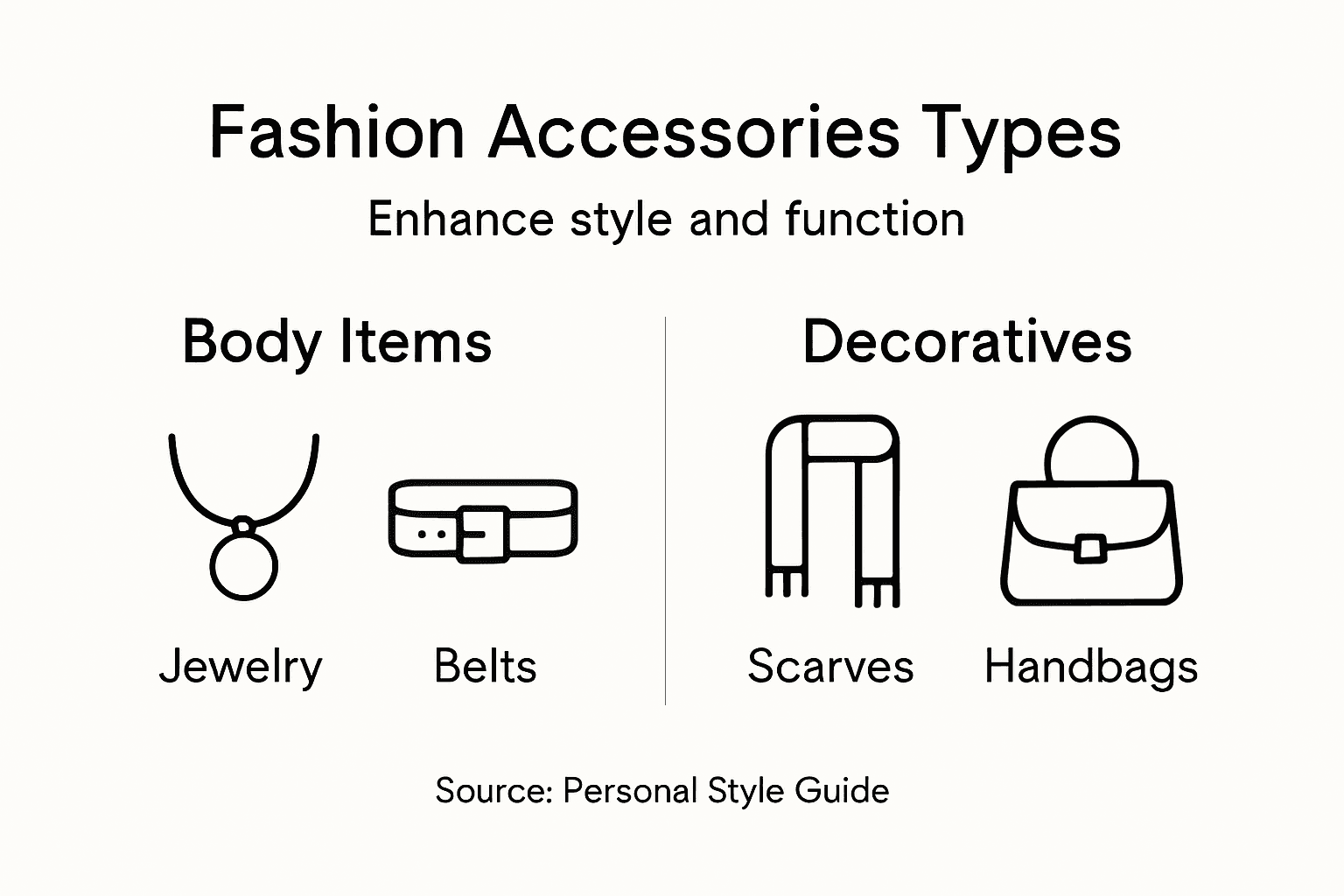
Body accessories include items worn directly on the body such as jewelry, which further subdivides into distinct categories. Necklaces, bracelets, rings, and earrings represent personal ornamental choices that reflect individual taste. Each piece can communicate subtle messages about personality, cultural background, and social status. Functional accessories like watches, belts, and eyewear serve practical purposes while simultaneously contributing to overall style composition, offering both utility and aesthetic enhancement.
Decorative statement pieces represent more dramatic accessory categories including handbags, scarves, hats, and distinctive belts. These items can dramatically transform an outfit’s entire mood and perception. A leather messenger bag might signal professional intent, while a vibrant silk scarf could indicate artistic creativity. Fashion accessories enable personal style experimentation through strategic selection and combination of these diverse elements.
Pro tip: When building your accessory collection, prioritize versatile pieces in neutral tones that can easily mix and match across multiple outfits, creating maximum styling flexibility.
Here’s a summary of accessory categories and the benefits they offer to personal style:
| Accessory Type | Practical Benefit | Aesthetic Role | Example Impact |
|---|---|---|---|
| Body Accessories | Personalized ornamentation | Subtle style signaling | Jewelry reveals personality |
| Functional Accessories | Everyday utility | Complements outfit structure | Belts enhance silhouette |
| Statement Pieces | Occasional use | Dramatic visual interest | Bags transform outfit mood |
How Accessories Elevate Casual and Winter Looks
Accessories are transformative elements that can dramatically upgrade casual and winter wardrobes, turning simple outfits into sophisticated style statements. Winter accessories provide strategic style and warmth through carefully selected pieces that balance functionality with aesthetic appeal. A basic hoodie and jeans combination can be instantly elevated with thoughtfully chosen accessories like a structured leather belt, statement watch, or textured scarf.
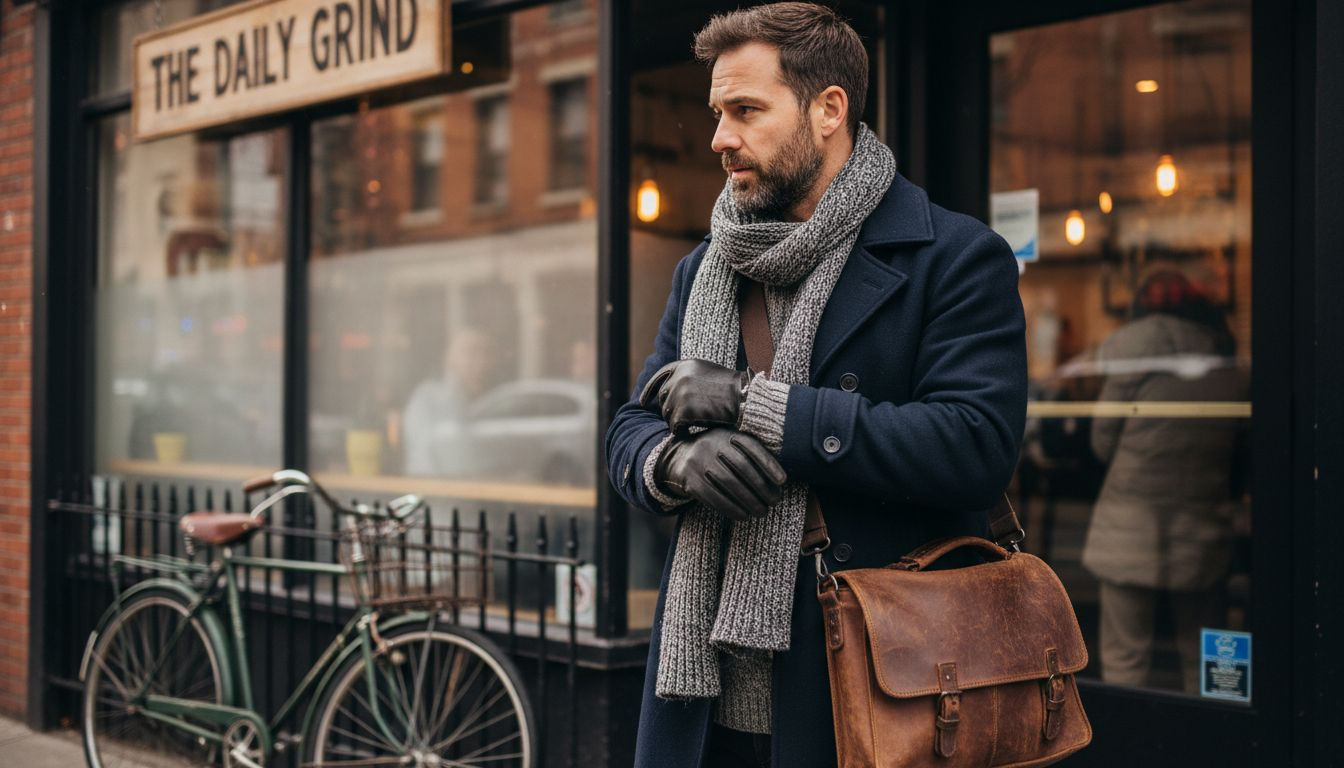
The art of accessorizing winter casual looks involves understanding proportion, texture, and color coordination. Mixing metals and layering accessories can transform mundane outfits into curated ensembles. Strategic winter accessories such as beanies, wool scarves, leather gloves, and ankle boots not only provide crucial warmth but also introduce visual interest and personality to otherwise minimalist winter clothing.
Furthermore, accessories serve as powerful tools for personal expression during colder months. A chunky knit infinity scarf can add bohemian flair to a simple sweater, while a sleek minimalist watch can communicate professional sophistication. Winter fashion guide selections demonstrate how thoughtful accessory choices can create visual depth and narrative within an outfit, allowing individuals to communicate their unique style even in layers of practical winter clothing.
Pro tip: Invest in versatile winter accessories in neutral color palettes that can seamlessly integrate with multiple outfits, maximizing both style flexibility and practical utility.
Practical Tips for Mixing and Matching Pieces
Mastering the art of mixing and matching accessories requires a strategic approach that balances personal style with sophisticated coordination. Successful accessory mixing involves understanding personal style and developing a keen eye for visual harmony. This means learning to create visual interest through thoughtful combinations while avoiding overwhelming or cluttered appearances.
One fundamental principle is establishing a cohesive color palette and maintaining balanced proportions. Coordinating colors and textures harmoniously allows you to blend different accessories seamlessly. For instance, if you’re wearing gold-toned jewelry, consider selecting accessories with warm undertones like camel-colored scarves or bronze-accented belts. Mixing metals is acceptable, but select one dominant metal tone to prevent visual confusion, and ensure the pieces share a similar visual weight and aesthetic.
Layering and experimenting with textures can transform simple outfits into compelling style statements. Combine smooth leather belts with chunky knit scarves, or pair delicate chain necklaces with structured leather bags. Winter fashion guide selections demonstrate that thoughtful accessory combinations can elevate even the most basic winter ensemble, creating depth and personal narrative through strategic styling choices.
Pro tip: Create a versatile accessory capsule collection featuring neutral-toned pieces that can be mixed and matched across multiple outfits, maximizing style flexibility and minimizing wardrobe complexity.
Compare key principles for successful mixing and matching of accessories:
| Principle | Purpose | Style Advantage |
|---|---|---|
| Cohesive Color Palette | Ensures unity in ensembles | Creates harmonious looks |
| Balanced Proportions | Avoids overwhelming appearance | Maintains visual synergy |
| Texture Layering | Adds depth and complexity | Elevates basic outfits |
Common Mistakes When Accessorizing Outfits
Over-accessorizing common pitfalls can transform a potentially stylish outfit into a cluttered and disorganized ensemble. Many fashion enthusiasts make the critical error of treating accessories as standalone elements rather than complementary components of their overall look. This approach leads to overwhelming visual noise that detracts from personal style instead of enhancing it.
One significant mistake is failing to understand proportion and scale when selecting accessories. Choosing items that are dramatically oversized or undersized in relation to your body type and outfit can create visual imbalance. Selecting flattering accessories requires body awareness and strategic thinking. For instance, petite individuals should avoid chunky, oversized statement necklaces that might overwhelm their frame, while taller people can experiment with more substantial accessory pieces.
Another common error involves being too rigid or uniform in accessory selection. Matching every element precisely—like wearing a belt, shoes, and handbag in exactly the same shade and texture—can make an outfit appear dated and uninspired. Instead, aim for harmonious coordination that allows for subtle variations and personal creativity. Winter fashion guide selections demonstrate that thoughtful, slightly eclectic accessory combinations create more dynamic and interesting style narratives.
Pro tip: Before leaving home, remove one accessory to ensure your outfit feels curated and intentional rather than overcrowded.
Elevate Your Personal Style With the Perfect Accessories and Casual Apparel
The article highlights how fashion accessories are essential for expressing individuality and enhancing both casual and winter looks. If you find yourself facing the challenge of creating versatile, stylish outfits that reflect your personality without feeling overwhelmed by choices or mismatched pieces then this is your moment to revamp your wardrobe. Whether you want to explore statement pieces or functional accessories that add sophistication and warmth, understanding balance, proportion, and texture layering will transform your everyday ensembles.
Discover a curated selection of casual and winter apparel designed to perfectly complement your accessory choices at Smoked Times. From stylish hoodies to versatile t-shirts and pullovers our collection helps you effortlessly merge comfort with style. Elevate your look today by exploring exclusive bundle offers and seasonal deals that make upgrading your wardrobe affordable and exciting. Start creating your unique style narrative now by visiting Smoked Times and unlock the power of carefully chosen accessories paired with premium clothing.
Frequently Asked Questions
What are the main types of fashion accessories?
Fashion accessories are categorized into body accessories (like jewelry), functional accessories (such as belts and watches), and decorative statement pieces (including handbags and scarves). Each type serves a unique purpose in enhancing style and functionality.
How can accessories elevate a casual outfit?
Accessories can transform casual outfits by adding elements that introduce color, texture, and personal flair. For instance, adding a structured belt, a statement watch, or a textured scarf can instantly upgrade a basic hoodie and jeans ensemble.
What common mistakes should I avoid when accessorizing?
Common mistakes include over-accessorizing, which can clutter an outfit, and failing to consider proportion and scale. Choosing accessories that are inappropriate for your body type can create visual imbalance. Aim for harmonious combinations instead of matching every element precisely.
How do I mix and match accessories effectively?
Effective mixing and matching of accessories involves creating a cohesive color palette, maintaining balanced proportions, and layering different textures. This approach creates visual interest without overwhelming your outfit, resulting in a curated and intentional look.