


Role of Seasonality in Clothing: Impact on Style and Sales
Finding clothes that actually match the season can be a struggle for anyone who loves keeping up with style trends. As temperatures drop, the shift from lightweight layers to cozy hoodies and comfortable t-shirts becomes a must for young shoppers who want to look good and feel warm. Seasonal fashion cycles strongly influence clothing choices and buying habits, so understanding these changes helps you score the best online deals without sacrificing your sense of style.
Table of Contents
- Defining Seasonality In Clothing And Fashion
- Major Seasonal Categories And Climate Influences
- Consumer Demand Shifts Throughout The Year
- Material And Design Choices By Season
- Inventory Planning For Seasonal Apparel Sales
- Common Challenges And Mistakes To Avoid
Key Takeaways
| Point | Details |
|---|---|
| Understanding Seasonality | Fashion trends and consumer behavior are significantly influenced by seasonal shifts, integrating climate and cultural expectations. |
| Geographic Influence on Fashion | Different climate zones dictate fabric choices, design focus, and color palettes in clothing collections. |
| Consumer Demand Dynamics | Seasonal purchasing patterns are complex and vary by demographics and geography, requiring retailers to adapt strategies accordingly. |
| Inventory Management Challenges | Effective inventory planning must account for fluctuations in demand and seasonal trends to minimize stock issues and maximize revenue. |
Defining seasonality in clothing and fashion
Seasonality in clothing represents a dynamic framework that classifies fashion trends and consumer purchasing behaviors based on cyclical climate and social patterns. Seasonal fashion fundamentally divides clothing into distinct categories that reflect changing environmental conditions and cultural expectations throughout the year. Cyclical nature of fashion seasons demonstrates how apparel shifts from lightweight summer styles to dense winter layers, creating a predictable yet adaptable marketplace.
The seasonal classification typically encompasses four primary categories:
- Spring Collection: Light fabrics, pastel colors, transitional pieces
- Summer Collection: Breathable materials, vibrant colors, minimal layers
- Fall Collection: Medium-weight fabrics, earth tones, layering pieces
- Winter Collection: Heavy fabrics, dark colors, insulating garments
Weather variations impact apparel demand significantly, creating distinct consumer behavioral patterns tied directly to temperature and climatic shifts. These variations drive fashion industry production cycles, retail strategies, and consumer purchasing decisions. Fashion brands strategically design collections that anticipate and respond to these predictable seasonal transitions, ensuring they meet consumer needs across different climate zones.
Pro tip: When building a versatile wardrobe, invest in transitional pieces that can be layered or styled differently across multiple seasons to maximize clothing utility and reduce overall purchasing costs.
Major seasonal categories and climate influences
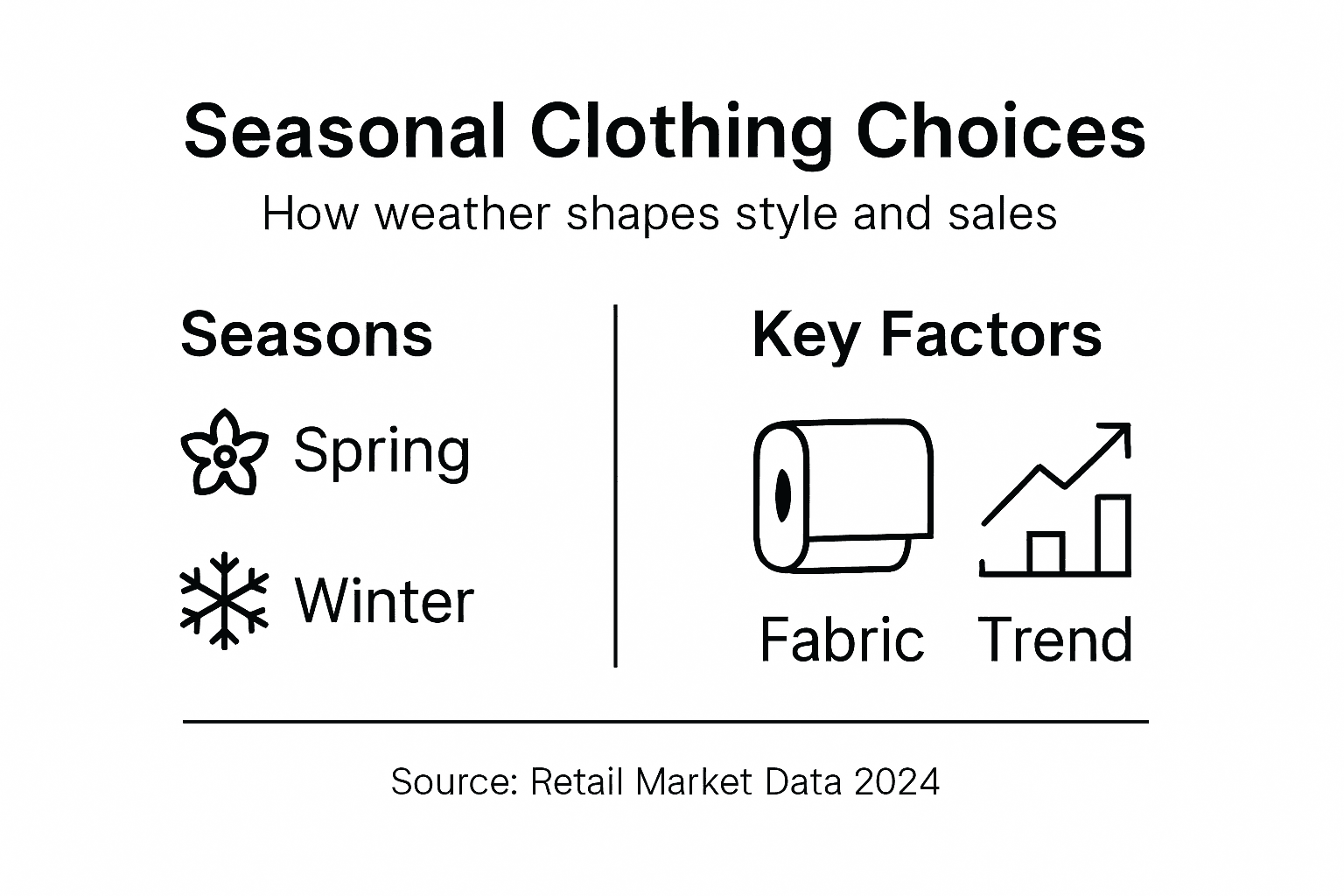
Fashion seasons represent complex systems of clothing design that respond dynamically to environmental and cultural shifts. Historical fashion season development reveals four primary classifications that guide global apparel production and consumer expectations across different geographic regions and climatic conditions.
The major seasonal categories typically encompass:
- Spring/Summer Collection: Lightweight fabrics, bright colors, minimal layering
- Autumn/Winter Collection: Heavy materials, muted tones, extensive layering
- Resort Collection: Vacation-oriented styles, tropical and lightweight designs
- Pre-Fall Collection: Transitional pieces bridging summer and autumn aesthetics
Climate characteristics influence fashion design profoundly, determining fabric weight, color palettes, and silhouette choices. Designers strategically adapt clothing to regional temperature variations, creating collections that balance aesthetic appeal with practical functionality. Tropical regions might emphasize breathable cotton and linen, while Nordic countries prioritize insulation and layering techniques in their seasonal wardrobe planning.
Understanding these seasonal nuances helps consumers and retailers make more informed clothing selections, ensuring wardrobe versatility and alignment with environmental demands. Geographic location plays a critical role in interpreting seasonal fashion, with clothing needs varying dramatically between tropical, temperate, and arctic climate zones.
Here’s a comparative look at how climate zones influence seasonal fashion strategies:
| Climate Zone | Fabric Priorities | Design Focus | Color Palettes |
|---|---|---|---|
| Tropical | Lightweight, moisture-wicking | Loose fits for ventilation | Bright, vibrant hues |
| Temperate | Adaptable, layered materials | Transitional layering styles | Earth tones, soft pastels |
| Arctic/Nordic | Dense, insulating fabrics | Heavy layering, wind-proof | Muted, dark shades |
This table helps clarify how geography drives specific fashion choices for each season.
Pro tip: Invest in versatile, multi-season pieces that can be layered or styled differently to maximize your wardrobe’s adaptability across changing climate conditions.
Consumer demand shifts throughout the year
Seasonal clothing demand represents a complex economic phenomenon driven by intricate interactions between weather patterns, consumer psychology, and fashion trends. Consumer purchasing behavior variations demonstrate remarkable predictability, with distinct purchasing rhythms emerging across different seasonal transitions.
Key demand shift patterns include:
- Winter Peak: Heavy clothing, thermal wear, layering pieces
- Summer Peak: Lightweight apparel, breathable fabrics
- Transitional Periods: Versatile, adaptable clothing items
- Holiday Season: Gift-oriented fashion purchases
Seasonal sales patterns significantly impact retail inventory management and strategic planning. Retailers must anticipate these fluctuations by developing sophisticated demand forecasting models that account for temperature changes, cultural events, and regional climate variations. For instance, winter clothing sales peak earlier in Northern states compared to Southern regions, creating nuanced purchasing landscapes.
Consumer demand isn’t uniform but follows complex geographical and demographic patterns. Younger demographics tend to be more trend-responsive, while older consumers prioritize functional seasonal clothing. Factors like income levels, local climate, and cultural preferences dramatically influence these seasonal purchasing decisions, making demand prediction a sophisticated analytical challenge for fashion retailers.
Pro tip: Track local weather forecasts and plan your clothing purchases strategically to maximize value and minimize unnecessary spending during seasonal transitions.
Material and design choices by season
Seasonal fabric selection represents a critical intersection between functional performance and aesthetic design in the fashion industry. Seasonal material innovation strategies demonstrate how designers carefully select textiles that respond to environmental conditions while maintaining style integrity.
Key material and design considerations include:
-
Spring/Summer: Lightweight, breathable fabrics
- Cotton, linen, moisture-wicking synthetics
- Loose, airy silhouettes
- Ventilated design features
-
Autumn/Winter: Dense, insulating materials
- Wool blends, thermal fabrics
- Layered clothing designs
- Wind-resistant construction techniques
Design trends respond to seasonal demands, creating nuanced clothing lines that balance comfort with contemporary aesthetics. Winter collections prioritize thermal properties and wind protection, incorporating technical fabrics that trap heat while maintaining flexibility. Summer designs emphasize breathability, using lightweight materials and strategic ventilation to manage body temperature and provide maximum comfort.

Technical innovations have transformed seasonal design approaches, enabling manufacturers to develop adaptive clothing that seamlessly transitions between different environmental conditions. Advanced textile technologies now allow for temperature-regulating fabrics, moisture management, and enhanced durability across various seasonal contexts.
Pro tip: When building a versatile wardrobe, prioritize multi-season pieces with adaptable materials that can be layered or styled differently to maximize clothing utility.
Inventory planning for seasonal apparel sales
Seasonal inventory management represents a complex strategic process that demands precise forecasting and adaptive planning. Seasonal sales forecasting techniques enable retailers to optimize stock levels, minimize waste, and maximize potential revenue through data-driven approaches.
Key inventory planning strategies include:
-
Demand Prediction
- Analyze historical sales data
- Track temperature and weather patterns
- Consider regional climate variations
-
Stock Allocation
- Distribute inventory across multiple locations
- Maintain flexible supply chain networks
- Implement rapid replenishment systems
Quantitative forecasting approaches like Holt-Winters methods provide sophisticated models for anticipating seasonal demand fluctuations. Retailers must continuously adapt their inventory strategies, considering factors such as climate trends, consumer behavior shifts, and emerging fashion patterns to maintain competitive advantage.
Successful inventory planning requires a holistic approach that integrates predictive analytics, market intelligence, and agile supply chain management. Advanced technology now enables real-time tracking and dynamic adjustments, allowing businesses to respond rapidly to unexpected market changes and consumer preferences.
Pro tip: Develop a flexible inventory management system that can quickly adapt to unexpected seasonal demand shifts and leverage data analytics for more accurate forecasting.
Common challenges and mistakes to avoid
Seasonal fashion forecasting involves navigating complex predictive landscapes with numerous potential pitfalls. Demand forecasting challenges reveal intricate difficulties that can significantly impact retail performance and inventory management strategies.
Common challenges in seasonal clothing sales include:
-
Trend Misinterpretation
- Overestimating short-lived fashion trends
- Failing to distinguish between temporary and sustained style shifts
- Misreading consumer preference signals
-
Inventory Miscalculation
- Overstocking unpopular seasonal designs
- Understocking high-demand items
- Inadequate geographical demand forecasting
Seasonal demand forecasting errors frequently result from insufficient data integration and rigid predictive models. Retailers must develop adaptive strategies that incorporate real-time market intelligence, consumer behavior analytics, and sophisticated technological tools to mitigate potential forecasting inaccuracies.
Successful seasonal clothing management requires continuous learning and technological adaptation. Modern retailers must leverage advanced predictive analytics, machine learning algorithms, and comprehensive market research to navigate the complex landscape of fashion demand, minimizing financial risks and maximizing inventory efficiency.
To help retailers minimize errors, here’s a summary of common mistakes and effective solutions in seasonal inventory planning:
| Common Mistake | Business Impact | Recommended Solution |
|---|---|---|
| Overstocking trends | Excess inventory, markdown losses | Use real-time sales analytics |
| Underestimating demand | Missed sales, stockouts | Implement flexible restocking systems |
| Ignoring climate shifts | Mismatched assortments | Monitor local weather data |
Applying these solutions strengthens forecasting and inventory accuracy.
Pro tip: Implement a dynamic forecasting system that combines historical data, real-time market trends, and machine learning algorithms to improve seasonal inventory accuracy.
Master Seasonal Style with Smoked Times Essentials
Managing the impact of seasonality on your wardrobe can be challenging. The article highlights key issues such as shifting consumer demand, fabric choices, and layering strategies that affect both comfort and style throughout the year. If you want versatile pieces that work perfectly across seasons, our Essentials – Smoked Times collection offers carefully selected casual and seasonal clothing designed for easy layering and adaptability.
Discover the smart way to update your wardrobe with premium options from our Hoodies Collection – Premium Oversized & Fleece Hoodies – Smoked Times to stay warm and stylish during the colder months. Don’t wait for the weather to catch you off guard. Act now to create a season-ready wardrobe that balances comfort and trend—with the convenience of shopping at Smoked Times. Explore our adaptable clothing today and experience effortless seasonal transitions.
Frequently Asked Questions
What is seasonality in clothing?
Seasonality in clothing refers to the classification of fashion trends and consumer purchasing behaviors that change with the seasons, influenced by climate and social patterns.
How does climate influence seasonal fashion choices?
Climate affects fabric selections, color palettes, and design features for each season, with designers adapting styles based on the environmental conditions prevalent in specific regions.
What are some key strategies for managing seasonal inventory in retail?
Key strategies include demand prediction through historical sales data, effective stock allocation across locations, and the implementation of rapid replenishment systems to adapt to fluctuations in consumer demand.
What are transitional pieces in seasonal wardrobes?
Transitional pieces are versatile items designed to be worn across multiple seasons, allowing for layering and different styling options, maximizing garment utility and minimizing the need for excessive purchases.
Recommended
- What Is Seasonal Fashion and Why It Matters – Smoked Times
- 7 Smart Ways to Embrace Seasonal Clothing Trends in Style – Smoked Times
- Color Trends in Apparel – Impact on Streetwear Style – Smoked Times
- 7 Smart Ways to Master Seasonal Clothing Trends – Smoked Times
- Understanding Seasonal Color Palettes for Special Events - DressMeUpNY
- Creativity in Clothing Design: Why It Matters – ChillStitchApparel