


Role of Social Media in Apparel: Driving Fashion Trends
Scrolling through Instagram or TikTok, trends seem to pop up overnight and spread in seconds, reshaping how young people everywhere discover new styles. Fashion now moves at the speed of social media, making it easier to find bold looks and comfortable winter outfits with just a tap. This article breaks down how platforms empower consumers, accelerate trends, and foster global connectivity in everyday apparel, so you can stay ahead in a fast-moving fashion world.
Table of Contents
- Defining Social Media’s Impact on Apparel
- Key Platforms and Content Types
- Influencer Marketing and Trend Creation
- Consumer Engagement and Purchase Decisions
- Risks, Challenges, and Ethical Concerns
Key Takeaways
| Point | Details |
|---|---|
| Social Media Empowers Consumers | Individuals now influence fashion narratives, taking active roles as creators and trendsetters. |
| Rapid Trend Propagation | Trends spread significantly faster through platforms, reshaping how brands engage with consumers. |
| Influencer Marketing Drives Perception | Authenticity from influencers fosters trust, directly impacting consumer purchase decisions. |
| Ethical Challenges Persist | The rise of social media in fashion raises concerns such as unsustainable consumption and misinformation. |
Defining Social Media’s Impact on Apparel
Social media has fundamentally transformed how fashion trends emerge, spread, and influence consumer behavior worldwide. Platforms like Instagram, TikTok, and Twitter have become powerful channels that democratize fashion, enabling instant global communication and trend diffusion. Social media’s transformative role goes far beyond traditional marketing, creating dynamic interactive spaces where consumers and brands continuously engage.
The impact of social media on apparel can be understood through several key dimensions:
- Consumer Empowerment: Individuals now actively shape fashion narratives
- Real-Time Trend Acceleration: Trends spread exponentially faster than traditional media
- Global Connectivity: Geographic barriers in fashion consumption dissolve
- User-Generated Content: Consumers become active creators, not just passive consumers
Research demonstrates that consumer engagement drives fashion trends through complex digital interactions. Brands no longer dictate trends unilaterally; instead, they participate in co-created fashion ecosystems where user feedback, viral content, and community dynamics play critical roles. This shift represents a profound change in how fashion is conceptualized, marketed, and consumed.
Pro tip: Follow diverse fashion creators across different platforms to understand emerging trends and develop a nuanced perspective on global style movements.
Key Platforms and Content Types
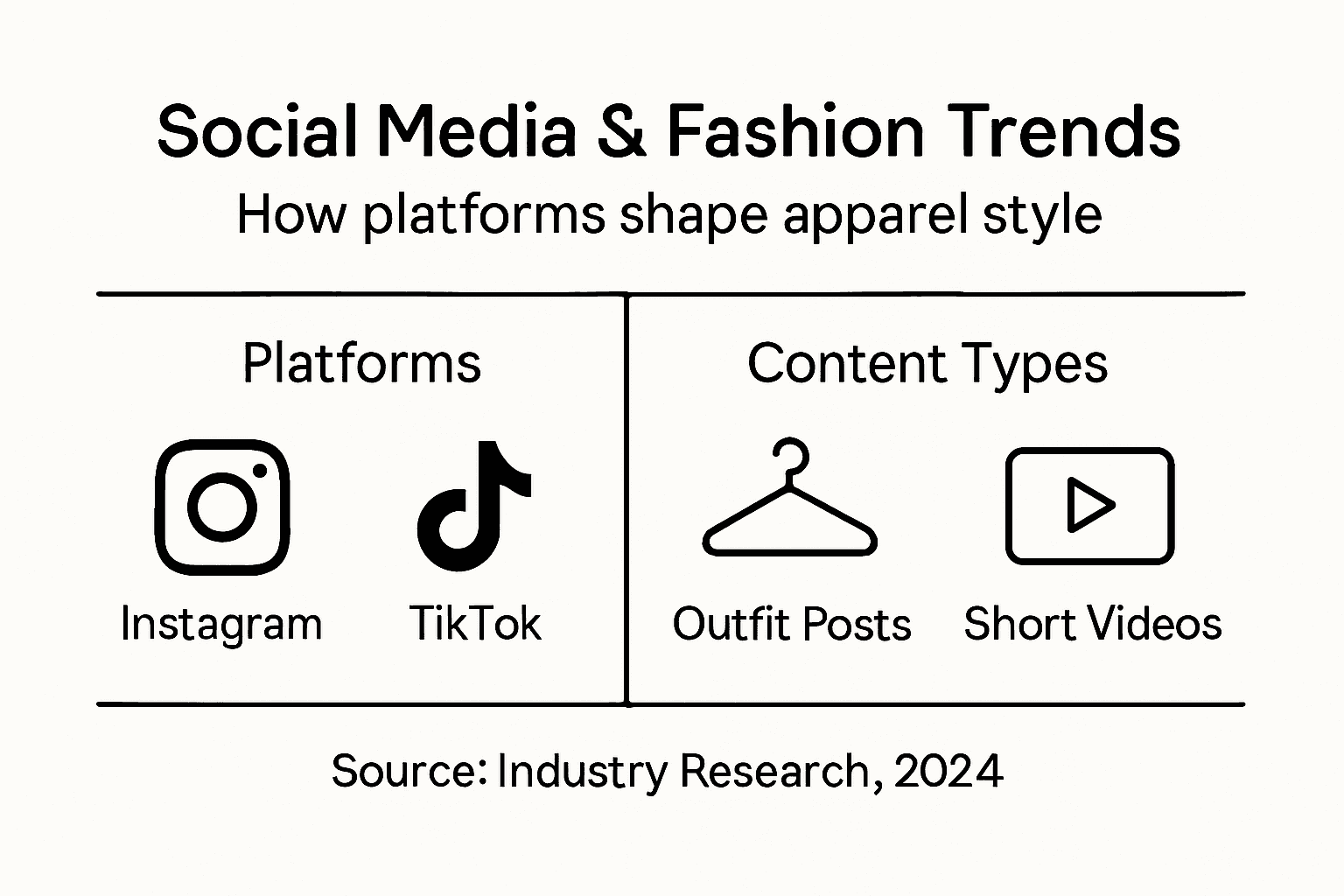
The digital landscape of fashion communication is dominated by distinct social media platforms, each offering unique capabilities for trend dissemination and consumer engagement. Visual platforms like Instagram and TikTok have emerged as powerhouses in apparel trend propagation, leveraging short-form video and image-based content to capture user attention and drive fashion discourse.
Key social media platforms can be categorized by their primary content and engagement strengths:
- Instagram: Visual storytelling through curated images and short videos
- TikTok: Viral trends, quick styling tutorials, and user-generated fashion content
- YouTube: Comprehensive fashion reviews, detailed styling guides, and influencer collaborations
- Twitter: Rapid trend discussions, brand interactions, and fashion activism
- Pinterest: Mood boards, style inspiration, and long-term trend visualization
Social media platforms showcase diverse content types that transform how consumers discover, interact with, and consume fashion. These range from professional influencer posts and brand promotions to authentic user-generated content that provides genuine, peer-driven perspectives on style and sustainability.
Pro tip: Diversify your social media following to explore multiple content styles and gain a comprehensive understanding of emerging fashion trends.
Here’s a summary comparing how major social media platforms contribute to fashion influence:
| Platform | Main Content Style | Unique Fashion Impact | Typical Audience |
|---|---|---|---|
| Curated images, stories | Visual brand storytelling | Millennials, Gen Z | |
| TikTok | Short-form video skits | Viral trend acceleration | Teens, Young Adults |
| YouTube | Long-form video guides | In-depth reviews & tutorials | Millennials, Gen Z |
| Text threads, images | Real-time debate & trend alerts | Trend analysts, Brands | |
| Visual mood boards | Style discovery, long-term ideas | Planners, Creatives |
Influencer Marketing and Trend Creation
Social media influencers have revolutionized fashion trend creation, emerging as powerful tastemakers who bridge traditional marketing channels and consumer expectations. Influencers play a critical role in shaping consumer perceptions by providing authentic, relatable content that resonates deeply with their dedicated followers.
The strategic impact of influencer marketing can be understood through several key dimensions:
- Authenticity: Genuine storytelling that builds trust
- Targeted Reach: Direct communication with specific audience segments
- Trend Acceleration: Rapid dissemination of fashion styles
- Cost-Effective Marketing: Lower acquisition costs compared to traditional advertising
- Community Engagement: Creating interactive fashion narratives
Social media influencers serve as prominent trend catalysts by democratizing fashion discourse and challenging traditional industry gatekeepers. They transform consumer behavior through compelling visual storytelling, personal styling demonstrations, and peer-driven recommendations that feel more genuine than conventional brand advertisements.

Pro tip: Analyze influencers’ engagement rates and audience demographics to understand their true impact on fashion trend creation.
Consumer Engagement and Purchase Decisions
Social media has fundamentally transformed how consumers interact with fashion brands and make purchasing decisions. Social media influences consumer behavior across demographic segments, creating complex pathways of inspiration, validation, and ultimate purchase motivation.
Key factors driving consumer engagement through social media include:
- Visual Inspiration: Instant access to styling ideas
- Peer Validation: Social proof through likes and comments
- Comparative Shopping: Easy product research and price comparisons
- Interactive Experiences: Direct brand and consumer communication
- Real-Time Feedback: Immediate product reviews and recommendations
Social media platforms shape complex decision processes by providing multifaceted inputs that go beyond traditional marketing channels. Consumers now integrate influencer recommendations, user-generated content, brand narratives, and peer experiences to create a holistic understanding before making fashion purchases.
Pro tip: Track your social media engagement metrics to understand how content translates into actual consumer purchasing behavior.
Risks, Challenges, and Ethical Concerns
The rapid evolution of social media in fashion presents significant ethical challenges that demand critical examination. Systematic reviews highlight emerging risks in digital fashion communication, revealing complex ethical dilemmas that extend beyond simple marketing practices.
Key ethical challenges in social media’s fashion ecosystem include:
- Environmental Impact: Promoting unsustainable consumption patterns
- Misinformation: Spreading unrealistic beauty and fashion standards
- Consumer Manipulation: Creating artificial purchasing pressures
- Privacy Concerns: Collecting and monetizing personal data
- Authenticity: Blurring lines between genuine recommendations and paid promotions
Fast fashion’s social media marketing exacerbates environmental and social sustainability challenges by glorifying rapid consumption. The platforms simultaneously raise consumer social consciousness while creating contradictory pressures that encourage constant trend chasing and disposable fashion experiences.
This table outlines the business benefits and potential challenges of using social media for fashion marketing:
| Aspect | Business Benefit | Common Challenge |
|---|---|---|
| Trend Visibility | Immediate access to global trends | Oversaturation, trend fatigue |
| Consumer Engagement | Direct feedback and loyalty | Managing negative feedback |
| Influencer Marketing | Cost-effective, authentic brand partnerships | Assessing true influence |
| Sustainability | Platforms for eco-friendly advocacy | Promoting unsustainable choices |
Pro tip: Critically evaluate social media fashion content by considering its broader environmental and ethical implications beyond aesthetic appeal.
Harness Social Media Trends with Timeless Cotton Basics
Social media drives fashion trends faster than ever and empowers consumers to shape their own style stories. Staying ahead means having versatile, quality apparel that adapts to any trend without sacrificing comfort or authenticity. If you want to translate viral fashion inspiration into your everyday wardrobe, our selection of Men’s Cotton T-Shirts – Clean Basics, No Prints offers a perfect foundation. These timeless pieces align with the article’s insights on consumer empowerment and authentic style creation.
Discover how simple, durable pieces can elevate your fashion journey while embracing the rapid trend cycles social media creates. Act now to build a wardrobe that supports your personal style and lasts beyond fleeting fads. Explore our full collection at Smoked Times and find the perfect Cotton T-Shirts to start reimagining your look today.
Frequently Asked Questions
What is the impact of social media on fashion trends?
Social media accelerates the spread of fashion trends, empowers consumers, and fosters global connectivity. It creates dynamic platforms where trends can emerge and spread rapidly, with users actively participating in fashion narratives.
How do influencers shape fashion trends on social media?
Influencers act as powerful tastemakers who provide authentic and relatable content. Their storytelling and engagement with followers play a crucial role in creating and accelerating trends, making fashion more accessible and interactive.
What types of content are most effective for driving fashion engagement on platforms like Instagram and TikTok?
Visual storytelling, short-form videos, and user-generated content are highly effective. Platforms like Instagram favor curated images, while TikTok thrives on viral trends and quick styling tutorials, attracting a younger audience keen on rapid fashion inspiration.
What are the ethical concerns associated with social media marketing in the fashion industry?
Key ethical challenges include promoting unsustainable consumption, spreading unrealistic beauty standards, privacy concerns, and blurring the lines between genuine recommendations and paid promotions. It’s important for consumers to critically evaluate content and understand its broader implications.
Recommended
- Digital Marketing in Fashion – Driving Global Trends – Smoked Times
- Role of Fashion in Youth Culture—Impact on Identity – Smoked Times
- Role of Fashion in Self-Expression Today – Smoked Times
- Why Follow Fashion Trends – Real Benefits and Impacts – Smoked Times
- Why Pop Culture Influences Fashion Trends Worldwide – IGZ Clothing