


Step by step T-shirt selection for a lasting wardrobe
TL;DR:
- Choosing high-quality T-shirts with proper fabric weight and construction ensures durability and vintage appeal over time. Regular wardrobe audits and focusing on current fit help you build a minimalist collection that fits your body and lifestyle. Investing in mid-range prices guarantees longer-lasting tees made from long-staple or ring-spun cotton, promoting sustainability and comfort.
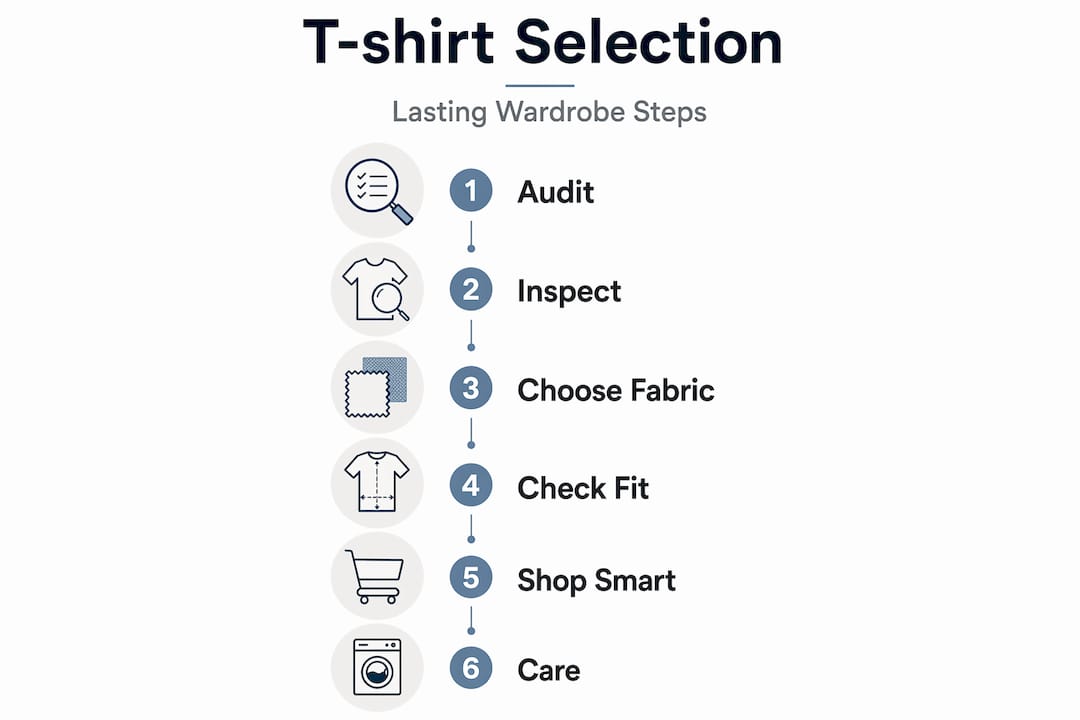
Most people have a drawer full of T-shirts that looked fine in the store and fell apart after six months. The necklines stretched, the seams twisted, or the fabric thinned out to the point where you could almost see through it. Following a clear step by step t-shirt selection process changes that completely. This guide walks you through every decision, from auditing what you already own to understanding fabric weights, fit, and care, so you can build a minimalist wardrobe anchored by vintage-inspired tees that actually last.
Table of Contents
- Start with a wardrobe audit: knowing what works and what doesn’t
- Understand fabric and construction: the foundation of vintage comfort
- Fit matters: choosing neckline, sleeve, and cut for your evolving body
- Smart shopping: practical checks, pricing, and places to buy quality tees
- Care and maintenance: getting the most life out of your T-shirts
- Why focusing on current fit and quality beats chasing trends
- Explore quality vintage-inspired tees at Smoked Times
- Frequently asked questions
Key Takeaways
| Point | Details |
|---|---|
| Audit your wardrobe first | Review and discard worn or ill-fitting tees to understand your current fit and fabric preferences before shopping. |
| Choose quality fabrics | Prefer 100% long-staple or ring-spun cotton with 180-220 GSM for durability and the vintage feel. |
| Focus on current fit | Fit changes with your body, so pick necklines and cuts that suit your present shape and comfort. |
| Shop smart and test | Check necklines, seams, and fabric weight in-store; invest in tees priced $30-$60 for lasting quality. |
| Care properly | Wash inside out in cold water, avoid heat drying, and reshape damp tees to maintain longevity. |
Start with a wardrobe audit: knowing what works and what doesn’t
Before you spend a dollar, pull every T-shirt out of your drawer and lay them flat. This is your baseline. It takes ten minutes and saves you from repeating the same expensive mistakes.
Inspect each shirt for three things: the neckline, the seams, and how the fabric feels in your hand. A neckline that has stretched more than an inch beyond its original shape is done. It will never recover. Seams that have twisted away from the shoulder or the side mean the fabric was too lightweight and too loosely constructed to hold its form through regular washing.
Fabric weight is the detail most people overlook entirely. Audit your current tees by discarding those with twisted seams, stretched necklines over 1 inch, or thin fabric under 160 GSM (grams per square meter, the standard measure of fabric weight). A tee under 160 GSM feels almost papery and loses shape fast. Most fast fashion basics fall right into this range.
Once you have weeded out the rejects, identify the one or two tees you actually reach for. Note their fit, their weight, and how the collar sits. That shirt is your reference point for everything that follows. Your minimalist style wardrobe starts with understanding exactly what already works on your body today.
Key things to check during your audit:
- Necklines stretched beyond 1 inch: discard
- Twisted side or shoulder seams: discard
- Fabric that feels thin or translucent under light: discard
- Pilling or fading after fewer than 20 washes: discard
- Your favorites: measure the chest, length, and shoulder width and write it down
Pro Tip: Photograph your favorite fitting tee laid flat next to a measuring tape. That image becomes your reference when shopping online, where you cannot try anything on before buying.
Understand fabric and construction: the foundation of vintage comfort
With your audit done, the next step is knowing what separates a tee that ages beautifully from one that falls apart. The difference comes down to two things: fiber quality and how the garment is built.
For vintage feel and long-term durability, 100% long-staple or ring-spun cotton at 180 to 220 GSM is the standard. Long-staple cotton means the individual fibers are longer, which produces a smoother, stronger yarn. Ring-spun cotton means those fibers are twisted tightly before weaving, which adds softness and resistance to pilling. You can learn more about what types of cotton fabric produce the best results for everyday wear.
A 180 to 220 GSM range hits the vintage sweet spot. Below 180 GSM and you get a tee that feels flimsy. Above 220 GSM and it starts feeling more like a sweatshirt. The drape, the way the fabric falls naturally from the shoulder, is what gives that worn-in, vintage character without looking sloppy.
Construction details matter just as much as fiber type. Necklines with internal fabric bands prevent stretching and maintain vintage shape retention over years of wear. Flip the collar inside out and look. If there is a full folded band of fabric inside the neckline, that shirt will hold its shape. If it is just a single folded edge with a stitch, it will stretch within a few months.
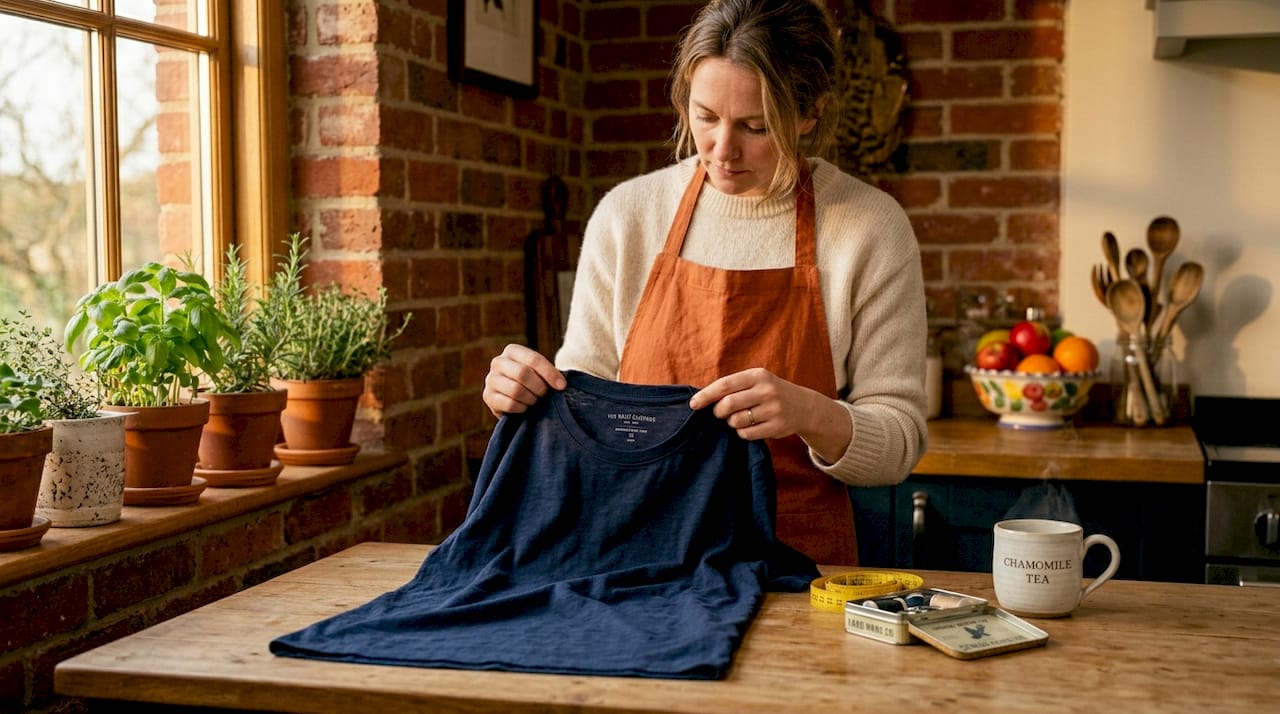
Shoulder taping is the second construction detail worth checking. It is a strip of fabric sewn along the shoulder seam on the inside. It prevents the shirt from pulling sideways or twisting after washing. You can also explore cotton blend basics if you want to understand how small percentages of polyester affect shrink resistance without fully sacrificing that natural cotton feel.
| Feature | What to look for | Red flag |
|---|---|---|
| Fiber type | 100% long-staple or ring-spun cotton | Generic “cotton” with no specification |
| Fabric weight | 180 to 220 GSM | Under 160 GSM |
| Neckline build | Full internal fabric band | Single-fold edge only |
| Shoulder construction | Taping visible inside shoulder seam | No taping present |
| Polyester content | Under 47% if blended | Over 50% polyester blend |
Pro Tip: If you cannot find the GSM listed on the label, pinch the fabric between two fingers and hold it up to a light source. A quality 200 GSM tee will block almost all light. A cheap tee under 160 GSM will glow through like tissue paper.
Fit matters: choosing neckline, sleeve, and cut for your evolving body
Now that fabric is clear, fit is where most people get tripped up. Not because it is complicated, but because they shop from habit rather than from what actually looks good on them right now.
Body proportions change every 3 to 5 years, which means the cut that suited you in your late twenties may not do your current frame any favors. A T-shirt fitting guide worth following starts with forgetting what you used to wear and evaluating what your current body actually needs.
Necklines to consider:
- Crew neck: the most versatile and classic, sits close to the base of the throat, works for most body types
- V-neck: elongates the neck and works well for broader shoulders, but avoid deep V cuts for a minimalist look
- Scoop neck: works for slimmer frames, creates a casual, laid-back silhouette
- Boatneck: works across the collarbone, flatters wide shoulders, less common but worth trying
How to evaluate fit step by step:
- Put the shirt on and check the shoulder seam: it should sit exactly at the edge of your shoulder bone, not droop down your arm or ride up toward your neck.
- Raise both arms above your head. If the shirt pulls out from your waistband by more than two inches, the torso is too short.
- Check the chest: you should be able to pinch about an inch of fabric on each side for a relaxed fit, or a half inch for a fitted cut.
- Move. Do a few arm circles. Twist your torso. A well-made tee should move with you without pulling across the back.
- Look in a mirror from the side. A good hem should hang straight without riding up at the front.
Pro Tip: Take your fit reference measurements with you to the store or open them on your phone when shopping online. Do not rely on size labels alone. A medium from one brand fits like a small from another.
Smart shopping: practical checks, pricing, and places to buy quality tees
With your fabric knowledge and fit criteria in hand, you can walk into any store or browse any product page with confidence. The t-shirt selection process at the shopping stage comes down to three quick tests and knowing what you are willing to spend.
In-store quality checks:
- Weight test: hold the folded shirt in your palm. A 200+ GSM tee feels noticeably substantial. Thin tees feel airy and light in a way that translates to faster wear.
- Snap-back test: stretch the neckline about one inch and release. It should return to its original shape immediately. Any hesitation means the neckline will bag out within a season.
- Hang test: hold the shirt by the shoulders and let it hang. The seams should run perfectly straight down each side. Any twisting tells you the fabric was cut off-grain and will continue to twist worse after washing.
Pricing reflects lifespan more directly than most people realize. A $30 to $100 investment in a mid-range brand yields a tee that lasts three to five years with proper care. A $10 to $20 tee from a discount retailer typically pills and loses shape within months, making it far more expensive per wear in the long run.
| Price range | Expected lifespan | Typical fabric quality |
|---|---|---|
| Under $20 | 3 to 6 months | Under 160 GSM, generic cotton |
| $30 to $60 | 2 to 4 years | 180 to 200 GSM, decent construction |
| $60 to $100+ | 4 to 7 years | 200 to 220 GSM, premium ring-spun cotton |
Washing habits affect this math significantly. Learn how to handle shrinking and fit before you wash a new shirt for the first time.
Pro Tip: Divide the purchase price by the number of times you expect to wear the shirt per year. A $55 tee worn 60 times a year costs less than $1 per wear. A $12 tee you replace every six months costs considerably more.
Care and maintenance: getting the most life out of your T-shirts
Selecting the right tee is only half the equation. How you wash and store it determines whether it lasts one year or five.
Step by step care routine:
- Turn the shirt inside out before every wash. This protects the outer surface from friction and keeps the color from fading against other fabrics.
- Wash in cold water on a gentle cycle. Hot water breaks down cotton fibers faster and causes premature shrinkage.
- Skip the dryer whenever possible. Air drying is the single biggest factor in maintaining the fabric’s structure and preventing the fibers from tightening unevenly.
- If you must use a dryer, use a low heat setting and remove the shirt while it is still slightly damp.
- Reshape the hem and collar by hand while the shirt is still damp, then lay it flat to finish drying.
- Treat stains immediately with cold water and a mild dish soap before they set. Heat, including dryer heat on a stained shirt, locks stains in permanently.
Common mistakes that shorten T-shirt life:
- Hanging tees by the collar on a hook: stretches the neckline within weeks
- Drying on high heat repeatedly: hardens the fibers and causes the shirt to feel scratchy over time
- Ignoring fabric care labels: some ring-spun cotton tees need specific handling to maintain their drape
You can find specific guidance on caring for cotton tees and details on how to shrink a cotton tee intentionally if you need a better fit after purchase.
Pro Tip: Fold your tees vertically and store them standing upright in your drawer rather than stacking them flat. You can see every shirt at once, you stop rewearing the same two tees from the top of the pile, and the collars stay in far better shape.
Why focusing on current fit and quality beats chasing trends
Here is the part most T-shirt buying guides skip: the reason your drawer is full of shirts you never wear has almost nothing to do with style. It has to do with the fact that you bought for a version of your body that no longer exists, or for a trend that made sense in the store and made no sense in real life.
The vintage aesthetic that has stayed relevant for decades is not about any specific graphic or cut. It is about fabric that has presence and fit that feels intentional. Bodies change every 3 to 5 years, and the tees that built your wardrobe five years ago deserve a reassessment. Not because they are wrong, but because you may have changed.
Trends ask you to adapt yourself to what is popular. A minimalist wardrobe built on quality works the other way around: you choose pieces that work for your actual life, your actual body, and your actual daily comfort. A tee in a 210 GSM ring-spun cotton that fits your current frame perfectly will serve you far better than three trendy shirts that you feel slightly off in.
The real confidence that comes from a well-made T-shirt is not about the label or the price. It is about putting on a shirt that looks like it belongs on you. That only happens when fit and fabric are treated as non-negotiable, not as afterthoughts.
Explore quality vintage-inspired tees at Smoked Times
If this guide has clarified exactly what you are looking for, Smoked Times makes the next step straightforward. The collection is built around the principles covered here: heavyweight cotton, minimal branding, and construction that ages well rather than falling apart after a season.
Every piece at Smoked Times reflects the kind of fabric weight and build quality described in this guide: tees that sit right, hold their shape through repeated washing, and feel better the more you wear them. Whether you are starting fresh or filling the gaps left by your wardrobe audit, the range covers the cuts and weights that work for a vintage-inspired, minimalist approach. International shopping and bundle options make it easy to invest in several pieces at once and do it right from the start.
Frequently asked questions
What fabric weight is best for a durable vintage-style T-shirt?
A fabric weight between 180 and 220 GSM offers the ideal balance of durability, vintage drape, and comfort. High-quality T-shirts at this weight use 100% long-staple or ring-spun cotton for durability lasting ten or more years.
How can I test a T-shirt’s neckline quality in-store?
Stretch the neckline gently about one inch and watch how fast it returns. Necklines with internal fabric bands snap back immediately and resist stretching over time, while poorly constructed necklines hesitate and stay slightly wider.
Why is fit more important than style trends for T-shirts?
Because body proportions shift every three to five years, a tee chosen for your current shape will always look and feel better than one selected to match a passing trend.
What price range reflects a good investment in quality T-shirts?
Spending $30 to $60 gives you noticeably better fabric and construction than budget alternatives. Mid-range brand tees in this range typically last three to five years compared to cheaper options that pill and lose shape within months.