


Why Optimize Your Winter Wardrobe for Real Comfort
TL;DR:
- Optimizing your winter wardrobe improves physical comfort, mental well-being, and energy levels during cold months.
- Smart layering, fabric choice, proper organization, and versatile pieces ensure warmth without bulk and reduce decision fatigue.
Most people treat their winter wardrobe as an afterthought. You grab what’s thick, layer it up, and hope for the best. But there’s a real reason to optimize winter wardrobe choices with more intention, and it goes well beyond how you look. What you wear in cold weather directly shapes your comfort, your energy, your mood, and your willingness to stay active and engaged. This guide breaks down the physical and psychological benefits of winter wardrobe optimization, covers smart layering, practical organization, and versatile styling so you can get through the cold season feeling sharp and capable.
Table of Contents
- Key takeaways
- Why optimize winter wardrobe: physical and mental benefits
- Smart layering and fabric choices
- Organizing and maintaining your winter wardrobe
- Building versatility into your cold-weather wardrobe
- Common pitfalls that undermine winter comfort
- My take on why this actually matters
- Upgrade your winter wardrobe with Smokedtimes
- FAQ
Key takeaways
| Point | Details |
|---|---|
| Clothes affect more than looks | Your winter wardrobe directly impacts nervous system load, energy levels, and mood during cold months. |
| Layering beats bulk | A three-layer system with high-loft, thin materials outperforms stacked thick clothing every time. |
| Storage protects your investment | Folding knitwear and cleaning garments before storage extends their life significantly. |
| Versatility saves money | A capsule wardrobe built on the 70/30 rule gives you more outfit options with fewer pieces. |
| Comfort fuels productivity | Uncomfortable clothing drains mental energy, making wardrobe optimization a form of real self-care. |
Why optimize winter wardrobe: physical and mental benefits
Here’s a framing most people miss entirely. Your winter clothes are not just fabric. They are inputs to your nervous system. Uncomfortable winter clothing creates micro-tensions and cognitive load that drain energy throughout the day. You are constantly adjusting a scratchy collar, tugging down a riding coat, or managing a zipper that won’t stay up. None of it seems like a big deal in isolation, but the cumulative effect is real fatigue.
“Clothing requiring constant adjustment creates cognitive load and micro-tensions that literally drain energy during winter.” — Union Beauty
The psychological benefits of a well-considered wardrobe are equally significant. A study of 252 women aged 38 to 67 found that wardrobe satisfaction predicts improved overall well-being and greater optimism. People who felt good about their clothing were also less likely to skip social interactions, which matters during a season when isolation risks spike. Winter already shortens daylight hours and limits outdoor activity. A wardrobe that makes you feel put together reduces the temptation to stay home and disengage.
Mental fatigue from clothing is an underrated drain. When you feel comfortable and confident in what you’re wearing, your attention goes toward your work, your relationships, and your goals rather than toward managing physical discomfort. That’s not a minor benefit. That is the difference between a productive winter and one where you spend three months waiting for spring.
Smart layering and fabric choices
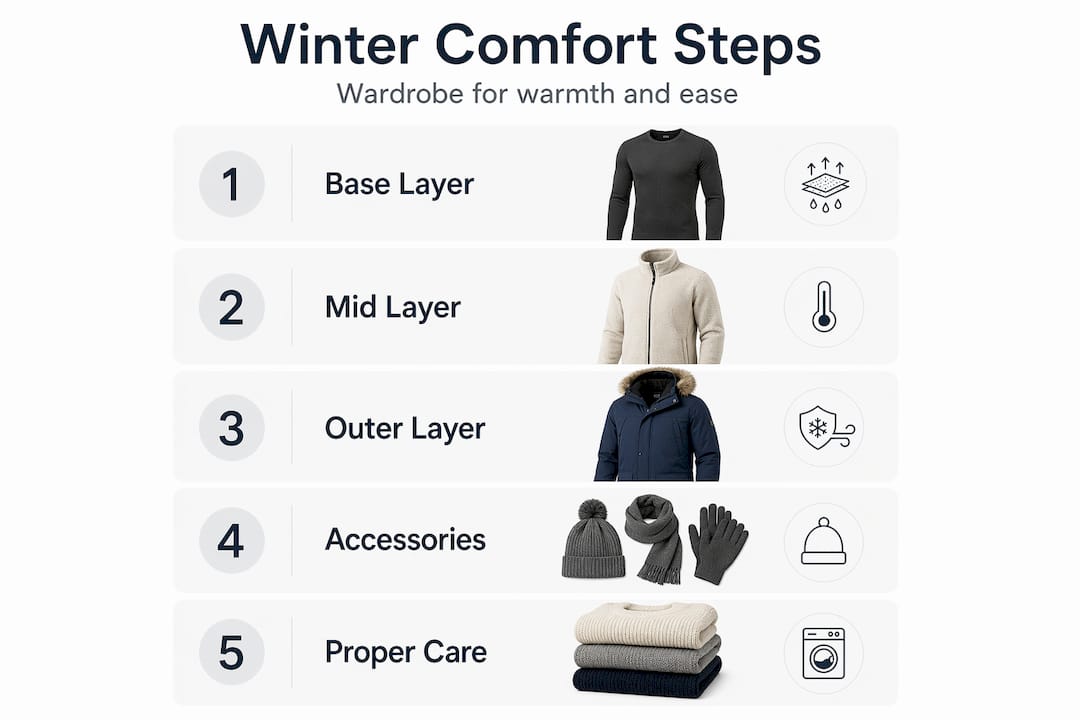
The three-layer system is the foundation of functional cold-weather dressing, and most people either skip a layer or get the order wrong. Each layer has a specific job. The base layer manages moisture. The mid layer traps heat. The outer layer blocks wind and precipitation. When all three work together, you stay warm without bulk and without sweating yourself into a chill.
Here is where fabric choice becomes critical:
- Base layers: Merino wool or moisture-wicking synthetics only. Cotton traps sweat against your skin, and wet cotton in cold weather drops your body temperature fast. This is the number one fabric mistake most people make.
- Mid layers: Look for high-loft fleece or down. The science is simple. Warmth comes from trapped air, not from weight or thickness. Thin, high-loft mid layers outperform stacked thick sweaters because they preserve that air without compressing it.
- Outer layers: Focus on wind and water resistance, not maximum insulation. Let the mid layer do the thermal work.
The most common layering mistake is stacking thickness. People wear two heavy sweaters and wonder why they feel restricted and still cold in a breeze. Compression kills insulation. When you crush a puffy mid layer under a tight coat, you eliminate the air pockets that do the actual warming.
Pro Tip: Think in terms of warmth-to-volume ratio rather than total warmth. Your goal is the most heat for the least bulk. A thin fleece under a shell often beats a single massive parka.
Learning how to enhance winter style through thoughtful layering also gives you flexibility. You can remove a layer in a warm office and add it back outside without rebuilding an entire outfit.
Organizing and maintaining your winter wardrobe
A wardrobe audit sounds tedious, but it takes less than an hour and pays off for the entire season. Work through it in order.
- Pull out every winter item you own and lay it flat.
- Separate anything with visible damage, severe pilling, or broken closures. Those pieces cost you comfort and credibility every time you wear them.
- Set aside items you have not worn in two winters. If the pattern hasn’t shifted, you are not going to wear them this winter either.
- Group what remains by type: base layers, mid layers, outerwear, accessories.
- Check fit on anything you are uncertain about. Coats that compress your mid layer, or base layers that bunch and shift, belong in the discard pile.
Proper storage is what protects the pieces you keep. Most people get this wrong in one specific way: they hang their knitwear. Heavy knitwear on hangers distorts shoulder seams and stretches the fabric permanently. Always fold wool sweaters, cashmere, and heavy knits flat.
| Garment type | Storage method | Care before storage |
|---|---|---|
| Wool and cashmere knits | Fold flat, breathable bin | Hand wash or dry clean |
| Down coats and puffer jackets | Hang or store uncompressed | Spot clean, professional clean annually |
| Fleece mid layers | Fold or hang | Machine wash cold, air dry |
| Scarves and gloves | Fold in drawer or small bin | Hand wash, air dry flat |
| Wool coats | Hang on wide-shoulder hanger | Professional cleaning before storage |
Professional cleaning before storage removes oils and pollutants that attract moths and cause fiber degradation. Skipping this step is one of the most expensive habits a person can have when it comes to winter clothing.
Building versatility into your cold-weather wardrobe
The capsule wardrobe concept gets talked about a lot in fashion circles, but its real value is practical. When you build a winter wardrobe around pieces that work together, you spend less mental energy on getting dressed and you get more use out of every item.
Start with color. A foundation of navy, charcoal, cream, and camel gives you combinations that work across every scenario without requiring deliberate coordination. Add texture to create visual variety so you are not wearing technically the same outfit repeatedly.
The 70/30 wardrobe rule applies directly here. Seventy percent of your winter wardrobe should be dependable essentials: solid base layers, a neutral mid layer, a reliable outer shell, one or two pairs of quality pants. The remaining 30% is where personality lives. A bold scarf, a patterned flannel, a statement coat in a color that isn’t charcoal. This ratio gives you a strong foundation while keeping winter dressing from feeling like a uniform.
A few specific areas most people overlook when thinking about tips for winter wardrobe:
- Footwear: Warm boots matter more than most people budget for. Cold feet undermine every other layer you have on. Waterproofing is not optional in winter.
- Hats: You lose a significant portion of body heat through your head. A good beanie or wool hat is not an accessory. It’s a core piece.
- Gloves: Thin liner gloves worn under a heavier glove give you more temperature control than one thick pair.
- Scarves: A wool or fleece scarf seals the gap between your coat collar and your jaw. That gap bleeds warmth every time the wind picks up.
These accessories are where cold comfort is often won or lost, and they are the easiest part of your wardrobe to upgrade for a modest cost.
Common pitfalls that undermine winter comfort
Even people who think they have a solid cold-weather wardrobe make a few consistent mistakes. These are worth calling out directly.
- Wearing cotton base layers: Cotton is comfortable in warm weather. In winter, it soaks up sweat and holds it against your skin, which makes you colder than if you had worn nothing underneath. Replace it.
- Buying a coat that’s too tight: A coat that fits perfectly over a shirt fits badly over a mid layer. You need room for that trapped air to do its job. If your coat compresses your fleece, it cancels out the warmth.
- Neglecting moisture management: Overheating and sweating in winter is more common than people expect, especially during commutes or active days. Moisture-wicking base layers prevent the chill that follows.
- Chasing trends over durability: Natural fiber knitwear like wool and cashmere costs more upfront but outlasts synthetic alternatives and provides better warmth retention over time. Cost-per-wear tells the real story.
Pro Tip: A simpler winter wardrobe actually reduces decision fatigue and supports mental endurance throughout the season. Fewer choices that all work together beats a crowded closet where nothing coordinates.
Knowing how to choose winter apparel for both comfort and long-term value keeps you from repeating the same expensive mistakes each season.
My take on why this actually matters
I’ve spent enough winters wearing the wrong things to know that discomfort is not just physical. It bleeds into your attitude. When I started actually paying attention to what I wore in cold weather, treating it as a system rather than a collection of random warm items, the difference wasn’t dramatic in any single moment. It was cumulative.
What I’ve learned is that most people underestimate how much mental bandwidth goes into managing a poorly assembled winter wardrobe. You are making micro-decisions and micro-adjustments all day long. Swap that out for clothes that fit right, layer correctly, and keep you genuinely comfortable, and you reclaim a meaningful amount of cognitive energy.
The counterintuitive part is that simplifying my wardrobe made me feel better dressed, not worse. I have fewer pieces now, but every one of them works. I don’t stand in front of a closet full of coats wondering which one isn’t going to leave me cold by noon.
Winter wardrobe optimization is self-care that looks practical. It has nothing to do with vanity and everything to do with showing up for your days feeling capable. That is worth the effort.
— Denis
Upgrade your winter wardrobe with Smokedtimes
If this article has you thinking about what your winter wardrobe is actually missing, Smokedtimes is a good next stop. The brand builds its line around heavyweight, durable essentials designed for real wear in cold weather. Hoodies, long-sleeve basics, and cold-weather accessories made for comfort and repeat use rather than for trend cycles. You will also find curated guides and tips covering winter wardrobe essentials for style and warmth in 2026 on the Smokedtimes blog. Whether you are rebuilding your cold-weather basics or filling in specific gaps, the range is worth a look.
FAQ
What does it mean to optimize your winter wardrobe?
Optimizing your winter wardrobe means selecting and organizing clothing that works together to provide maximum comfort, warmth, and versatility in cold weather. It goes beyond style and includes layering strategy, fabric choice, and garment care.
How does your wardrobe affect your mood in winter?
Research shows that clothing satisfaction predicts improved well-being and optimism, and people who feel good about their winter clothes are less likely to avoid social activities during the colder months.
What is the best base layer fabric for winter?
Merino wool and moisture-wicking synthetics are the best base layer fabrics for winter. Cotton traps sweat against the skin and lowers body temperature in cold conditions, making it a poor choice.
How should you store wool sweaters?
Fold knitwear flat and store in a breathable bin rather than hanging. Hanging heavy wool distorts shoulder seams and stretches the fabric over time.
What is the 70/30 wardrobe rule for winter?
The 70/30 wardrobe rule means 70% of your winter wardrobe should be neutral, versatile essentials and 30% can be statement pieces that add personality. This creates maximum outfit combinations with a manageable number of items.