


Guide to mixing casual outfits for everyday style
Putting together casual outfits that look effortlessly stylish shouldn’t feel like solving a puzzle every morning. Many young adults find themselves standing in front of a closet full of hoodies, tees, and pullovers yet struggling to create cohesive looks that work for their daily routines. This guide breaks down practical strategies for mixing casual pieces with confidence, focusing on seasonal considerations and smart online shopping choices. You’ll discover how to build a versatile wardrobe foundation, master layering techniques, adapt your style to changing weather, and verify your outfit choices work beautifully together.
Table of Contents
- What You Need: Essential Casual Wardrobe Pieces And Preparation
- How To Mix Casual Outfits: Step-By-Step Styling And Layering Techniques
- Adapting Casual Outfit Mixing For Seasonal Trends And Weather In 2026
- Troubleshooting Common Mistakes And Verifying Your Casual Outfit Success
- Shop Must-Have Casual Pieces For Mixing And Matching
Key takeaways
| Point | Details |
|---|---|
| Essential wardrobe foundation | Start with versatile neutral pieces like hoodies, tees, and pullovers that work across multiple seasons and outfit combinations. |
| Layering mastery | Combine different textures and weights strategically to create depth while maintaining comfort and style throughout the day. |
| Seasonal adaptation | Adjust fabric choices, color palettes, and layering techniques based on current weather and 2026 seasonal trends. |
| Color coordination | Build outfits around neutral bases with one or two accent colors to avoid clashing while maintaining visual interest. |
| Quick verification checks | Use simple assessment methods like mirror checks and photo reviews to confirm outfit balance before heading out. |
What you need: essential casual wardrobe pieces and preparation
Building a functional casual wardrobe starts with selecting versatile pieces that work together seamlessly. Understanding the 7 essential types of casual outfits helps in choosing versatile wardrobe pieces. Your foundation should include quality hoodies in neutral colors, classic crew neck tees, comfortable pullovers, and layering pieces like lightweight jackets. These items form the backbone of countless outfit combinations when chosen thoughtfully.
Seasonality plays a crucial role in wardrobe preparation. Spring and summer demand breathable fabrics like cotton and lightweight blends, while fall and winter require warmer materials such as fleece, sherpa lining, and heavier cotton blends. When shopping online, focus on pieces described as “seasonally adaptable” or “year-round versatile” to maximize your investment. Check product descriptions carefully for fabric weight and composition to ensure items match your climate needs.
Consider this breakdown of essential items by season:
| Season | Essential Items | Recommended Fabrics | Key Features |
|---|---|---|---|
| Spring | Light hoodies, tees, denim jackets | Cotton, jersey knit | Breathable, easy layering |
| Summer | Graphic tees, polo shirts, shorts | Lightweight cotton, linen blends | Moisture wicking, loose fit |
| Fall | Mid-weight hoodies, long sleeves, flannels | Cotton fleece, brushed cotton | Soft texture, moderate warmth |
| Winter | Sherpa hoodies, thermal tees, heavy pullovers | Fleece, wool blends, lined cotton | Insulation, wind resistance |
Online shopping offers unique advantages for building your casual wardrobe. You can compare multiple brands simultaneously, read detailed reviews about fit and quality, and access seasonal collections that might not be available locally. Filter search results by fabric type, color family, and price range to streamline your shopping experience. Save items to wishlists and monitor them for promotional periods when you can maximize value.
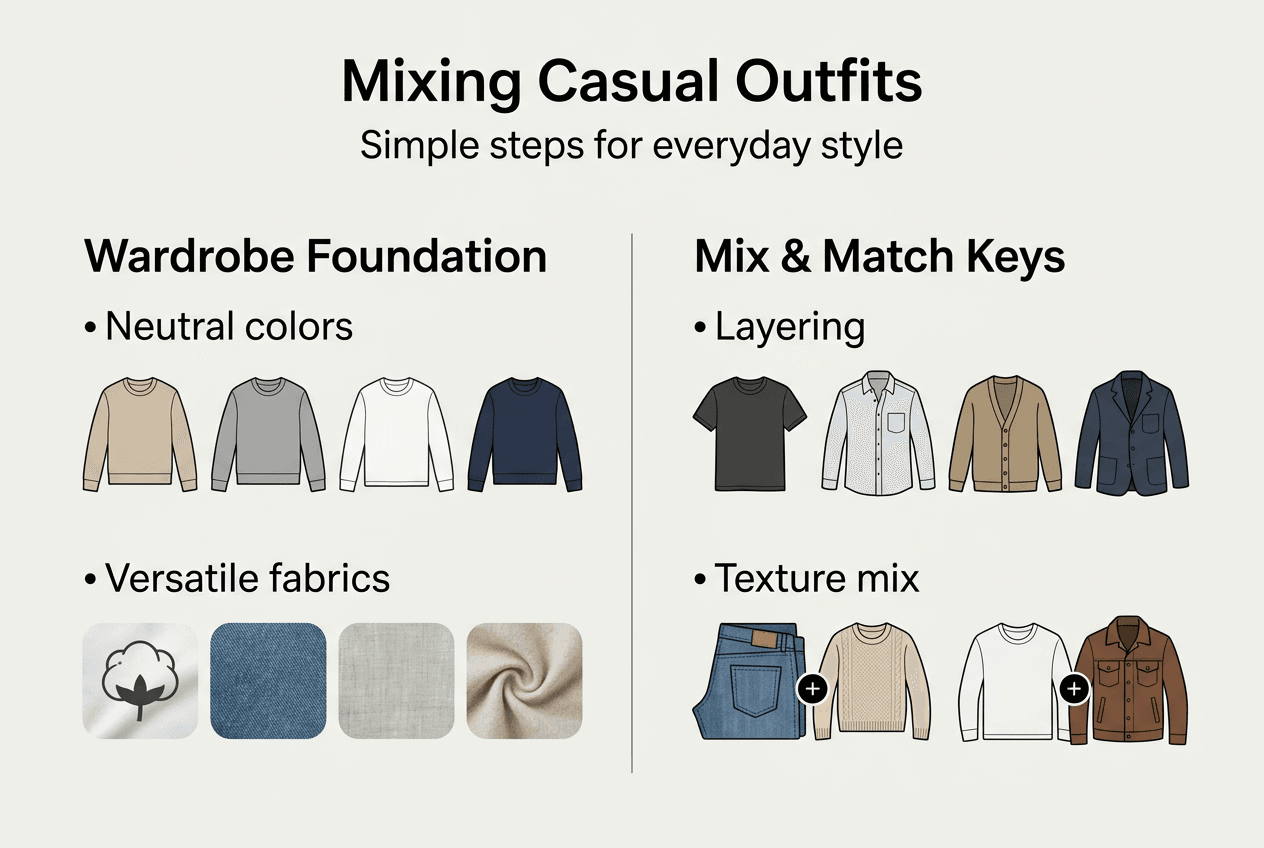
Pro Tip: Create a color palette of three to five complementary shades for your wardrobe foundation. Choose two neutrals (black, gray, navy, or beige) and two to three accent colors that work well together. This strategy ensures almost everything in your closet can be mixed successfully, reducing decision fatigue and expanding outfit possibilities exponentially.
Preparing your wardrobe also means organizing pieces for easy access. Group similar items together and keep frequently worn combinations within reach. This organization saves time during busy mornings and helps you spot gaps in your collection that need filling during your next shopping session.
With your wardrobe essentials and seasonal readiness in place, you’re primed to start mixing and matching for stylish, casual looks.
How to mix casual outfits: step-by-step styling and layering techniques
Layering is key for adding style, comfort, and versatility to casual outfits. Mastering this technique transforms basic pieces into dynamic looks that adapt to temperature changes and different settings throughout your day. The secret lies in understanding how different fabrics, textures, and fits work together to create visual interest without bulk.
Follow these steps to mix casual pieces effectively:
- Start with your base layer, typically a well-fitted tee or long-sleeve shirt in a neutral or complementary color to your outer layers.
- Add your middle layer, such as a hoodie or lightweight pullover, ensuring it’s slightly looser than your base but not oversized.
- Choose an outer layer if needed, like a denim jacket or casual bomber, that complements both underlayers in color and style.
- Consider texture contrast by pairing smooth cotton tees with textured hoodies or combining solid colors with subtle patterns.
- Balance proportions by pairing fitted tops with relaxed bottoms or vice versa to avoid looking either too tight or too baggy overall.
- Assess the overall silhouette in a mirror, checking that layers don’t bunch awkwardly and that each piece is visible in a way that adds to the look.
- Make final adjustments by rolling sleeves, adjusting hems, or switching accessories to refine the outfit’s overall vibe.
Color coordination makes or breaks casual outfit success. When combining pieces, use the 60-30-10 rule as a guideline: 60% of your outfit should be your dominant color (usually a neutral), 30% your secondary color, and 10% an accent shade. This creates visual balance without overwhelming the eye. If you’re wearing patterned pieces, ensure patterns share at least one common color with your solid items.
Texture mixing adds sophistication to simple casual outfits. Pair smooth jersey tees with chunky knit hoodies, or combine sleek synthetic materials with natural cotton weaves. These subtle contrasts create depth that makes outfits more interesting without requiring bold colors or patterns. Avoid combining too many competing textures in one outfit, as this can look chaotic rather than intentional.

Pro Tip: When layering for indoor and outdoor transitions, choose pieces you can easily remove or add back. A zip-up hoodie over a tee works better than a pullover when you’ll be moving between heated buildings and cool outdoor air. Keep a lightweight layer in your bag during transitional seasons so you’re never caught unprepared for temperature shifts.
Fit consistency across layers prevents the dreaded “bulky” look that ruins casual outfits. Each successive layer should be incrementally larger, allowing the layer beneath to sit smoothly without bunching. If your base tee is a slim fit, your hoodie should be regular fit, and your jacket should have room for both. This progression creates clean lines and maintains comfort throughout the day.
Now that you know how to mix pieces effectively, let’s explore how to adapt these strategies for seasonal trends and weather conditions.
Adapting casual outfit mixing for seasonal trends and weather in 2026
Seasonal changes demand strategic adjustments to your casual outfit mixing approach. Smart ways to embrace seasonal clothing trends help elevate casual style with weather-appropriate choices. Fabric selection becomes your primary consideration, as materials that work beautifully in spring can leave you uncomfortable in winter. Understanding these seasonal nuances ensures your outfits look intentional rather than haphazard.
The 2026 casual fashion landscape emphasizes sustainability and versatility, with earth tones dominating spring and summer palettes while jewel tones and deep neutrals take center stage in fall and winter. Oversized fits continue trending, but the key is balancing proportions rather than drowning in fabric. Vintage-inspired graphics and retro color blocking remain popular across all seasons, offering opportunities to express personality while maintaining outfit cohesion.
Compare seasonal approaches with this breakdown:
| Aspect | Spring/Summer 2026 | Fall/Winter 2026 |
|---|---|---|
| Primary Fabrics | Lightweight cotton, linen blends, breathable synthetics | Fleece, wool blends, sherpa-lined materials, heavyweight cotton |
| Color Palettes | Pastels, earth tones, bright accents, faded neutrals | Deep jewel tones, rich browns, forest greens, classic blacks and grays |
| Layering Strategy | Minimal layers, focus on single statement pieces | Multiple thin to medium layers for adjustable warmth |
| Key Accessories | Sunglasses, canvas sneakers, lightweight caps | Beanies, scarves, boots, heavier footwear |
| Trending Styles | Relaxed fits, cropped lengths, vintage tees | Oversized hoodies, longline cuts, textured knits |
Seasonal styling tips for 2026 include:
- Embrace monochromatic outfits in spring by layering different shades of the same color family for a sophisticated, pulled-together look.
- Incorporate seasonal textures like linen in summer or corduroy in fall to add visual interest without relying solely on color.
- Use accessories strategically to transition outfits between seasons, such as adding a beanie to extend a fall hoodie into early winter.
- Follow the “weather plus 10 degrees” rule when choosing outfit weight, as your body heat and movement will warm you up once you’re active.
- Invest in transitional pieces like medium-weight hoodies that work for cool summer evenings and mild fall days, maximizing cost per wear.
- Pay attention to regional climate patterns, as 2026 weather variability means traditional seasonal boundaries are increasingly flexible.
Color psychology plays into seasonal dressing as well. Lighter, brighter colors naturally feel more appropriate in warmer months, while deeper, richer tones suit colder weather. However, don’t feel constrained by these conventions. A light gray hoodie works beautifully in winter when layered properly, and a deep navy tee can anchor summer outfits effectively.
Trending styles in 2026 favor comfort without sacrificing style. The “elevated casual” aesthetic means your everyday hoodies and tees should fit well and look intentional rather than sloppy. This trend works in your favor when mixing pieces, as the emphasis on quality basics makes building cohesive outfits simpler. Focus on fit, fabric quality, and versatile colors rather than chasing every micro-trend.
With seasonal considerations clear, you’re ready to troubleshoot common challenges to perfect your casual outfit mixing.
Troubleshooting common mistakes and verifying your casual outfit success
Even experienced dressers make outfit mixing mistakes that undermine otherwise solid casual looks. Evaluating outfit balance and avoiding over-layering are crucial for everyday casual style success. Recognizing these pitfalls before you leave the house saves you from feeling uncomfortable or self-conscious throughout your day.
Common mistakes include clashing colors that fight for attention rather than complementing each other. This happens when you combine too many bold shades or mix warm and cool tones without a neutral bridge. Over-layering creates bulk that obscures your silhouette and makes you look heavier than you are. Ignoring proper fit leads to outfits that look sloppy rather than casually cool, with items either too tight or drowning your frame.
Quick verification checks ensure your outfit works:
- Perform the mirror test from multiple angles, checking front, side, and back views to catch awkward bunching or unflattering lines.
- Take a quick photo on your phone, as the camera often reveals proportion issues your eye might miss in the mirror.
- Do the movement test by sitting, reaching, and bending to ensure layers don’t ride up, gap, or restrict your motion uncomfortably.
- Check color balance by ensuring no single element overwhelms the outfit unless it’s an intentional statement piece.
- Verify texture harmony by confirming materials complement rather than compete, with intentional contrast rather than accidental clash.
- Assess the occasion appropriateness, making sure your casual outfit matches the day’s activities and settings.
- Consider the weather reality by stepping outside briefly if possible to test if your layering matches actual conditions.
This principle guides successful casual dressing:
Comfort and balance form the foundation of great casual style. An outfit that looks amazing but feels restrictive will undermine your confidence, while perfectly comfortable clothes that lack visual harmony won’t make the impression you want. The sweet spot combines both elements seamlessly.
Using mirrors effectively means looking at your whole outfit rather than fixating on individual pieces. Step back far enough to see your complete silhouette. Notice where your eye naturally goes first. If it’s drawn to an awkward fit issue or clashing element, address it before heading out. Your outfit should read as a cohesive whole rather than a collection of separate items.
Photos provide objective feedback that mirrors sometimes miss. Take a full-length shot in natural lighting and review it critically. Does the outfit photograph well? Are proportions balanced? Do colors translate as you intended? This quick check catches issues that might not be obvious in person but will be apparent to others seeing you throughout the day.
Seeking feedback from trusted friends or family members offers valuable perspective. Ask specific questions like “Do these colors work together?” or “Does this layering look intentional?” rather than general “How do I look?” queries. Specific questions yield actionable feedback you can use immediately and apply to future outfit decisions.
Common fit mistakes include wearing hoodies that are too long, creating an unbalanced silhouette, or choosing tees that are too short, exposing your midsection when you move. Sleeves should end at your wrist bone for long sleeves and mid-bicep for short sleeves. Shoulder seams should sit at your natural shoulder point, not drooping down your arm or pulling tight across your back.
Having learned how to avoid pitfalls and confirm a great look, let’s explore some curated shopping options to build your casual wardrobe effortlessly.
Shop must-have casual pieces for mixing and matching
Building a versatile casual wardrobe becomes effortless when you shop curated collections designed for easy mixing. Quality hoodies form the foundation of countless outfit combinations, offering the perfect middle layer for cool days or standalone pieces for mild weather. The hoodies collection features styles in essential neutrals and trending colors that work seamlessly with your existing wardrobe.
When temperatures drop, winter sherpa hoodies provide the warmth you need without sacrificing style. These pieces layer beautifully over tees while offering enough structure to wear alone with confidence. The sherpa lining delivers genuine cold-weather protection while maintaining the relaxed aesthetic that defines modern casual wear.
The casual essentials collection brings together foundational pieces that form the backbone of mix-and-match styling. From classic tees to versatile pullovers, these items are selected specifically for their ability to work together across seasons and occasions. Shopping these curated selections eliminates guesswork and ensures every piece you add enhances your existing wardrobe rather than sitting unused.
FAQ
How can I mix casual outfits without clashing colors?
Start with neutral base pieces like black, gray, navy, or beige, then add one or two accent colors that complement each other. Use online color wheel tools or Pinterest boards to identify harmonious color combinations before purchasing new pieces. Stick to the 60-30-10 color distribution rule to maintain visual balance across your outfit.
What are the best fabrics for comfortable casual layering?
Cotton, fleece, merino wool, and lightweight synthetic blends offer the best combination of comfort and versatility for layering. Cotton provides breathability for base layers, fleece adds warmth without bulk for middle layers, and wool blends regulate temperature effectively across changing conditions. Choose fabrics based on their weight and texture to create intentional contrast between layers.
How do I transition casual outfits from day to night?
Swap your daytime sneakers for casual boots or clean white leather shoes to instantly elevate your look. Add a structured jacket over your hoodie or replace your casual cap with minimal accessories like a simple watch or chain. These small changes shift the outfit’s formality level without requiring a complete wardrobe change.
How many layers should I wear for optimal comfort and style?
Two to three layers work best for most situations, allowing temperature adjustment without creating bulk. A base tee, middle hoodie or pullover, and optional outer jacket provide flexibility for changing conditions. More than three layers typically looks overwrought and restricts movement unless you’re facing genuinely extreme cold.
What’s the biggest mistake when mixing casual pieces?
Ignoring proper fit ruins otherwise good outfit combinations more than any other single factor. Each layer should be incrementally larger than the one beneath it, creating clean lines rather than bunching fabric. Invest time in finding your correct size for each brand, as sizing varies significantly across manufacturers and styles.
Recommended
- 7 Essential Types of Casual Outfits for Young Adults – Smoked Times
- Step-by-Step Guide to Choosing Casual Wear for Style – Smoked Times
- 7 Essential Examples of Casual Wear for Stylish Comfort – Smoked Times
- Mix and Match Apparel Guide for Effortless Winter Style – Smoked Times
- Choosing Shoes for Daily Wear: Find Comfort and Style Easily – YDA UK