


How Hoodies Defined Street Fashion: Culture, Impact, Style
TL;DR:
- Hoodies originated as workwear and gained cultural significance through hip-hop and fashion.
- The garment symbolizes identity, rebellion, and solidarity, with social and political implications.
- Market projections show continued growth driven by athleisure and evolving streetwear styling.
The hoodie is probably the most underestimated piece in your wardrobe right now. Most people grab one on a cold morning without thinking twice, yet this single garment carries decades of cultural rebellion, political debate, artistic expression, and economic muscle. The global hoodies market is valued at roughly USD 19 to 20 billion in 2025 to 2026, with projections climbing toward USD 31 to 35 billion by 2035. That kind of growth does not happen for simple casualwear. This article covers where hoodies came from, what they mean, how they crossed into high fashion, and exactly how to wear one with intention today.
Table of Contents
- The origins of hoodies in street fashion
- Cultural symbolism and controversies around hoodies
- From subculture to fashion mainstream: The hoodie’s evolution
- Modern impact: Hoodies in streetwear trends and styling
- Why hoodies are more than a trend: An insider’s view
- Level up your streetwear style with Smoked Times
- Frequently asked questions
Key Takeaways
| Point | Details |
|---|---|
| Hoodies as cultural icons | Hoodies are much more than basics; they symbolize rebellion, comfort, and modern identity. |
| Market growth | Hoodies drive a multi-billion dollar market and are core to global street style trends. |
| Evolution to high fashion | What began as underground style now defines both everyday streetwear and luxury collections. |
| Styling versatility | Hoodies adapt to endless looks, from bold layering to casual essentials. |
The origins of hoodies in street fashion
With the stage set, let’s dive into where hoodies first earned their street fashion credibility.
The hoodie was not born on a runway. It came from work sites and locker rooms. Champion, the American sportswear company, is widely credited with producing the first hooded sweatshirt in the 1930s, originally designed for cold-weather laborers working in upstate New York warehouses. The practical design, a sweatshirt with a hood sewn on, kept workers warm without restricting movement. Athletes quickly adopted it for warm-ups and training, and by the 1970s, it had migrated from the gym to the streets of American cities.
Hip-hop culture is what truly launched the hoodie into the streetwear conversation. When the genre exploded out of New York’s South Bronx in the late 1970s and early 1980s, artists were already wearing hoodies as part of their everyday uniform. The garment fit the aesthetic perfectly: it was affordable, functional, and carried an edge that matched the music. By the early 1990s, the crossover was complete. Groups like Wu-Tang Clan helped popularize hoodies through gangsta rap culture, and designers like Tommy Hilfiger and Giorgio Armani started incorporating hooded silhouettes into mainstream and high-fashion collections.
That transition from workwear to hip-hop to high fashion is not just interesting history. It reflects a pattern we see with almost every major streetwear piece: the street authenticates, and the runway borrows. Understanding pop culture’s impact on streetwear shows exactly how that pipeline works.
Key moments in hoodie adoption:
- 1930s: Champion creates the hooded sweatshirt for outdoor laborers
- 1970s: The hoodie becomes athletic warm-up gear and casual campus wear
- 1976: Rocky, the film, cements the grey hoodie as an American symbol of grit and determination
- 1980s: Hip-hop artists adopt the hoodie as part of their everyday visual identity
- Early 1990s: Wu-Tang Clan, Notorious B.I.G., and West Coast rap scenes normalize the oversized hoodie look
- Mid 1990s: Tommy Hilfiger and Armani bring hooded silhouettes into their mainline collections
- 2000s: Skate culture and Silicon Valley tech culture each claim the hoodie as their own uniform
| Decade | Primary context | Key influence |
|---|---|---|
| 1930s to 1960s | Workwear and athletics | Champion, college sports programs |
| 1970s to 1980s | Urban youth and hip-hop | New York street culture, early rap artists |
| 1990s | Mainstream fashion | Designers, music videos, film |
| 2000s to present | Global streetwear | Tech culture, luxury brands, social media |
This table makes something clear. The hoodie did not stay in one lane. It kept moving, kept absorbing new cultural energy, and that adaptability is exactly why it outlasted every other piece that tried to make the same jump.
Cultural symbolism and controversies around hoodies
Origins tell only part of the story. Let’s uncover how hoodies became so loaded with symbolism.
The same design feature that made the hoodie practical, its hood, is also what made it controversial. Pulling a hood over your head changes how you appear in public space. It creates anonymity. For some people, that anonymity feels like freedom. For others, it triggers suspicion. This tension sits right at the center of what the hoodie means in modern culture.
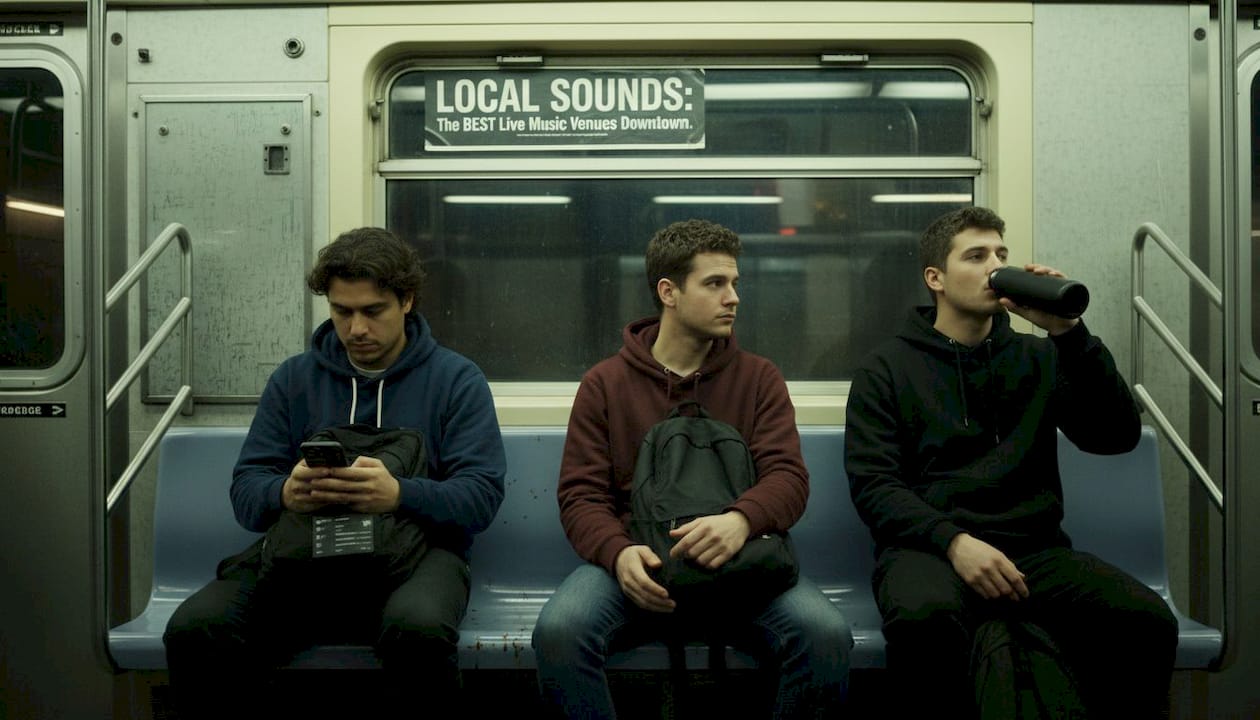
On the positive side, the hoodie has been embraced as a symbol of youth identity, creative independence, and belonging. Skateboarders wear them as part of their tribe’s visual language. Musicians wear them as armor before performing. Protesters wear them as a form of solidarity. The garment communicates “I’m not here to dress for your approval,” which resonates deeply with anyone who has ever felt like an outsider.
The darker side of that symbolism is harder to ignore. As research and reporting has documented, hoodies carry stereotypes that fall disproportionately on young Black men. The 2012 shooting of Trayvon Martin, a 17-year-old who was wearing a hoodie when he was killed, forced a national conversation about how clothing influences perception and threat assessment. In response, people wore hoodies in protest, turning the garment into a symbol of anti-racism and solidarity. That is an extraordinary amount of cultural weight for a sweatshirt to carry.
“The hoodie has gone from athletic gear to a canvas for political identity. The same piece of clothing can signify rebellion, comfort, danger, or resistance, depending entirely on who is wearing it and who is doing the watching.”
Understanding what defines streetwear means understanding this duality. Streetwear has never been neutral. It has always reflected the tensions of the cultures it emerged from.
Common symbolic meanings of the hoodie:
- Anonymity: The ability to move through public space without being easily identified
- Belonging: Signaling membership in a subculture, team, or community
- Rebellion: Pushing back against dress codes and formal expectations
- Solidarity: Worn collectively as a statement, as seen in Trayvon Martin protests
- Comfort and authenticity: Prioritizing personal ease over social performance
- Economic accessibility: A democratic garment worn across income levels
Pro Tip: When styling a hoodie for a public setting, fit and fabric quality do significant work to shift perception. A well-fitted hoodie in a premium heavyweight cotton reads very differently than a faded, oversized one. Both are valid choices, but knowing the visual message each sends helps you dress with intention rather than accident.
From subculture to fashion mainstream: The hoodie’s evolution
With meaning established, it’s time to see how hoodies crossed over into the wider fashion landscape.
The journey from subculture staple to runway regular is not a straight line. It happened in stages, driven by music, sports, celebrity, and eventually social media. Each wave brought the hoodie further into mainstream consciousness while somehow keeping its street credibility intact.
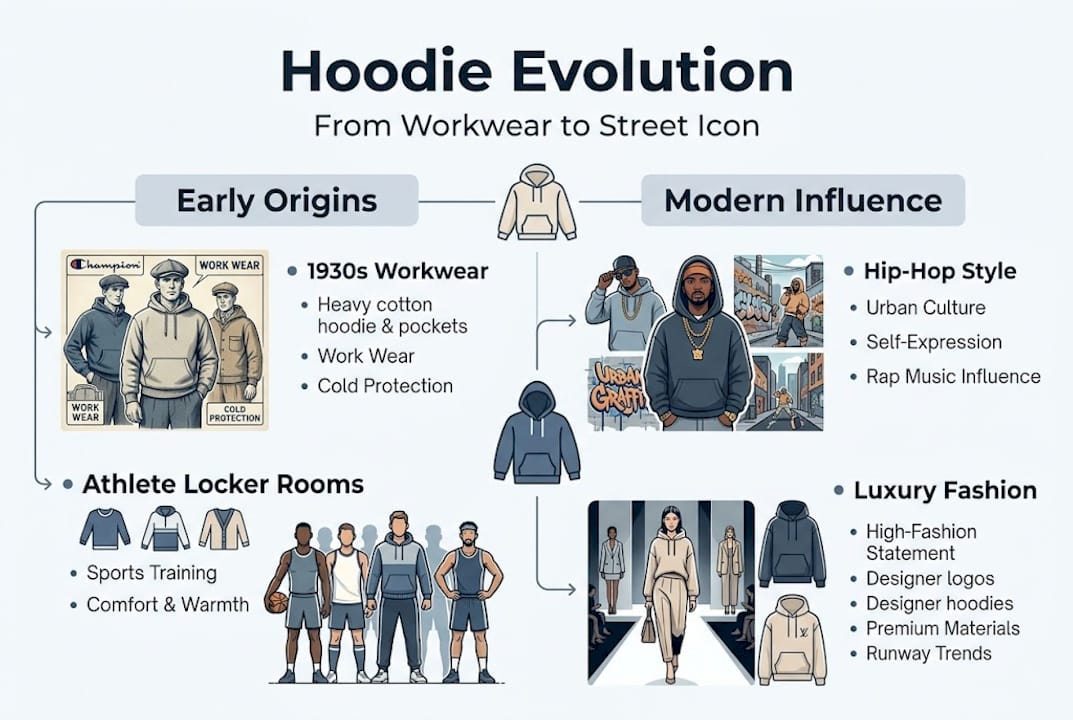
The key players in this evolution are worth naming. By the 1990s, Wu-Tang Clan and gangsta rap had pushed the hoodie into mainstream awareness, and designers responded by incorporating it into their collections. But the real acceleration came in the 2000s when brands like Supreme, Stüssy, and A Bathing Ape (BAPE) turned limited-edition hoodies into collectible objects. Suddenly, the hoodie was not just something you wore. It was something you waited in line for, resold online, and used to signal cultural fluency.
Luxury houses followed. Balenciaga, Vetements, and later Virgil Abloh’s Off-White label brought oversized, logo-heavy hoodies to the high-fashion market at prices that would have seemed absurd to the warehouse workers who wore Champion’s first version. If you want to explore which best hoodie brands are worth your attention today, the landscape ranges from heritage athletic labels to newer DTC (direct-to-consumer) brands focused on quality basics.
| Feature | Subculture roots | Modern fashion mainstream |
|---|---|---|
| Price point | Budget to mid-range | Budget to ultra-luxury |
| Fit | Oversized, practical | Varies: oversized, cropped, fitted |
| Branding | Minimal or local | Heavy logos and designer labels |
| Fabric | Basic fleece cotton | Premium cotton, technical fabrics |
| Styling | Casual, utilitarian | Layered, runway, high-low mixing |
Key steps in the hoodie’s journey to mainstream:
- 1930s to 1970s: Born as workwear, adopted by athletes and campus culture
- 1980s: Hip-hop community integrates it into a visual identity that spreads nationally
- Early 1990s: Designers recognize its market potential and add it to collections
- Late 1990s to 2000s: Streetwear brands create hype around limited drops, making hoodies collectible
- 2010s: Luxury fashion houses adopt the oversized hoodie as a formal offering
- 2020s: Athleisure and remote work normalize the hoodie across all demographics and dress codes
Knowing how to style winter hoodies gives you the practical vocabulary to work with this evolution rather than just observing it. The garment’s range is genuinely wide, and that range is the result of every stage listed above.
Modern impact: Hoodies in streetwear trends and styling
Now that we’ve explored the hoodie’s journey, let’s look at how it thrives in today’s street fashion.
The numbers confirm what your eyes already tell you. The global hoodie market is projected to grow at a CAGR (compound annual growth rate) of 4.9 to 6.5% through 2035, driven largely by the athleisure boom and the fact that 64% of consumers now prefer casualwear in their everyday wardrobe. These are not small shifts. This is a fundamental change in how people think about dressing, and the hoodie is sitting directly at the center of it.
The athleisure movement, which blends athletic and leisure aesthetics into a single coherent wardrobe, has given the hoodie permission to appear in contexts that would have seemed unconventional 20 years ago. People wear high-quality hoodies to business-casual offices, on first dates, and at gallery openings. The key differentiator is always execution: fabric weight, fit, and how you build the rest of the outfit around it.
Color blocking has become one of the most widely used techniques for making a hoodie look intentional rather than accidental. Pairing a neutral hoodie with a bold outer layer, or wearing a standout color hoodie with monochrome trousers, creates a visual focal point that reads as deliberate and confident. Understanding color trends in streetwear helps you make those choices with current cultural context rather than guesswork.
Modern streetwear outfit ideas featuring hoodies:
- The tonal stack: Wear a mid-gray hoodie under a charcoal bomber jacket with matching gray joggers for a clean, monochromatic silhouette
- High-low mixing: Pair an oversized graphic hoodie with tailored trousers and leather loafers to create productive tension between casual and polished
- Layered textures: Wear a lightweight hoodie under a waxed canvas or denim jacket for outdoor-ready layering with visual depth
- Color pop: Use a single bold-color hoodie as the statement piece, keeping everything else in neutral territory
- Sporty utility: Stack a zip-up hoodie over a long-sleeve tee with cargo pants and chunky sneakers for a functional, streetwear-coded look
Refer to this versatile hoodie styling guide for step-by-step breakdowns of each of these looks with specific proportions and layering sequences that actually work in practice.
Pro Tip: Invest in at least one heavyweight cotton hoodie in a neutral color (charcoal, slate, or natural ecru). It will do more work in your wardrobe than three cheaper alternatives combined. Fabric weight above 400gsm (grams per square meter) holds its shape after washing and develops a richer texture over time rather than pilling and thinning out.
Why hoodies are more than a trend: An insider’s view
Here is something that conventional fashion commentary gets wrong about the hoodie: they frame its popularity as a trend cycle, something that rises, peaks, and eventually retreats. That framing misses the point entirely.
Hoodies have survived every supposed “end of streetwear” think piece written in the last 30 years. They survived the normcore wave, the quiet luxury movement, and the brief return of formal dressing post-pandemic. Why? Because the hoodie is not a trend vehicle. It is an identity vehicle. It adapts to whoever is wearing it and to whatever the cultural moment requires.
Major fashion houses, from Balenciaga to Bottega Veneta, return to hooded silhouettes each season because they have no choice. Consumers keep demanding them. And the interesting part is that those consumers are not all looking for the same thing. Some want the hoodie’s comfort. Some want its anti-fashion statement. Some want the status signal of a recognizable label. The streetwear culture insights behind this garment show that it consistently serves all three groups simultaneously.
What separates an iconic staple from a trend is simple: a trend solves a moment. A staple solves a human need. The hoodie solves warmth, identity, comfort, and belonging all at once. That is not a coincidence. That is a design that works.
Level up your streetwear style with Smoked Times
If this guide pushed you to think differently about what a hoodie can do for your wardrobe, the next step is making sure the piece you reach for is actually worth wearing. At Smoked Times, we build around that exact principle: durable, minimal, and made to be worn constantly without losing shape or character.
Our heavyweight cotton essentials, including organic retro cotton T-shirts, are designed to pair naturally with the hoodie looks we covered here. Every piece is built for repeat wear, not one-season use. If you have found pieces that work for your style, we would love to hear about it. Share your review and let us know how you are building your casual wardrobe. We support international shoppers with multi-currency checkout, and bundle offers make stocking up on quality basics even more practical.
Frequently asked questions
Why are hoodies associated with street fashion?
Hoodies became central to street fashion through their deep ties to hip-hop culture in the 1980s and 1990s, when artists like Wu-Tang Clan wore them daily as part of their visual identity, later crossing into high fashion through designers like Tommy Hilfiger and Armani.
What does a hoodie symbolize in modern culture?
The hoodie carries layered meanings including individuality, rebellion, and solidarity, but as seen in the Trayvon Martin case, it also reflects serious social tensions around race, identity, and public perception.
How big is the global hoodie market?
The hoodie market was valued around USD 19 to 20 billion in 2025 to 2026 and is projected to reach USD 31 to 35 billion by 2035, driven by athleisure growth and a clear shift toward casualwear preferences.
What are some current trends in styling hoodies?
Modern streetwear features hoodies in oversized cuts, tonal monochrome stacks, high-low pairings with tailored pieces, and bold color blocking, with fabric quality and fit doing most of the work in making the look feel deliberate rather than casual.