


How pop culture shapes modern streetwear trends
TL;DR:
- Pop culture drives streetwear’s rise through celebrity influence, social media hype, and cultural amplification.
- Minimalist streetwear with neutral tones and functional designs reflects a shift influenced by pop culture trends.
- The authenticity of streetwear faces challenges from commercialization, cultural appropriation, and sustainability issues.
Streetwear now commands a global market worth over $185 billion, yet most people still think of it as underground fashion. That gap between perception and reality is exactly where pop culture does its most powerful work. From hip-hop legends wearing Adidas without laces to Kanye West turning earth-toned hoodies into cultural statements, pop culture has always been the invisible hand behind what ends up in your closet. If you care about dressing with intention, understanding this connection is not just interesting. It is essential for building a wardrobe that feels both current and timeless.
Table of Contents
- How pop culture gave rise to streetwear
- Celebrity and artist influence: The engine of streetwear hype
- Hype cycles, scarcity, and the social media effect
- Pop culture’s impact on minimalist and timeless streetwear
- Controversies: Authenticity, commodification, and sustainability
- What most miss: Pop culture’s hidden effect on streetwear authenticity
- Find your next streetwear inspiration
- Frequently asked questions
Key Takeaways
| Point | Details |
|---|---|
| Pop culture origins | Hip-hop, skate, and youth music scenes gave streetwear its start through authentic self-expression. |
| Celebrity-driven trends | Artists and influencers fuel hype, visibility, and new waves of streetwear for all styles—including minimalist. |
| Hype cycle mechanics | Limited releases and social media drive streetwear exclusivity and viral popularity. |
| Evolving minimalist focus | Current pop culture shifts streetwear toward timeless, subtle, and versatile design. |
| Authenticity debate | Commercialization and luxury adoption spark debate about streetwear’s roots and realness. |
How pop culture gave rise to streetwear
StreetWear did not start in a design studio. It started on the block. In the 1970s and 1980s, young people in New York, Los Angeles, and other urban centers were creating their own visual language through clothing. Hip-hop artists, skateboarders, and graffiti writers were not following fashion. They were making it. This is what historians and fashion researchers call the trickle-up effect, which means street-level style moves upward into mainstream and luxury markets, rather than luxury trends filtering down to the masses.
Understanding what is streetwear style means understanding the communities that built it. These were not wealthy tastemakers. They were young people using clothing to communicate identity, resistance, and creativity. The streetwear evolution from those roots to today’s luxury collaborations is a direct result of pop culture amplifying subcultural voices.
Here are the key subcultures that shaped streetwear’s DNA:
- Hip-hop: Oversized silhouettes, bold logos, and athletic wear became symbols of identity and pride in urban communities
- Skateboarding: Graphic tees, baggy pants, and sneaker culture introduced a rebellious, West Coast aesthetic
- Punk and DIY culture: Customization, patches, and anti-establishment messaging pushed fashion as protest
- Sports culture: Team jerseys, tracksuits, and branded athletic gear crossed over into everyday style
- Graffiti and visual art: Bold color, graphic expression, and street-level creativity influenced print and pattern design
“Pop culture acts as the engine for streetwear via trickle-up dynamics, celebrity amplification, and digital hype, enabling subcultural rebellion to become global luxury.”
What makes this origin story so important is the authenticity behind it. These communities were not performing style. They were living it. That genuine self-expression is what gave streetwear its staying power, and it is also what makes the modern tension between hype and authenticity so worth paying attention to.
Celebrity and artist influence: The engine of streetwear hype
With the roots established, let’s explore how celebrities became not just wearers, but definers, of streetwear. The shift happened gradually, then all at once. When Run-D.M.C. performed in Adidas tracksuits and shell-toe sneakers without laces, they were not following a brand strategy. They were expressing who they were. Adidas noticed. A partnership followed. That moment set the template for every celebrity streetwear collaboration that came after it.
Today, music and streetwear fashion are practically inseparable. Artists like Kanye West, Rihanna, Jay-Z, and Travis Scott have not just worn streetwear. They have built empires around it, each fusing their musical identity with a distinct fashion vision.
| Artist | Brand/Line | Key impact |
|---|---|---|
| Kanye West | Yeezy | Popularized earth tones, minimalist silhouettes, mass-market luxury |
| Jay-Z | Rocawear | Brought hip-hop fashion into mainstream retail at scale |
| Rihanna | Fenty | Merged inclusivity, high fashion, and streetwear aesthetics |
| Travis Scott | Cactus Jack | Defined the “worn-in” vintage drop culture for Gen Z |
| Pharrell Williams | Humanrace | Blended wellness, art, and understated streetwear |
The most influential pop culture streetwear launches of the past two decades, ranked by cultural impact:
- Yeezy x Adidas (2015): Redefined what mass-market minimalism could look like
- Supreme x Louis Vuitton (2017): Collapsed the wall between streetwear and high fashion permanently
- Nike x Off-White (2017): Made deconstructed design a mainstream concept
- Travis Scott x Nike Air Jordan 1 (2019): Launched the modern era of reverse-swoosh hype drops
- Fenty x Puma (2015): Brought gender-fluid silhouettes into the streetwear conversation
The numbers back this up. According to streetwear industry stats, 76% of consumers say they purchase items because of artist collaborations, and Gen Z specifically prioritizes cultural relevance over brand legacy when making buying decisions. That is a massive shift in how influence works.
For anyone building a wardrobe around clean, versatile pieces, the urban streetwear guide breaks down how to apply these cultural signals without chasing every drop. And if you want to see how different tee styles hold up in streetwear contexts, the streetwear t-shirt comparison is worth your time.
Hype cycles, scarcity, and the social media effect
Beyond individual celebrities, let’s break down how digital mechanisms pump up streetwear’s influence. The hype cycle is a specific, engineered phenomenon. It works like this: a brand announces a limited product drop, often tied to a celebrity or cultural moment. Supply is deliberately kept low. Social media amplifies the announcement. Demand spikes. The item sells out in minutes. Resale prices triple overnight.
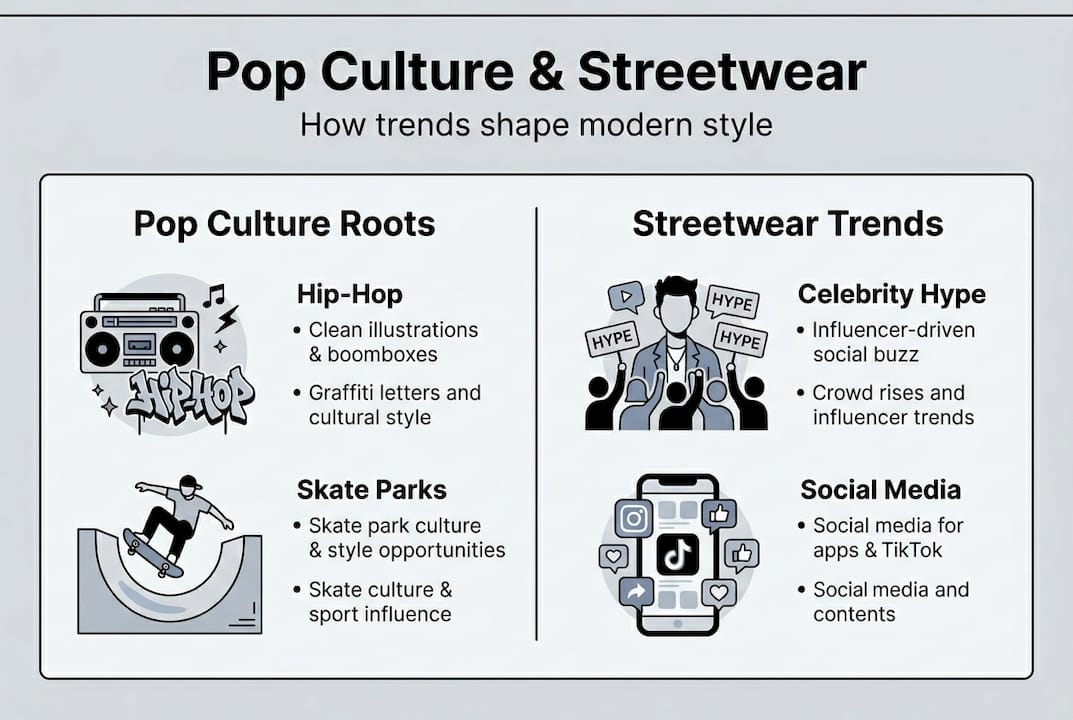
This is not accidental. It is a calculated retail strategy that trickle-up fashion researchers have documented extensively, showing how scarcity and social amplification turn ordinary products into cultural events.
| Traditional retail | Streetwear drop model |
|---|---|
| Seasonal collections | Limited, surprise releases |
| Wide distribution | Exclusive, often online-only |
| Price stability | Immediate resale markup |
| Brand-driven marketing | Community and influencer-driven |
| Predictable availability | FOMO-based urgency |
Here is how hype is manufactured and maintained in the modern streetwear world:
- Scarcity signals: Low production numbers create the perception of exclusivity
- Countdown drops: Timed releases build anticipation and social media chatter
- Influencer seeding: Sending product to key creators before launch generates organic buzz
- Platform-native content: TikTok unboxings and Instagram styling posts extend a drop’s cultural life
- Resale legitimacy: High resale prices signal that an item has cultural value, attracting more buyers
The role of TikTok and Instagram cannot be overstated. A single viral video of someone styling a new drop can generate thousands of orders within hours. Understanding how social media shapes fashion trends helps you see why certain items blow up seemingly overnight while others quietly disappear.
Pro Tip: To tell authentic trends from manufactured hype, ask yourself whether the item would still feel relevant in three years without the celebrity association. If the answer is no, it is hype. If yes, it might be worth your investment.
Pop culture’s impact on minimalist and timeless streetwear
Contrasting the hype, pop culture has also sparked a return to minimalist design in streetwear. Not everything driven by celebrities and cultural moments is loud, logo-heavy, or disposable. In fact, some of the most lasting shifts in streetwear have moved in the opposite direction.
The streetwear evolution over the last decade shows a clear pattern: reduced logos, subdued earth tones, oversized silhouettes, and functional workwear aesthetics have replaced the maximalist graphics of earlier eras. Yeezy is the clearest example. Kanye’s entire design philosophy pushed streetwear toward neutral palettes, clean lines, and repeat-wear functionality. That aesthetic is now everywhere.
Top minimalist streetwear features defining 2026:
- Earth tones and neutrals: Beige, olive, clay, and washed black replace bold primaries
- Oversized, relaxed fits: Comfort-forward silhouettes that work across multiple settings
- Minimal or no visible branding: Clean surfaces that let fabric and cut do the talking
- Heavyweight, durable fabrics: Quality over novelty, built for long-term wear
- Versatile layering pieces: Hoodies, tees, and pants that move from casual to semi-dressed easily
This shift matters for anyone who wants a wardrobe that does not expire. Exploring minimalist streetwear comfort and paying attention to color trends in streetwear gives you a practical edge when building pieces that stay relevant season after season.
Pro Tip: Build your core wardrobe around two or three neutral tones that work together. Then add one or two pieces per season that reflect current cultural energy without committing your entire closet to a trend.
Controversies: Authenticity, commodification, and sustainability
But with all this success and exposure, not everything about pop culture’s impact is positive. The same forces that brought streetwear to a global audience have also created real tensions within the culture.
The impact of streetwear on fashion is not a clean success story. It is a complicated one, full of genuine empowerment and genuine exploitation happening simultaneously.
Key controversies shaping the streetwear conversation in 2026:
- Authenticity erosion: When luxury brands adopt streetwear aesthetics without understanding the culture, the original meaning gets hollowed out
- Cultural appropriation: Styles rooted in Black, Latino, and Asian communities are often commercialized by brands with no connection to those communities
- Sustainability failures: Limited drops and hype cycles encourage overconsumption and fast fashion behavior, generating significant textile waste
- Market saturation: Too many collaborations dilute the cultural weight of each one, making it harder to distinguish meaningful releases from cash grabs
- Gatekeeping vs. accessibility: As streetwear becomes more expensive, it risks excluding the communities that created it
“Luxury adoption of streetwear aesthetics can dilute subcultural roots, turning what was once an act of resistance into a product category.”
This tension is especially relevant for people who care about fashion in youth culture and want to understand how style movements evolve and sometimes get co-opted. The global fashion retail landscape makes these dynamics even more complex, as international markets adopt and reinterpret streetwear through their own cultural filters.
The uncomfortable truth is that loving streetwear today means navigating these contradictions honestly.
What most miss: Pop culture’s hidden effect on streetwear authenticity
Here is the perspective you rarely hear amid the noise. Most conversations about pop culture and streetwear focus on hype, celebrity drops, and trend cycles. But the more interesting story is subtler. Pop culture does not erase streetwear’s rebellious DNA. It evolves it. Every generation finds new ways to use clothing as a form of resistance and self-definition, even within commercial systems.
What gets missed is that understated, timeless styles are just as culturally driven as the loudest limited drops. The person wearing a clean heavyweight tee in washed olive is making a statement too. It is a statement about rejecting noise, choosing quality, and dressing for themselves rather than for the algorithm.
Understanding what is streetwear style at its core means recognizing that authenticity is not about being early to a trend. It is about knowing why you wear what you wear. The danger is mistaking hype for authenticity, buying into a cultural moment without understanding what it actually represents. For modern style fans who value integrity, that distinction is everything.
Find your next streetwear inspiration
Inspired by the dynamic world of streetwear and pop culture? Here is where to continue your exploration.
At Smoked Times, we build pieces for people who think this way. Our heavyweight cotton tees, clean hoodies, and versatile basics are designed for repeat wear, not trend cycles. No loud logos. No manufactured drops. Just well-made essentials that hold up season after season. If you have found pieces you love or want to share your take on minimalist streetwear, we would genuinely love to hear from you. Submit a review and help other style-conscious shoppers find what actually works. Staying connected to authentic voices is how you navigate a market full of noise.
Frequently asked questions
What pop culture movement started streetwear?
Hip-hop, skateboarding, and music subcultures in the 1970s and 1980s ignited the streetwear movement by expressing urban style and authenticity outside of mainstream fashion institutions.
How do celebrities impact streetwear trends?
Celebrities drive trends by launching their own brands, collaborating with established designers, and showcasing new looks that spread virally across social platforms within hours.
Why are limited edition drops so popular in streetwear?
Limited drops and scarcity fuel exclusivity by keeping supply artificially low, which drives demand and amplifies cultural buzz through resale markets and social media coverage.
Is minimalist streetwear still influenced by pop culture?
Yes. Modern minimalist streetwear directly reflects pop culture’s shift toward subtle, functional, and versatile designs, popularized by mainstream icons like Kanye West and Pharrell Williams whose aesthetics now define everyday wardrobe choices.