


Selecting winter clothing essentials for stylish comfort
Choosing winter clothing that balances warmth, durability, and style can feel overwhelming. Many men struggle to find pieces that keep them comfortable in cold weather while maintaining a clean, minimalist aesthetic for everyday wear. This guide cuts through the confusion and helps you select timeless winter essentials built for repeat wear, focusing on quality materials, versatile layering, and durable construction. You’ll learn exactly which pieces deliver lasting value, how to combine them effectively, and what to look for when building a winter wardrobe that works season after season.
Table of Contents
- Key takeaways
- Understanding your winter clothing needs
- Choosing quality materials for durability and comfort
- Building a versatile winter wardrobe: key essential pieces
- Tips for proper layering and maintaining your winter clothing
- Explore Smoked Times for durable winter essentials
- FAQ
Key Takeaways
| Point | Details |
|---|---|
| Balance warmth and durability | Aim for winter pieces that keep you comfortable in cold weather while resisting wear and maintaining a clean minimalist look. |
| Layering for versatility | Layer thin, compatible pieces to adapt to indoor and outdoor temperatures and prevent bulky outfits. |
| Choose quality materials | Favor wool and well made blends for insulation, odor resistance, and long lasting wear. |
| Select versatile pieces | Pick neutral colors and simple silhouettes that mix and match across outfits and seasons. |
Understanding your winter clothing needs
Before you invest in winter essentials, assess your specific requirements. Your climate determines how much insulation you need. Someone facing harsh northeastern winters requires heavier pieces than someone in a mild coastal region. Check average temperatures and wind conditions for your area during winter months.
Your daily activities shape your wardrobe choices. Commuters need durable outerwear that transitions from outdoor cold to heated offices. Office workers benefit from professional-looking layers that regulate temperature indoors. Those who spend significant time outdoors require robust insulation and weather resistance. Choosing the right materials and styles depends on understanding your daily activities and local weather conditions.
Define your style priorities early. Minimalist fashion emphasizes clean lines, neutral colors, and versatile pieces that work across multiple situations. Timeless essentials outlast trendy items and provide better value over years of wear. Consider whether you prefer fitted or relaxed silhouettes, as this affects comfort and layering options.
Fabric preferences matter significantly. Wool offers natural insulation and moisture management. Cotton blends provide softness and breathability. Synthetics can add stretch and quick-drying properties. Some men prioritize natural fibers for comfort and sustainability, while others value performance features from modern materials.
Layering forms the foundation of effective winter dressing. Multiple thin layers trap warm air between them, creating better insulation than a single thick garment. This approach also lets you adjust to temperature changes throughout the day. Understanding layering principles helps you select pieces that work together rather than fighting each other.
Pro Tip: Create a simple checklist of your typical winter activities, rating each by time spent outdoors and formality level. This helps identify which pieces deserve the biggest portion of your budget.
Choosing quality materials for durability and comfort
Material selection determines how well your winter clothing performs over time. Wool stands as the gold standard for cold weather wear. It insulates even when damp, naturally resists odors, and lasts for years with proper care. Merino wool offers exceptional softness against skin, making it ideal for base layers. Heavier wool works perfectly for sweaters and outerwear.

Blended fabrics combine the best properties of multiple materials. A wool-polyester blend adds durability and reduces pilling while maintaining warmth. Cotton-elastane blends provide stretch for comfort and movement. These combinations often perform better than single-fiber fabrics. Wool and high-quality blends provide superior warmth and durability necessary for winter wear.
Avoid purely synthetic fabrics for your core winter pieces. While polyester and nylon have their place in performance wear, they often lack breathability for everyday use. Synthetic-heavy garments can trap moisture and feel clammy during temperature transitions. They also tend to retain odors more than natural fibers.
Look for materials known for minimal pilling and long-term wear. Tightly woven fabrics resist surface damage better than loose weaves. Higher thread counts in cotton indicate better quality. For wool, check the micron count, with lower numbers indicating finer, softer fibers that still maintain strength.
| Material | Warmth | Durability | Breathability | Best Use |
|---|---|---|---|---|
| Merino wool | Excellent | Very good | Excellent | Base layers, sweaters |
| Wool blend | Very good | Excellent | Good | Outerwear, pants |
| Cotton blend | Good | Good | Very good | Mid layers, casual wear |
| Heavyweight cotton | Fair | Excellent | Excellent | Layering pieces |
Sustainable fabric choices align perfectly with minimalist principles. Quality materials last longer, reducing the need for frequent replacements. Natural fibers biodegrade more easily than synthetics. Many brands now offer recycled wool and organic cotton options that maintain performance while reducing environmental impact.
Pro Tip: Feel the fabric weight before buying. Winter essentials should have substantial heft without feeling stiff. A quality wool sweater should drape naturally and bounce back when gently compressed.
Building a versatile winter wardrobe: key essential pieces
A functional winter wardrobe starts with core pieces that work together seamlessly. A quality wool coat serves as your primary outer layer. Choose a mid-length style in navy, charcoal, or camel for maximum versatility. The coat should fit comfortably over sweaters without restricting movement.
Knit sweaters form the backbone of cold weather dressing. Invest in crew neck and V-neck styles in neutral colors. Heavyweight knits provide warmth for casual settings, while finer gauge sweaters work under blazers for dressier occasions. Aim for three to four sweaters in coordinating colors.
Slim-fit thermal base layers revolutionize winter comfort. Layering smartly with versatile essentials achieves warmth and style without bulk. Modern base layers use advanced knitting techniques to trap heat while remaining thin enough to wear under regular clothing. Choose long-sleeve tops and bottoms in black or gray.
| Essential Piece | Primary Function | Color Options | Layering Position |
|---|---|---|---|
| Wool coat | Weather protection | Navy, charcoal, camel | Outer |
| Knit sweater | Insulation | Gray, navy, black, burgundy | Mid |
| Thermal base layer | Moisture management | Black, gray | Base |
| Flannel shirt | Versatile layering | Earth tones, checks | Base or mid |
| Wool scarf | Neck warmth | Coordinating neutrals | Accessory |
Casual layering pieces add flexibility to your rotation. Flannel shirts work as standalone tops in mild weather or as mid layers under sweaters. Hoodies provide relaxed warmth for weekends. Quarter-zip pullovers offer a sporty alternative to traditional sweaters.
Timeless colors ensure everything coordinates effortlessly. Navy works with nearly every other color and looks sharp without being stark. Gray ranges from light heather to charcoal, providing depth and visual interest. Black adds sophistication and pairs well with earth tones. Burgundy, olive, and tan introduce subtle variety without trending territory.
Design details matter for minimalist aesthetics. Prioritize clean lines over excessive pockets, zippers, or logos. Subtle textures like cable knits or herringbone patterns add visual interest without busyness. Avoid large branding or decorative elements that date quickly.
Footwear and accessories complete your winter setup. Leather boots in brown or black provide durability and weather resistance. Wool socks prevent cold feet while wicking moisture. A quality wool or cashmere scarf adds warmth and elevates any outfit. Leather gloves protect hands while maintaining a refined appearance. For comprehensive guidance on building your winter wardrobe, check out this smart winter fashion checklist.
Tips for proper layering and maintaining your winter clothing
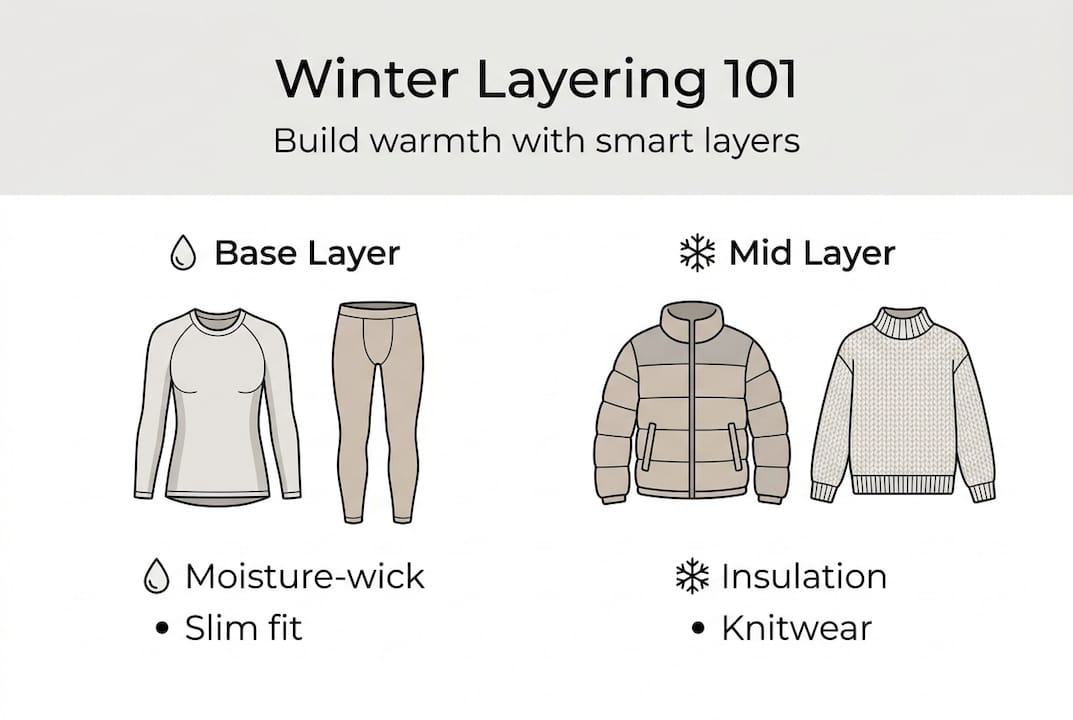
Effective layering follows a three-tier system. Start with moisture-wicking base layers that sit directly against your skin. These pull sweat away from your body, keeping you dry and comfortable. Thermal underwear or merino wool base layers work best. They should fit snugly without restricting movement.
Insulating mid layers trap warm air and provide the bulk of your thermal protection. Sweaters, fleece, or down vests serve this purpose. Choose mid layers based on activity level and temperature. Lighter days need just a single sweater, while harsh conditions might require a sweater plus a vest. Layering increases thermal efficiency and style flexibility while proper care extends garment life.
Outer shells protect against wind, rain, and snow while completing your silhouette. A well-fitted coat should accommodate your mid layers without looking oversized. Test this by wearing your thickest sweater when trying on coats. The coat should close comfortably with room to move your arms.
Avoid bulky layers that sacrifice style and movement. Multiple thin layers outperform fewer thick ones. A thermal base layer, dress shirt, and sweater provide more versatility than a single heavy sweatshirt. You can remove or add pieces as temperatures change throughout the day.
Follow these steps for optimal layering:
- Apply a thin base layer directly to skin, ensuring it fits smoothly without bunching
- Add a mid layer like a sweater or flannel, checking that sleeves don’t create bulk at wrists
- Include an optional second mid layer for extreme cold, keeping it lighter than the first
- Top with your outer shell, verifying that all layers move together comfortably
- Adjust as needed, removing layers before you overheat rather than after
Proper care extends the life of your winter essentials significantly. Air out wool garments after each wear instead of washing them immediately. Wool naturally resists odors and refreshes when exposed to air. Hang items in a well-ventilated area overnight.
Follow fabric-specific washing instructions carefully. Wool requires cool water and gentle detergents designed for delicate fibers. Many wool items can be hand-washed in a sink, saving trips to the dry cleaner. Never wring wool, instead press water out gently and lay flat to dry.
Store wool and knitwear properly during off-season. Clean items before storage to prevent moth damage. Fold heavy sweaters rather than hanging them to avoid stretching. Use cedar blocks or lavender sachets as natural moth deterrents. Store in breathable cotton bags, not plastic, which can trap moisture.
Rotate your essentials to reduce wear and maintain freshness. Wearing the same piece daily accelerates deterioration. Having multiple sweaters and base layers lets each piece rest between wears. This rotation also prevents visible wear patterns from developing.
Pro Tip: Invest in a fabric shaver to remove pilling from sweaters and extend their presentable life. A few minutes of maintenance keeps your essentials looking new for years.
Explore Smoked Times for durable winter essentials
Finding winter clothing that combines durability, comfort, and minimalist style becomes easier when you know where to look. Smoked Times specializes in exactly these qualities, offering heavyweight cotton basics, comfortable hoodies, and cold weather accessories designed for repeat wear.

The brand focuses on timeless pieces that skip trends in favor of lasting style. Their emphasis on quality materials and clean design aligns perfectly with the principles outlined in this guide. Each piece works as part of a cohesive wardrobe built for everyday comfort. Learn more about their approach to durable, comfortable essentials through the Smoked Times brand story. Real experiences from other customers help inform your choices, so explore customer reviews and feedback to see how these essentials perform in daily winter wear.
FAQ
What fabrics are best for winter clothing essentials?
Wool and wool blends top the list for winter wear. Merino wool provides exceptional warmth, moisture management, and odor resistance in base layers and sweaters. Blended fabrics combining wool with polyester or nylon add durability while maintaining thermal properties. Heavyweight cotton works well for layering pieces, though it lacks wool’s insulating power when damp. Avoid purely synthetic fabrics for core pieces, as they often trap moisture and odors.
How can I layer clothes for winter without looking bulky?
Start with thin, moisture-wicking base layers that fit close to your body. Choose lightweight insulating mid layers like fine-gauge sweaters instead of thick, chunky knits. Your outer coat should have a tailored fit that accommodates layers without excess fabric. Avoid adding more than three total layers, as this creates bulk without significantly improving warmth. Select pieces designed to work together, ensuring sleeves and hems don’t bunch awkwardly.
What are the key minimalist colors for winter wear?
Navy, black, gray, and earth tones form the foundation of a minimalist winter wardrobe. Navy offers versatility and sophistication without the starkness of black. Gray ranges from light heather to charcoal, providing neutral options that coordinate effortlessly. Black adds formality and works across casual and dressy situations. Earth tones like burgundy, olive, and camel introduce subtle warmth while maintaining timeless appeal. These colors mix freely, simplifying outfit creation.
How do I properly care for wool winter clothes?
Air out wool garments after each wear instead of washing them immediately, as wool naturally resists odors. When washing becomes necessary, use cool water and detergent specifically formulated for wool. Hand wash in a sink or use your machine’s delicate cycle, then lay flat to dry on a clean towel. Never hang wet wool, as this causes stretching. Store clean wool folded in breathable bags with cedar blocks to prevent moth damage during off-season.