


What is apparel sizing: your essential 2026 guide
Ever ordered a shirt online, confidently selected your usual size, and ended up with something that fits like a tent or a straightjacket? You’re not alone. Apparel sizing confusion drives millions of returns annually, costing shoppers time and frustration. This guide breaks down sizing systems, measurement techniques, and practical strategies to help you shop casual wear with confidence and find the perfect comfortable fit every time.
Table of Contents
- Introduction To Apparel Sizing
- Understanding Apparel Sizing Systems
- Why Sizes Vary Across Brands
- Measuring Yourself Accurately
- Understanding And Using Size Charts
- Common Misconceptions About Apparel Sizing
- Framework For Comparing Sizes Across Brands
- Practical Tips For Selecting Size When Shopping Online
- Discover Your Perfect Casual Fit With Smoked Times
- FAQ
Key takeaways
| Point | Details |
|---|---|
| Multiple global sizing systems | US, UK, EU, and Asian standards create confusion with different numeric and letter codes. |
| Accurate measurements matter | Taking proper body measurements and using brand-specific size charts dramatically improves fit success. |
| Vanity sizing causes inconsistency | Brands manipulate sizes for marketing, making the same label fit differently across stores. |
| Conversion charts reduce errors | Using size conversion tools and customer reviews helps navigate online shopping confidently. |
| Size universality is a myth | Assuming sizes work the same everywhere leads to poor fits and unnecessary returns. |
Introduction to apparel sizing
Apparel sizing refers to the numeric or letter codes printed on clothing labels that indicate garment dimensions and intended fit. For casual shoppers seeking comfortable everyday wear like hoodies, t-shirts, and pullovers, understanding sizing is essential. The right size means you move freely, feel confident, and avoid the hassle of returns.
Why does size matter so much? Ill-fitting clothing ruins your day. A too-tight t-shirt restricts movement. An oversized hoodie looks sloppy and feels uncomfortable. When you understand sizing, you make smarter purchases and enjoy what you wear.
Global sizing systems add layers of complexity. Apparel sizing varies across regions, with distinct US, UK, European, and Asian standards causing confusion. A size Medium in the US might translate to Large in Asian sizing. Even within one country, brands interpret sizes differently based on their target demographics and design philosophy.
Brand differences compound the problem. One company’s Large fits like another’s Medium. This inconsistency stems from different measurement standards, manufacturing tolerances, and design choices. Casual wear brands targeting younger demographics often size smaller than those catering to broader age groups.
For casual apparel shoppers, inconsistent sizing creates decision paralysis. You hesitate before clicking “add to cart” because you’re unsure if the size will work. Understanding what is casual wear and how sizing impacts comfort empowers you to shop confidently. The next sections decode these systems and give you practical tools to navigate sizing successfully.
Understanding apparel sizing systems
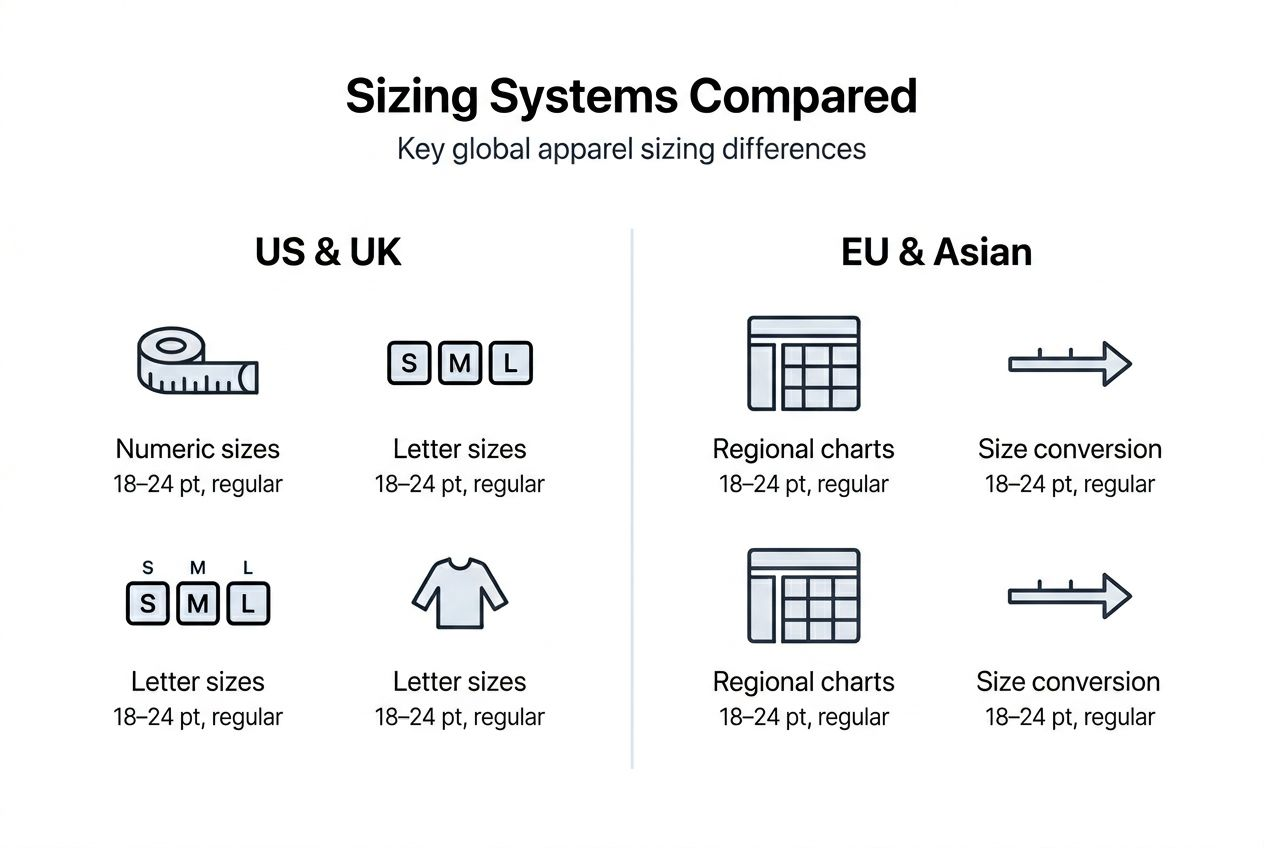
Sizing systems developed independently across regions, creating more than 3 major sizing systems globally. Each uses different numeric or letter-based standards. Understanding these systems helps you translate sizes when shopping international brands or online stores.
US sizing typically uses numeric sizes (2, 4, 6, 8) for women’s wear and Small, Medium, Large, Extra Large (S, M, L, XL) for unisex casual items like t-shirts and hoodies. Men’s pants use waist and inseam measurements in inches. UK sizing follows a similar numeric pattern but shifted by two sizes compared to US standards. European sizing uses a completely different numeric scale, often 36, 38, 40, 42, based on chest or bust circumference in centimeters. Asian sizing runs significantly smaller, with what’s labeled Large in Asia often fitting like a US Medium or even Small.
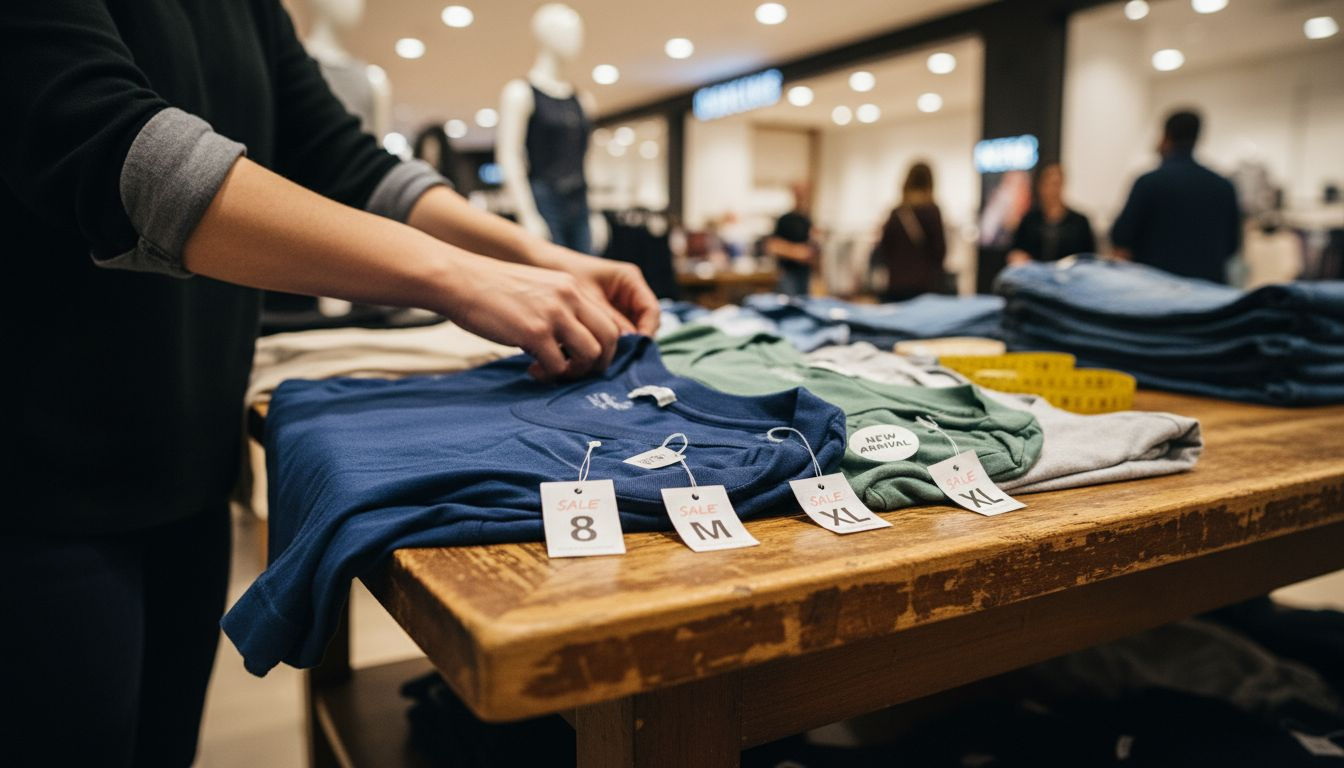
Numeric vs letter-based sizes serve different purposes. Numeric sizes offer more granular distinctions, useful for tailored fits. Letter sizes (S, M, L, XL) dominate casual wear because they’re simple and flexible. However, this simplicity hides variation. One brand’s Medium might accommodate a 38-inch chest while another’s targets 40 inches.
Here’s how sizing systems compare for a typical adult male casual shirt:
| Size Label | US Chest (inches) | UK Chest (inches) | EU Size | Asian Size |
|---|---|---|---|---|
| Small | 34-36 | 34-36 | 44-46 | Large |
| Medium | 38-40 | 38-40 | 48-50 | XL |
| Large | 42-44 | 42-44 | 52-54 | XXL |
| XL | 46-48 | 46-48 | 56-58 | XXXL |
These differences directly affect fit perception in casual items. A hoodie sized Medium in Europe feels roomier than a US Medium because European sizing accounts for layering traditions. Asian sizing prioritizes slimmer silhouettes, reflecting different body type averages and style preferences.
When comparing hoodie brands comparison 2026 or exploring best t-shirts for streetwear, always note which sizing system the brand uses. Check product descriptions for this critical detail.
Pro Tip: Always confirm the sizing system when shopping internationally. A simple size chart check prevents costly mistakes and return shipping fees.
Why sizes vary across brands
Even within one sizing system, you’ll find shocking variation between brands. Several factors drive this inconsistency, making your usual size unreliable across different stores.
Vanity sizing manipulates label numbers to flatter customers psychologically. Brands label garments smaller than actual measurements, so shoppers feel good buying a size down. A size Medium today might have measured as Large two decades ago. This practice inflates egos but destroys sizing consistency. You might wear Small in one store and Large in another, despite identical body measurements.
Fit types introduce intentional variation beyond vanity sizing. Garments come in three primary fits:
- Slim fit: Tailored close to the body with minimal ease, popular in modern streetwear
- Regular fit: Standard fit with moderate room for movement, the default for most casual wear
- Relaxed fit: Loose and comfortable with extra fabric, favored for loungewear and oversized styles
A Medium slim-fit hoodie fits tighter than a Medium regular-fit from the same brand. This isn’t sizing inconsistency but intentional design. However, many shoppers overlook fit type labels, leading to surprise when their usual size feels different.
Brand-specific measurement tolerances and marketing strategies add more variation. Brands targeting athletic builds cut garments with broader shoulders and tapered waists. Those serving different demographics use completely different base patterns. Manufacturing tolerances mean two identical size labels from the same production run might vary by half an inch.
Research shows vanity sizing has shifted average clothing measurements by 2-3 inches over the past 30 years, with some brands sizing up to two full sizes larger than historical standards for the same label.
Why does the same nominal size fit differently across brands? Because “Medium” isn’t a universal measurement. It’s a marketing term each company defines independently. One brand’s Medium targets a 38-inch chest; another aims for 40 inches. Both are legally correct because no governing body enforces sizing standards for casual apparel.
Pro Tip: Use garment fit type info to guide your size selection. If you prefer looser casual wear, size up in slim-fit styles or stick with regular or relaxed fits in your standard size.
Measuring yourself accurately
Accurate body measurements eliminate sizing guesswork. When you know your exact dimensions, you can confidently match them to any brand’s size chart, regardless of how they label their sizes.
Essential tools for measuring:
- Flexible cloth tape measure (the kind tailors use)
- Full-length mirror for checking tape position
- Fitted clothing or undergarments to wear during measurement
- Notepad or phone to record measurements
Follow these steps for key measurements:
- Chest: Wrap the tape around the fullest part of your chest, typically across the nipples, keeping it parallel to the floor and snug but not tight.
- Waist: Measure around your natural waistline, the narrowest part of your torso, usually just above the belly button.
- Hips: Wrap the tape around the fullest part of your hips and buttocks, maintaining the same snugness as chest measurement.
- Shoulder width: Measure straight across your back from one shoulder point to the other, useful for jackets and structured shirts.
- Sleeve length: Bend your arm slightly and measure from the center back of your neck, across your shoulder, down to your wrist.
Common mistakes sabotage measurement accuracy. Guessing sizes based on old measurements wastes time because bodies change. Using stiff rulers instead of flexible tape gives inaccurate curves. Measuring over bulky clothing adds inches you don’t actually have. Pulling the tape too tight or leaving it loose creates false readings.
Measure yourself wearing the type of undergarments or fitted clothes you’ll wear with the garment you’re buying. If you’re shopping for a t-shirt worn over nothing, measure bare or over a thin undershirt. For a hoodie worn over other layers, measure with typical layering clothes on.
Pro Tip: Measure yourself wearing similar undergarments or fitted clothes to what you’ll wear with the purchased item for the most accurate fit prediction.
Using a mirror or asking someone to help ensures the tape stays level. When measuring alone, position yourself in front of a mirror to check that the tape runs parallel to the floor all the way around. Tilted tape gives false readings. Having a friend or family member measure you produces more accurate results, especially for back measurements like shoulder width.
Once you have measurements, write them down and keep them handy when shopping online. Update your measurements every six months or whenever your body changes significantly. Refer to the guide to choosing casual wear for more context on how measurements translate to comfortable fits.
Understanding and using size charts
Size charts bridge the gap between your body measurements and garment sizes. Learning to read them correctly transforms online shopping from guesswork into science.
Typical size charts display three key components. First, size labels (S, M, L, XL or numeric equivalents). Second, measurement ranges for chest, waist, hips, and sometimes sleeve length or inseam. Third, fit notes explaining whether sizing runs small, large, or true to standard. Premium brands include additional details like garment length and shoulder width.
To match your measurements to chart dimensions, start with your most important measurement for the garment type. For t-shirts and hoodies, chest measurement matters most. For pants, focus on waist and hip. Find where your measurement falls within the chart ranges. If your chest measures 40 inches and the chart shows Medium as 38-41 inches, Medium is your size.
Brand-specific charts trump generic ones every time. Generic charts show industry averages that rarely match actual products. Brand-specific charts reflect that company’s unique patterns and cuts. Always use the chart on the product page you’re viewing, not a generic conversion table you found elsewhere.
Cross-check multiple measurement points for best match results. Your chest might suggest Medium while your waist indicates Large. In this case, consider the garment’s primary function. For a fitted t-shirt, chest measurement dominates the decision. For a relaxed hoodie, go with the larger size for comfort. When measurements split between two sizes, reviews often reveal whether the item runs small or large.
Tips for reading charts effectively:
- Always check the unit of measurement (inches vs centimeters) to avoid confusion
- Note whether measurements represent body dimensions or garment dimensions
- Look for fit type indicators that affect how the garment drapes
- Compare your measurements to the middle of the size range, not the edges
- When between sizes, consider fabric stretch and your comfort preference
- Save successful size choices by brand to speed up future purchases
Common misconceptions about apparel sizing
False beliefs about sizing lead shoppers astray, resulting in poor fits and frustrating returns. Clearing up these misconceptions saves you time and money.
Myth: Sizes are universal and consistent across all brands. Reality: Size labels mean nothing without context. A Medium from one brand fits completely differently than a Medium from another. Even within the same brand, different product lines may use different sizing standards. Treat each purchase as unique and always consult that specific item’s size chart.
Myth: Your in-store size guarantees online fit. Reality: Brick-and-mortar stores often carry limited size runs or regional fits that don’t match online inventory. Store fitting rooms have flattering lighting and mirrors. The size you tried on last month might have been a different fit type or production run. Always re-measure and check charts when shopping online.
Myth: Bigger sizes equal better comfort. Reality: Oversized doesn’t automatically mean comfortable. Clothes that are too large create extra fabric that bunches, restricts movement, and looks sloppy. Proper fit means adequate ease (extra room) in the right places, not just buying bigger. A well-fitted garment in your true size offers more comfort than swimming in extra fabric.
Myth: Ignoring fit style won’t impact comfort. Reality: Fit style (slim, regular, relaxed) dramatically affects wearability. A slim-fit shirt in your usual size might feel restrictive if you’re accustomed to regular fits. Conversely, someone who prefers fitted styles will find relaxed fits uncomfortably baggy. Fit style and size work together to determine final comfort.
Myth: Size labels are more reliable than measurements. Reality: Your body measurements are the only consistent data point. Size labels change meaning across brands, regions, and time periods. Measurements stay constant. A 40-inch chest is always 40 inches, but “Medium” means whatever the brand decides. Smart shoppers use measurements and treat size labels as suggestions.
Framework for comparing sizes across brands
Navigating different brands requires a systematic approach. This three-pillar framework turns chaos into clarity.
Pillar 1: Identify the sizing system. Determine whether the brand uses US, UK, EU, or Asian sizing. Check product descriptions or the “size and fit” section. International brands often state their primary system. This establishes your baseline for comparison.
Pillar 2: Cross-reference your measurements. Take your recorded body measurements and match them to the brand’s specific size chart. Ignore the size label initially. Focus purely on whether your measurements fall within their ranges. This removes bias from previous size experiences.
Pillar 3: Account for brand variability. Read reviews specifically mentioning fit. Look for phrases like “runs small,” “true to size,” or “generous cut.” Review photos from verified purchasers. Consider the brand’s target demographic, as this influences their base sizing. Streetwear brands often size smaller than outdoor casual brands.
Here’s a size conversion chart for common casual wear between systems:
| US Size | UK Size | EU Size | Asian Size | Chest (inches) |
|---|---|---|---|---|
| XS | XS | 42-44 | M | 32-34 |
| S | S | 44-46 | L | 34-36 |
| M | M | 48-50 | XL | 38-40 |
| L | L | 52-54 | XXL | 42-44 |
| XL | XL | 56-58 | XXXL | 46-48 |
Conversion charts reduce errors by 25% when used alongside measurements. They provide quick reference points but shouldn’t replace checking brand-specific charts.
Balance numeric size and fit style in your final choice. If your measurements suggest Medium but you prefer looser casual wear, a Medium in relaxed fit works better than sizing up to Large in slim fit. Fit type and size label combine to create the final fit experience.
Practical tips for applying this framework:
- Create a sizing reference document with your measurements and successful purchases by brand
- Screenshot size charts from brands you buy frequently for quick future reference
- Use conversion charts as starting points, then verify with brand-specific measurements
- When trying a new brand, read at least 10 reviews that mention fit before deciding
- Consider ordering from retailers with free returns while you learn a new brand’s sizing
- Track patterns in your sizing across brands to identify your personal fit preferences
Practical tips for selecting size when shopping online
Online shopping removes the fitting room safety net. These strategies minimize uncertainty and maximize success.
Always check brand-specific size charts before ordering. Generic size assumptions cause most online shopping failures. Spend 30 seconds reviewing the chart on each product page. This simple step prevents 80% of size-related returns.
Read customer reviews for fit insights beyond charts. Reviewers reveal whether items run small or large, where fit issues occur, and how garments look on real bodies. Sort reviews by “most helpful” or filter for your size to find relevant feedback. Photos from verified purchasers show actual fit better than model shots.
Select fabrics with stretch or tolerance for comfort in casual wear. Cotton-polyester blends with 5-10% spandex forgive minor sizing errors. Pure cotton offers less give but feels more natural. Knit fabrics like jersey have inherent stretch. Woven fabrics require more precise sizing. Check fabric composition in product details.
Consider ordering multiple sizes when unsure. Many retailers offer free returns, making this strategy cost-effective. Order your usual size plus one size up or down. Try both at home and return the poor fit. This approach works best for first-time purchases from unfamiliar brands.
Understand return policies before purchasing. Check return windows, restocking fees, and who pays return shipping. Some retailers offer free returns within 30 days. Others charge restocking fees or require you to cover return shipping. Factor these costs into your decision when ordering multiple sizes.
Additional online shopping strategies:
- Shop from brands with detailed size charts that include garment measurements, not just body measurements
- Use virtual try-on tools when available, though treat results as estimates
- Buy from retailers with customer service chat to ask specific fit questions
- Check if the brand offers fit guarantees or easy exchange programs
- Join brand email lists for sizing guides and fit tips specific to their products
- Reference trusted guides like clothing shopping tips online for broader context
Pro Tip: Use trusted online shopping guides to optimize your choices and learn how to compare clothing products online effectively across multiple brands and platforms.
Understanding ecommerce apparel global impact helps you appreciate why sizing standardization remains challenging across international online retail. As online shopping grows, developing personal strategies for size selection becomes increasingly valuable.
Discover your perfect casual fit with Smoked Times
Now that you understand apparel sizing, put this knowledge to work. Smoked Times offers curated reviews and practical shopping guides to help you find comfortable, well-fitting casual apparel without the guesswork. Our community shares real fit insights that go beyond size charts.
Explore detailed product comparisons and honest reviews from shoppers like you. Learn which brands run true to size and which require sizing adjustments. Share your own experiences through review submission to help others shop confidently. Check out essential clothing shopping tips online for more strategies to improve your online shopping success.
Visit Smoked Times today to access sizing guides, brand comparisons, and community wisdom that takes the frustration out of finding your perfect fit in casual hoodies, t-shirts, and everyday wear.
FAQ
What is vanity sizing and how does it affect apparel fit?
Vanity sizing labels clothes smaller than their actual measurements to flatter customers psychologically. This practice makes you feel good buying a smaller size but destroys consistency across brands. You might wear Small in one store and Large in another despite unchanged body dimensions.
How can I ensure accurate measurements at home?
Use a flexible tape measure and position yourself in front of a mirror or ask someone to help. Measure key points like chest, waist, and hips while wearing the type of fitted clothing you’ll wear under the garment. Keep the tape snug but not tight and parallel to the floor. Reference the guide to choosing casual wear for detailed measurement context.
Why do sizes differ so much between online brands?
Brands develop unique size charts based on their target demographics and design philosophy. Marketing strategies like vanity sizing create intentional variation. Manufacturing tolerances and different fit types (slim, regular, relaxed) add more inconsistency. No universal sizing standard exists for casual apparel.
What’s the best way to pick a size for casual hoodies or t-shirts?
Measure your chest, waist, and any other dimensions listed on the product’s size chart. Compare your measurements to the brand-specific chart rather than relying on size labels. Consider the garment’s fit type and read customer reviews for real-world fit insights. When uncertain, check essential clothing shopping tips online for additional guidance on making confident size selections.
Recommended
- Lifestyle Apparel: Shaping Everyday Comfort and Style – Smoked Times
- Ecommerce in Apparel: Driving Global Fashion Trends – Smoked Times
- What Is Seasonal Apparel and Why It Matters – Smoked Times
- Role of Social Media in Apparel: Driving Fashion Trends – Smoked Times
- Role of Fashion Eyewear: Complete Guide for 2025 – MINISTRY OF SIGHT