


What is Athleisure? 65% Correct Style & Comfort Guide
Most people get athleisure wrong. Research shows 65% mistakenly think athleisure is only workout clothing, but it’s so much more than gym gear. Athleisure represents a lifestyle shift where athletic comfort meets fashion versatility. You’ll discover how to choose fabrics, style outfits across seasons, and understand what truly separates athleisure from sportswear and casual wear.
Table of Contents
- Definition And Evolution Of Athleisure
- Difference From Sportswear And Casual Wear
- Material And Fabric Technology In Athleisure
- Common Misconceptions About Athleisure
- Styling Athleisure For Different Occasions And Seasons
- Influence Of Athleisure On Fashion Industry Trends
- Seasonal And Usage Variations
- Explore Quality Athleisure At Smoked Times
- Frequently Asked Questions
Key Takeaways
| Point | Details |
|---|---|
| Definition | Athleisure is athletic-inspired apparel designed for both performance and everyday style, offering multifunctional wear beyond the gym. |
| Key Differences | Unlike sportswear’s performance focus or casual wear’s traditional comfort, athleisure balances technical fabrics with fashion aesthetics. |
| Fabric Technology | Moisture-wicking polyester blends, breathable materials, and sustainable textiles deliver year-round comfort and durability. |
| Styling Versatility | Layer pieces strategically and adjust for seasons to create looks ranging from casual coffee runs to smart-casual outings. |
| Market Impact | The global athleisure market grew at 12.7% CAGR reaching over $300 billion, reflecting massive consumer demand. |
Definition and Evolution of Athleisure
Athleisure combines athletic functionality with street-ready style, creating apparel you can wear from morning yoga to afternoon meetings. This category emerged when consumers demanded clothing that moved with their increasingly active lifestyles. The athleisure market growth reflects how dramatically dressing habits have changed.
The timeline shows a fascinating shift. In the early 2000s, workout clothes stayed in the gym. By 2015, brands recognized people wanted performance fabrics in everyday settings. Fast forward to 2026, and athleisure dominates wardrobes globally. This evolution mirrors our blurred boundaries between work, exercise, and social time.
Cultural changes accelerated athleisure’s rise. Remote work normalized comfortable clothing during professional hours. Wellness trends elevated activewear’s status. Urban living demanded versatile outfits for mixed activities. These factors converged to make athleisure essential rather than optional.
Key milestones in athleisure’s journey include:
- Early adoption by yoga practitioners seeking stylish studio-to-street options
- Celebrity endorsements bringing athletic wear into mainstream fashion
- Tech fabric innovations making performance materials accessible
- Pandemic-era comfort priorities permanently shifting consumer preferences
- Sustainability movements pushing brands toward eco-friendly athletic materials
Today’s athleisure reflects our values: efficiency, comfort, health consciousness, and style. You’re not sacrificing aesthetics for function or vice versa. Modern designs prove you can have both, transforming how we approach daily dressing decisions.
Difference from Sportswear and Casual Wear
Understanding these distinctions helps you build a wardrobe that actually serves your lifestyle. Each category has specific purposes, and knowing them prevents buying mistakes.
Sportswear prioritizes performance. Think compression fabrics for muscle support, ventilation panels for intense workouts, and specialized cuts for specific sports. You wear sportswear when activity demands maximum functionality. It’s engineered for movement, sweat management, and durability during physical stress.
Casual wear emphasizes relaxed comfort and traditional style. What is casual wear includes jeans, basic tees, and everyday garments designed for comfort without technical features. These pieces work for social settings but lack the performance elements that make athleisure unique.
Athleisure sits perfectly between these worlds. It borrows sportswear’s technical fabrics but adds fashion-forward designs suitable for non-athletic settings. You get moisture-wicking properties in a hoodie stylish enough for brunch. Stretch fabrics provide comfort without looking overtly athletic.
| Category | Primary Focus | Typical Use | Key Features |
|---|---|---|---|
| Sportswear | Performance | Gym, sports, intense workouts | Compression, ventilation, sport-specific cuts |
| Athleisure | Style + Function | Everyday wear, light activity, social settings | Technical fabrics, fashion aesthetics, versatility |
| Casual Wear | Comfort + Tradition | Social occasions, relaxed settings | Conventional materials, classic styles, laid-back fit |
Consumer preferences reveal athleisure’s appeal. People choose it because:
- Multifunctionality eliminates outfit changes between activities
- Technical fabrics provide superior comfort throughout the day
- Modern designs look intentional rather than sloppy
- Versatility justifies higher price points through extended wear
The examples of casual wear show how athleisure pieces can replace traditional basics while offering enhanced functionality. You’re investing in clothing that adapts to your dynamic routine rather than forcing you to plan around wardrobe limitations.
Material and Fabric Technology in Athleisure
Fabric innovation separates quality athleisure from basic clothing. Understanding these technologies helps you identify pieces worth buying.
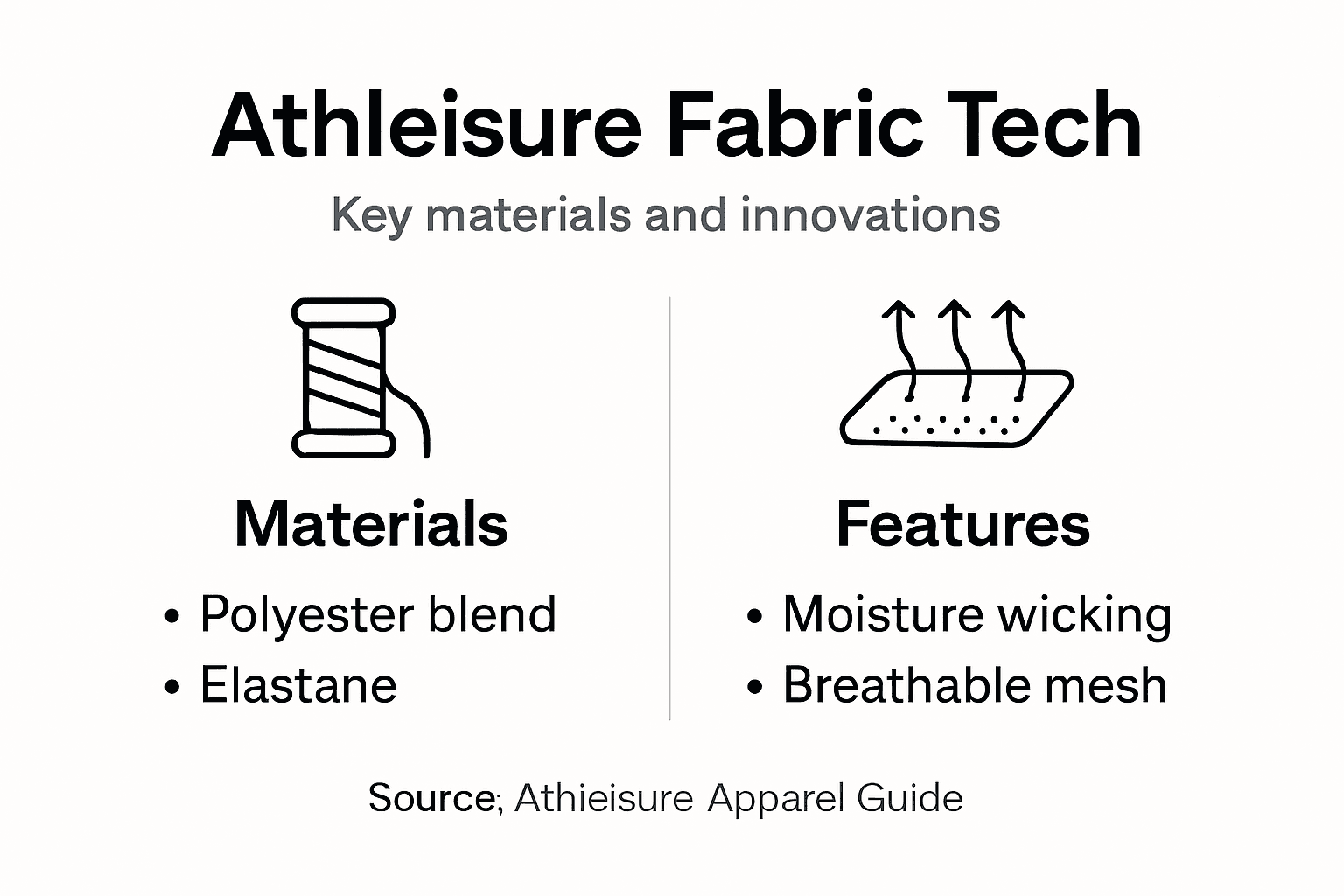
Polyester blends dominate athleisure for good reason. These engineered fabrics wick moisture away from skin, keeping you dry during light exercise or warm weather. Unlike cotton that absorbs sweat, polyester moves it to the fabric surface where it evaporates quickly. Modern blends add elastane for stretch and recovery, ensuring garments maintain their shape.
Breathability matters as much as moisture management. Mesh panels, open-weave constructions, and micro-perforations allow air circulation without compromising structure. You stay comfortable whether you’re rushing between meetings or relaxing at a café. These features work passively, requiring no special care or activation.
Durability concerns often surprise first-time athleisure buyers. Quality pieces withstand frequent washing and extended wear better than traditional casual clothing. Reinforced seams, colorfast dyes, and abrasion-resistant fabrics mean your investment lasts seasons rather than months. This durability offsets higher initial costs.
Sustainability has entered athleisure fabric development significantly. Recycled polyester from plastic bottles reduces environmental impact without sacrificing performance. Organic cotton blends offer natural comfort with lower pesticide use. Brands increasingly highlight these materials as consumers demand ethical production.
Key fabric technologies to look for include:
- Four-way stretch for unrestricted movement in all directions
- Anti-odor treatments using silver ions or natural antimicrobials
- UV protection integrated into fiber structure for outdoor wear
- Thermal regulation properties that adapt to temperature changes
- Quick-dry capabilities reducing laundering time and energy
Pro Tip: Check fabric composition tags before buying. Blends with 10 to 20% elastane provide optimal stretch without losing shape, while 100% synthetic fabrics dry fastest but may feel less breathable than cotton blends.
The seasonal clothing trends show how fabric choices affect year-round wearability. Heavier fleece-lined athleisure works for winter, while lightweight mesh constructions suit summer heat. Understanding these options helps you build a complete wardrobe. The seasonal wardrobe tips provide additional guidance for selecting appropriate weights and styles.
Common Misconceptions About Athleisure
Clearing up confusion helps you make smarter purchasing decisions and wear athleisure confidently.
The biggest myth: athleisure equals gym clothes. Statistics confirm 65% wrongly believe athleisure is only for workouts, missing its broader lifestyle application. You can wear athleisure to coffee shops, casual dinners, shopping trips, and relaxed work environments. The category specifically evolved for these non-athletic scenarios.
Another misconception suggests athleisure lacks style compared to traditional fashion. Reality contradicts this completely. Designers create athleisure with the same aesthetic attention as any fashion category. Color palettes, silhouettes, and details receive careful consideration. You’re wearing deliberately styled pieces, not workout leftovers.
“Athleisure represents a fundamental shift in how we define appropriate dress, merging wellness culture with contemporary fashion in ways that challenge traditional style boundaries while maintaining sophisticated aesthetics.” Fashion Industry Analysis, 2026
The quality myth persists too. Some assume all athleisure represents cheap fast fashion. Premium athleisure brands focus on:
- Sustainable material sourcing and ethical production practices
- Advanced fabric technologies requiring significant research investment
- Superior construction methods ensuring longevity
- Limited production runs maintaining exclusivity
- Transparent supply chains building consumer trust
These misconceptions impact buying behavior negatively. People either avoid athleisure thinking it’s inappropriate for their lifestyle, or they purchase low-quality pieces that confirm their worst assumptions. Neither approach serves you well.
Understanding athleisure’s true nature opens wardrobe possibilities. You gain versatile pieces that genuinely simplify daily dressing while maintaining style standards. The category exists specifically to solve the functionality versus fashion dilemma that plagued previous generations.
Styling Athleisure for Different Occasions and Seasons
Mastering athleisure styling unlocks its full potential. These practical strategies work for real-world situations.
Layering creates versatility instantly. Start with a fitted base like a moisture-wicking tee, add a hoodie for warmth, and top with a bomber jacket for polish. This progression takes you from casual to smart-casual effortlessly. Remove or add layers as settings change throughout your day.
Seasonal adjustments require strategic thinking:
- Spring: Lightweight pullovers over breathable tees with joggers
- Summer: Tank tops, shorts, and minimal layers in quick-dry fabrics
- Fall: Medium-weight hoodies, layered looks, transitional jackets
- Winter: Insulated athleisure, thermal base layers, weather-resistant outer shells
Accessories elevate athleisure significantly. A structured backpack looks more intentional than a gym bag. Minimalist sneakers appear cleaner than chunky athletic shoes. Simple jewelry adds polish without clashing with the casual aesthetic. These small additions transform your overall impression.
Footwear choices matter enormously. Clean white sneakers work for most athleisure outfits, providing a neutral base. Slip-on styles offer convenience for quick errands. Weather-appropriate boots maintain athleisure’s comfort during winter while looking put-together. Avoid overtly athletic training shoes unless you’re actually exercising.
Pro Tip: Stick to neutral color palettes in athleisure basics, then add personality through one statement piece. This approach keeps outfits cohesive while preventing the “head-to-toe gym” look that reads as unintentional.
Versatile outfit formulas to master include:
- Classic casual: Fitted joggers, plain tee, zip hoodie, white sneakers
- Smart athleisure: Tapered athletic pants, collared pullover, bomber jacket, leather sneakers
- Weekend comfort: Shorts, performance tee, lightweight hoodie, slide sandals
- Transitional layers: Base tee, quarter-zip pullover, vest, athletic pants, boots
- Minimalist approach: Monochrome athleisure set with structured outerwear and accessories
The seasonal clothing trends guide provides deeper insights into timing purchases and rotating pieces. Learning to style winter hoodies specifically helps during colder months. The mix and match winter apparel strategies extend your wardrobe’s versatility without constant shopping.
Influence of Athleisure on Fashion Industry Trends
Athleisure fundamentally changed how fashion operates. The market impact reveals its significance.
Market Growth: The global athleisure market expanded at 12.7% CAGR from 2018 to 2025, surpassing $300 billion in total value. This explosive growth forced traditional fashion brands to adapt or risk obsolescence.
Traditional categories felt athleisure’s pressure immediately. Suit sales declined as workplaces relaxed dress codes. Denim brands struggled against comfortable alternatives. Formal wear became occasion-specific rather than daily. These shifts reflected consumers choosing comfort without sacrificing style.
Consumer behavior transformed completely. People now prioritize:
- Versatility over single-purpose garments
- Performance fabrics over traditional materials
- Comfort alongside aesthetics in purchasing decisions
- Multi-activity functionality in wardrobe planning
- Value measured by wear frequency rather than just price
Brands responded with strategic pivots. Luxury houses launched athleisure lines. Fast fashion retailers expanded activewear sections. Athletic brands hired fashion designers. These moves acknowledged athleisure’s permanent market position rather than treating it as a passing trend.
The social media influence on fashion trends amplified athleisure’s reach. Influencers showcased styling possibilities, normalizing athletic wear in non-athletic contexts. User-generated content demonstrated real-world versatility. Platforms became virtual runways for athleisure experimentation.
Future prospects remain strong. Innovation continues in sustainable materials, smart fabrics, and inclusive sizing. The global athleisure market trends suggest continued expansion as wellness culture spreads globally. You’re witnessing a permanent shift in how people approach daily dressing.
Seasonal and Usage Variations
Adapting athleisure across seasons maximizes your wardrobe investment. Understanding these variations improves comfort and style year-round.
Fabric weights change dramatically by season. Winter athleisure uses fleece-lined hoodies, insulated joggers, and thermal base layers. Summer pieces feature lightweight mesh, moisture-wicking tees, and breathable shorts. Transitional seasons mix these weights strategically, allowing layering flexibility as temperatures fluctuate.
Thermal regulation technologies built into athleisure fabrics help maintain comfort. Cold-weather pieces trap body heat while allowing moisture escape, preventing that clammy feeling. Warm-weather designs promote air circulation and rapid evaporation. These features work automatically, adjusting to your activity level passively.
| Season | Fabric Focus | Typical Pieces | Primary Usage |
|---|---|---|---|
| Winter | Fleece-lined, insulated, thermal | Heavy hoodies, joggers, base layers | Outdoor activities, layered casual wear |
| Spring | Medium-weight, breathable | Pullovers, light joggers, tees | Transitional layering, variable weather |
| Summer | Lightweight, moisture-wicking | Tank tops, shorts, breathable tees | Minimal layers, maximum ventilation |
| Fall | Mid-weight, versatile | Hoodies, long-sleeve tees, medium joggers | Layering options, temperature flexibility |
Usage scenarios extend beyond seasons. Light exercise demands breathability and stretch without heavy insulation. Casual social wear prioritizes style alongside comfort. Outdoor activities require weather resistance and durability. Your athleisure choices should match these specific needs.
Seasonal sales patterns affect availability and pricing. Retailers stock heavily before traditional season starts. End-of-season clearances offer value but limited sizing. Planning purchases around these cycles stretches your budget effectively.
Choosing outfits based on weather and activity requires practical thinking:
- Check forecasts before selecting fabric weights
- Consider activity intensity when choosing breathability levels
- Plan for indoor/outdoor transitions with removable layers
- Match footwear to weather conditions and walking distance
- Keep backup pieces for unexpected temperature changes
The seasonality in clothing impact explores timing considerations deeply. Learning to master seasonal clothing trends ensures your athleisure wardrobe stays current and functional across changing conditions.
Explore Quality Athleisure at Smoked Times
You’ve learned what makes athleisure unique, how to style it, and why it dominates modern wardrobes. Now apply this knowledge with pieces designed for your lifestyle.
Smoked Times offers lifestyle apparel that embodies athleisure principles: comfortable fabrics, versatile designs, and style that transitions seamlessly between activities. Our collection includes hoodies, pullovers, and tees engineered for year-round wear. Whether you’re building a complete athleisure wardrobe or adding key pieces, you’ll find casual wear essentials that deliver both function and fashion. Explore our seasonal clothing trends guide for styling inspiration, then discover pieces that bring these concepts to life. Your perfect athleisure outfit starts here.
Frequently Asked Questions
What is athleisure clothing?
Athleisure is athletic-inspired apparel designed for both performance and everyday style, blending technical fabrics with fashion aesthetics. It allows you to move seamlessly from workouts to social settings without changing clothes. Unlike pure sportswear, athleisure prioritizes versatility and street-ready looks alongside functionality.
How is athleisure different from casual wear and sportswear?
Athleisure balances performance fabrics with fashion design, unlike casual wear’s comfort-only focus or sportswear’s activity specialization. Sportswear emphasizes maximum performance for specific sports, while casual wear uses traditional materials for relaxed settings. Athleisure bridges these worlds, offering technical benefits in socially appropriate styles suitable for multiple environments throughout your day.
What fabrics are best for athleisure clothing?
Moisture-wicking polyester blends, breathable mesh panels, four-way stretch materials, and sustainable recycled fabrics dominate quality athleisure. Look for compositions with 10 to 20% elastane for optimal stretch and recovery. These engineered textiles provide comfort, durability, and performance features that traditional cotton or denim cannot match, making them ideal for active lifestyles.
Can athleisure be worn year-round?
Yes, athleisure adapts perfectly across seasons through strategic fabric weights and layering techniques. Winter pieces feature fleece linings and thermal properties, while summer options use lightweight, breathable constructions. Transitional seasons benefit from medium-weight hoodies and versatile pullovers that layer effectively, ensuring comfort regardless of temperature or weather conditions.