


Your Guide to Sizing for Online Shopping
TL;DR:
- Buying clothes online without trying them on is challenging due to inconsistent sizing across brands, leading to high return rates. Accurate measurements, understanding brand-specific charts, and reading detailed reviews significantly improve fit confidence. Regular remeasurement and using digital fitting tools help shoppers select their correct size and reduce unnecessary returns.
Buying clothes online without trying them on first is genuinely tricky. Sizing inconsistency between brands means your usual “medium” in one store fits like a large in another, and the cost of guessing wrong adds up fast. Wrong fit drives roughly 50–60% of clothing returns in online retail, which wastes your time and money. This guide to sizing for online shopping walks you through exactly what to measure, how to read size charts, and what to check before you hit “buy” so your next order actually fits.
Table of Contents
- Key Takeaways
- Getting ready: tools and prep for accurate measuring
- How to measure the key areas for each clothing type
- Reading brand size charts the right way
- Common sizing mistakes that lead to returns
- Confirming your size before you place the order
- My take on why sizing labels have always been the wrong reference point
- Shop smarter with Smokedtimes
- FAQ
Key Takeaways
| Point | Details |
|---|---|
| Measure yourself accurately | Use a soft measuring tape and take each measurement twice to get a reliable average. |
| Match measurements to brand charts | Never rely on S/M/L labels alone. Cross-reference your numbers with each brand’s specific size chart. |
| Prioritize garment-relevant measurements | Focus on bust for tops, waist and hips for pants, and shoulder width for outerwear. |
| Read reviews before ordering | Customer fit notes and model size info help you gauge real-world fit before committing to a size. |
| Avoid over-ordering multiple sizes | Making a confident single size choice using fit tools beats ordering three sizes and returning two. |
Getting ready: tools and prep for accurate measuring
Before you take a single measurement, getting your setup right makes a bigger difference than most shoppers realize. The most common measurement errors come from poor preparation, not carelessness.
Here is what you need before you start:
- A soft fabric measuring tape. A rigid ruler or hardware tape will not wrap around your body correctly. You can find a soft tape at any craft or fabric store for under two dollars.
- Minimal or lightweight clothing. Measure in underwear or a single thin layer. Thick jeans, hoodies, or layers add bulk that throws off your numbers.
- A full-length mirror or phone camera. You need to see whether your tape is sitting level and straight. A camera propped up is particularly useful for checking your back-side placement.
- A helper if possible. Measuring your own back shoulder width or checking tape angle is genuinely difficult solo. Even a quick five-minute favor from a housemate produces more accurate results.
- A notepad or notes app. Write everything down in the same session. Numbers you “remember” from a week ago are less reliable than you think.
Once you have your tools ready, stand in a neutral posture with feet together and shoulders relaxed. Do not suck in your stomach or push your chest out. Natural posture gives you numbers you can actually shop with. Consistent tape placement, snug against the body but not pulling the skin, is the single biggest factor in getting repeatable measurements.
Pro Tip: Take each measurement twice and write down both numbers. If they match, great. If they differ by more than half an inch, measure a third time and use the middle value.
How to measure the key areas for each clothing type
This is where most online shopping size guides gloss over the details. Here is a precise breakdown by body area, covering what to measure and exactly how to do it.
-
Bust or chest. Wrap the tape around the fullest part of your chest, keeping it level across your back. For women, this is typically over the bra at the nipple line. For men, it sits just under the arms. Do not pull the tape tight enough to compress.
-
Waist. Find your natural waist by bending slightly to the side. The crease that forms is your natural waistline, typically an inch or two above your belly button. Wrap the tape around this point, parallel to the floor.
-
Hips. Stand with feet together and measure around the widest part of your hips and seat, usually seven to nine inches below your natural waist. This measurement matters most for pants, skirts, and fitted dresses.
-
Inseam. Stand straight with feet about six inches apart. Measure from the top of your inner thigh down to your ankle bone. The easiest method: take a pair of pants that already fit you well, lay them flat, and measure from the crotch seam straight down to the hem.
-
Shoulder width. Measure straight across the back from the outer edge of one shoulder to the other, where the sleeve would naturally begin. This measurement is often overlooked but is critical for jacket and outerwear fit.
-
Sleeve length. With your arm slightly bent, measure from the center back of your neck, across your shoulder, and down to your wrist. This matters most for dress shirts, blazers, and hoodies where sleeve length is part of the fit.
Pro Tip: Different garments need different measurements. For tops and dresses, your bust is the most critical number. For pants and skirts, focus on waist, hips, and inseam. Matching the right measurement to the garment type reduces fit errors significantly.
Reading brand size charts the right way
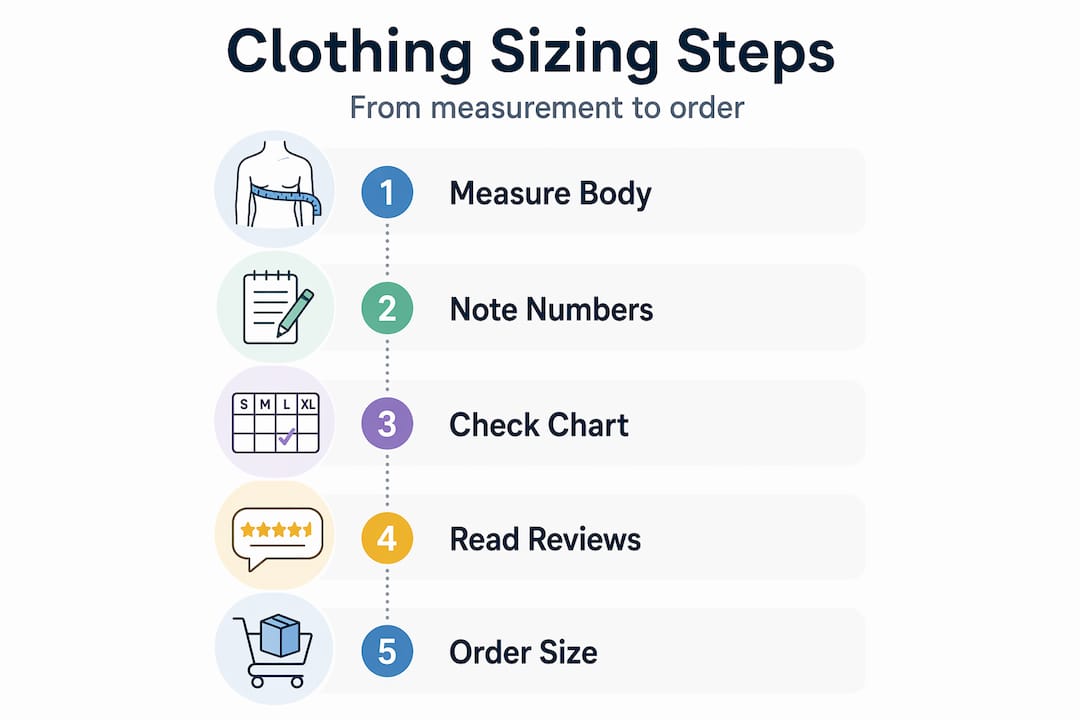
Having your measurements is only half the job. The other half is knowing how to use them correctly against each brand’s size chart.

Size labels like S, M, L, or numeric sizes like 32 or 8 are not consistent between brands. Two brands can label the same measurements completely differently. Shoppers should match exact measurements to brand charts rather than assuming a size they know from one brand transfers to another. This is especially true when shopping internationally. European dress sizes (34, 36, 38) require careful measurement conversion and do not map directly to US numeric sizes.
Here is how to work through a size chart effectively:
- Identify which measurements matter most for the garment. For a T-shirt, focus on chest and shoulder. For jeans, waist and hip measurements dominate. You rarely need to match every column perfectly.
- When your measurements fall between two sizes, consider the garment’s intended fit. If a brand describes a shirt as “relaxed fit,” sizing down is usually fine. For a “slim fit” description, sizing up preserves comfort.
- Read the product description carefully for fit notes. Phrases like “runs small,” “true to size,” or “generous cut” give you real information beyond the chart numbers.
- Look at reviewer feedback with sizing context. Customer fit notes that mention the reviewer’s measurements alongside their purchased size are the most useful data you can find.
Here is a quick reference for which measurements to prioritize by garment type:
| Garment type | Primary measurement | Secondary measurement |
|---|---|---|
| T-shirts and tops | Chest/bust | Shoulder width |
| Dresses | Bust | Waist, hips |
| Pants and jeans | Waist | Hips, inseam |
| Jackets and outerwear | Chest | Shoulder width, sleeve length |
| Skirts | Waist | Hips |
Common sizing mistakes that lead to returns
Even shoppers who measure regularly fall into predictable traps. Knowing what these are makes you harder to fool.
- Measuring over thick clothing. A quarter-inch added by a chunky sweater sounds minor. Multiply that across your bust, waist, and hips and you end up a full size off. Always measure against skin or a single thin layer.
- Using old measurements. Bodies change. Weight shifts, muscle builds up, posture adjusts. Using outdated measurements or relying on a familiar size label is one of the top causes of poor online fit. Remeasure at least every six months, or whenever your weight shifts noticeably.
- Ignoring garment-specific fit notes. If the product page says “this style runs one size small due to structured fabric,” and you order your usual size anyway, that is not a sizing chart failure. That is skipped information.
- Over-ordering to hedge your bets. Ordering a medium, large, and extra-large “just to see” feels like a safe strategy. It rarely is. Revisiting size charts and using available fit tools produces better outcomes than bracketing sizes, and it cuts down on the return cycle entirely.
- Skipping the apparel fit basics that explain how fabric type and garment construction affect how a size actually wears.
Sizing confidence at the moment you choose a size directly links to better conversion and fewer returns. Shoppers who commit based on real data, rather than habit, are the ones who keep what they buy.
Confirming your size before you place the order
You have your measurements. You have matched them to the chart. Before you click “add to cart,” run through this final checklist.
- Check what the model is wearing and their listed measurements. If a brand shows a model who is 5’10" and 165 lbs wearing a size medium, and you are significantly shorter or lighter, that visual alone tells you something the chart cannot.
- Consider the fabric. Stretch fabrics like jersey cotton or spandex blends are more forgiving than woven fabrics. A shirt described as “100% woven cotton” with no stretch will fit more rigidly than its measurements suggest for someone between sizes.
- Look for digital fitting tools on the product page. Digital fitting platforms that use purchase and return data can double conversion and cut fit-related returns noticeably. When a retailer offers one, use it.
- Read the return and exchange policy before ordering. If a brand offers easy exchanges, you have a safety net. If returns are final sale or involve a shipping fee, that changes how carefully you should verify your size first.
- Start building a personal size profile. Keep a simple notes document with your measurements and the size you ordered from each brand, along with whether it fit correctly. Within a few purchases, you will have a reference that makes every future order faster and more reliable.
The role of reviews in fashion choices is worth taking seriously here. Reviewers who include their own measurements alongside sizing feedback are doing you a real favor. Filter for those comments specifically.
My take on why sizing labels have always been the wrong reference point
I’ve spent years reading product pages, comparing charts, and watching people order the wrong size for the same avoidable reason: they trusted the label instead of the numbers.
Here is what I’ve learned. Brands do not use a shared sizing standard. There is no industry agreement that a “medium” must fit a 38-inch chest. Each brand builds to its own block and then assigns a label. That means the only thing a size label tells you is where you stand within that one brand’s internal system, and nothing else.
What actually works is treating every new brand as a stranger. You do not assume what a stranger means by “medium.” You ask for the specific numbers and compare them to your own. That shift in mindset, from label-matching to measurement-matching, is where consistent fit starts.
I have also seen the early results from virtual try-on tools and digital fitting technology. They are genuinely promising for the future of online fit confidence. But the technology only works when you feed it accurate input. A shopper with solid, current body measurements will get more out of any fitting tool than a shopper who guesses at inputs. The foundation is always the same: know your numbers.
My advice is to spend fifteen minutes with a tape measure this week. Write down your chest, waist, hips, inseam, and shoulder width. That one session will pay off every time you shop online for the next year.
— Denis
Shop smarter with Smokedtimes
Getting sizing right starts with knowing your measurements. But it also helps when a brand builds its pieces with honest, consistent fits. Smokedtimes’ Retro Cotton T-Shirts are cut from 100% organic and Pima cotton with a relaxed but intentional fit that reads true to the size chart. No vanity sizing, no surprises when the box arrives. The product pages include detailed size charts so you can match your measurements directly. Smokedtimes also ships internationally with multi-currency support, and the brand runs regular bundle promotions that make stocking up worthwhile. If you want to put your new sizing knowledge to work, that is a good place to start.
FAQ
What is the most accurate way to measure for online shopping?
Use a soft measuring tape against minimal clothing and take each measurement twice, then average the two results. Consistent tape placement, snug but not compressing, gives you the most reliable numbers.
Why do my measurements not match the size I usually buy?
Size labels vary between brands because there is no universal sizing standard. Your usual size in one brand may not match another, which is why you should cross-reference your measurements against each brand’s specific chart.
How do I choose a size when my measurements fall between two chart values?
Consider the garment’s described fit. For relaxed or oversized styles, size down. For slim or structured fits, size up. Reviewer feedback from people with similar measurements is also a reliable guide.
Can digital fitting tools really help reduce returns?
Yes. Fit predictor tools using real purchase and return outcome data can more than double conversion rates and reduce fit-related returns by up to 15%. They work best when you enter accurate body measurements.
How often should I update my measurements?
Remeasure at least every six months, or any time your weight or body composition changes noticeably. Relying on outdated measurements is one of the top causes of poor online fit and unnecessary returns.