


Ethical Apparel: Why It Matters for Conscious Shoppers
Choosing casual apparel that matches your style should never mean compromising your values. Many young people are questioning the shady origins of fast fashion and its hidden costs for workers and the environment. As the call for truly sustainable clothing grows, understanding the core of ethical apparel helps you distinguish real change from empty promises and empowers you to support brands that genuinely value people, planet, and transparency.
Table of Contents
- What Ethical Apparel Really Means
- Key Standards and Certifications Explained
- How Ethical Apparel Is Produced
- Buyer Responsibilities and Common Missteps
Key Takeaways
| Point | Details |
|---|---|
| Ethical Apparel Principles | Ethical apparel focuses on fair labor practices, environmental responsibility, and transparency throughout production. |
| Consumer Impact | Every purchase influences the market; choose brands that align with ethical values to drive systemic change. |
| Importance of Certifications | Look for reputable certifications to verify a brand’s ethical claims, as not all labels carry equal weight. |
| Avoiding Common Pitfalls | Be cautious of marketing claims without verification, and don’t limit ethical shopping to occasional purchases for true impact. |
What Ethical Apparel Really Means
Ethical apparel isn’t just marketing jargon. It represents real commitments to people and planet throughout the entire production cycle. Think of it as the antithesis of fast fashion’s “buy it, wear it once, toss it” mentality.
The core concept combines three interconnected elements that define truly ethical clothing:
- Labor practices treating workers fairly with living wages and safe conditions
- Environmental responsibility minimizing water usage, chemical pollution, and waste
- Transparency showing where clothes come from and how they’re made
Here’s what separates ethical apparel from greenwashing (those deceptive green labels that mean nothing). Ethical challenges throughout production reveal widespread issues: garment workers earning less than $3 daily, textile factories dumping toxic dyes into water supplies, and supply chains deliberately hidden from consumers.
Ethical apparel addresses the entire value chain—from raw material sourcing through manufacturing to how products reach your closet. It’s not just one aspect; it’s systemic change.
When you choose ethical apparel, you’re voting for a different system. You’re saying that the person stitching your hoodie deserves dignity and fair compensation. You’re stating that water purity matters more than cheap production. You’re requiring companies to prove their claims instead of hiding behind vague sustainability language.
The difference shows in quality too. Ethical brands invest in durable materials and better construction because they’re not racing to the bottom on price. Your t-shirt lasts longer, fits better, and actually reflects the craftsmanship behind it.
Many brands position themselves as sustainable without addressing labor abuse or environmental devastation—that’s greenwashing. Real ethical apparel tackles everything simultaneously. When examining sustainable fashion fundamentals, you’ll notice transparent brands willingly discuss their supply chain challenges.
Your role matters too. Ethical apparel exists because consumers like you demand better. Every purchase signals to brands what you value, making market pressure the most powerful accountability tool available.
Here’s how ethical apparel differs from fast fashion:
| Aspect | Ethical Apparel | Fast Fashion |
|---|---|---|
| Worker Treatment | Fair wages, safe workplaces | Low pay, unsafe conditions |
| Environmental Impact | Low pollution, minimal waste | High pollution, high waste |
| Supply Chain | Transparent, traceable | Hidden, opaque |
| Product Longevity | Durable, high quality | Short lifespan, disposable |
Pro tip: Check if brands publicly name their factories and publish labor audits—transparency is the clearest indicator that ethical commitments are genuine, not performative.
Key Standards and Certifications Explained
Certifications act as third-party proof that brands actually follow through on ethical promises. Without them, “ethical” is just a marketing claim with zero accountability.
Think of certifications as badges of verification. Independent auditors inspect factories, test materials, and review labor practices to confirm companies meet specific standards. This prevents brands from making empty promises.
Here are the major players you’ll encounter:
- GOTS (Global Organic Textile Standard) focuses on organic fiber production and safe working conditions
- Fair Trade Certified ensures farmers and workers earn fair wages and have decent working conditions
- OEKO-TEX Standard 100 tests for harmful chemicals throughout the entire production process
- Bluesign tracks chemical use and water management in textile manufacturing
- SA8000 certifies ethical labor practices and worker rights across all industries
Each certification tackles different aspects of the ethical equation. Sustainability standards and ecolabeling motivate responsible production while helping consumers identify genuinely compliant brands versus imposters.
But here’s the reality: not all certifications carry equal weight. Some require rigorous auditing; others are easier to obtain. Your job is understanding which ones matter for what you’re buying.
Look for certifications that include regular third-party audits and transparent reporting—these indicate real accountability, not performative compliance.
When you’re shopping for hoodies or t-shirts, scan the product details for certification badges. Legitimate brands proudly display them because they’ve invested in verification. If a company claims ethical practices but shows no certifications, that’s a red flag worth investigating.
Multiple certifications often signal stronger commitment. A brand with both Fair Trade and OEKO-TEX certification addresses both worker welfare and environmental safety simultaneously. Single certifications aren’t automatically bad, but they cover narrower scope.
The certification landscape gets complicated globally because different countries have different standards. A certification valid in Europe might not apply in Asia. This fragmentation creates challenges, but it’s also why transparent brands publish their audits publicly.
Pro tip: Visit certification websites directly (not brand websites) and search for the company name in their certified list—this confirms the badge is legitimate and currently active, not expired or fabricated.
Use this table to quickly interpret major certification focuses:
| Certification | Labor Standards | Environmental Safety | Scope of Coverage |
|---|---|---|---|
| GOTS | Moderate | High | Organic textiles |
| Fair Trade | High | Moderate | Cotton and wider industries |
| OEKO-TEX Standard 100 | Low | High | Chemical testing |
| Bluesign | Moderate | High | Textile manufacturing |
| SA8000 | Very High | Low | Industrial workplaces |
How Ethical Apparel Is Produced
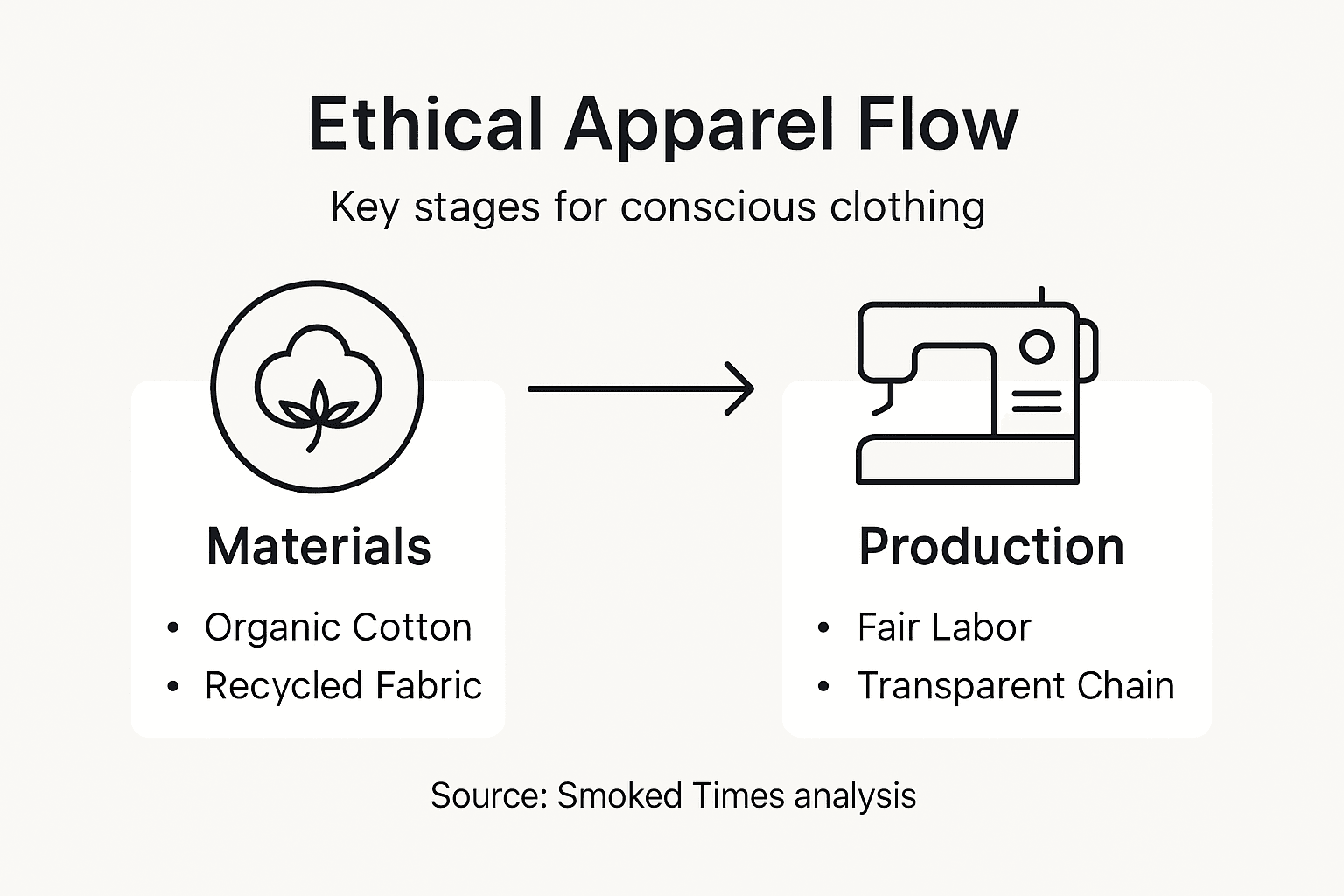
Ethical production starts before the first stitch. It begins with choosing responsible materials and continues through every manufacturing stage until your hoodie reaches your door.
The journey differs significantly from conventional apparel production. Ethical brands prioritize worker welfare, environmental protection, and transparency at every step. This intentionality adds complexity but delivers real value.
Here’s the basic production flow:
- Material sourcing - selecting organic, recycled, or sustainably grown fibers
- Spinning and weaving - processing raw materials into usable fabrics with minimal chemical use
- Dyeing and finishing - coloring and treating fabrics using eco-friendly methods
- Cutting and sewing - assembling garments in facilities with fair labor practices
- Quality control and packaging - ensuring durability before shipment
Each stage presents ethical choices. Sustainable manufacturing processes in apparel production now include energy-efficient technologies and responsible chemical management that reduce environmental harm.
Material selection matters tremendously. Sustainable fabric options minimize water consumption and chemical pollution compared to conventional alternatives. Organic cotton uses no synthetic pesticides; recycled polyester diverts waste from landfills.
Ethical production isn’t cutting corners—it’s building quality through responsible practices that benefit workers, the environment, and ultimately you as the consumer.
Wet processing (dyeing and finishing) creates the biggest environmental impact in textile manufacturing. Ethical brands invest in closed-loop systems that capture and recycle water and chemicals instead of dumping them into rivers. This costs more upfront but prevents ecosystem damage.
Labor conditions distinguish ethical production fundamentally. Fair-trade certified factories guarantee living wages, safe working hours, and no child labor. Workers aren’t rushed through assembly lines; they have time to produce quality garments properly.
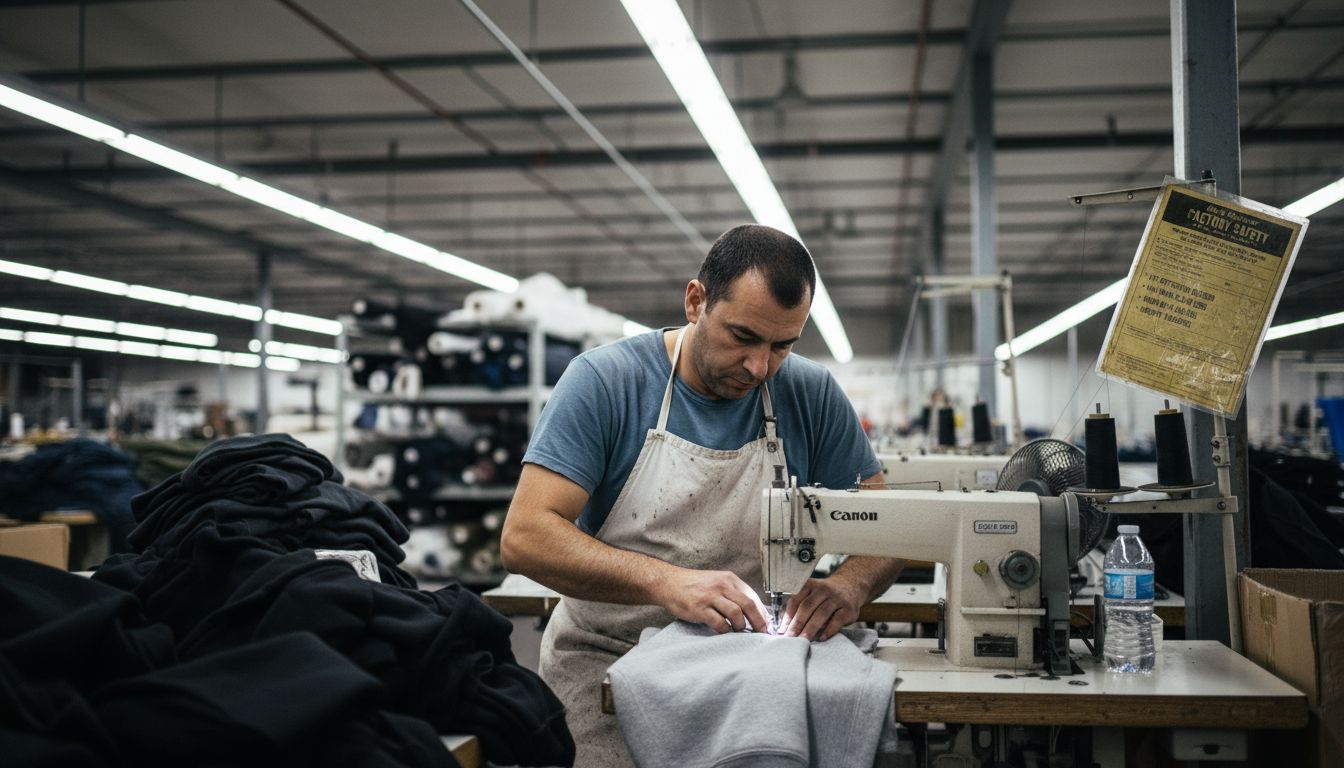
Supply chain transparency reveals commitment levels. Ethical brands willingly disclose factory locations, worker wage ranges, and environmental metrics. If a company refuses this transparency, question their actual practices.
The entire system requires coordination. Ethical sourcing decisions involve supplier selection, organizational standards, and individual accountability at multiple levels. This complexity explains why ethical apparel costs more than fast fashion.
Pro tip: Contact brands directly and ask specific questions about their production: Which factories make their products? What percentage of workers earn living wages? These answers reveal whether ethical claims match actual practices.
Buyer Responsibilities and Common Missteps
Your purchasing power matters more than you realize. Every dollar you spend either reinforces ethical practices or enables exploitation. This isn’t hyperbole—it’s how supply chains work.
But here’s the uncomfortable truth: most conscious shoppers make purchasing mistakes without realizing it. Good intentions don’t guarantee good outcomes. Understanding common pitfalls helps you make genuinely ethical choices.
Here are the most frequent missteps:
- Believing marketing without verification - assuming “eco-friendly” labels are legitimate without checking certifications
- Buying from brands with zero transparency - purchasing from companies that won’t disclose factory locations or labor practices
- Overlooking worker conditions - focusing only on environmental impact while ignoring labor exploitation
- One-off ethical purchases - buying one ethical item while continuing fast fashion habits elsewhere
- Assuming price equals ethics - thinking expensive clothes are automatically produced ethically
The biggest mistake? Trusting brand claims without investigation. Consumer awareness of unethical practices reveals that buyers bear responsibility for avoiding support of exploitative behavior. Don’t let clever marketing replace critical thinking.
Your responsibility as a conscious shopper is verifying claims, not accepting them at face value. Research before you buy.
Another common error involves selective ethics. You can’t claim environmental consciousness while ignoring worker abuse. Ethical sourcing across supply chains requires scrutinizing all aspects—labor, environment, transparency—not just one dimension.
Many shoppers purchase ethically once, feel satisfied, then revert to convenience. One ethical hoodie doesn’t offset dozens of exploitative t-shirts. Sustainable shopping requires consistent habits, not occasional gestures.
Price confusion trips up conscious buyers constantly. Expensive doesn’t mean ethical; cheap definitely means unethical. Mid-range prices aren’t automatically untrustworthy either. Focus on certifications and transparency rather than price tags.
Ignoring supply chain transparency is perhaps the easiest misstep. If a brand won’t tell you where clothes are made or how workers are treated, that silence speaks volumes. Ethical companies document these details proudly.
The solution? Develop a personal vetting system. Research before purchasing. Check certifications. Compare brands. Ask questions directly. This takes time initially but becomes routine quickly.
Pro tip: Create a simple spreadsheet tracking brands you’ve researched with their certifications, factory locations, and transparency scores—this prevents repeating research and helps you make faster, more confident ethical purchases.
Make Conscious Choices with Ethical Apparel You Can Trust
Choosing truly ethical apparel can feel overwhelming when faced with unclear claims and hidden supply chains. Many consumers want durable, fair-priced garments made under transparent conditions that respect workers and the environment. If you are seeking premium quality basics that align with your values, start by exploring our carefully curated collection of Men’s Cotton T-Shirts – Clean Basics, No Prints. These essentials represent the combination of comfort, durability, and ethical sourcing detailed in the article.
Shop now at Smoked Times to support apparel crafted with integrity. Discover the difference that verified ethical production makes through styles from our Cotton T-Shirts line. Act today to build a wardrobe that reflects your conscious commitments while enjoying seasonal promotions and quality you can trust.
Frequently Asked Questions
What is ethical apparel?
Ethical apparel refers to clothing produced with a commitment to fair labor practices, environmental responsibility, and transparency throughout the entire production cycle.
How does ethical apparel differ from fast fashion?
Ethical apparel prioritizes fair wages, safe working conditions, and minimal environmental impact, whereas fast fashion often relies on low pay, unsafe conditions, and high pollution levels.
Why are certifications important for ethical apparel?
Certifications serve as third-party proof of a brand’s commitment to ethical standards, ensuring accountability regarding labor practices and environmental safety.
What should conscious shoppers look for when buying ethical apparel?
Conscious shoppers should look for certifications, transparency in supply chains, and a brand’s commitment to sustainable materials and labor conditions to ensure their purchases align with ethical values.