


How to layer winter clothing for warmth and style
TL;DR:
- Effective winter layering relies on a three-layer system: a moisture-wicking base, an insulating mid layer, and a protective outer layer. Choosing quality, fitted pieces in neutral colors enhances both warmth and style, with minimal, versatile wardrobe pieces being most effective. Proper accessories and mindful layer adjustments ensure comfort, functionality, and a polished look in cold weather.
You step outside on a cold morning looking sharp, only to realize twenty minutes later that you’re either sweating through too many layers or shivering because one thin jacket wasn’t enough. Most men experience this exact frustration every winter. The good news is that layering winter clothing well isn’t complicated once you understand a few core principles. This guide walks you through the essential pieces you need, how to stack them correctly, the mistakes that ruin most cold-weather outfits, and the small finishing touches that pull everything together cleanly.
Table of Contents
- What you need: Key winter layering essentials
- Step-by-step: How to layer winter clothing for warmth and style
- Troubleshooting: Common layering mistakes and how to avoid them
- Finishing touches: Accessories and how to adapt your look
- What most men miss: Minimalist mastery over winter layering
- Ready to upgrade your winter layering game?
- Frequently asked questions
Key Takeaways
| Point | Details |
|---|---|
| Three-layer system | A base, mid, and outer layer maximize warmth and comfort without excess bulk. |
| Minimalist essentials | A few versatile, neutral pieces can achieve many stylish winter looks. |
| Fabric matters | Merino wool and synthetics outperform cotton for warmth and moisture control. |
| Fit and proportion | Fitted bases, relaxed mid-layers, and structured outers create a clean and practical winter silhouette. |
| Smart accessories | Beanies, scarves, and gloves can fine-tune warmth and style for any winter day. |
What you need: Key winter layering essentials
The secret to winter layering isn’t owning more clothes. It’s owning the right clothes and knowing exactly how they work together. Before you buy anything new, understand the framework first.
The three-layer system
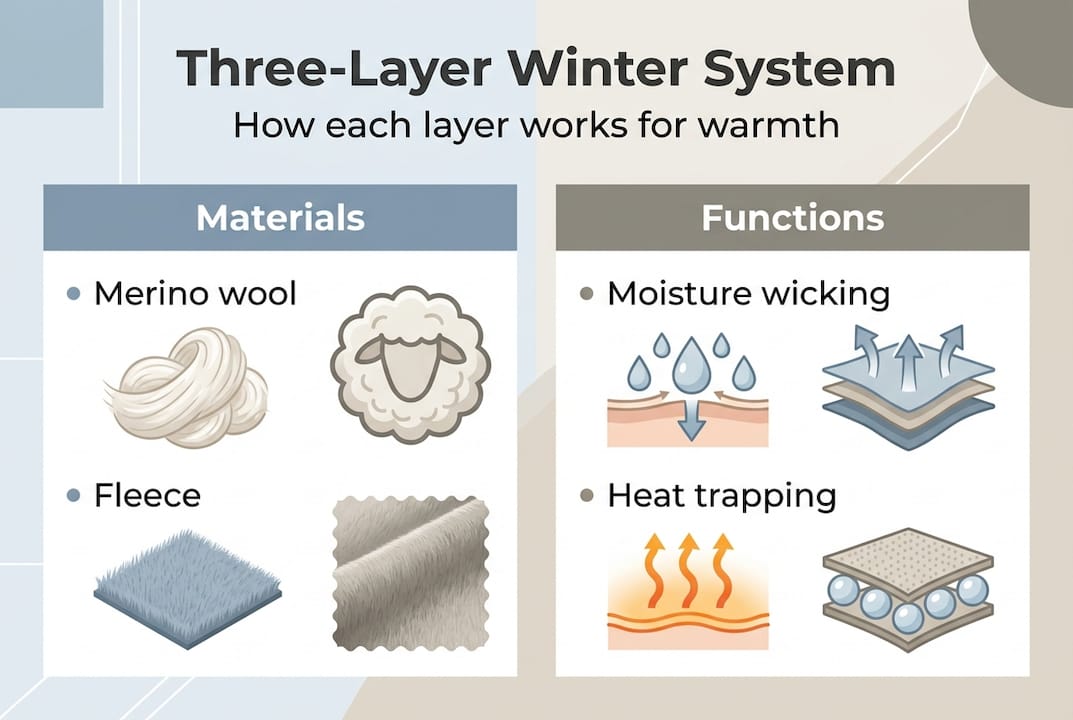
Winter clothing layering follows a three-layer system: the base layer wicks moisture away from your skin, the mid layer traps heat, and the outer layer protects you from wind, rain, and cold air. Every effective winter outfit builds from this foundation. Skip one layer and the whole system breaks down.
Here’s a quick breakdown of what belongs in each layer:
| Layer | Purpose | Best materials | Examples |
|---|---|---|---|
| Base | Moisture management | Merino wool, polyester | Thermal shirts, fitted long-sleeves |
| Mid | Insulation | Fleece, wool, down | Hoodies, sweaters, cardigans |
| Outer | Wind and water protection | Nylon, waxed cotton, wool | Parkas, overcoats, puffers |
The right fabrics matter more than you think
The base layer fabric should be merino wool or a synthetic like polyester for moisture-wicking. Keep the fit snug and stick to neutral colors so it layers invisibly under everything else. Avoid cotton at this layer. Cotton absorbs sweat and holds onto it, which makes you colder faster.
For the mid layer, sweaters, fleeces, hoodies, cardigans, or puffers all work well for trapping heat. Keep the fit slim and choose breathable materials. A wool crewneck, a heavyweight hoodie, or a shacket (shirt-jacket hybrid) are excellent options here. They add warmth without looking overdone.
The outer layer should be wind and water resistant. Think wool overcoats for cleaner looks, puffer jackets for maximum warmth, or bombers for a more casual edge. The outer layer also needs to be structured enough to maintain good proportions over what you’re wearing underneath.
You can read more about choosing the right pieces in this guide to comfort and style clothing types for winter, or explore a curated list of outdoor essentials for winter to start building your kit.
Building a minimalist winter wardrobe
For a minimalist versatile wardrobe, stick to neutrals: black, gray, navy, and camel. Aim for two thermals, two sweaters, a hoodie, a bomber, a puffer, and an overcoat. That’s it. Eight pieces that rotate endlessly with one another. You’ll also find solid outdoor layering tips worth reading before your first real cold-weather outing.
Key principles to keep in mind when selecting winter essentials:
- Choose quality over quantity. Two great sweaters beat five mediocre ones.
- Neutral colors are non-negotiable. They make every combination work.
- Avoid patterns at the base layer. Save texture and pattern for the mid layer only.
- Every piece should work with at least three others in your closet.
Pro Tip: Invest in two or three truly multipurpose pieces, like a heavyweight hoodie that works as a mid layer under a coat or as a standalone on mild days. Pieces that serve double duty cut your wardrobe needs in half.
Step-by-step: How to layer winter clothing for warmth and style
With your wardrobe set, it’s time to layer up. Here’s how to do it right, every time.
Layering by temperature
The right layer combination depends on the weather outside. For mild days around 15 to 20 degrees Celsius, a T-shirt with a sweatshirt and a bomber is enough. For harsh cold between 0 and 10 degrees Celsius, go with a thermal base, a heavy knit mid layer, and a puffer. In freezing conditions, you need merino wool against your skin, fleece over that, and a parka as the outer shell. Following these layering for warmth principles ensures you’re dressed correctly, not just bundled up randomly.
The step-by-step layering sequence
Follow this order every time you dress for cold weather:
-
Put on your base layer first. This should sit against your skin with no gap. It should feel snug but not tight. Merino wool is ideal because it regulates temperature naturally and doesn’t hold odors.
-
Add your mid layer. This is where warmth actually comes from. A heavyweight hoodie, wool sweater, or fleece jacket traps the warm air your body generates. Keep it relaxed but not oversized.
-
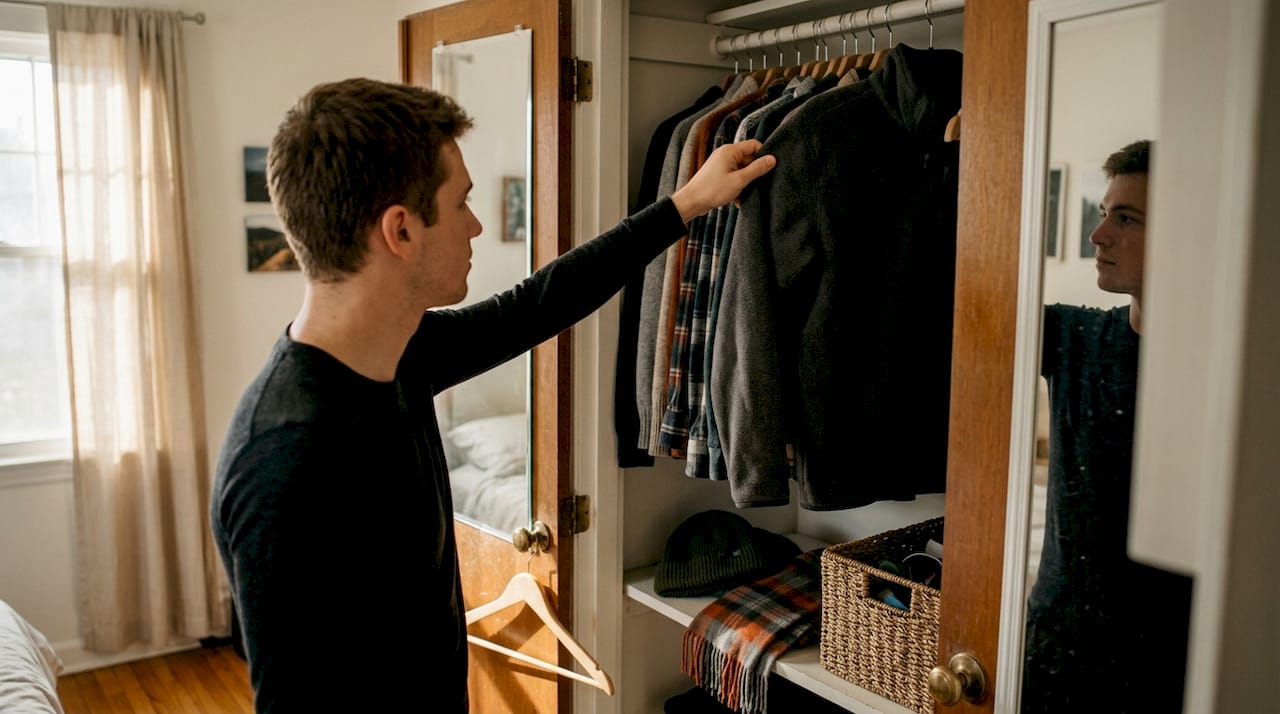
Check the fit before adding the outer layer. Stand in front of a mirror. Make sure your mid layer doesn’t bunch, that your base layer isn’t visible at the cuffs or collar (unless intentionally), and that movement feels unrestricted.
-
Finish with the outer layer. Your jacket or coat should close comfortably over your mid layer without pulling at the shoulders. If it feels tight, the outer layer is too small or the mid layer is too thick.
-
Adjust for the day. Consider whether you’ll be going in and out of heated buildings. If so, choose a mid layer you can easily remove and carry.
Exploring minimalist layering styles gives you solid visual references to match these steps with real outfits.
The critical moisture warning
Never use cotton as your base layer in serious cold. Moisture pulls heat 25 times faster when fabric is wet. Synthetics and merino wool regulate body heat far better than cotton because they keep moisture moving away from your skin rather than trapping it.
The fit rules are equally important for style: fitted base, relaxed mid, structured outer. Go thin to thick from skin outward. Cap visible layers at three. Use texture and contrast between layers to add visual interest without adding more pieces.
You can build on this with a full collection of effortless casual winter outfits for men that apply these rules directly.
Pro Tip: Plan your outfit the night before based on the next day’s weather forecast. Doing this removes morning guesswork and helps you make smarter fabric and weight choices in advance.
Troubleshooting: Common layering mistakes and how to avoid them
Even with the best intentions, some layering approaches lead to discomfort or awkward style. Here’s how to dodge common traps.
The most frequent mistakes men make
Most layering failures come down to three core errors. First, choosing the wrong fabric at the base layer, usually cotton, which holds moisture against the skin. Second, wearing too many layers at once and ending up with a silhouette that looks stuffed rather than styled. Third, choosing oversized pieces throughout, which creates shapeless, unflattering bulk.
Avoid bulky bases, too many patterns or colors, and oversized fits. Focus on proportion and quality. One well-chosen mid layer does more work than three mismatched ones stacked on top of each other.
Here’s a practical comparison to reference when building any winter outfit:
| What to do | What to avoid |
|---|---|
| Fitted merino or polyester base | Loose cotton T-shirt as base |
| One solid mid layer with texture | Two or three competing mid layers |
| Structured outer that closes properly | Oversized coat with no shape |
| Neutral palette with one accent piece | Mixing multiple patterns and colors |
| Thin to thick fabric progression | Thick fabric under thin fabric |
Adjusting for body type
Body type matters more than most men realize when layering. If you’re lean or slim, use structure and turtlenecks to add visual weight. A well-fitted overcoat gives you presence without looking padded. If you’re broad or heavyset, vertical lines work in your favor. Avoid chunky knits and oversized silhouettes that add horizontal volume. If you’re on the shorter side, use contrast between layers to create visual breaks that can actually add the appearance of height. Keep the number of visible layers to two or three maximum.
Some other common mistakes worth fixing immediately:
- Starting too warm and sweating through your base layer within the first hour
- Wearing a thick outer layer with nothing underneath, leaving you either too hot or too cold depending on location
- Ignoring sleeve length, which leads to awkward gaps between layers when you move your arms
- Mixing fabrics that don’t breathe together, which traps moisture and makes the entire system fail
Check out our breakdown of casual layering trends or revisit why layering matters for the full reasoning behind every one of these principles.
Finishing touches: Accessories and how to adapt your look
With the basics perfected, completing the look is all about smart details and seasonal flexibility.
Why accessories matter more than you think
Most men treat accessories as an afterthought. That’s a mistake. In winter layering, a well-chosen beanie, scarf, or pair of gloves does two things at once: it seals in warmth and it sharpens the overall look without adding bulk to your main outfit.
Beanies, scarves, gloves, and wool socks are the four essentials for fine-tuning warmth at the edges. These are also the pieces you can swap out most easily to shift the feel of an outfit.
Here’s how to choose each one with intention:
- Beanie: Go with a fitted ribbed knit in a neutral tone. Avoid oversized slouchy styles unless your outer layer is equally relaxed in cut.
- Scarf: A chunky wool scarf in navy or camel adds texture and warmth without overwhelming a clean coat. Keep it loosely wrapped for a more polished look.
- Gloves: Leather gloves read as sharp and refined. Knit gloves are more casual. Match to your outer layer rather than your mid layer.
- Socks: Wool socks are not optional in real cold. They regulate foot temperature in a way that synthetic socks simply can’t match, especially if you’re wearing boots or heavier shoes.
Adapting your layers to activity and temperature
The biggest advantage of the three-layer system is flexibility. When you move between indoor and outdoor environments, you can add or remove a single layer rather than changing your whole outfit. If you’re heading from a heated office to a cold commute and back again, your outer layer does all the work. Keep it removable and packable where possible.
Statistic callout: Wet fabric conducts heat away from the body 25 times faster than dry fabric. This is why moisture management at the base layer isn’t just a comfort issue. It’s a temperature regulation issue that affects your entire outfit’s performance.
Use these layering principles to build looks that work all day, not just for the first ten minutes after leaving the house. A comprehensive winter fashion essentials checklist is a great starting point if you want to cross-reference what you already own.
What most men miss: Minimalist mastery over winter layering
Here’s the uncomfortable truth most style guides won’t say directly. The majority of men’s winter wardrobes are cluttered, inconsistent, and full of pieces that don’t actually work together. The instinct when it gets cold is to buy more. Another jacket. Another sweater. Another “just in case” coat. The closet gets full, but somehow nothing works.
The real answer is fewer, better pieces. A capsule wardrobe for winter built around eight to ten neutrals does more stylistic work than thirty random pieces ever could. When everything matches, getting dressed becomes effortless. You stop thinking about what goes with what and start thinking about how you feel.
Minimalism in layering isn’t about sacrifice. It’s about precision. One heavyweight hoodie in a true neutral does more work than four hoodies in competing shades of blue. One structured overcoat in camel or charcoal covers more occasions than three mid-weight jackets that each half-work.
The men who consistently look sharp in winter aren’t buying more. They’re choosing better, wearing what they own with confidence, and understanding that warmth and style aren’t competing priorities. They’re the same goal achieved through the same smart decisions.
Ready to upgrade your winter layering game?
Practical wisdom is only half the journey. The next steps are up to you. The three-layer system, the right fabrics, the minimalist approach, and a handful of well-chosen accessories are all you need to dress well and stay genuinely warm from November through March.

At Smoked Times, we build exactly the kind of pieces this system demands. Heavyweight basics, clean minimal design, durable fabrics, and versatile fits that work as base layers, mid layers, and everything in between. No loud branding. No trend chasing. Just clothes that do the job every single day. Explore more winter layering tips and find the essentials that make this whole system work from the ground up.
Frequently asked questions
What is the best base layer for winter layering?
Merino wool or synthetic polyester is best, as both wick moisture efficiently and dry fast. Avoid cotton at the base layer entirely.
How many layers should men wear in winter?
Three layers work best for most conditions. The three-layer system covers base, mid, and outer, giving you warmth, moisture control, and weather protection together.
How do you layer for extreme cold vs. mild winter?
In mild weather, a T-shirt, sweatshirt, and bomber is plenty. In extreme cold, thermal base, fleece, and parka is the appropriate combination.
Which accessories are essential for winter layering?
A beanie, scarf, quality gloves, and wool socks seal in warmth at the edges and complete the look without adding bulk to your main outfit.
How can layering be stylish and not look bulky?
Use a fitted base, relaxed mid, and structured outer with no more than three visible layers. This keeps proportions clean and the overall look intentional rather than stuffed.