


Minimalist Fashion Explained: Essentials for Timeless Style
TL;DR:
- Minimalist fashion is about intentional, versatile, high-quality essentials that enhance personal style.
- It promotes sustainability by reducing waste, supporting ethical brands, and prioritizing durable materials.
- The style emphasizes thoughtful accessorizing and layering for personal expression within a simplified wardrobe.
Minimalist fashion gets misunderstood constantly. Most people assume it means owning barely anything or dressing in a way that erases personality. The reality is the opposite. Minimalist fashion is about making intentional choices, selecting versatile, high-quality, comfortable essentials that work harder and last longer than a closet stuffed with disposable pieces. It sits at the intersection of personal style, smart consumption, and genuine sustainability. If you’ve ever felt overwhelmed by your wardrobe yet still felt like you had nothing to wear, minimalist fashion offers a clear, practical path forward.
Table of Contents
- Understanding minimalist fashion: Principles and misconceptions
- Core elements: Building a minimalist wardrobe
- How to style minimalist fashion: Accessories and personal expression
- Sustainability and long-term value: Why minimalist fashion matters
- Minimalist fashion beyond the basics: Lessons and pitfalls
- Shop sustainable minimalist essentials
- Frequently asked questions
Key Takeaways
| Point | Details |
|---|---|
| Intentional choices | Minimalist fashion is defined by selecting versatile, quality pieces with purpose. |
| Sustainability first | Eco-friendly fabrics and lasting essentials reduce environmental impact and waste. |
| Timeless style | Minimalist wardrobes focus on comfort, neutral colors, and enduring design. |
| Personal expression | Accessories and thoughtful styling add uniqueness without clutter or excess. |
| Long-term value | Investing in minimalist essentials saves money and helps the planet over time. |
Understanding minimalist fashion: Principles and misconceptions
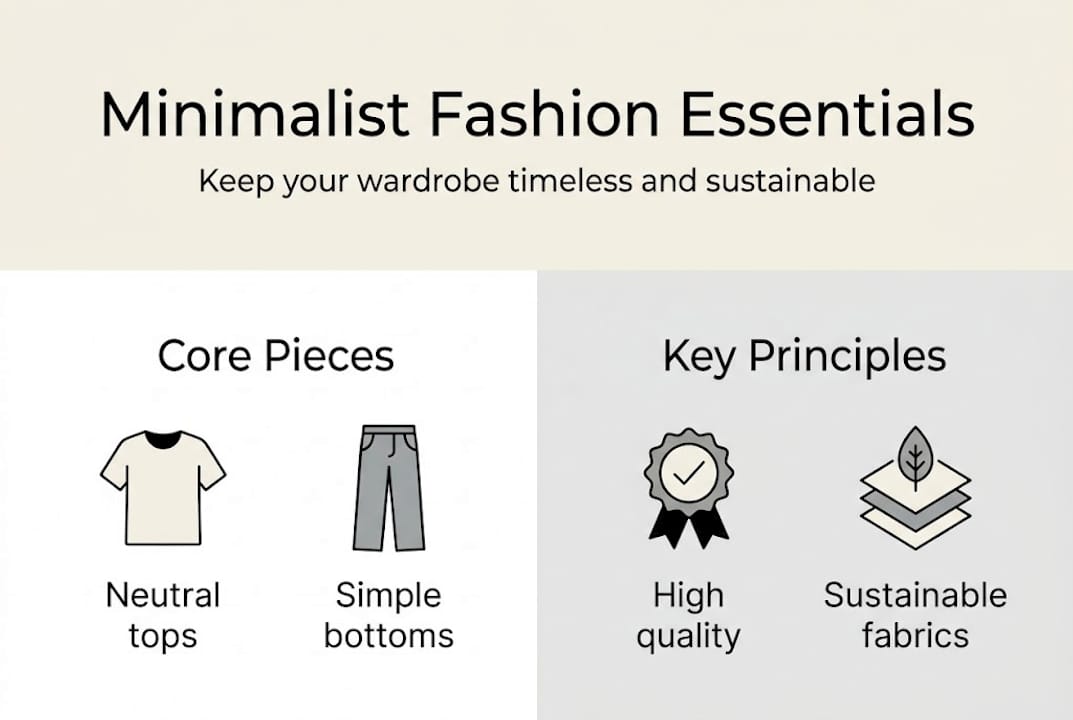
Minimalist fashion starts with one simple idea: every piece you own should earn its place. That doesn’t mean bland or boring. It means choosing items with intention, pieces that serve multiple purposes, fit well, feel comfortable, and age gracefully. The guiding principles are versatility, quality, comfort, and timeless design. These aren’t arbitrary rules. They’re the foundation of a wardrobe that actually works for your life.
One of the biggest misconceptions is that minimalism equals restriction. People picture a closet with five identical gray shirts and nothing else. But real minimalist fashion is about editing, not emptying. You keep what you love and what works, and you remove what creates noise. The result is a wardrobe that feels genuinely yours.
Compare that to a maximalist approach:
| Feature | Minimalist wardrobe | Maximalist wardrobe |
|---|---|---|
| Number of items | Fewer, curated pieces | Many, varied pieces |
| Decision fatigue | Low | High |
| Cost over time | Lower (fewer replacements) | Higher (frequent purchases) |
| Environmental impact | Reduced waste | Higher consumption |
| Styling flexibility | High (mix and match) | Variable |
The minimalist approach wins on sustainability too. As noted in resources on sustainable apparel options, minimalist fashion emphasizes sustainability through high-quality, long-lasting essentials. That philosophy directly counters the fast fashion cycle that floods landfills with short-lived clothing.
Some other myths worth clearing up:
- Myth: Minimalist fashion is expensive. Reality: You spend less over time because pieces last longer.
- Myth: It’s only for certain body types or aesthetics. Reality: Minimalism adapts to every body and personal style.
- Myth: You can’t express personality. Reality: Restraint in quantity creates space for quality expression.
“The best wardrobe is the one that makes you feel confident every single day, not the one with the most options.”
If you’re curious where current minimalist comfort trends are heading, the emphasis is firmly on clean silhouettes and breathable, durable fabrics. And for real-world outfit inspiration, casual minimalist outfits show just how expressive simplicity can be.
Core elements: Building a minimalist wardrobe
With principles defined, it’s time to see what actually goes into creating a minimalist wardrobe. The good news is that the list is shorter than you’d expect, and every item on it punches above its weight.
Here are the core essentials most minimalist wardrobes are built around:
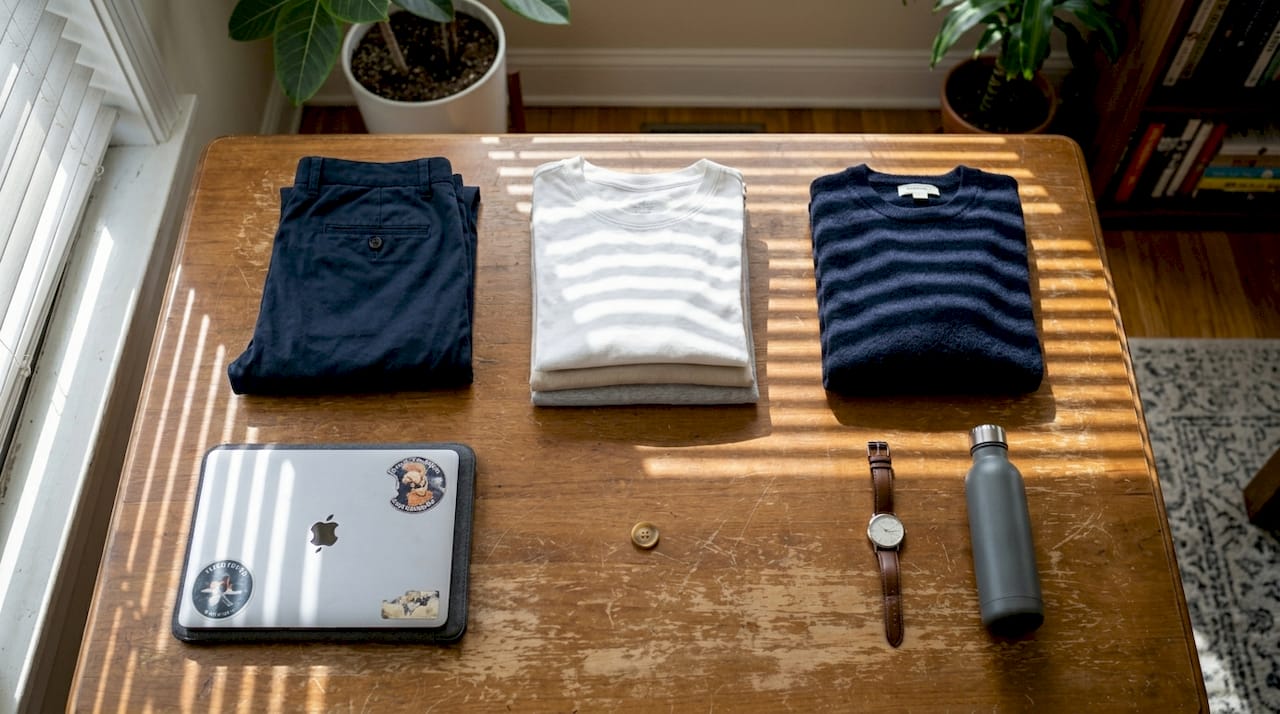
- Heavyweight cotton T-shirts in neutral tones (white, black, gray, navy)
- Well-fitted chinos or trousers that transition from casual to smart-casual
- A quality hoodie or sweatshirt for layering across seasons
- A versatile outerwear piece like a bomber jacket or structured coat
- Clean, simple footwear in one or two neutral colorways
- Basics for cold weather such as beanies or scarves in natural tones
Neutral colors are the backbone of this system. They mix and match without clashing, which multiplies your outfit options without multiplying your wardrobe. A white tee pairs with chinos, dark denim, or joggers. A gray hoodie works under a jacket or on its own. This is intentional versatility in action.
Materials matter enormously here. As confirmed by research on sustainable fabrics, sustainable fabrics are the foundation of eco-friendly minimalist style. Organic cotton, Pima cotton, and recycled blends lead the pack because they’re soft, durable, and gentler on the planet. Choosing these materials means your pieces stay in rotation longer before showing wear.
| Material | Key benefit | Best for |
|---|---|---|
| Organic cotton | Breathable, chemical-free | Everyday tees, basics |
| Pima cotton | Extra soft, long-lasting | Elevated basics, polos |
| Recycled polyester | Reduces plastic waste | Outerwear, activewear |
| Linen blends | Lightweight, eco-friendly | Warm-weather pieces |
For travel, a minimalist wardrobe really proves its value. A smart minimalist travel packing approach relies on exactly these pieces: items that layer, mix, and adapt across climates. And if you want a full framework, a solid capsule wardrobe guide walks through the process step by step.
Adopting sustainable clothing practices alongside a minimalist mindset amplifies the positive impact on both your wallet and the environment.
Pro Tip: Before buying any new piece, ask yourself if it works with at least three items you already own. If not, skip it. This single habit eliminates most impulse purchases.
How to style minimalist fashion: Accessories and personal expression
Once your basics are established, styling is where minimalist fashion comes alive. Accessories are the lever you pull to make a simple outfit feel intentional, personal, and interesting. They add texture, color, and personality without cluttering the overall look.
The key insight here is that fewer, better accessories outperform a pile of cheap ones every time. As explored in depth in how accessories elevate minimalist style, minimalist accessories enhance style without overwhelming the outfit. One well-chosen watch, a quality leather belt, or a textured knit scarf can transform a plain tee and chinos into something that looks completely put-together.
Here are the best accessories for a minimalist wardrobe:
- A classic watch in a neutral metal or leather strap
- A quality leather or canvas bag that works day and evening
- Versatile scarves in wool or cotton blends for layering
- Simple sneakers or leather shoes that complement most outfits
- A minimal cap or beanie in a neutral tone
- A leather or canvas belt that pairs with both casual and smart outfits
Layering is another underrated styling tool in minimalist fashion. A lightweight tee under an open shirt, topped with a hoodie, creates depth and visual interest without adding complexity. Mixing textures works the same way. A smooth cotton tee against a textured knit scarf creates contrast that makes the look feel deliberate.
For more ideas on this, versatile minimalist accessories break down which pieces work hardest across seasons and outfit combinations.
Pro Tip: Choose accessories in the same neutral family as your core wardrobe. A brown leather watch and tan canvas bag, for example, create a cohesive palette without effort.
Personal expression in minimalist fashion comes through the how, not the how much. The fit, the fabric quality, the subtle details in a collar or cuff, these are what communicate who you are without shouting.
Sustainability and long-term value: Why minimalist fashion matters
Minimalism isn’t just about personal style. It’s deeply connected to sustainability, and that connection is worth taking seriously.
Every piece of fast fashion has an environmental cost: water use, chemical dyes, carbon emissions from shipping, and eventual landfill waste. Buying fewer, better pieces directly reduces that footprint. When you choose a heavyweight organic cotton tee over a $10 throwaway version, you’re not just getting better quality. You’re reducing demand for the cycle that makes cheap, wasteful clothing the norm.
Here’s what a minimalist wardrobe does for sustainability:
- Reduces textile waste by keeping pieces in active rotation longer
- Supports ethical production by favoring brands that prioritize fair labor and eco-friendly materials
- Lowers carbon footprint through fewer purchases and less shipping
- Promotes conscious consumption by shifting focus from quantity to quality
- Improves personal well-being by reducing decision fatigue and closet clutter
The financial argument is equally compelling. A quality piece that lasts five years costs far less per wear than a cheap alternative replaced three times in that same period. Minimalism is actually the economical choice when you calculate cost per wear.
“Choosing quality over quantity isn’t just better for your wardrobe. It’s better for the world.”
As outlined in this eco-friendly basics guide, embracing sustainable apparel is central to minimalist principles. The two philosophies reinforce each other naturally. Minimalism encourages you to buy less and choose better. Sustainability gives you the criteria to make those better choices.
Exploring eco-conscious apparel options is a practical next step for anyone ready to align their wardrobe with their values.
Minimalist fashion beyond the basics: Lessons and pitfalls
Here’s what most minimalist fashion guides won’t tell you: the biggest pitfall isn’t buying too much. It’s buying “minimal” pieces that are low quality. People hear the advice to buy fewer items and immediately try to do it on a tight budget, which just recreates the fast fashion problem with fewer pieces. Quality cannot be compromised. A minimalist wardrobe built on flimsy basics fails the entire philosophy.
Another common mistake is neglecting comfort in favor of aesthetics. Minimalism should feel good to wear, not like a uniform you endure. If a piece doesn’t fit your body well or makes you uncomfortable, it doesn’t belong in a minimalist wardrobe regardless of how clean it looks.
The contrarian insight worth considering: minimalism actually fosters more creativity, not less. When you remove the noise of too many choices, you start thinking more carefully about proportion, texture, and detail. You become a better dresser because you’re paying attention.
A deep dive on sustainability reveals that the most successful minimalist wardrobes are built slowly, one great piece at a time. Start small, resist trends, and prioritize personal fit and joy above everything else.
Shop sustainable minimalist essentials
Building a minimalist wardrobe becomes much simpler when you start with pieces designed exactly for that purpose.
At Smoked Times, every item is built around the principles we’ve covered here: durable fabrics, clean silhouettes, minimal branding, and genuine comfort for repeat wear. Our organic retro tees in Pima cotton are a strong starting point for anyone serious about building a wardrobe that lasts. Heavyweight, well-constructed, and versatile enough to anchor dozens of outfits. Tried one of our pieces already? We’d love to hear from you. Share your experiences and help others make smarter, more intentional wardrobe decisions.
Frequently asked questions
What counts as minimalist clothing?
Minimalist clothing consists of versatile, high-quality, comfortable items in neutral colors that can be mixed and matched easily. Think neutral tones and adaptable fits as the baseline.
Is minimalist fashion boring or restrictive?
Minimalist fashion is highly expressive. It prioritizes quality and personal style while cutting clutter and fast trends. Intentional choices actually foster more creativity, not less.
How does minimalist fashion support sustainability?
Minimalist wardrobes use fewer, high-quality pieces and eco-friendly materials, reducing waste and environmental impact. Eco-friendly basics are central to this philosophy.
What fabrics are best for minimalist clothing?
Organic cotton, Pima cotton, and recycled materials are ideal for minimalist wardrobes due to their sustainability and comfort. Sustainable fabrics strengthen the eco-friendly foundation of the style.
How can I add personality to minimalist outfits?
Mix textures, add versatile accessories, and layer thoughtfully to personalize minimalist style without sacrificing simplicity. Versatile picks make this process straightforward and enjoyable.