


T-Shirts in Casual Style: 70% Prefer Year-Round Comfort
Think T-shirts are just for summer? You might be surprised. Over 42% of consumers actually wear T-shirts year-round by smartly choosing fabrics and layering strategically. This guide will show you how to select and style T-shirts confidently across all seasons, balancing comfort with fashion-forward appeal. Whether you’re building a versatile wardrobe or refining your casual aesthetic, you’ll discover practical techniques to maximize T-shirt wearability throughout the year.
Table of Contents
- Understanding The Role Of T-Shirts In Casual Style
- Material And Fabric Considerations For Year-Round Wear
- Styling And Fit Variations Shaping Casual Aesthetics
- Seasonal Styling And Layering Strategies
- Common Misconceptions About T-Shirts
- Comparative Framework Of Casual Tops
- Practical Tips For Year-Round T-Shirt Styling
- Upgrade Your Casual Style With Our Year-Round T-Shirt Selection
- Frequently Asked Questions
Key Takeaways
| Point | Details |
|---|---|
| Evolution | T-shirts transformed from undergarments to essential casual staples that balance comfort and modern style. |
| Fabric Matters | Cotton weight and blend composition directly affect seasonal comfort and aesthetic versatility. |
| Layering Extends Use | Strategic layering techniques let you wear T-shirts comfortably in any weather condition. |
| Style Variations | Fit choices like slim or relaxed dramatically impact your overall casual look and comfort. |
| Year-Round Flexibility | Debunking myths reveals T-shirts work beyond summer with proper fabric and styling choices. |
Understanding the Role of T-Shirts in Casual Style
The foundational role of T-shirts extends far beyond their humble origins. Originally developed as military undergarments before becoming a global casual fashion staple, T-shirts now anchor wardrobes worldwide. Their rise reflects a shift in how we value clothing, prioritizing comfort and simplicity without sacrificing style.
What makes T-shirts indispensable is their remarkable adaptability. You can create minimal, clean looks or embrace trendy graphic designs depending on your mood and occasion. This versatility stems from their clean silhouette and neutral foundation, which pairs effortlessly with jeans, chinos, shorts, or layered under jackets and hoodies.
For fashion-forward young adults, T-shirts serve as the perfect layering base. They enable you to transition between seasons smoothly while maintaining your personal aesthetic. Consider these key advantages:
- Universal appeal across demographics and style preferences
- Effortless integration into multiple outfit formulas
- Cost-effective wardrobe foundation that maximizes outfit combinations
- Comfortable enough for all-day wear without restricting movement
The T-shirt’s staying power comes from meeting modern demands for both practicality and self-expression. Unlike more structured tops, T-shirts let you build looks that feel authentic while staying comfortable throughout your day.
Material and Fabric Considerations for Year-Round Wear
Fabric choice fundamentally determines whether your T-shirt works for you or against you. Cotton and blends dominate due to breathability, but understanding weight and composition helps you select shirts that perform across different climates and activities. Lightweight cotton excels in warm weather by allowing air circulation, while heavyweight cotton provides insulation during cooler months.
Blended fabrics combine cotton with polyester or other synthetics to enhance durability and reduce wrinkling. These cotton vs blends combinations offer practical benefits but may compromise breathability compared to pure cotton. Understanding this trade-off helps you choose based on your priorities, whether that’s easy care or maximum comfort.
Sustainability increasingly influences fabric decisions. Many consumers now seek organic cotton or recycled materials, aligning purchases with environmental values. Brands responding to this trend often highlight their cotton T-shirt fabric details and sourcing practices, making it easier for you to make informed choices.
Fabric weight deserves special attention for seasonal adaptability:
- Lightweight (3 to 4 oz): Ideal for summer heat and active wear
- Medium weight (5 to 6 oz): Versatile for spring, fall, and mild winter days
- Heavyweight (6+ oz): Perfect for layering in cold weather or standalone comfort
Pro tip: Feel the fabric between your fingers before buying. Quality cotton has a soft hand feel without being flimsy, while blends often feel smoother but less breathable. If shopping online, check the listed fabric weight in ounces to gauge seasonal suitability.
The right fabric transforms a basic T-shirt into a reliable wardrobe workhorse. Pay attention to how different materials feel against your skin and how they hold up after washing. This awareness ensures your T-shirts deliver comfort and longevity regardless of when you wear them.
Styling and Fit Variations Shaping Casual Aesthetics
Fit dramatically changes how a T-shirt looks and feels on your body. Slim and relaxed fits dominate young adult preferences, with slim fits accounting for 45% and relaxed fits 35% among urban consumers. These preferences reflect a balance between contemporary silhouettes and comfortable daily wear.
Your body type should guide fit selection. Slim fits flatter athletic or lean builds by following natural contours without clinging. Relaxed fits provide comfort for broader frames while creating a laid-back aesthetic that works across body types. Understanding the influence of T-shirt styles helps you make choices that enhance rather than hide your shape.
Color selection affects outfit coordination and wardrobe versatility. Neutral shades like white, black, gray, and navy serve as foundational pieces that pair with anything. These basics let you experiment with bolder colors in other garments without clashing. Meanwhile, statement colors in T-shirts can anchor an outfit when paired with neutral bottoms and layers.
Graphic T-shirts add personality but require thoughtful styling. 60% of fashion-forward young adults frequently wear graphic T-shirts for trend impact, yet balancing graphics with plain pieces prevents overwhelming your look. A graphic tee paired with solid jeans and a plain jacket maintains sophistication while expressing individuality.
Consider these styling guidelines for casual outfit types:
- Match T-shirt fit to your activity level and comfort needs
- Use color blocking by pairing bold tees with neutral layers
- Limit graphics to one statement piece per outfit
- Choose necklines (crew, V-neck, scoop) that complement your face shape
Did you know? Fit preferences vary by region and culture. Urban markets favor slimmer silhouettes, while suburban and rural areas often embrace relaxed fits. Understanding fit trends data and graphic T-shirt trends helps you align personal style with current movements.
Pro tip: Try on T-shirts and move around before buying. Raise your arms, sit down, and check if the hem stays in place. A well-fitted T-shirt should feel like a second skin without restricting movement or riding up during normal activities.
The intersection of fit, color, and pattern creates your signature casual aesthetic. Experiment with combinations to discover what makes you feel confident and comfortable, then build your wardrobe around those successful formulas.
Seasonal Styling and Layering Strategies
Layering transforms T-shirts from single-season garments into year-round essentials. Over 42% of consumers wear T-shirts year-round by adapting their layering approach to match weather conditions. This strategy maximizes wardrobe value while maintaining your casual aesthetic across seasons.
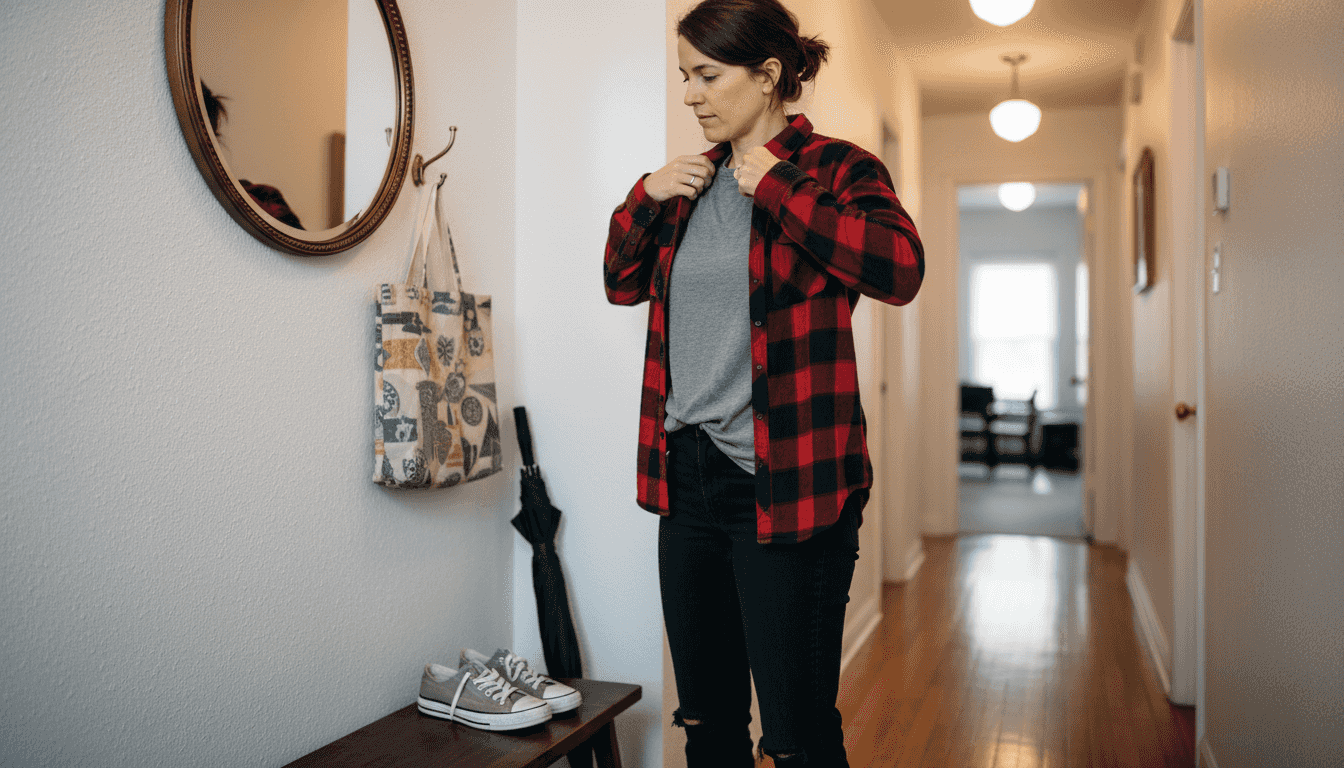
Spring and fall present ideal layering opportunities. Start with a medium weight T-shirt as your base, then add a lightweight hoodie or unbuttoned flannel shirt. This combination provides warmth without bulk, and you can easily remove layers as temperatures fluctuate throughout the day.
Winter demands more substantial layering. Use your T-shirt as the foundation, add a pullover or hoodie, then finish with a jacket or coat. This approach appears in comprehensive winter layering essentials guides, emphasizing how multiple thinner layers trap heat more effectively than one thick garment.
Summer styling focuses on fabric weight and breathability rather than layering. Choose lightweight cotton T-shirts that allow maximum air circulation. Light colors reflect heat better than dark shades, keeping you cooler during hot weather.
Effective layering requires attention to color and pattern coordination:
- Pair plain T-shirts with patterned outer layers for visual balance
- Use contrasting colors between layers to add depth without clashing
- Keep your base T-shirt fitted when layering to avoid bunching
- Match your T-shirt length to outer layers so hems align properly
Seasonal transitions benefit from the casual layering guide approach. During unpredictable weather, carry a lightweight layer you can add or remove as needed. This flexibility ensures comfort regardless of temperature swings.
Layering also lets you extend the life of seasonal pieces. A summer T-shirt becomes winter-appropriate when layered under heavier garments, while winter weight tees work in air-conditioned spaces during summer. This versatility reduces the need for separate seasonal wardrobes, saving money and closet space.
Common Misconceptions About T-Shirts
Several myths limit how effectively people use T-shirts in their wardrobes. Addressing these misconceptions opens up new styling possibilities and helps you maximize the T-shirt versatility myths often perpetuated in fashion discussions.
The biggest misconception claims T-shirts only work for summer. As we’ve seen, layering and fabric choices enable comfortable year-round wear. Dismissing T-shirts as warm weather clothing ignores their adaptability and forces unnecessary wardrobe limitations.
Another common belief suggests all T-shirts are basically the same. Fit and cut dramatically impact both style and comfort. A poorly fitted T-shirt looks sloppy regardless of quality, while a well-fitted one elevates even simple outfits. Paying attention to these details separates intentional casual style from appearing unkempt.
Many assume graphic T-shirts always look juvenile or overly casual. Strategic styling proves otherwise. When balanced with plain pieces and appropriate fits, graphic tees express personality while maintaining mature aesthetics. The key lies in proportion, not avoiding graphics entirely.
Some people believe investing in quality T-shirts wastes money since they’re “just basics.” Quality fabric and construction actually extend garment life significantly. A well-made T-shirt maintains its shape and color through dozens of washes, ultimately costing less per wear than cheap alternatives that deteriorate quickly.
Debunking these misconceptions:
- T-shirts work in all seasons with proper fabric weight and layering
- Fit quality matters as much as fabric quality for appearance
- Graphic tees can be styled maturely when balanced thoughtfully
- Quality basics provide better value than cheap replacements
Understanding these realities helps you make smarter purchasing decisions and style T-shirts more effectively. Don’t let outdated assumptions restrict your wardrobe potential or limit your casual style expression.
Comparative Framework of Casual Tops
Comparing T-shirts with other casual tops clarifies their unique position in your wardrobe. Each option serves different needs, and understanding these distinctions helps you choose appropriately for various situations. 70% of young consumers prefer T-shirts for casual comfort, highlighting their dominant role in everyday wear.
Polos occupy a middle ground between T-shirts and button-downs. They provide slightly more formality than T-shirts while maintaining reasonable comfort. Polos suit business casual environments or situations requiring a polished appearance without full formality. However, they often feel stiffer and less breathable than quality T-shirts.
Button-downs represent the most formal casual option. They work well for dressier occasions or professional settings but sacrifice comfort and ease compared to T-shirts. The collar, buttons, and typically heavier fabric restrict movement and breathability, making them less ideal for active or all-day casual wear.
| Feature | T-Shirts | Polos | Button-Downs |
|---|---|---|---|
| Comfort Level | Highest | Moderate | Lower |
| Formality | Casual | Semi-Formal | Business Casual |
| Breathability | Excellent | Good | Fair |
| Layering Ease | Excellent | Good | Moderate |
| Versatility | High | Moderate | Moderate |
| Price Range | Low to Mid | Mid | Mid to High |
This comparison from casual tops comparison data reveals why T-shirts dominate casual wardrobes. Their combination of comfort, versatility, and affordability makes them unbeatable for everyday wear. Polos and button-downs serve specific purposes but cannot match T-shirts for general casual situations.
When building your wardrobe, consider examples of casual tops and how they complement each other. A balanced approach includes primarily T-shirts for daily comfort, a few polos for semi-formal needs, and select button-downs for dressier occasions. This strategy ensures appropriate options without overinvesting in less-worn pieces.
Understanding these distinctions prevents wardrobe gaps and helps you allocate your clothing budget effectively. T-shirts deserve the largest investment since you’ll wear them most frequently, while other options can be more selectively acquired based on your lifestyle needs.
Practical Tips for Year-Round T-Shirt Styling
Applying T-shirt knowledge effectively requires actionable strategies you can implement immediately. These practical tips translate theory into everyday styling success, helping you maximize comfort and style throughout the year.
-
Match fabric weight to your climate and planned activities. Use lightweight options for warm weather or active days, medium weight for transitional seasons, and heavyweight for cold weather layering.
-
Select fits that complement your body type and desired aesthetic. Try multiple styles to discover what works best rather than assuming one fit suits all situations.
-
Build a color foundation with neutral T-shirts first. Black, white, gray, and navy provide maximum versatility, then add accent colors that reflect your personal style.
-
Practice layering combinations at home before wearing them out. Experiment with different layer orders and color combinations to discover what looks and feels best.
-
Balance graphic and plain T-shirts in your wardrobe. Aim for a 1:3 ratio of graphic to plain if you prefer bold statements, or 1:5 for more understated style.
-
Invest in quality over quantity. Three well-made T-shirts outlast and outperform ten cheap ones, providing better value and consistent comfort.
-
Rotate T-shirts regularly to extend their lifespan. Wearing the same shirt repeatedly accelerates wear, while rotation distributes use across your collection.
Pro tip: Keep a lightweight T-shirt and hoodie in your car or bag during transitional seasons. Temperature swings catch you unprepared less often when you have quick layering options available.
These strategies align with comprehensive choosing casual wear tips found in detailed guides. Implementation matters more than knowledge, so start applying one tip at a time until these practices become automatic.
Seasonal planning also improves T-shirt utilization. Before each season, assess your collection and identify gaps. Do you need more lightweight options for summer? Are your winter layering pieces sufficient? Proactive planning prevents last-minute purchases and ensures your wardrobe meets actual needs rather than impulse wants.
Remember that personal style evolves over time. Regularly evaluate what works and what doesn’t, then adjust your approach accordingly. This ongoing refinement process keeps your wardrobe aligned with your current lifestyle and aesthetic preferences.
Upgrade Your Casual Style with Our Year-Round T-Shirt Selection
Ready to put these strategies into action? Our curated collections make building a versatile T-shirt wardrobe effortless. We’ve designed selections specifically for year-round wear, balancing comfort with fashion-forward style that suits modern casual aesthetics.
Explore our winter fashion checklist to discover how T-shirts integrate into cold weather layering systems. Our guides detail practical combinations that keep you warm without sacrificing style. For transitional seasons, check out winter layering trends that show how strategic layering extends T-shirt wearability. Find complete outfit inspiration in our casual outfit guide, featuring real combinations you can recreate immediately.
Frequently Asked Questions
Can I really wear T-shirts comfortably in winter?
Absolutely. Use medium to heavyweight T-shirts as base layers under hoodies, pullovers, and jackets. This layering approach traps body heat effectively while maintaining the comfort T-shirts provide. Choose cotton blends for added warmth retention.
How should I care for cotton T-shirts to maintain quality?
Wash in cold water to prevent shrinkage and color fading. Turn shirts inside out before washing to protect exterior finishes. Avoid high heat drying, which damages fibers over time. Air drying or low heat tumbling extends T-shirt lifespan significantly. For detailed guidance, see caring for cotton T-shirts.
What T-shirt fit works best for different body types?
Athletic or lean builds benefit from slim fits that highlight natural shape. Broader or larger frames find relaxed fits more comfortable and flattering. Medium builds can wear either depending on desired aesthetic. Always prioritize comfort over trends when selecting fit.
How do I layer T-shirts for unpredictable spring weather?
Start with a fitted T-shirt base, add a lightweight hoodie or cardigan you can remove easily. Carry an extra layer in your bag for temperature drops. Choose medium weight T-shirts that work alone or layered, maximizing versatility throughout the day.
Are graphic T-shirts appropriate for mature casual style?
Yes, when styled thoughtfully. Pair graphic tees with plain bottoms and neutral outer layers. Choose graphics with subtle designs or meaningful themes rather than loud, busy patterns. Balance is key to maintaining sophistication while expressing personality through your clothing choices.