


The Role of Texture in Apparel: Style and Comfort
TL;DR:
- Texture plays a vital role in apparel by shaping visual, tactile, and functional qualities that influence style and comfort. It combines visual surface and hand feel, affecting color perception, silhouette, and sensory experience, thus guiding wardrobe choices and design. Understanding, measuring, and deliberately pairing textures enhance garments’ aesthetic appeal, performance, and wearer satisfaction.
Most fashion conversations obsess over color, cut, and silhouette. The role of texture in apparel rarely gets the same attention, even though it shapes how a garment looks, moves, feels against your skin, and communicates your personal style before you say a word. Texture is the difference between a T-shirt that feels like a second skin and one that scratches by noon. It is the reason a chunky-knit sweater reads as cozy and relaxed while a sleek silk blouse signals polish. Understanding texture gives you a genuine edge, whether you are building a wardrobe or designing one from scratch.
Table of Contents
- Key takeaways
- The role of texture in apparel, defined
- How texture shapes aesthetics
- Texture’s impact on comfort and performance
- Measuring texture: beyond hand feel
- Selecting and pairing textures for real wardrobes
- My honest take on texture and why it matters more than most admit
- Explore texture-first essentials at Smokedtimes
- FAQ
Key takeaways
| Point | Details |
|---|---|
| Texture is two things at once | Every fabric has both a tactile feel and a visual surface that together define its character. |
| Texture modifies color | Smooth and shiny fabrics intensify color; matte and textured surfaces tone it down. |
| Comfort is structural | Fabric texture directly affects moisture management, thermal regulation, and how a garment feels across a full day. |
| Measurement goes beyond touch | Reliable texture evaluation combines friction testing and acoustic emission data for accurate results. |
| Layering textures is a skill | Pairing contrasting textures builds outfit depth and avoids the flat, one-note look. |
The role of texture in apparel, defined
Before you can use texture with confidence, you need to separate two concepts that are easy to confuse. Fabric texture combines tactile hand feel and visual surface depth, shaped by fiber type, yarn construction, weaving or knitting structure, and finishing treatments. That means texture is never just one thing.
Tactile texture is what you feel. Run your hand across a waffle-knit cotton and you notice the raised ridges. Touch a piece of brushed fleece and it feels soft and almost furry. The sensory words here are specific: smooth, rough, grainy, nubby, silky, scratchy, fuzzy. Tactile texture is physical.
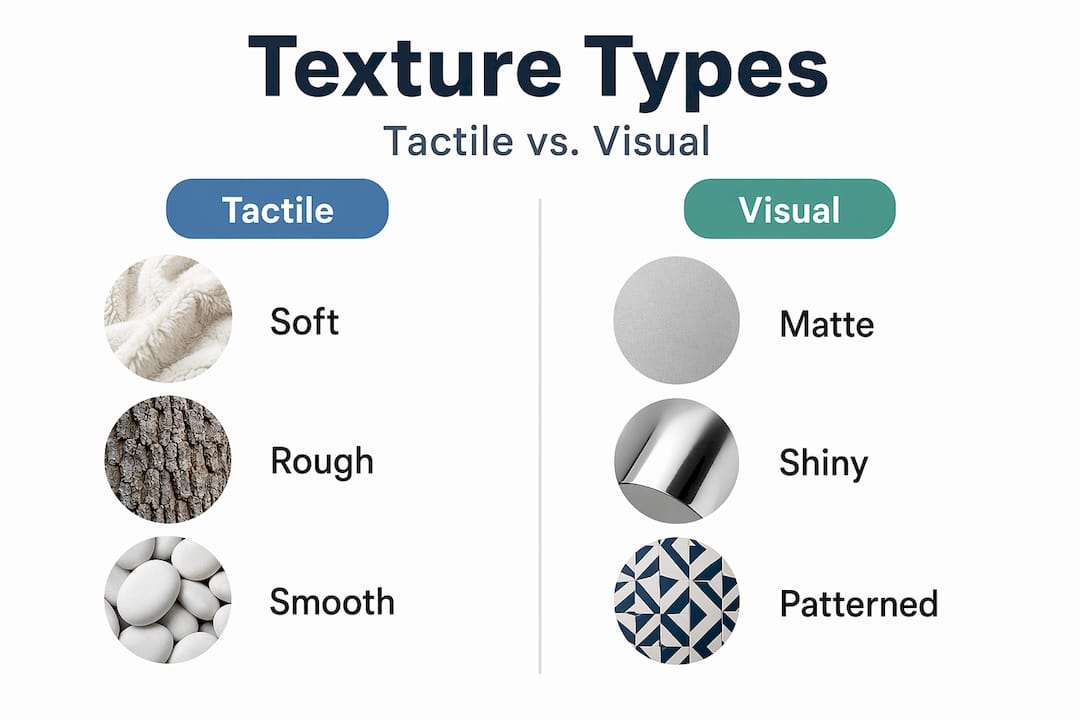
Visual texture is what you see. A fabric can appear rough on camera but feel smooth to the touch, or look flat but reveal a subtle sheen under light. Visual texture comes from surface pattern, weave depth, and the way a fabric interacts with light. A jacquard fabric, for instance, has a pattern woven directly into the structure, creating shadows and highlights that read as texture without necessarily changing the hand feel dramatically.
What creates both? Four factors work together:
- Fiber: Natural fibers like linen have inherent surface variation. Synthetic fibers like polyester tend toward uniformity but can be engineered for specific textures.
- Yarn structure: Twisted yarns create denser surfaces. Loosely spun or looped yarns produce softer, more irregular textures like terry cloth.
- Weave or knit construction: A plain weave sits flat; a twill weave like denim has diagonal ridges; a knit structure like ribbing has vertical channels that stretch and recover.
- Finishing: Processes like sanding, brushing, embossing, or coating alter surface texture after the fabric is constructed. A sanded poplin feels softer than its unfinished version, even with identical fiber and weave.
Understanding where texture comes from lets you evaluate fabric with purpose rather than instinct alone.
How texture shapes aesthetics
Texture does not just make clothes feel different. It actively changes how they look on a body, and that shift can be dramatic.
Smooth, clingy fabrics like jersey or charmeuse follow body contours closely. This works in your favor if you want to highlight shape, but it also means every contour becomes visible. Rougher or more structured fabrics like tweed, boucle, or heavy canvas add volume and stand away from the body slightly, which softens lines and creates a more forgiving silhouette. This is not theory. It is why a fitted cotton T-shirt and an oversized woven cotton shirt made from the same color can read completely differently.
Smooth and shiny surfaces brighten colors while textured and matte surfaces soften or tone them down. A cobalt blue silk blazer reads as electric and bold. The same color in a linen blazer with a loose slub weave reads as relaxed and approachable. The color is identical on a hex chart. The texture rewrites the message.
Texture also carries style codes that operate almost below conscious awareness:
- Polished textures like smooth wool, taffeta, or fine poplin signal formality and precision.
- Relaxed textures like slubbed jersey, waffle knit, or raw-edge denim read as casual and unfussy.
- Bold textures like faux fur, velvet, or quilted nylon make a visual statement even in neutral colors.
- Soft textures like brushed fleece or modal jersey communicate approachability and comfort.
The practical application is direct. If you want a casual outfit to feel more intentional, swap a flat-finish piece for one with a subtle visual texture. A ribbed tank under a plain overshirt adds depth without changing the color story at all.
Pro Tip: When working with a monochromatic outfit, vary the textures in each piece. A single-color look built from matte, sheen, and knit textures reads as considered and sophisticated rather than flat or accidental.
Texture’s impact on comfort and performance
The way a fabric feels against your skin goes far deeper than rough versus smooth. Soft and pleasant textures link directly to comfort, security, and positive emotional response. That response is partly psychological but it is also physiological.
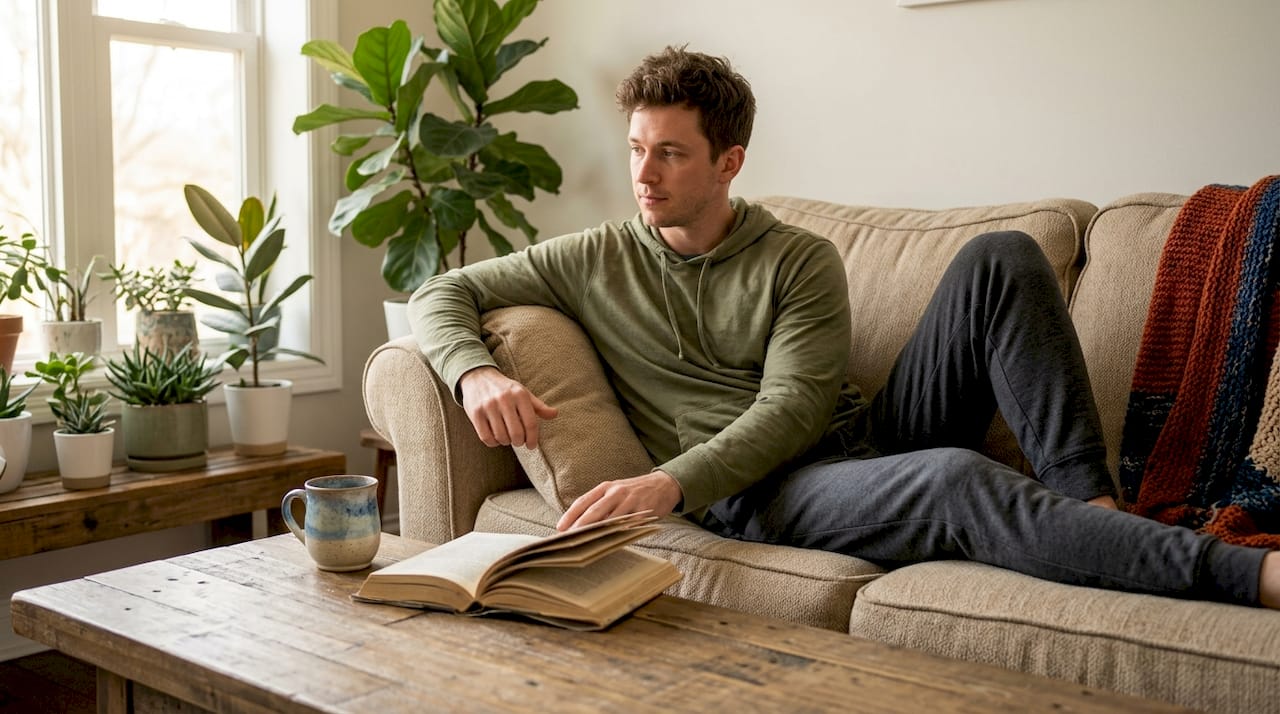
Your skin contains mechanoreceptors, sensory cells that fire in response to pressure, vibration, and surface features. Research shows that tactile perception varies with texture wavelength, meaning the spacing between surface features matters as much as how prominent they are. A fabric with closely spaced micro-ridges stimulates different receptors than one with widely spaced raised yarns, even if both register as “textured” to a casual touch. This is why two fabrics that seem similarly rough can feel completely different to wear for eight hours.
Performance-oriented texture goes beyond feel. Textured fabrics like meshes and piques create a stand-off distance from the skin that reduces cling when wet and promotes air circulation, which directly improves moisture management and thermal comfort. This is the structural reason why a moisture-wicking polo in a pique knit performs better in heat than a flat-knit alternative with the same fiber content. The texture itself is doing functional work.
For cold-weather applications, textures that trap air pockets, such as fleece, terry, or quilted materials, create insulating microclimates against the body. The air caught in those pockets holds heat, making the garment warmer without necessarily being heavier.
Pro Tip: When evaluating a fabric for everyday wear, hold it against the inside of your forearm for thirty seconds rather than just your palm. The forearm skin is more sensitive and will give you a more accurate read on how the fabric will feel across extended wear.
Measuring texture: beyond hand feel
Textile professionals know that “feels soft” is not a design specification. Standardized textile testing provides the objective methods designers need to achieve consistent results and communicate texture requirements across supply chains.
The science here has grown significantly. Predicting tactile smoothness and roughness now involves machine learning models trained on multiple mechanical properties simultaneously, including friction coefficients, geometric roughness parameters, hardness, and tensile strength. No single measurement tells the full story.
That last point is especially significant in manufacturing. Friction coefficient alone cannot fully discriminate between fabrics with different tactile qualities. Combining friction measurements with acoustic emission data, the subtle sounds fabrics make during surface contact, reveals distinctions that friction data misses entirely.
| Testing method | What it measures | Practical use |
|---|---|---|
| Friction coefficient | Surface resistance and slip | Baseline smoothness comparison |
| Acoustic emission | Sound produced during contact | Distinguishing fabrics with similar friction |
| Geometric roughness | Surface peak height and spacing | Predicting mechanoreceptor stimulation |
| Hardness and tensile testing | Fiber deformation under pressure | Modeling comfort under extended wear |
For designers, this means sourcing decisions made purely on tactile impression in a fabric showroom may not hold up in production. Requesting standardized test data alongside physical samples gives you a reference point that holds across batches and suppliers.
Pro Tip: Ask your fabric supplier for a AATCC test report alongside physical swatches. The data gives you a benchmark to compare against when reordering, so the texture your customers fell in love with stays consistent across production runs.
Selecting and pairing textures for real wardrobes
Understanding texture theoretically is one thing. Using it well in an actual outfit or collection is another. Here is a practical framework.
- Start with your silhouette goal. If you want to minimize volume, lean toward smooth, matte, and flat-weave fabrics. If you want to add presence or dimension, introduce structured or raised textures.
- Match texture intensity to the occasion. Loud textures like boucle, velvet, or patent finishes carry strong visual weight. Reserve them for pieces that are meant to lead. Quieter textures like fine rib, brushed cotton, or slub jersey work as supporting players.
- Use texture to enhance your color choices. If you are working with a muted or earthy palette, adding varied textures prevents the outfit from reading as dull. If you are working with saturated color, a flat texture lets the color itself carry the energy.
- Layer contrasting textures deliberately. A smooth denim jean under a chunky knit sweater over a flat cotton T-shirt works because each layer has a distinct texture register. All three share a casual vocabulary but they add visual complexity that makes the whole look intentional.
- Evaluate texture at point of purchase with purpose. When choosing textured fabrics, hold the fabric under the type of light you will wear it in. Natural light and retail fluorescents read texture very differently. Test drape by holding it against your body rather than laying it flat on a table.
When it comes to specific end uses, textures have proven performance territory. Performance polo shirts built from recycled pique fabrics combine visual texture with genuine moisture and UV management. For casual everyday wear, mid-weight slub jersey or waffle-knit cotton offers visual interest without sacrificing the softness needed for all-day comfort. Knowing how to select comfortable fabrics based on both hand feel and structural properties saves you from buying something that photographs well but wears poorly.
My honest take on texture and why it matters more than most admit
I have spent years looking at how people build wardrobes and why some pieces get worn repeatedly while others disappear after two outings. The answer, more often than people expect, comes back to texture.
What I have learned is that texture is the silent communicator. Color draws the eye first. Cut defines the shape. But texture determines whether you reach for a garment again. A piece that looks great in a mirror but feels wrong against your skin over time simply stops getting worn. It becomes a closet occupant. The inverse is equally true: a garment with even modest visual appeal but exceptional tactile texture, say a heavyweight brushed cotton hoodie that feels soft on the inside, gets worn until it falls apart.
I have also noticed that most people who say they are not “texture people” are actually responding to bad texture pairings, not texture itself. Wearing all smooth fabrics creates an outfit that reads as slick but strangely flat. Wearing all rough textures at once creates visual noise. The skill is in the contrast and the balance.
My honest recommendation is this: the next time you are evaluating a new piece for your wardrobe, close your eyes and feel it for ten seconds. If the tactile experience is neutral or pleasant, you are starting from a good place. If something feels off immediately, no amount of interesting color or silhouette will override that sensation across a full day of wear. Trust the touch.
— Denis
Explore texture-first essentials at Smokedtimes

Smokedtimes builds everyday basics with the kind of fabric weight and tactile quality that actually gets noticed. The heavyweight cotton T-shirts, ribbed polos, and brushed hoodies in the collection are chosen specifically because they hold their texture and structure after repeated washing, not just on day one. If you want to go deeper on fabric evaluation before your next purchase, the full T-shirt fabric guide at Smokedtimes walks through how different knit constructions and finishes affect both feel and durability. Browse the full collection at Smokedtimes and feel the difference that intentional fabric choice makes.
FAQ
What is the role of texture in apparel design?
Texture in apparel design influences silhouette, color perception, comfort, and style communication. It shapes how a garment looks on the body and how it feels against the skin over extended wear.
How does texture affect clothing color?
Smooth and shiny fabric surfaces intensify and brighten colors, while matte and textured surfaces soften the same hues. Choosing texture consciously lets you control the visual impact of your color palette.
Why does fabric texture matter for comfort?
Tactile texture stimulates skin mechanoreceptors in ways that affect how comfortable a garment feels across a full day. Structured textures like mesh or pique also improve moisture management by creating airflow between fabric and skin.
How do designers measure fabric texture objectively?
Reliable texture measurement combines friction coefficient testing with acoustic emission data, since friction alone cannot distinguish between fabrics with similar tactile properties. Industry standards from organizations like AATCC provide consistent benchmarks for fabric evaluation.
How should I layer textures in an outfit?
Pair fabrics with distinct texture registers, such as smooth, knit, and woven, within a shared style vocabulary. Contrasting textures add visual depth while keeping the overall look cohesive rather than chaotic.