


Shop Seasonal Sales Like a Pro: Save Up to 70%
TL;DR:
- Understanding seasonal sale cycles helps plan purchases and maximize discounts on basics.
- Prioritize timeless essentials over trendy pieces to build a lasting, versatile wardrobe.
- Always verify discounts by comparing prices across retailers to avoid fake deals.
Most shoppers know seasonal sales exist, but few know how to use them with real precision. You end up buying a trendy jacket in October that costs full price, then watching it hit 60% off in January. Or you grab something “on sale” that turns out to be the same price everywhere else. The result is a closet full of pieces you barely wear and a wallet that took the hit. This guide gives you a practical, step-by-step framework for building a durable, timeless wardrobe by timing your buys, choosing the right pieces, and verifying every deal before you spend a dollar.
Table of Contents
- Know the seasonal sales calendar
- What to buy: Timeless versus trendy picks
- Verify deals before you buy
- Add thrift and secondhand shopping to boost savings
- Why most shoppers settle for less—And how to break the cycle
- Ready to build your smarter wardrobe?
- Frequently asked questions
Key Takeaways
| Point | Details |
|---|---|
| Time sales for big savings | You’ll save the most by shopping end-of-season clearances on timeless basics. |
| Prioritize essentials | Build your core wardrobe on versatile staples to maximize style and value year after year. |
| Always verify deals | Price check across retailers to avoid fake sales and get true discounts. |
| Mix in resale finds | Thrift and secondhand shopping can stretch your budget for quality apparel even further. |
Know the seasonal sales calendar
Every major clothing retailer follows a predictable cycle. Spring and summer collections move in early spring, then hit clearance in late July and August. Fall and winter items launch in September and October, then get marked down hard from late December through March. If you understand this rhythm, you can plan purchases months in advance instead of reacting to whatever is being pushed in your inbox.
The timing matters most for basics. A heavyweight hoodie, a classic polo, or a pair of well-made cotton pants does not go out of style. That means you can buy last season’s version in February at a steep discount and wear it for years. According to the Seasonal Buying Strategy Playbook, you should shop end-of-season clearances for maximum discounts, with winter apparel hitting 50 to 70% off in January and February, and summer gear doing the same in July and August.
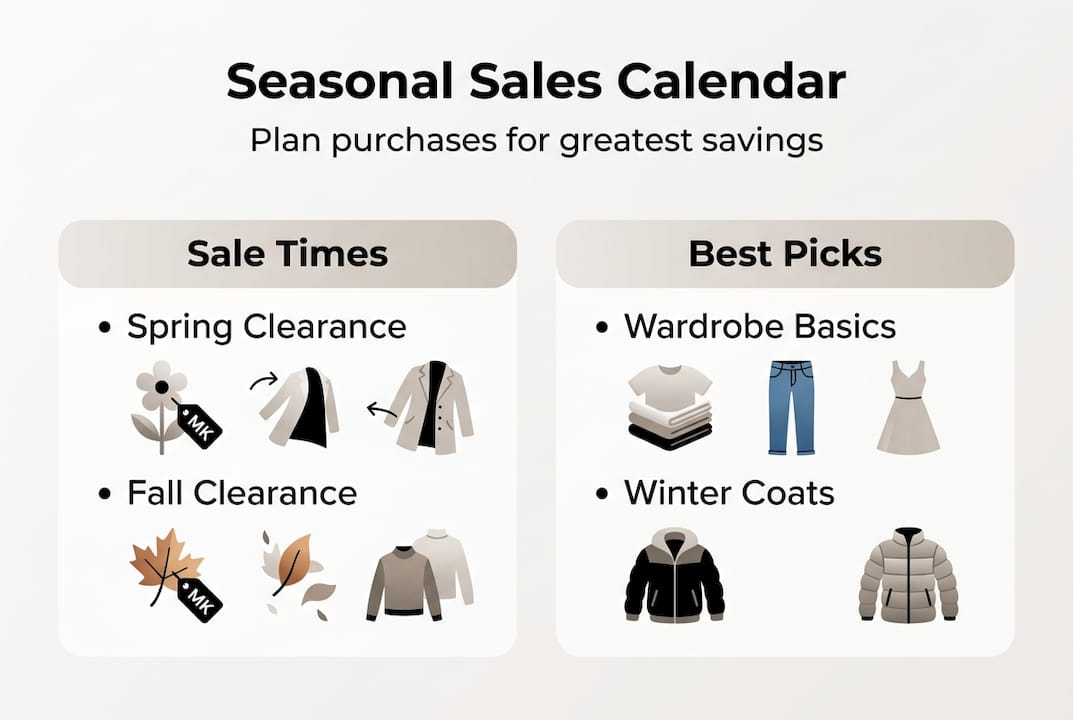
The savings are not marginal. The same source notes that off-season savings reach 70%, and disciplined shoppers save over $500 per year, including paying 40% less on coats in February compared to November. That is real money for anyone trying to build a quality wardrobe without overpaying.
Here is a quick reference for when to buy each category:
| Wardrobe Item | Best Month to Buy | Expected Discount |
|---|---|---|
| Winter coats and jackets | January to March | 40 to 70% off |
| Hoodies and sweatshirts | February to March | 30 to 60% off |
| Summer T-shirts | July to August | 40 to 70% off |
| Fall knits and cardigans | December to January | 30 to 50% off |
| Lightweight pants | August to September | 25 to 50% off |
Beyond clearance windows, here are the deal types worth tracking:
- End-of-season clearances: The deepest discounts, often 50 to 70% off entire categories
- Holiday weekend sales: Labor Day, Black Friday, and Memorial Day bring strong site-wide offers
- Bundle promotions: Buy-two-get-one deals that reward stocking up on basics
- Email subscriber exclusives: Early access sales before items sell out
- Flash sales: Short windows with high discounts, best used for items you already planned to buy
Pairing this calendar with a solid seasonal wardrobe guide helps you plan by category so nothing slips through. If you are newer to the concept of rotating essentials by season, reading up on what is seasonal fashion gives you the mental model to make better decisions year-round.
What to buy: Timeless versus trendy picks
Understanding the best times to shop is only half the strategy. The next step is knowing what to actually put in your cart for maximum style and value.

The biggest mistake budget-conscious shoppers make is spending too much of their clearance budget on trend-driven pieces. A statement puffer in a bold color might feel exciting in the moment, but it may look dated in 18 months. Basics, on the other hand, stay relevant indefinitely. Classic jeans, neutral knits, solid cardigans, heavyweight tees, and well-cut pants never go out of rotation. Putting 80% of your seasonal budget toward these capsule wardrobe guide staples is the move that pays off over time.
Here is a simple process for planning what you buy during sales:
- Audit your closet first. Write down the gaps. Do you need more base layers? A better hoodie? More neutral bottoms?
- Separate your list into essentials and wants. Essentials go on your priority buy list. Wants are for if budget allows.
- Set a per-category budget before the sale starts. Decide in advance how much you will spend on tops, bottoms, and outerwear.
- Shop essentials during deep clearance. Wait for basics to drop to their lowest price before buying.
- Buy trend pieces early if you want them. Trendy items in popular sizes sell out fast before hitting clearance. If you love a specific piece, get it early at a moderate discount rather than missing it entirely.
The Fall Wardrobe Budget Picks approach confirms this. You can build 10 fall staples from retailers like Old Navy, Uniqlo, and Target for around $250 total, focusing on versatile pieces that work across multiple outfits.
The tradeoff between basics and trendy items is also worth mapping out clearly:
| Factor | Timeless essentials | Trendy items |
|---|---|---|
| Discount depth | 50 to 70% off clearance | 20 to 40% off, often early |
| Size availability | Good during deep clearance | Sells out fast |
| Longevity | 3 to 7 years of wear | 1 to 2 seasons |
| Outfit versatility | Works across many looks | Limited styling options |
As best time to buy clothing research shows, basics stay available through deep clearance while trendy items in standard sizes disappear much earlier. Plan around that reality.
Pro Tip: If a seasonal trend genuinely excites you, buy it early. But for your core wardrobe, be patient and wait for the deepest possible markdown.
“A $23 cardigan on sale beats a $55 trendy jacket that lasts one season.”
For more targeted advice on building year-round confidence through basics, the essential wardrobe tips resource is worth bookmarking.
Verify deals before you buy
Even with the right timing and picks, your savings can vanish if you fall for misleading markdowns.
Not every “sale” is real. Some retailers inflate the original price before a promotion period so that the discount looks dramatic. A jacket listed at $120 “on sale” for $60 might normally sell for $60 at three other stores. You feel like you saved half, but you just paid full price with extra steps.
The fix is fast and simple. Before you complete any purchase, spend two minutes checking the same or comparable item on Amazon, Walmart, or a brand competitor. Browser extensions like Honey or CamelCamelCamel also track price history automatically. As consumer research on fake deals shows, verifying prices across retailers before buying is the single most reliable way to confirm you are getting a real discount.
Here is what that comparison might look like for a basic item like a heavyweight cotton tee:
| Retailer | Listed Price | Sale Price | Verified Deal? |
|---|---|---|---|
| Brand A | $45 | $27 | Yes, 40% off |
| Amazon (same spec) | $28 | $28 | No, same price |
| Walmart comparable | $22 | $22 | Brand A sale is fair |
Knowing these numbers tells you Brand A’s deal is real but modest. Walmart’s comparable item offers better base value without a “sale” at all.
Red flags that suggest a deal is not legitimate:
- The base price changed recently, just before the sale window opened
- Forced bundles that require you to buy multiple items to unlock the discount
- Vague original prices listed as “compare at” without verifiable history
- Deep discounts on unpopular sizes only, while standard sizes are still full price
- No end date on the “limited time” offer, meaning it is likely permanent pricing
Pro Tip: When a retailer offers price matching, use it. Bring the competitor’s lower price to checkout and ask. Many brands will honor it without hesitation.
For more ways to stretch your budget across seasonal drops, the smart deal hunting resource covers practical tactics for identifying genuine value in a crowded market.
Add thrift and secondhand shopping to boost savings
If you want to stretch your seasonal savings even further, secondhand shopping adds another winning layer.
Thrift stores and resale platforms give you access to premium quality at a fraction of the retail cost. During peak clearance seasons, sellers on these platforms also drop their prices to move inventory. That means your timing strategy applies here too. Shopping secondhand off-season often uncovers the same classic pieces you would find at retail clearance, sometimes in near-new condition.
The numbers are striking. Secondhand platforms like ThredUP and Poshmark regularly offer like-new basics under $15, and cashmere pieces can show up at 5 to 10% of their original retail price. A cashmere sweater that retails for $200 might sell on ThredUP for $18. That is not a typo.
Here are the platforms worth knowing and what each does best:
- ThredUP: Huge selection of everyday basics and name brands, sorted by size and condition. Great for building out your essentials at very low prices.
- Poshmark: More community-driven, good for finding specific brands. Prices are negotiable.
- Nordstrom Rack: Not a secondhand platform, but its clearance section often rivals thrift pricing on quality brands.
- Local thrift stores: Goodwill and Salvation Army stores see fresh inventory constantly. The treasure hunt aspect is real, but so are the prices.
- Facebook Marketplace: Works well for local, no-shipping pickups on gently used basics.
Pro Tip: Apply the same off-season logic to thrift shopping. Hunting for winter coats in March at your local thrift store means less competition and better prices.
Thrift finds also shine for one-of-a-kind classics that no retailer carries anymore: vintage denim cuts, old-school fleece pullovers, or heavyweight flannels that simply are not made the same way today. For a deeper look at how resale fits into building a lasting wardrobe, the fashion resale guide covers the full landscape.
Why most shoppers settle for less—And how to break the cycle
Here is the honest truth: most people shop reactively. A flash sale email lands, they click, they buy something they did not plan for, and they feel good for 10 minutes. Three months later, that item sits unworn because it does not work with anything else they own.
The shoppers who actually win at seasonal promotions are the ones who show up prepared. They already know what they need. They have already checked prices. They wait for the right clearance window and move with confidence rather than impulse.
Intentional shopping is not about being rigid or boring. It is about building a closet that actually functions, where every piece earns its place. When you stop chasing “the deal” and start buying with purpose, something shifts. You spend less overall, wear everything you own, and feel genuinely satisfied with your wardrobe rather than constantly searching for something to fix it. The minimalist comfort trend that is reshaping casual dressing in 2026 is built on exactly this idea: fewer, better pieces you actually reach for.
The cycle breaks when you make a plan before the sale starts, not during it.
Ready to build your smarter wardrobe?
At Smoked Times, we built the brand around exactly this kind of thinking. No trend chasing. No throwaway fabrics. Just well-made, heavyweight essentials that hold up wash after wash and look good doing it. Read the Smoked Times brand story to understand why we make what we make the way we make it.
If you are ready to start applying these seasonal strategies, our lineup of timeless basics is the natural place to put them into practice. Browse shop Smoked Times essentials to see what fits your wardrobe gaps, and check out real feedback from customers on our customer reviews page. Build smart, buy less, wear more.
Frequently asked questions
When is the best time to buy winter clothing on sale?
The deepest discounts on winter apparel usually appear in January through March, with savings up to 70% during end-of-season clearances.
How can I check if a seasonal sale is a real deal?
Compare the sale price with competitors like Amazon or Walmart, and look out for fake sales where unchanged base prices or forced bundles signal misleading markdowns.
What wardrobe basics should I prioritize during seasonal promotions?
Choose versatile essentials like classic jeans, knits, and cardigans, which offer better value and last far longer than trendy items.
Can I find quality brands at thrift or resale shops during seasonal promotions?
Yes, secondhand marketplaces like ThredUP or Poshmark regularly offer premium brands at discounts reaching 5 to 10% of original retail price during clearance periods.
Recommended
- Role of Seasonality in Clothing: Impact on Style and Sales – Smoked Times
- 7 Smart Ways to Master Seasonal Clothing Trends – Smoked Times
- What Is Seasonal Fashion and Why It Matters – Smoked Times
- 7 Smart Ways to Embrace Seasonal Clothing Trends in Style – Smoked Times
- Richtig vorbereiten für den Primeday 2025 - Amz-Scalable
- Warum Schnäppchen so beliebt sind: Psychologie & Nutzen MonsterDealz.de