


Street style guide: Fashion freedom for real people
TL;DR:
- Street style is about authentic self-expression rooted in personal storytelling.
- It evolves from urban subcultures and influences mainstream fashion through real people.
- Minimalist, vintage, and quality basics with intentional layering define accessible, timeless street style.
High fashion gets all the credit, but the most influential looks rarely start on a runway. They start on a sidewalk in Tokyo, a subway platform in New York, or a skate park in London. Street style has been quietly shaping what designers present each season for decades, yet most people still think of it as something reserved for the bold or the brave. It is not. Street style is about wearing what feels true to you, and that makes it one of the most accessible forms of fashion out there. This guide breaks down where it came from, what it really means, and how you can make it your own.
Table of Contents
- Defining street style: Expression from the ground up
- How street style evolved: A journey through decades
- Core elements of street style: Minimalism meets personality
- Interpreting street style for today: Trends, brands, and outfit ideas
- Our perspective: Why true street style is more accessible than you think
- Take your street style further with Smoked Times
- Frequently asked questions
Key Takeaways
| Point | Details |
|---|---|
| Street style origins | Street style began with youth-driven urban culture and influences high fashion from the ground up. |
| Essential elements | Mixing basics, layering, and authentic touches create modern street style. |
| Application tips | Minimalist and vintage wardrobes thrive with clever layering and quality pieces. |
| Personal expression | Street style is authentic, focusing on individual expression rather than strict fashion rules. |
Defining street style: Expression from the ground up
Street style is not a trend. It is not a brand. It is a way of approaching clothing that prioritizes personal storytelling over fashion rules. As street style emerges organically from urban environments and subcultures, focusing on personal expression and individuality, it stands apart from anything you would see dictated in a glossy magazine.
The core of street style is authenticity. You are not dressing to impress a stylist or follow a seasonal color palette. You are dressing to communicate something real about who you are, where you have been, and what you value. That is why fashion as self-expression sits at the center of this movement.
“Street style is not about what you wear. It is about why you wear it and how you make it yours.”
For minimalist and vintage fans especially, street style is a natural home. The movement rewards restraint, intention, and an eye for quality over quantity. You do not need a closet full of statement pieces. You need a few things that genuinely reflect your taste.
Here are the core values that define street style:
- Authenticity: Wear what feels true, not what is trending
- Individuality: Your outfit should tell your story, not someone else’s
- High-low mixing: Pair a thrift find with a quality basic and let them talk to each other
- Comfort first: If it does not feel right to walk in, it will not photograph well either
- Vintage reimagining: Old pieces in new contexts create the most interesting looks
These principles are not complicated. They are actually a relief compared to trying to keep up with runway cycles. Street style gives you permission to slow down and dress with intention.
How street style evolved: A journey through decades
Street style did not appear overnight. Its roots go back further than most people realize, and understanding that history makes it easier to draw from it today.
Street style gained prominence post-WWII from youth subcultures in major cities. Teddy Boys in 1950s London repurposed Edwardian-era tailoring into something rebellious. Mods in the 1960s made sharp cuts and bold patterns their uniform. Hippies rejected structure entirely. Each group used clothing to signal belonging and belief.
Then came the movements that truly pushed street style into the mainstream. From Teddy Boys to hip-hop and skateboarding, street style became a bottom-up driver of fashion innovation, meaning the influence flowed from real people upward to designers, not the other way around. This is the shift that changed everything.
| Era | Subculture | Key cities | Style signature |
|---|---|---|---|
| 1950s | Teddy Boys | London | Drape jackets, crepe soles |
| 1970s | Punk | London, New York | Torn fabric, safety pins |
| 1980s | Hip-hop | New York | Tracksuits, gold chains |
| 1990s | Skate | Los Angeles, Tokyo | Baggy denim, graphic tees |
| 2000s | Harajuku | Tokyo | Layered, maximalist mixing |
The cities themselves matter too. London gave us punk and mod. New York gave us hip-hop and downtown cool. Tokyo gave us Harajuku layering and the kind of fearless experimentation that still influences designers today. Paris brought a quieter, more refined take on everyday dressing.
Pro Tip: When you feel stuck on your own style, look back at a subculture that resonates with you. Pull one or two elements from it, not the whole look. That restraint is what makes the reference feel intentional rather than costume-like.
Understanding these street culture influences helps you see that every era had its own version of minimalism and maximalism. And pop culture’s role in street style continues to evolve, keeping the movement fresh without losing its grassroots roots.
Core elements of street style: Minimalism meets personality
Knowing the history is one thing. Applying it is another. The good news is that the mechanics of great street style are repeatable once you understand them.
Key methodologies include proportion play, layering, high-low mixing, and individual signatures, and these are not just abstract ideas. They are practical tools you can use every time you get dressed.
Proportion play is probably the most powerful. An oversized top with slim pants creates visual balance. A fitted tee tucked into wide-leg trousers does the same thing in reverse. The goal is contrast, not chaos.
Layering follows a simple three-step system:
- Foundation: A clean, well-fitting base layer like a heavyweight tee or a slim long-sleeve
- Character piece: The item that carries personality, a vintage flannel, a worn denim jacket, a textured knit
- Frame: An outer layer that ties everything together, usually a coat, overshirt, or structured jacket
This approach to mastering layering keeps your look intentional even when it involves multiple pieces.
High-low mixing is where street style gets interesting. A thrift store find paired with a quality basic creates tension that makes both pieces look better. The vintage item gets context. The basic gets character.
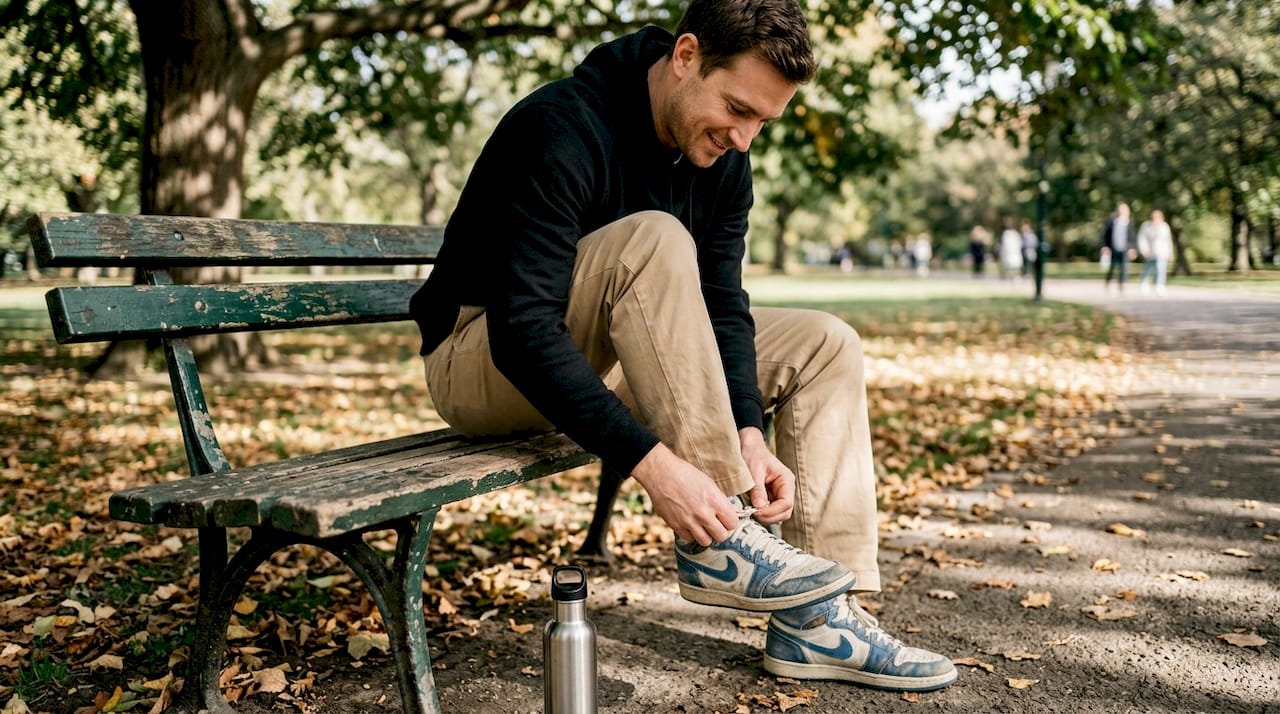
Signature details are the finishing touches that make a look yours. Rolled cuffs on jeans. A single ring. A worn leather belt. These small choices signal that you are paying attention. Using accessories to personalize your look does not require spending much. It requires noticing.
Pro Tip: Avoid the two most common street style mistakes: wearing all-oversized pieces with no contrast, and combining too many competing colors. Pick one statement element and let everything else support it.
For those drawn to a quieter approach, minimalist accessory choices can add depth without noise. A clean watch, a simple cap, or a tonal bag can complete a look without competing with it.
| Common mistake | Better approach |
|---|---|
| All-oversized silhouette | Oversized top plus slim bottom |
| Too many bold colors | One accent color, neutral base |
| Mixing too many eras | One vintage reference, modern basics |
| Over-accessorizing | Two or three intentional pieces |
Interpreting street style for today: Trends, brands, and outfit ideas
Street style in 2026 leans heavily toward the quiet and considered. Loud logos are fading. Neutral palettes, relaxed fits, and quality fabrics are taking their place. This is good news for anyone who prefers a wardrobe built around versatile pieces rather than seasonal novelties.
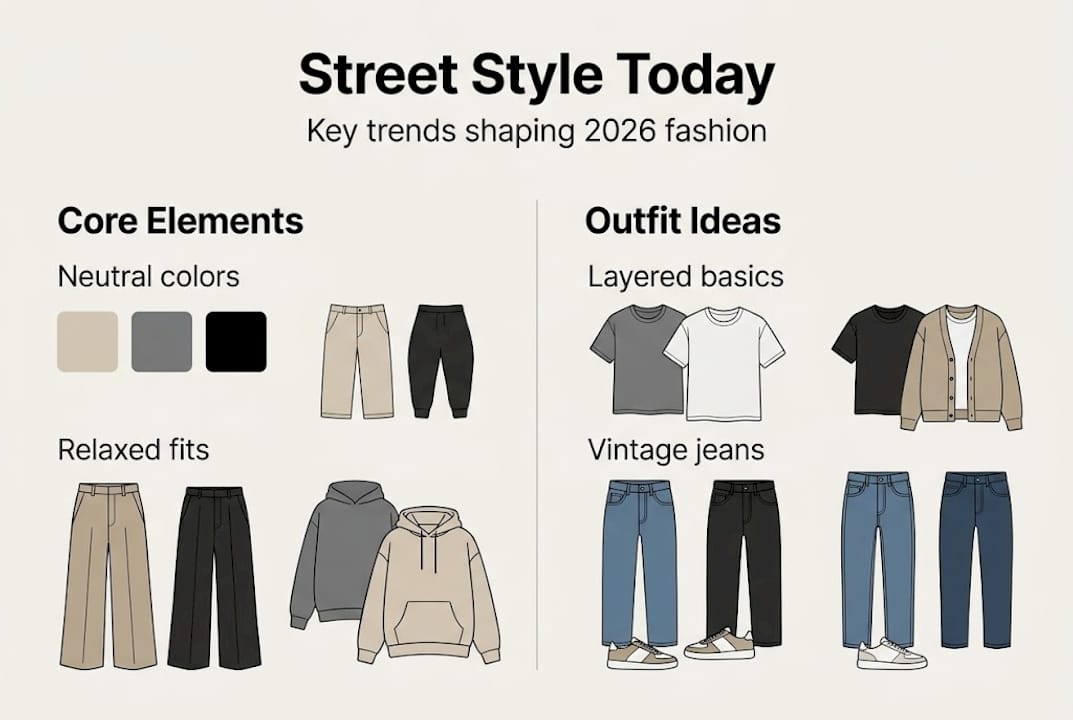
Street style continues to democratize fashion, emphasizing simplicity, quality basics, and mindful details. That shift is visible everywhere from fashion week sidewalks to everyday city dressing.
Building a core street style wardrobe does not require a complete overhaul. Start here:
- Quality tees: Heavyweight cotton in neutral tones. These are your foundation.
- Vintage denim: Straight or relaxed fit, slightly worn. Nothing too distressed.
- Classic sneakers: White, black, or earth tones. Simple enough to work with anything.
- One statement outer layer: A denim jacket, a long coat, or an overshirt with character.
- Subtle accessories: A cap, a simple bag, a watch. Choose one or two per outfit.
The minimalist comfort trends shaping 2026 align perfectly with this approach. Relaxed fits, earth tones, and natural fabrics are everywhere, and they age well in your wardrobe.
For outfit ideas for minimal street style, think about combinations that feel effortless rather than assembled. A faded tee, straight-leg jeans, and clean sneakers. A heavyweight hoodie over a collared shirt with dark trousers. These are not complicated. They are just intentional.
For broader street style guidance, look to city streets and fashion week documentation rather than trend reports. Real people in real contexts will always give you more useful ideas than a runway presentation.
Our perspective: Why true street style is more accessible than you think
Here is what most street style guides will not tell you: the people who look the best are almost never the ones taking the biggest risks. They are the ones being the most consistent.
Street style has a reputation for being about boldness, novelty, and fashion courage. But the looks that actually hold up over time are built on coherence. Wearing what feels natural to you, in pieces that fit well and reflect your actual life, is far more compelling than chasing a trend you do not fully believe in.
Brand labels matter less than people think. A rare sneaker or a designer piece can anchor a look, but it cannot save a look that lacks intention. The person who wears a plain tee with genuine confidence will always outshine someone in an expensive outfit that does not feel like theirs.
Minimalist and vintage fans are not on the fringes of street style. They are at its center. The movement has always rewarded those who know what they like and dress accordingly. If you are drawn to minimalist vintage outfit ideas, you are already thinking about fashion the right way. The only thing left is to trust it.
Take your street style further with Smoked Times
If the principles in this guide resonate with you, the next step is building a wardrobe that actually supports them. Street style at its best starts with quality basics you can rely on.
At Smoked Times, we make the kind of pieces that form the foundation of a real street style wardrobe. Our retro cotton T-shirts are built from heavyweight organic Pima cotton, designed to layer well and wear in beautifully over time. The oversized retro hoodie brings that relaxed, vintage-inspired silhouette without sacrificing comfort. Every piece is minimal by design, which means it works harder in your wardrobe. Browse the collection, find your foundation, and share your street style review with the community when you are ready.
Frequently asked questions
What is the main purpose of street style?
Street style is about authentic self-expression, mixing personal tastes with influences from urban culture rather than following prescribed fashion rules.
How is street style different from runway fashion?
Runway fashion is created by designers and presented on a catwalk, while street style starts organically on real people in cities and subcultures, often influencing designers afterward.
What pieces are essential for minimalist street style?
Simple tees, vintage jeans, layered basics, and subtle accessories form the core. Quality basics and thoughtful layering define a strong minimalist street look.
How can I avoid common mistakes in street style?
Balance your silhouette by mixing oversized and fitted pieces, and avoid chaotic color schemes by anchoring your look with a neutral base and one accent.
Where can I find inspiration for street style today?
City streets, fashion week photography, and social media platforms offer the most current and real-life style inspiration you can find.
Recommended
- Urban streetwear guide: 2026 style and culture insights – Smoked Times
- What Is Streetwear Style and Why It Matters – Smoked Times
- Role of Fashion in Youth Culture—Impact on Identity – Smoked Times
- 7 Top Fashion Trends 2026 to Upgrade Your Casual Style – Smoked Times
- People Photoshoot Guide: Creative Tips for Stunning Shots 2026