


How collaborations transform fashion and shape timeless style
TL;DR:
- Nearly two-thirds of consumers have purchased co-branded fashion products, making collaborations a core business strategy.
- Successful minimalist collaborations add depth through shared values, craftsmanship, and longevity, not hype.
- Authentic, values-driven partnerships drive long-term growth and consumer loyalty beyond short-term trends.
Nearly two-thirds of consumers in studied markets have already purchased co-branded fashion products, which means collaborations are not a novelty or a marketing experiment. They are a core commercial force. 64.5% of Spanish consumers have bought co-branded fashion items, a figure that signals how deeply partnerships have embedded themselves into everyday buying decisions. For fashion enthusiasts and industry professionals, understanding what drives this demand, and how it connects to minimalist and timeless apparel, is no longer optional. This guide breaks down the mechanics, the results, and the future of fashion collaborations with clarity and a sharp editorial eye.
Table of Contents
- Setting the stage: Why collaborations matter in fashion
- Collaborations powering timeless and minimalist apparel
- Measuring the real impact: Revenue, reach, and brand identity
- Beyond the hype: Risks, fatigue, and authentic success
- A fresh take: Why sustained, values-driven collaborations will define the next era
- Explore and share your perspective on fashion’s collaborative future
- Frequently asked questions
Key Takeaways
| Point | Details |
|---|---|
| Collaborations drive real growth | Fashion collaborations are responsible for significant revenue boosts and expanded brand reach. |
| Minimalist appeal succeeds | Partnerships excel when they add new value to timeless, minimalist styles without losing authenticity. |
| Risks and fatigue are real | Overusing collaborations or chasing trends can lead to brand dilution and consumer exhaustion. |
| Sustainability matters | Values-driven and responsible collaborations can fuel long-term brand credibility and circular economy ambitions. |
Setting the stage: Why collaborations matter in fashion
A fashion collaboration is a formal creative or commercial partnership between two or more brands, designers, or organizations, each bringing distinct strengths to produce something neither could achieve alone. These range from streetwear giants teaming with luxury houses to independent designers partnering with sustainable fabric suppliers. The result is always a product or collection that carries the DNA of both parties.
There are four widely recognized types of co-branding in fashion:
- Complementary competency: Two brands combine unique strengths, like a technical outerwear brand pairing with a heritage tailor.
- Promotional endorsement: A brand uses a celebrity or cultural figure to amplify its identity.
- Awareness enhancement: Smaller brands partner with larger ones to gain visibility.
- Ingredient branding: One brand’s material or technology is featured inside another’s product, such as Gore-Tex inside a designer jacket.
Each type serves a different strategic goal, but all share one outcome: they introduce something new to an existing audience while reaching a fresh one. That dual effect is why fashion retail partnerships have become a standard growth lever rather than an occasional creative experiment.
The numbers back this up. Over 28% of revenue at some major brands now comes directly from partnership activity. That is not a side channel. That is a primary business driver. And on the consumer side, 64.5% choosing co-branded products shows that buyers are actively seeking out these joint offerings, not just stumbling into them.
“Collaborations are no longer a shortcut to relevance. For the brands doing it right, they are the strategy.”
For minimalist and timeless fashion specifically, this matters because the best collaborations in this space do not chase noise. They add depth. They bring in a new material, a refined silhouette, or a cultural reference that elevates a basic without turning it into something disposable. That is the distinction worth paying attention to.
Collaborations powering timeless and minimalist apparel
Minimalist fashion is built on restraint, quality, and longevity. So when collaborations enter this space, they have to earn their place. The ones that succeed do so by adding something genuinely meaningful, not just a logo swap or a limited-edition colorway.
The Loro Piana x New Balance partnership is a strong example. Loro Piana brought its signature cashmere and vicuña fabrics to New Balance’s performance silhouette. The result was a sneaker that felt at home in a capsule wardrobe, quiet enough for minimalist sensibilities but rich enough to signal craft. Similarly, Veja’s collaboration with Sashiko Gals introduced traditional Japanese boro stitching to a clean, everyday sneaker, adding cultural texture without visual clutter.
These collaborations work because they follow a clear set of principles:
- Start with shared values. Both parties must agree on what the product should feel like, not just look like.
- Let craft lead. The material or technique should be the story, not the marketing.
- Respect the existing audience. Neither brand should alienate its core customer in pursuit of the other’s fan base.
- Design for longevity. A piece that works in 2026 should still feel relevant in five years.
| Collaboration | Core strength added | Minimalist fit |
|---|---|---|
| Loro Piana x New Balance | Luxury textiles, quiet prestige | High |
| Veja x Sashiko Gals | Craft heritage, sustainable materials | High |
| nanamica x A Kind of Guise | Technical fabric, refined tailoring | High |
These minimalist comfort trends show that the most enduring collaborations treat the everyday staple as a canvas worth respecting. They do not overload it. They refine it. For anyone building a wardrobe around lifestyle comfort and style, these partnerships offer a useful filter: if a collaboration adds noise, skip it. If it adds depth, it is worth your attention.
Pro Tip: When evaluating a collaboration, ask whether the product would still make sense without the co-branding. If it would, the partnership added real value. If the logo is the only reason it exists, it is hype, not craft. The same logic applies to accessory-driven minimalism, where every addition must justify its presence.
Measuring the real impact: Revenue, reach, and brand identity
The financial outcomes of fashion collaborations can be dramatic. Looking at documented case studies, the numbers are hard to ignore. Balenciaga’s collaboration with Scholl produced an 82.8% revenue increase. Louis Vuitton’s partnership with Supreme drove a 21% revenue lift. Gucci’s collaboration with The North Face resulted in a 134.3% increase in resale value for related items. These are not marginal gains.
But revenue is only one dimension. The non-monetary impact is equally significant:
- New audience acquisition: Each collaboration introduces one brand’s audience to the other, often permanently.
- Media impact value (MIV): The earned media generated by a major collaboration can exceed the paid media budget many times over.
- Cultural relevance: Being associated with the right partner at the right moment can reposition a brand for years.
- Resale market activity: A strong collaboration creates secondary market demand, which signals long-term desirability.
Over 70% of consumers react positively to fashion collaborations, which is a remarkably high approval rate for any marketing-driven initiative. That number reflects genuine consumer enthusiasm, not passive tolerance.

However, not all metrics are worth chasing. A spike in social media mentions during a launch week means little if the product does not move or if the audience does not return. Smart brands track social media influence alongside repeat purchase rates and brand sentiment over time. The collaboration that boosts your profile for a month but confuses your identity for a year is a net loss.
For industry professionals, the lesson from the data is to measure collaborations across a full cycle, not just at launch. The brands winning at marketing in fashion are the ones treating partnerships as long-term brand investments, not short-term revenue events.
Beyond the hype: Risks, fatigue, and authentic success
Not every collaboration is a win. The fashion industry has produced enough failed partnerships to fill a cautionary catalog. The risks are real, and ignoring them is how brands end up diluted, confused, or simply ignored.
The most common pitfalls include:
- Overexposure: When a brand collaborates too frequently, each new partnership carries less weight. The scarcity that makes collaborations exciting disappears.
- Identity erosion: Partnering with brands that do not share your values can blur what you stand for, especially in minimalist fashion where clarity of identity is everything.
- Short-lived hype: A collaboration built on trend-chasing rather than genuine creative alignment fades fast and leaves no lasting impression.
- Audience confusion: If your customer cannot understand why two brands are together, the collaboration has already failed.
Collaboration fatigue is a documented concern in the industry, with brands and consumers alike growing skeptical of partnerships that feel manufactured. Sustainability adds another layer of complexity. A collaboration that claims environmental credentials but uses virgin synthetics or exploitative supply chains will face scrutiny it cannot survive.
“The brands that win long-term are not the ones that collaborate the most. They are the ones that collaborate with the most intention.”
The counterpoint is equally clear. Brands that commit to authentic, values-aligned partnerships see over 50% annual growth, a figure that underscores how powerful genuine collaboration can be when done with discipline.
Look at Zara’s collaboration strategy as a case study in volume versus depth. High-frequency partnerships can build momentum, but they require exceptional curation to avoid becoming noise. The brands with the most durable collaborative track records, whether in fast fashion or ecommerce apparel, are the ones that treat each partnership as a long-term commitment rather than a seasonal marketing play.
Pro Tip: Before entering or endorsing a collaboration, check whether both brands share a customer, a craft philosophy, and a long-term vision. If even one of those three is missing, the partnership is likely to underperform.
A fresh take: Why sustained, values-driven collaborations will define the next era
Most commentary on fashion collaborations focuses on the launch moment: the drop, the sellout, the resale spike. That framing misses the point entirely. The collaborations that matter are the ones you are still thinking about three years later because the product held up, the design aged well, and the partnership made sense.
Gen Z consumers favor timeless style and restrained collaborations over hype-driven releases. That shift in preference is not a trend. It is a values statement. Younger buyers are more skeptical of manufactured excitement and more loyal to brands that demonstrate genuine creative integrity.
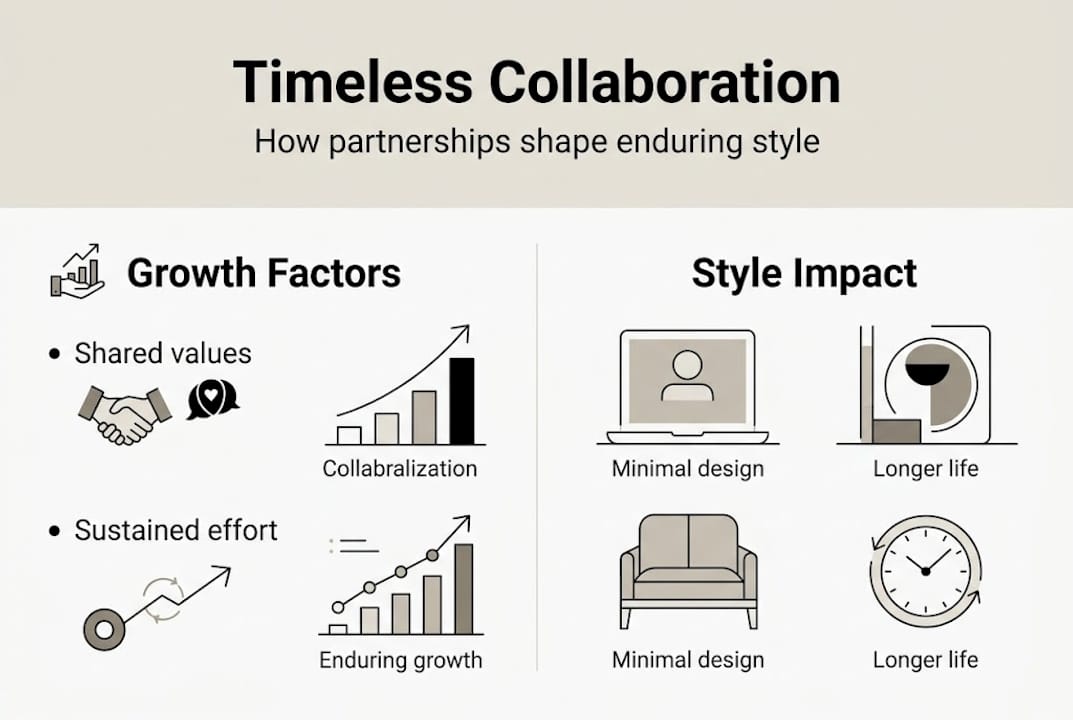
For the fashion industry, this means the next era of successful collaborations will be defined by shared purpose, not shared marketing budgets. The brands that invest in understanding their partner’s craft, customer, and culture will produce work that lasts. The ones chasing reach alone will produce noise.
At Smoked Times, we believe the same principle applies to how you build your wardrobe. Pieces that reflect timeless minimalist outfits and genuine quality outlast anything built on hype. The collaborations worth your attention are the ones that share that philosophy.
Explore and share your perspective on fashion’s collaborative future
Collaborations are reshaping what fashion means, from the runway to the everyday wardrobe. If you have a perspective on which partnerships have earned your respect or which ones missed the mark, we want to hear it. Your experience as a fashion enthusiast or industry professional adds real value to this conversation.
Take a moment to submit your review and share what you think makes a collaboration genuinely worthwhile. And if you want to keep exploring how partnerships, minimalism, and timeless design intersect, discover more about fashion collaborations across our full content library. The conversation is ongoing, and your voice belongs in it.
Frequently asked questions
What are the main types of fashion collaborations?
Common types include complementary competency, promotional endorsement, awareness enhancement, and ingredient branding, each serving a distinct strategic purpose.
Do collaborations actually increase fashion brand sales?
Yes, with documented examples like Balenciaga’s 82.8% revenue spike from its Scholl collaboration and Louis Vuitton’s 21% lift from the Supreme partnership.
Can collaborations help with sustainability in fashion?
When grounded in shared values, collaborations can support sustainable materials and circular economy models that neither brand could develop as efficiently alone.
What are the risks of frequent collaborations?
Frequent partnerships risk market fatigue and brand dilution, especially when the creative rationale is thin or the values alignment is absent.
Why are collaborations important to minimalist fashion?
They allow brands to introduce premium materials and functionality without overloading the design, keeping the identity focused and the product genuinely useful over time.
Recommended
- How pop culture shapes modern streetwear trends – Smoked Times
- Role of Fashion in Youth Culture—Impact on Identity – Smoked Times
- Role of Fashion in Self-Expression Today – Smoked Times
- Role of Social Media in Apparel: Driving Fashion Trends – Smoked Times
- The Rise of Zara: A Fashion Revolution - Visit Agadir