


What is retro fashion? Styles, trends & how to wear it
TL;DR:
- Retro fashion involves modern, inspired pieces from past decades, blending nostalgia with contemporary style.
- Key styles from the 70s, 80s, 90s, and Y2K are prevalent in 2026, emphasizing fit and simplicity.
- Incorporating retro into everyday wear is easy through accessories, outerwear, and thoughtful mixing with modern basics.
Retro fashion isn’t just for costume parties or bold personalities willing to stand out in a crowd. It’s already woven into most modern wardrobes, whether you realize it or not. That oversized hoodie, those wide-leg pants, the chunky sneakers — all of it traces back to specific decades. Right now, 2026 fashion trends are pulling heavily from the 70s, 80s, 90s, and early 2000s in ways that feel fresh rather than dated. This guide breaks down what retro fashion actually means, which decade styles are driving the conversation, why it keeps coming back, and how you can wear it without looking like you raided a time capsule.
Table of Contents
- Defining retro fashion: What does ‘retro’ really mean?
- Retro fashion through the decades: Key styles and defining looks
- Why is retro fashion so popular again?
- How to wear retro styles today: Practical tips for everyday outfits
- Rethinking retro: Don’t just follow trends — make them your own
- Bring retro style to your closet with Smoked Times
- Frequently asked questions
Key Takeaways
| Point | Details |
|---|---|
| Retro is inspired, not old | Retro fashion features new clothing designed to echo the styles of the past. |
| Popular decades resurge | Current trends revisit the 70s, 80s, 90s, and Y2K for fresh inspiration. |
| Retro boosts sustainability | Choosing retro over fast fashion helps reduce environmental impact. |
| Blend, don’t costume | Mix standout retro pieces with modern basics for wearable style. |
Defining retro fashion: What does ‘retro’ really mean?
The word “retro” gets thrown around loosely, but it has a specific meaning in fashion. Retro clothing refers to new or recently made pieces that are inspired by styles from the past, typically from 20 to 50 years ago. The key word is inspired. Retro isn’t the original item — it’s a modern interpretation of it.
This is where a lot of shoppers get confused. Here’s a quick breakdown of the three terms you’ll encounter:
| Term | What it means | Age range |
|---|---|---|
| Retro | New clothing inspired by past styles | Modern made, past-inspired |
| Vintage | Authentic items actually made in a past era | 20+ years old |
| Antique | Rare, collectible items from a much earlier period | 100+ years old |
Why does this distinction matter? Because it affects what you’re buying, how much you pay, and how you care for it. A retro-style corduroy jacket from a current brand is easy to find, affordable, and machine washable. A true vintage piece from 1975 requires more care and comes with a higher price tag.
For everyday shoppers, retro is the most practical entry point. You get the aesthetic without the fragility or the hunt.
Current minimalist comfort trends show exactly how this plays out. Designers are borrowing silhouettes, textures, and color palettes from past decades and filtering them through a modern lens. The vintage fashion trends for 2026 emphasize 70s boho prints, 80s power blazers and strong shoulders, 90s slip dresses and minimalism, and Y2K elements — all reinterpreted for today’s wardrobes with sustainability in mind.
Key retro elements showing up in current fashion include:
- Wide-leg and flared silhouettes borrowed from the 70s
- Oversized blazers with structured shoulders from the 80s
- Neutral, clean basics reflecting 90s minimalism
- Metallic and shiny fabrics nodding to Y2K aesthetics
- Earthy tones and natural textures rooted in boho influences
Understanding these roots helps you shop smarter and style more intentionally.
Retro fashion through the decades: Key styles and defining looks
Each decade left behind a visual fingerprint. Knowing what defined each era makes it much easier to spot retro references in today’s stores and style them well.
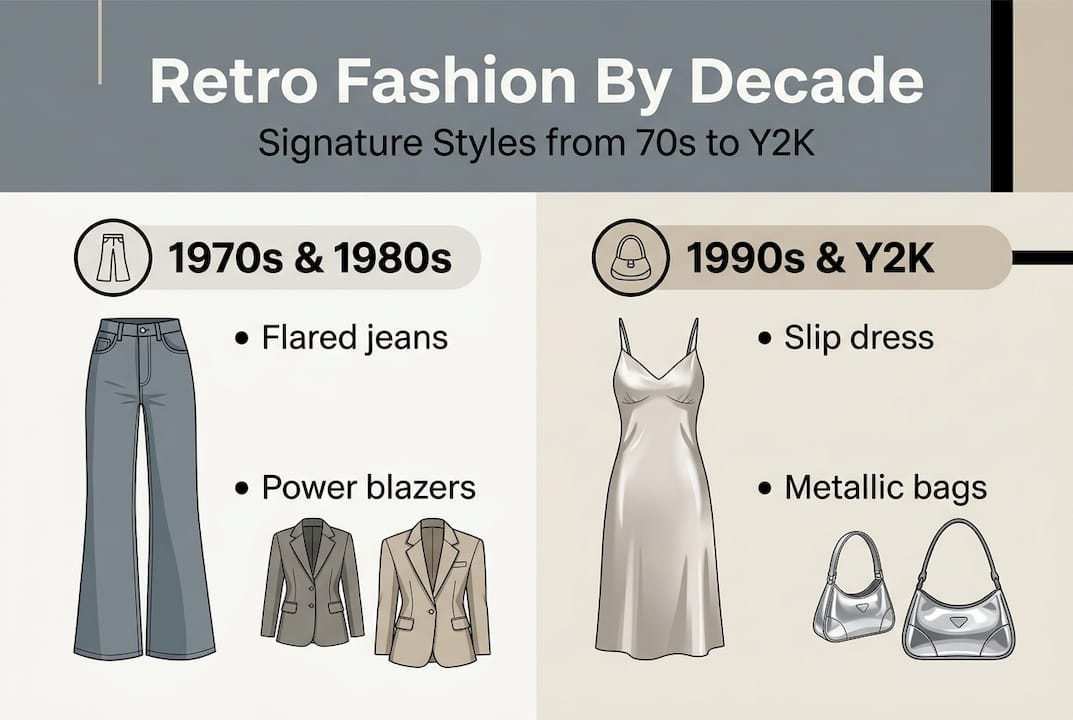
| Decade | Signature pieces | 2026 reinterpretations |
|---|---|---|
| 70s | Flares, boho prints, suede, earth tones | Wide-leg trousers, printed blouses, fringe details |
| 80s | Power shoulders, bold colors, tracksuits | Oversized blazers, color-blocked outerwear |
| 90s | Slip dresses, minimalism, baggy denim | Clean basics, wide-fit jeans, neutral palettes |
| Y2K | Shiny fabrics, low-rise, logomania | Metallic accents, micro bags, chunky footwear |
The 70s brought a relaxed, earthy energy. Think flared denim, printed blouses in warm oranges and browns, and suede boots. Boho styling from this era is one of the biggest vintage fashion influences in 2026, showing up in everything from festival looks to everyday outfits.
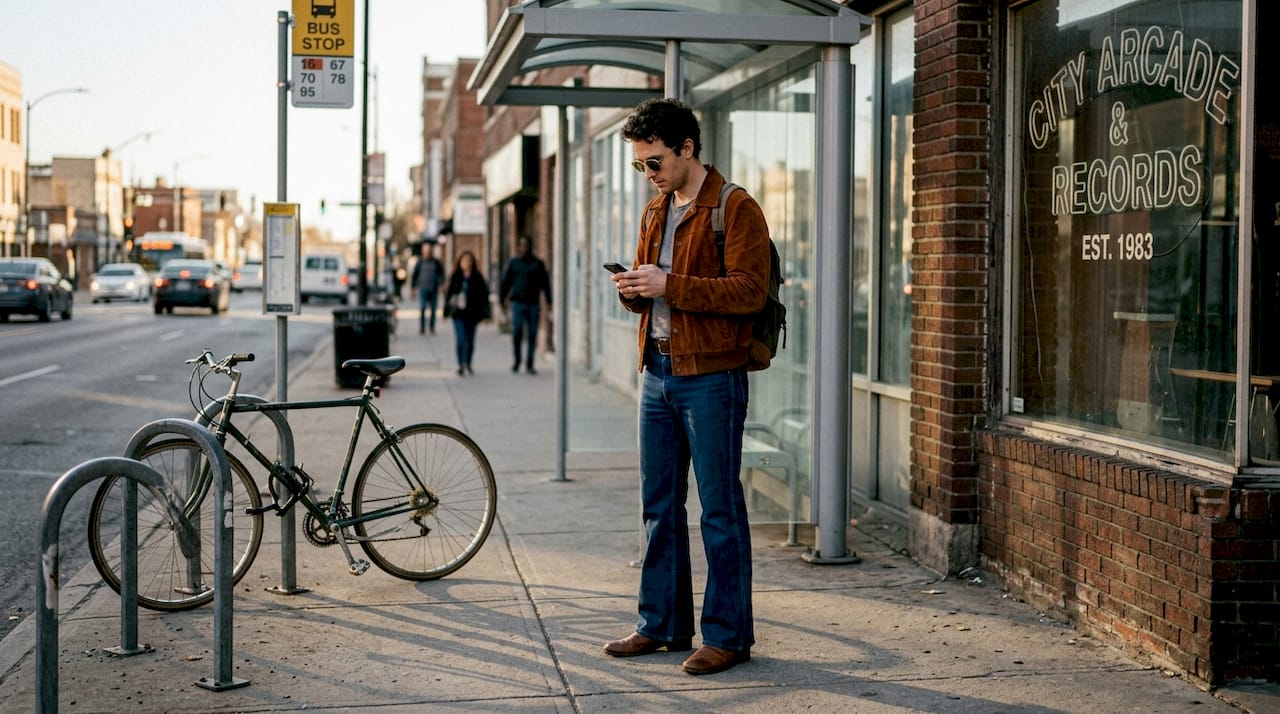
The 80s were all about presence. Power shoulders, saturated colors, and athletic-inspired tracksuits defined the decade. Today, those oversized blazers and bold outerwear pieces are back — but styled with cleaner basics underneath to balance the drama.
The 90s gave us the opposite: stripped-back minimalism. Slip dresses, clean white tees, baggy jeans, and simple sneakers. This era is arguably the easiest to incorporate into a modern wardrobe because it already aligns with urban streetwear insights and current casual dressing habits.
Y2K (roughly 1999 to 2004) brought shiny fabrics, low-rise cuts, and a love of logos. It’s the most maximalist of the current retro revivals, and it works best when used as an accent rather than a full look.
Pro Tip: Pick one or two signature pieces from a single decade rather than mixing multiple eras at once. One 70s-inspired flared trouser paired with a clean white tee reads as stylish. Flares plus a power blazer plus a Y2K metallic bag starts to feel like a costume.
The reason each era resurfaces is simple: fashion cycles roughly every 20 to 30 years. What felt dated becomes nostalgic, and nostalgia eventually becomes cool again.
Why is retro fashion so popular again?
Retro’s comeback isn’t random. Several forces are driving it back into the mainstream at the same time.
1. Cultural nostalgia is real and powerful. People are drawn to aesthetics that remind them of formative years — their own or those of a generation they admire. The 90s revival resonates deeply with millennials who grew up in that era, while Gen Z is discovering it fresh.
2. Influencers and designers are amplifying it. Major fashion houses and independent designers are actively referencing past decades in their collections. Social media accelerates this, turning niche retro references into viral trends within weeks.
3. Affordability and originality. Thrifted and retro-inspired pieces often cost less than new fast fashion while offering more visual interest. You’re less likely to show up wearing the same outfit as someone else.
4. Sustainability is shifting buying habits. Choosing retro and vintage over new fast fashion reduces waste and extends the life of existing garments. As sustainability via retro becomes a key driver of 2026 fashion trends, more shoppers are actively seeking out secondhand and retro-inspired options. Understanding why sustainable fashion matters helps put this shift in context.
Here’s a useful framing:
Retro fashion lets you express individuality, reduce environmental impact, and look genuinely interesting — all at the same time. That’s a rare combination in any trend.
Pro Tip: Thrift stores, curated vintage shops, and online resale platforms are excellent places to find authentic retro pieces. Pair them with modern basics from brands focused on eco-friendly clothing for a balanced wardrobe that’s both stylish and responsible.
The popularity of retro isn’t a passing phase. It’s a structural shift in how people think about getting dressed — less disposable, more intentional.
How to wear retro styles today: Practical tips for everyday outfits
The goal isn’t to recreate a decade. It’s to borrow the best parts and make them work for your actual life. Here’s how to do that without overthinking it.
Start with accessories. A 70s-inspired belt, a pair of 90s-style sunglasses, or a Y2K metallic bag can shift the entire energy of an outfit without requiring a wardrobe overhaul. Accessories are low commitment and easy to swap out.
Use retro outerwear as the anchor. A vintage-inspired bomber jacket or an oversized 80s-style coat does a lot of heavy lifting. Wear it over simple jeans and a clean tee and you’ve got a retro-leaning look that still feels current.
Lean on fit. The biggest difference between looking stylish and looking like you’re wearing a costume is fit. A wide-leg trouser that’s properly hemmed looks intentional. One that pools on the floor looks sloppy. 2026 trends blend retro elements with minimalist comfort, which means clean lines and proper fit matter more than ever.
Key guidelines for blending retro into everyday wear:
- Keep the base neutral. White tees, clean denim, and simple sneakers let retro pieces stand out without competing.
- One statement piece per outfit. Let it lead. Everything else supports it.
- Mix textures thoughtfully. Pairing a 70s suede jacket with modern cotton basics creates contrast that feels deliberate.
- Check the proportions. Oversized on top usually means fitted on the bottom, and vice versa.
Pro Tip: When shopping for retro-inspired pieces, prioritize fabric quality over novelty. A well-made heavyweight cotton tee in an earthy 70s tone will serve you far longer than a trendy but flimsy piece. Explore sustainable clothing practices and sustainable apparel options to build a retro wardrobe that lasts.
The best retro outfits feel effortless because the wearer understood the reference and then let it go slightly. That looseness is what makes it look modern.
Rethinking retro: Don’t just follow trends — make them your own
Here’s the honest take: most retro trend guides tell you what to wear and when. What they don’t tell you is that the people who actually look good in retro pieces aren’t following a rulebook. They’re using the past as raw material.
Retro fashion is a starting point, not a destination. You don’t owe any decade a faithful recreation. The 70s had plenty of things that don’t translate well to 2026, and that’s fine. Take the earthy palette. Leave the rest.
The most interesting personal styles we see are built around pieces that feel right to the wearer, not pieces that are technically correct for a given era. Authenticity reads. Costume dressing doesn’t — at least not outside of Halloween.
There’s also a practical argument here. Micro-trends move fast. A specific Y2K silhouette that’s everywhere today may feel exhausted in six months. But a well-made, vintage-inspired heavyweight tee in a classic color? That’s still going to work in five years. Choosing quality and eco-friendly fabrics over trend-chasing is the quieter, smarter play.
Wear what resonates. Ignore what doesn’t. That’s the only retro rule worth keeping.
Bring retro style to your closet with Smoked Times
Ready to build a wardrobe that nods to the past without living in it? Smoked Times makes that easy.
Our pieces are designed around the same principles that make retro fashion enduring: quality fabrics, clean silhouettes, and styles that don’t expire after one season. The retro cotton t-shirt is a perfect foundation — heavyweight, comfortable, and versatile enough to anchor any decade-inspired look. For cooler days, the oversized retro hoodie brings that relaxed 90s energy without sacrificing modern comfort. Browse our full range of sustainable essentials and find the pieces that actually fit your style, not just the trend cycle.
Frequently asked questions
What’s the difference between retro and vintage fashion?
Retro refers to new clothes inspired by past styles, while vintage means the items are actually from a previous decade, usually at least 20 years old.
Which decades are trending in retro fashion for 2026?
Styles from the 70s, 80s, 90s, and Y2K, including boho prints, power blazers, and metallic shimmer, are especially popular in 2026.
Is retro fashion sustainable?
Yes. Retro fashion promotes reuse over fast fashion, reducing textile waste and encouraging more intentional buying habits.
How can I incorporate retro style without looking outdated?
Start with one or two accent pieces or accessories and blend them with clean, modern basics — fit and proportion do most of the work.