


Why Invest in Off-Season Clothing: Save More, Wear Better
TL;DR:
- Shopping for clothes off-season reduces costs by enabling smarter timing and better selection.
- It promotes building a wardrobe of durable, versatile pieces with lower cost-per-wear.
- Organized storage and strategic sale planning maximize savings and wardrobe longevity.
Most shoppers buy clothes when they need them. Summer dress in July, winter coat in November. It feels logical, but it’s one of the most expensive ways to build a wardrobe. Understanding why invest in off-season clothing matters starts with one simple truth: retailers set full-price tags based on demand, and demand peaks exactly when you need the item most. The shoppers who consistently dress well without overspending have figured out a different system. This article breaks down that system, from cost-per-wear math to storage methods to timing your purchases for maximum leverage.
Table of Contents
- Key Takeaways
- Why invest in off-season clothing: the cost-per-wear case
- How to store and rotate off-season clothing properly
- Off-season fashion advantages beyond the savings
- Timing your purchases to maximize value
- My honest take on building smarter shopping habits
- Build your wardrobe the smart way with Smokedtimes
- FAQ
Key Takeaways
| Point | Details |
|---|---|
| Cost-per-wear beats sticker price | A $70 quality item worn 120 times costs less per wear than a $20 impulse buy worn 3 times. |
| End-of-season discounts go deep | Markdowns can reach 70-80% off original prices by weeks 24-28 of a clearance cycle. |
| Storage protects your investment | Cleaning and properly storing off-season garments prevents damage and extends their lifespan significantly. |
| Off-season buys reduce impulse shopping | Planning purchases around sale cycles curbs fast fashion spending and builds a more intentional wardrobe. |
| Stack discounts for maximum savings | Combining loyalty programs and cashback on clearance prices adds an effective 5-10% on top of sale discounts. |
Why invest in off-season clothing: the cost-per-wear case
Cost-per-wear (CPW) is the single most useful number in clothing math. You calculate it by dividing what you paid by how many times you wear the item. That’s it. But once you start thinking this way, your entire approach to shopping changes.
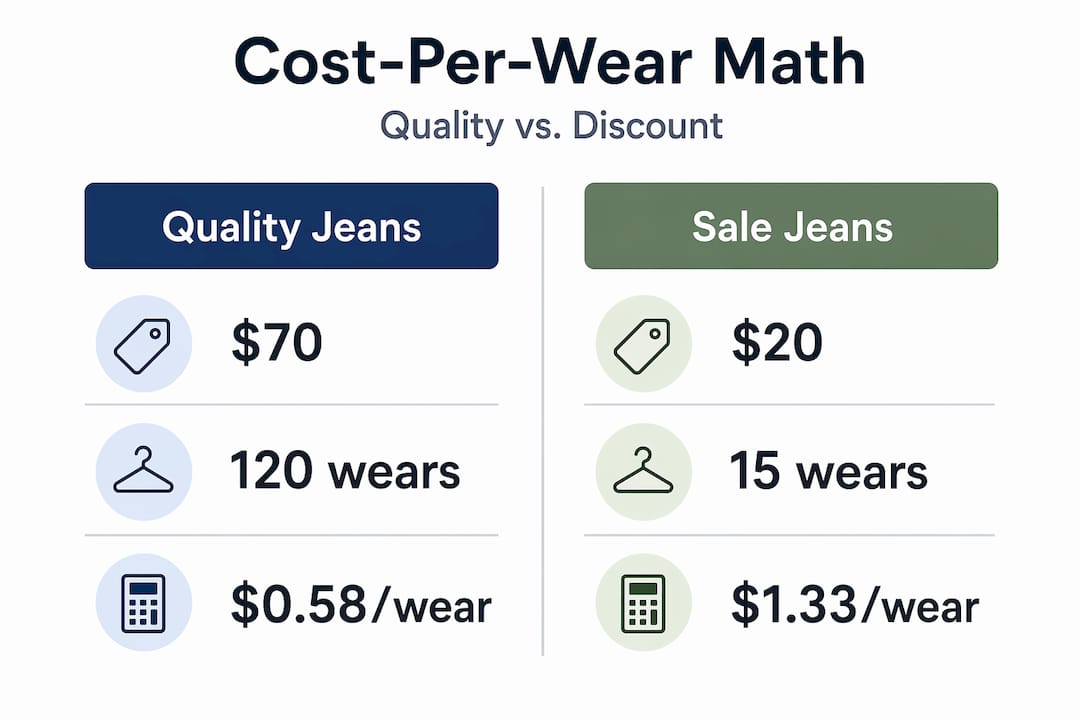
Here’s a real example: a $70 pair of jeans worn 120 times costs approximately $0.58 per wear. Compare that to a $20 sale dress worn just three times, which runs you $6.67 per wear. The “cheap” item is eleven times more expensive in actual use. Off-season buys tip this math further in your favor because you’re purchasing quality items at reduced prices, which compresses that CPW even lower.
The benefits of off-season clothing become concrete when you apply CPW to categories like outerwear and heavy knitwear. A heavyweight hoodie or a well-made winter coat gets worn daily for four to five months every year. Buy that coat in March when winter stock is being cleared instead of October when it’s full price, and you’ve just dropped your CPW by 40 to 60 percent without changing how often you wear it.
Pro Tip: Before buying any off-season item, mentally run through how many times you’ll realistically wear it in the next two years. If the answer is more than 20 times, the math almost always favors buying, especially at a markdown.
The CPW mindset also shifts focus toward classic, durable pieces rather than trend-driven ones. Trends wear out in one season, literally and stylistically. Durable basics wear out in years. When you invest in seasonal apparel off-season, you naturally gravitate toward the pieces with the highest potential for repeat use.
| Item | Purchase Price | Times Worn | Cost Per Wear |
|---|---|---|---|
| Quality jeans (off-season) | $70 | 120 | $0.58 |
| Impulse sale dress | $20 | 3 | $6.67 |
| Heavyweight hoodie (off-season) | $55 | 90 | $0.61 |
| Trendy top (full price) | $35 | 5 | $7.00 |
How to store and rotate off-season clothing properly
Buying smart is only half the equation. The other half is keeping those pieces in good condition until their season comes around. Seasonal rotation, done right, turns your closet into an organized system rather than a pile of half-forgotten clothes.

The “seasonal swap” method recommends rotating your wardrobe twice a year, once in spring and once in fall. Off-season items go into dedicated storage, and in-season items take their place in your primary closet space. This sounds basic, but most people skip it, and their investment pieces either get damaged in crowded conditions or forgotten entirely.
Here’s the storage approach that actually works:
- Wash or dry clean every garment before storing it. Pre-storage cleaning prevents permanent stains and stops moths from being attracted to body oils trapped in fabric fibers.
- Use labeled bins or boxes for each category. Sweaters in one bin, coats in another, layering pieces in a third. Labeled storage makes retrieval fast and keeps you from tearing through everything when a cold snap hits in October.
- Store knits folded, never hung. Hanging stretches shoulders over months.
- Use garment bags for coats, structured jackets, and anything with significant structure. A dust bag takes thirty seconds to put on and can save a $150 coat from developing a musty odor or sun-fading.
- Check on stored pieces once mid-season. It takes five minutes and catches any issues, like a developing mildew smell, before they become permanent.
Organizing stored off-season items in clearly labeled bins also solves a problem most people don’t think about: visual clutter. When your closet contains clothes for every season, you make slower decisions and you reach for the same five items repeatedly. Clearing out what you can’t currently wear makes your active wardrobe easier to use.
Pro Tip: Take a photo of what’s in each storage bin before you seal it. Store the photo in a phone album labeled “stored clothes.” When September rolls around, you’ll know exactly what’s coming back out and can plan accordingly.
For anyone looking to sharpen their garment care habits, the winter apparel care guide from Smokedtimes covers the specifics of maintaining heavyweight cotton and cold-weather pieces across storage cycles.
Off-season fashion advantages beyond the savings
Saving money on clothing is the obvious win. But the off-season fashion advantages that compound over time are actually about wardrobe quality and flexibility, not just dollars saved.
When you buy off-season, you’re forced to think about how a piece fits into what you already own. You can’t wear it immediately, so you’re not making an emotional, in-the-moment purchase. That slight delay is a filter. It weeds out impulse buys and leaves only the pieces you genuinely want and will use.
A few reasons why buying off-season builds a better wardrobe overall:
- It pushes you toward building a capsule wardrobe. A 10 to 15 piece capsule wardrobe of versatile pieces dramatically lowers cost-per-wear and textile waste. Off-season buying naturally aligns with capsule thinking because you’re selecting for long-term use, not immediate gratification.
- It reduces fast fashion turnover. When you plan purchases strategically around sale cycles, you stop filling your cart with cheap seasonal pieces that fall apart after three washes.
- It encourages building a seasonless core of layerable pieces that work across multiple seasons. A quality midweight crewneck, for example, works in fall, late spring, and under a coat in winter.
- It makes your wardrobe more intentional. You’re choosing pieces based on how they fit your actual life and existing wardrobe, not just because they’re in front of you right now.
Why buy clothes off-season also connects to a broader lifestyle efficiency. When your wardrobe is curated and your storage is organized, getting dressed takes less mental energy. That’s not a trivial benefit. Decision fatigue from a cluttered closet is real, and a leaner, better-curated wardrobe eliminates it. Check out the seasonal wardrobe building guide from Smokedtimes for a practical framework on organizing your pieces across the year.
Timing your purchases to maximize value
Knowing when to buy is where the real savings happen. Retailers don’t mark things down randomly. They follow predictable cycles, and once you understand the pattern, you can plan your off-season purchases with precision.
Here’s how end-of-season markdown cycles typically work:
- Weeks 1-8 after peak season: Stock is still relatively full. Initial promotions and selective discounts begin, usually 10-20% off.
- Weeks 8-12: Initial markdowns hit around 25-30%. Good time to buy if you want selection. Popular sizes and colors are still available.
- Weeks 12-20: Discounts deepen to 40-50%. This is the sweet spot for most shoppers. Solid savings, still plenty of stock in common sizes.
- Weeks 20-28: Markdowns reach 70-80% off original prices. Maximum savings, but stock-out risk rises sharply once discounts exceed 60%. If you wear a popular size, don’t wait this long for key pieces.
- Beyond week 28: Clearance bins. Hit or miss on selection, but occasionally excellent finds for less common sizes.
The best categories to target with this timing strategy are outerwear, heavyweight knitwear, and structured layering pieces. These items are expensive at full price, deeply discounted off-season, and have long useful lifespans.
On the savings side, stacking loyalty rewards and cashback on top of clearance prices can add an effective 5-10% in additional savings. If you shop through cashback portals and hold active loyalty memberships with brands you trust, apply those at the markdown stage, not full price. The savings multiply when you stack them on already-discounted items.
For a deeper breakdown of how to time your purchases across different sale cycles, the shop seasonal sales smart guide from Smokedtimes walks through the specifics with a casual wardrobe focus.
My honest take on building smarter shopping habits
I’ll be direct: most people approach clothing sales backwards. They get excited about a 30% discount on a full-price item they bought because it was on sale, not because they genuinely needed it. Then they wonder why their closet is full and they still have nothing to wear.
What changed my own approach was running the CPW math on what I already owned. The results were uncomfortable. My most-worn pieces were not my cheapest. They were the quality basics I’d bought with some thought, even at higher original prices. The fast, impulsive sale buys had the worst numbers by a wide margin.
Once I shifted to planning purchases around end-of-season cycles, two things happened. My spending on clothing actually went down. And the quality of what I owned went up, because I was buying better pieces at discounted prices instead of mediocre pieces at “cheap” prices.
The mental barrier most people hit is the waiting. Buying a coat in March when you won’t wear it until October feels weird. But that’s exactly the thinking retailers count on. They know demand drives full-price behavior. When you learn to think about seasonality in clothing as a pricing signal rather than a shopping trigger, you stop paying the demand premium.
Off-season investing isn’t about being frugal. It’s about being deliberate. And the lifestyle efficiency of a well-organized, thoughtfully curated wardrobe is something you genuinely notice every single morning.
— Denis
Build your wardrobe the smart way with Smokedtimes
If you’ve made it this far, you already think differently about how you shop for clothes. Smokedtimes is built for exactly this kind of buyer. The brand focuses on heavyweight cotton essentials, hoodies, tees, polos, and cold-weather basics that are made to be worn repeatedly, not just once or twice a season. These are timeless wardrobe basics designed for high cost-per-wear. Browse the current collection to see what’s available, and keep an eye on the seasonal sale windows to catch these pieces at their best prices. If you’re building a wardrobe around durable, repeat-wear pieces, Smokedtimes is a natural fit for that system. International shoppers can shop in their local currency with multi-country support built in.
FAQ
What does cost-per-wear mean for clothing?
Cost-per-wear is the purchase price divided by the number of times you wear an item. A $70 item worn 120 times costs $0.58 per wear, making it far more economical than a cheaper item worn only a few times.
When is the best time to buy off-season clothing?
The best window is typically weeks 8-20 after peak season, when discounts range from 25-50% and stock is still plentiful. Waiting beyond week 20 risks stock-outs on popular sizes despite deeper discounts.
How should I store off-season clothing?
Wash or dry clean garments before storage, fold knits flat, use labeled bins by category, and store structured pieces in garment bags. This prevents stains, odor, and fabric damage during the off-season months.
Does buying off-season actually save money long-term?
Yes, when combined with cost-per-wear thinking. Stacking end-of-season discounts with loyalty rewards and cashback can add an effective 5-10% on top of already-reduced clearance prices, making quality pieces genuinely affordable.
What types of clothing are best to buy off-season?
Outerwear, heavyweight knitwear, and structured layering pieces offer the best value. They carry high full-price tags, see deep seasonal markdowns, and have long useful lifespans that keep cost-per-wear low.